Overview
In this unit you will develop a detailed understanding of what constitutes a food production system and the key drivers determining its productivity. You will study the environmental factors and management options driving farming outcomes and examine new and emerging trends and innovations aimed at increasing productivity and improving sustainability of major agricultural industries. Various agricultural strategies and practices will be discussed and external factors such as government policy, market trends and access to infrastructure affecting food production will be analysed. Analyses of case studies drawn from a range of crop and livestock production systems will develop your systems thinking ability.
Details
Pre-requisites or Co-requisites
There are no requisites for this unit.
Important note: Students enrolled in a subsequent unit who failed their pre-requisite unit, should drop the subsequent unit before the census date or within 10 working days of Fail grade notification. Students who do not drop the unit in this timeframe cannot later drop the unit without academic and financial liability. See details in the Assessment Policy and Procedure (Higher Education Coursework).
Offerings For Term 1 - 2026
Attendance Requirements
All on-campus students are expected to attend scheduled classes - in some units, these classes are identified as a mandatory (pass/fail) component and attendance is compulsory. International students, on a student visa, must maintain a full time study load and meet both attendance and academic progress requirements in each study period (satisfactory attendance for International students is defined as maintaining at least an 80% attendance record).
Recommended Student Time Commitment
Each 6-credit Undergraduate unit at CQUniversity requires an overall time commitment of an average of 12.5 hours of study per week, making a total of 150 hours for the unit.
Class Timetable
Assessment Overview
Assessment Grading
This is a graded unit: your overall grade will be calculated from the marks or grades for each assessment task, based on the relative weightings shown in the table above. You must obtain an overall mark for the unit of at least 50%, or an overall grade of 'pass' in order to pass the unit. If any 'pass/fail' tasks are shown in the table above they must also be completed successfully ('pass' grade). You must also meet any minimum mark requirements specified for a particular assessment task, as detailed in the 'assessment task' section (note that in some instances, the minimum mark for a task may be greater than 50%). Consult the University's Grades and Results Policy for more details of interim results and final grades.
All University policies are available on the CQUniversity Policy site.
You may wish to view these policies:
- Grades and Results Policy
- Assessment Policy and Procedure (Higher Education Coursework)
- Review of Grade Procedure
- Student Academic Integrity Policy and Procedure
- Academic Progression Policy and Procedure
- Student Refund and Credit Balance Policy and Procedure
- Complaints Policy and Procedure
- Information and Communications Technology Acceptable Use Policy and Procedure
This list is not an exhaustive list of all University policies. The full list of University policies are available on the CQUniversity Policy site.
Feedback, Recommendations and Responses
Every unit is reviewed for enhancement each year. At the most recent review, the following staff and student feedback items were identified and recommendations were made.
Feedback from SUTE
Students consistently noted that the lecturer was responsive and supportive, providing clear guidance and timely communication throughout the term. Feedback on the residential school was very positive, with many commenting that the practical activities were engaging, enjoyable, and highly relevant to their future careers. The hands-on components were seen as valuable opportunities to develop important practical skills.
We will continue to foster an engaging, supportive, and hands-on learning environment, ensuring students receive timely guidance and practical experiences that strengthen their skills and confidence for future industry pathways.
Feedback from SUTE and UC REFLECTION
Students have commented that some learning resources could be further enhanced to improve clarity and support understanding.
The teaching team will take this opportunity to review and enhance learning resources where most needed, ensuring improvements are incorporated into future iterations of the unit.
- Analyse the main drivers of productivity in crop and livestock industries
- Apply a scientific approach to solve problems of plant and animal productivity
- Examine emerging global trends and innovations in various food production systems.
Alignment of Assessment Tasks to Learning Outcomes
| Assessment Tasks | Learning Outcomes | ||
|---|---|---|---|
| 1 | 2 | 3 | |
| 1 - Online Test - 35% | |||
| 2 - Research Assignment - 40% | |||
| 3 - Report - 25% | |||
Alignment of Graduate Attributes to Learning Outcomes
| Graduate Attributes | Learning Outcomes | ||
|---|---|---|---|
| 1 | 2 | 3 | |
| 1 - Communication | |||
| 2 - Problem Solving | |||
| 3 - Critical Thinking | |||
| 4 - Information Literacy | |||
| 5 - Team Work | |||
| 6 - Information Technology Competence | |||
| 7 - Cross Cultural Competence | |||
| 8 - Ethical practice | |||
| 9 - Social Innovation | |||
| 10 - First Nations Knowledges | |||
| 11 - Aboriginal and Torres Strait Islander Cultures | |||
Alignment of Assessment Tasks to Graduate Attributes
| Assessment Tasks | Graduate Attributes | ||||||||||
|---|---|---|---|---|---|---|---|---|---|---|---|
| 1 | 2 | 3 | 4 | 5 | 6 | 7 | 8 | 9 | 10 | 11 | |
| 1 - Online Test - 35% | |||||||||||
| 2 - Research Assignment - 40% | |||||||||||
| 3 - Report - 25% | |||||||||||
Textbooks
There are no required textbooks.
IT Resources
- CQUniversity Student Email
- Internet
- Unit Website (Moodle)
- Zoom
All submissions for this unit must use the referencing style: Harvard (author-date)
For further information, see the Assessment Tasks.
m.naiker@cqu.edu.au
Week 1
Begin Date: 09 Mar 2026Module/Topic
Introduction to Agricultural Productivity
Chapter
Events and Submissions/Topic
Week 2
Begin Date: 16 Mar 2026Module/Topic
Basic Principles of Livestock Nutrition
Chapter
Events and Submissions/Topic
Week 3
Begin Date: 23 Mar 2026Module/Topic
Feeds and Supplements
Chapter
Events and Submissions/Topic
Week 4
Begin Date: 30 Mar 2026Module/Topic
Grazing Management
Chapter
Events and Submissions/Topic
Online Test (QUIZ 1) Due: Week 4
QUIZ 1 will open in week 4 on Wednesday, 01/04/2026, 5:00 AM and close on Friday, 03/04/2026, 11:45 PM AEST
Week 5
Begin Date: 06 Apr 2026Module/Topic
Crop Responses to Light and CO2
Chapter
Events and Submissions/Topic
Week 6
Begin Date: 13 Apr 2026Module/Topic
Water as a Driver of Crop Productivity
Chapter
Events and Submissions/Topic
Vacation Week
Begin Date: 20 Apr 2026Module/Topic
Chapter
Events and Submissions/Topic
Week 7
Begin Date: 27 Apr 2026Module/Topic
Crop Nutrition
Chapter
Events and Submissions/Topic
Week 8
Begin Date: 04 May 2026Module/Topic
Crop Responses to Temperature and Temperature Extremes
Chapter
Events and Submissions/Topic
Week 9
Begin Date: 11 May 2026Module/Topic
Independent Learning
Chapter
Events and Submissions/Topic
Online Test (QUIZ 2) Due: Week 9
QUIZ 2 will open in week 9 on Wednesday, 13/05/2026, 5:00 AM and close on Friday, 15/05/2026, 11:45 PM AEST
Week 10
Begin Date: 18 May 2026Module/Topic
Trends and Innovations
(Residential School (22 - 24 May)
Chapter
Events and Submissions/Topic
Week 11
Begin Date: 25 May 2026Module/Topic
External Factors
Chapter
Events and Submissions/Topic
Week 12
Begin Date: 01 Jun 2026Module/Topic
Revision and Integration of Concepts
Chapter
Events and Submissions/Topic
Exam Week
Begin Date: 08 Jun 2026Module/Topic
Chapter
Events and Submissions/Topic
Vacation/Exam Week
Begin Date: 15 Jun 2026Module/Topic
Chapter
Events and Submissions/Topic
1 Online Test
You will have two online quizzes to assess your comprehension of the content covered in weeks 1 to 8. These quizzes will include various question types, such as multiple choice, true/false, and short answer, among others.
QUIZ 1 (15%) will cover the content covered in weeks 1 to 3.
QUIZ 2 (20%) will cover the content covered in weeks 4 to 8.
All calculations and workings must be detailed and entirely the student's own work. Collusion and/or external assistance.
Level of GenAI use allowed:
Level 1: You must not use Al at any point during the assessment. You must demonstrate your core skills and knowledge.
The 72-hour grace period does not apply to this assessment.
Quiz 1 will be available from 5:00 AM (AEST) on Wednesday, 1 April 2026, until 11:45 PM (AEST) on Friday, 3 April 2026 (Week 4). Quiz 2 will be available from 5:00 AM (AEST) on Wednesday, 13 May 2026, until 11:45 PM (AEST) on Friday, 15 May 2026 (Week 9).
QUIZ 1: Week 5 Friday, 10/04/2026, QUIZ 2: Week 10 Friday, 22/05/2026
- Multiple choice and true/false questions will be evaluated based on correctness.
- Short answer questions, will be assessed for correctness, accuracy, and conciseness.
- Analyse the main drivers of productivity in crop and livestock industries
- Communication
- Critical Thinking
- Information Literacy
- Information Technology Competence
- Ethical practice
2 Research Assignment
For this assignment you will write up your practical work conducted during the residential school in the format of a small scientific research paper. During the residential school you will develop your own research question in relation to the effects of environmental stresses on plant functioning and productivity and collect the data to answer the question. For your write up, you will then analyze the data and present the results in figures as well as discuss the main findings incorporating relevant literature. Your paper will have 2000(±10%) words with the following structure:
- Descriptive title (not included in the word count)
- Abstract (a maximum of 300 words)
- Introduction to the topic (~450 words)
- Research question and hypothesis (~100 words)
- Methods (~300 words)
- Results including figures and captions (~300 words)
- Discussion (~450 words)
- Conclusion (~100 words)
- References (not included in the word count)
- All calculations and workings must be detailed and entirely the student's own work. Collusion and/or external assistance is not permitted.
Level of GenAI use allowed:
Level 1: You must not use Al at any point during the assessment. You must demonstrate your core skills and knowledge.
Week 11 Friday (29 May 2026) 11:45 pm AEST
Exam Week Friday (12 June 2026)
- Ability to formulate a research question and hypothesis
- Appropriate collection, analysis, presentation and interpretation of data
- Demonstrated understanding and interpretation of plant functioning
- Professional presentation of the report including correct structure, referencing and keeping to word limit where needed
- Clarity of language including expression, spelling and grammar
- Appropriate use of relevant references
- Analyse the main drivers of productivity in crop and livestock industries
- Apply a scientific approach to solve problems of plant and animal productivity
- Communication
- Problem Solving
- Information Literacy
- Team Work
- Information Technology Competence
3 Report
In this report you will (1) introduce an agricultural production system including a current challenge the system is facing and (2) describe in detail an innovation strategy that aims at eliminating the challenge. Your report will have 1000 (±10%) words with the following structure:
- Title (not included in the word count)
- Introduction of the production system including current challenge (~400 words)
- Innovation strategy that aims at eliminating the challenge (~500 words)
- Conclusion (~100 words)
- References (not included in the word count)
- All calculations and workings must be detailed and entirely the student's own work. Collusion and/or external assistance is not permitted.
Level of GenAI use allowed:
Level 1: You must not use Al at any point during the assessment. You must demonstrate your core skills and knowledge.
Week 12 Friday (5 June 2026) 11:45 pm AEST
Exam Week Friday (12 June 2026)
- Detail, accuracy and detail of the information provided
- Professional presentation of the report including correct structure, referencing and keeping to word limit
- Clarity of language including expression, spelling and grammar
- Appropriate use of relevant references
- Apply a scientific approach to solve problems of plant and animal productivity
- Examine emerging global trends and innovations in various food production systems.
- Communication
- Critical Thinking
- Information Literacy
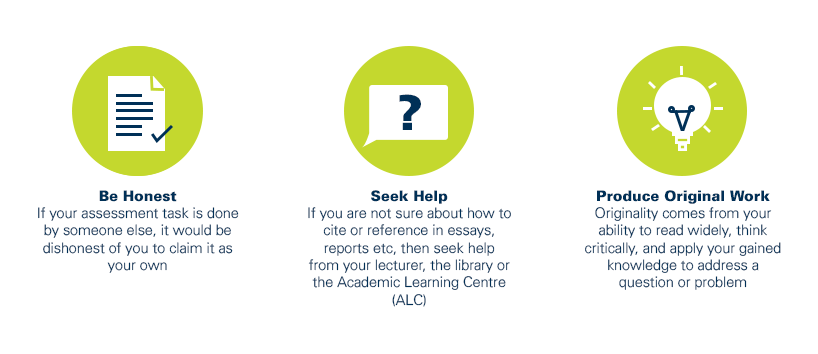
As a CQUniversity student you are expected to act honestly in all aspects of your academic work.
Any assessable work undertaken or submitted for review or assessment must be your own work. Assessable work is any type of work you do to meet the assessment requirements in the unit, including draft work submitted for review and feedback and final work to be assessed.
When you use the ideas, words or data of others in your assessment, you must thoroughly and clearly acknowledge the source of this information by using the correct referencing style for your unit. Using others’ work without proper acknowledgement may be considered a form of intellectual dishonesty.
Participating honestly, respectfully, responsibly, and fairly in your university study ensures the CQUniversity qualification you earn will be valued as a true indication of your individual academic achievement and will continue to receive the respect and recognition it deserves.
As a student, you are responsible for reading and following CQUniversity’s policies, including the Student Academic Integrity Policy and Procedure. This policy sets out CQUniversity’s expectations of you to act with integrity, examples of academic integrity breaches to avoid, the processes used to address alleged breaches of academic integrity, and potential penalties.
What is a breach of academic integrity?
A breach of academic integrity includes but is not limited to plagiarism, self-plagiarism, collusion, cheating, contract cheating, and academic misconduct. The Student Academic Integrity Policy and Procedure defines what these terms mean and gives examples.
Why is academic integrity important?
A breach of academic integrity may result in one or more penalties, including suspension or even expulsion from the University. It can also have negative implications for student visas and future enrolment at CQUniversity or elsewhere. Students who engage in contract cheating also risk being blackmailed by contract cheating services.
Where can I get assistance?
For academic advice and guidance, the Academic Learning Centre (ALC) can support you in becoming confident in completing assessments with integrity and of high standard.
What can you do to act with integrity?