Overview
This unit will provide students with the basis for explaining the evolution of accident investigation methods and practice. On completion, students will be able to explain the characteristics, strengths and weaknesses of key theoretical accident causation models and apply the models to accident scenarios.
Details
Pre-requisites or Co-requisites
There are no requisites for this unit.
Important note: Students enrolled in a subsequent unit who failed their pre-requisite unit, should drop the subsequent unit before the census date or within 10 working days of Fail grade notification. Students who do not drop the unit in this timeframe cannot later drop the unit without academic and financial liability. See details in the Assessment Policy and Procedure (Higher Education Coursework).
Offerings For Term 1 - 2026
Attendance Requirements
All on-campus students are expected to attend scheduled classes - in some units, these classes are identified as a mandatory (pass/fail) component and attendance is compulsory. International students, on a student visa, must maintain a full time study load and meet both attendance and academic progress requirements in each study period (satisfactory attendance for International students is defined as maintaining at least an 80% attendance record).
Recommended Student Time Commitment
Each 6-credit Undergraduate unit at CQUniversity requires an overall time commitment of an average of 12.5 hours of study per week, making a total of 150 hours for the unit.
Class Timetable
Assessment Overview
Assessment Grading
This is a graded unit: your overall grade will be calculated from the marks or grades for each assessment task, based on the relative weightings shown in the table above. You must obtain an overall mark for the unit of at least 50%, or an overall grade of 'pass' in order to pass the unit. If any 'pass/fail' tasks are shown in the table above they must also be completed successfully ('pass' grade). You must also meet any minimum mark requirements specified for a particular assessment task, as detailed in the 'assessment task' section (note that in some instances, the minimum mark for a task may be greater than 50%). Consult the University's Grades and Results Policy for more details of interim results and final grades.
All University policies are available on the CQUniversity Policy site.
You may wish to view these policies:
- Grades and Results Policy
- Assessment Policy and Procedure (Higher Education Coursework)
- Review of Grade Procedure
- Student Academic Integrity Policy and Procedure
- Academic Progression Policy and Procedure
- Student Refund and Credit Balance Policy and Procedure
- Complaints Policy and Procedure
- Information and Communications Technology Acceptable Use Policy and Procedure
This list is not an exhaustive list of all University policies. The full list of University policies are available on the CQUniversity Policy site.
Feedback, Recommendations and Responses
Every unit is reviewed for enhancement each year. At the most recent review, the following staff and student feedback items were identified and recommendations were made.
Feedback from Observation
Students performed well and remained engaged over the term.
Continue to maintain good student contact and interesting lectures.
- Analyse the evolution of accident investigation methods and practice.
- Use accident causation models to establish accident causation factors.
- Apply accident causation models to contemporary accident case studies.
- Evaluate the application and effectiveness of accident causation models.
- Employ effective communication strategies appropriate to accident phenomenology.
- Demonstrate reflective skills appropriate to the development of the intermediate practitioner.
Alignment of Assessment Tasks to Learning Outcomes
| Assessment Tasks | Learning Outcomes | |||||
|---|---|---|---|---|---|---|
| 1 | 2 | 3 | 4 | 5 | 6 | |
| 1 - Online Quiz(zes) - 10% | ||||||
| 2 - Written Assessment - 20% | ||||||
| 3 - Practical Assessment - 20% | ||||||
| 4 - Written Assessment - 50% | ||||||
Alignment of Graduate Attributes to Learning Outcomes
| Graduate Attributes | Learning Outcomes | |||||
|---|---|---|---|---|---|---|
| 1 | 2 | 3 | 4 | 5 | 6 | |
| 1 - Communication | ||||||
| 2 - Problem Solving | ||||||
| 3 - Critical Thinking | ||||||
| 4 - Information Literacy | ||||||
| 5 - Team Work | ||||||
| 6 - Information Technology Competence | ||||||
| 7 - Cross Cultural Competence | ||||||
| 8 - Ethical practice | ||||||
| 9 - Social Innovation | ||||||
| 10 - First Nations Knowledges | ||||||
| 11 - Aboriginal and Torres Strait Islander Cultures | ||||||
Alignment of Assessment Tasks to Graduate Attributes
| Assessment Tasks | Graduate Attributes | ||||||||||
|---|---|---|---|---|---|---|---|---|---|---|---|
| 1 | 2 | 3 | 4 | 5 | 6 | 7 | 8 | 9 | 10 | 11 | |
| 1 - Online Quiz(zes) - 10% | |||||||||||
| 2 - Written Assessment - 20% | |||||||||||
| 3 - Practical Assessment - 20% | |||||||||||
| 4 - Written Assessment - 50% | |||||||||||
Textbooks
There are no required textbooks.
IT Resources
- CQUniversity Student Email
- Internet
- Unit Website (Moodle)
All submissions for this unit must use the referencing styles below:
For further information, see the Assessment Tasks.
e.crawford@cqu.edu.au
Week 1
Begin Date: 09 Mar 2026Module/Topic
Introduction and Unit Overview
Chapter
Events and Submissions/Topic
Tip: Review the entire Moodle site to ensure you know where everything is including the assessment submission area.
Week 2
Begin Date: 16 Mar 2026Module/Topic
The Accident Phenomenon
Chapter
See e-Reading List via Moodle
Events and Submissions/Topic
Quiz No. 1 Opens on Monday
Week 3
Begin Date: 23 Mar 2026Module/Topic
The Accident Phenomenon
Chapter
See e-Reading List via Moodle
Events and Submissions/Topic
Link to the OHS Body of Knowledge
Quiz No. 2 Opens on Monday
Week 4
Begin Date: 30 Mar 2026Module/Topic
Evolution of Accident Investigation and Prevention
Chapter
OHS BoK 38.3 Ethics and Professional
Practice
See e-Reading List via Moodle
Events and Submissions/Topic
Tutorial: Ethical Practice
Week 5
Begin Date: 06 Apr 2026Module/Topic
Heinrich's Domino Theory
Chapter
See e-Reading List via Moodle
Events and Submissions/Topic
Tutorial: Applying Heinrich's Domino Theory to a major accident
Online Quiz 1 Due: Week 5 Tuesday (7 April 2026) 9:00 am AEST
Week 6
Begin Date: 13 Apr 2026Module/Topic
The Haddon Matrix
Chapter
See e-Reading List via Moodle
Events and Submissions/Topic
Tutorial: Applying the Haddon Matrix to a major accident
Online Quiz 2 Due: Week 6 Tuesday (14 April 2026) 9:00 am AEST
Vacation Week
Begin Date: 20 Apr 2026Module/Topic
Chapter
Events and Submissions/Topic
Week 7
Begin Date: 27 Apr 2026Module/Topic
Reason's System Safety Management Model
Chapter
See e-Reading List via Moodle
Events and Submissions/Topic
Tutorial: Applying Reason's System Safety model to a major accident.
Accident Prevention Paper Due: Week 7 Monday (27 Apr 2026) 9:00 am AEST
Week 8
Begin Date: 04 May 2026Module/Topic
Viner's Extended Energy Damage Model and Time Sequence Model
Chapter
See e-Reading List via Moodle
Events and Submissions/Topic
Tutorial: Applying Viner's models to a major accident
Week 9
Begin Date: 11 May 2026Module/Topic
The Tapestry of Failure
Chapter
See e-Reading List via Moodle
Events and Submissions/Topic
Week 10
Begin Date: 18 May 2026Module/Topic
Learning from Failure and Corrective Actions
Chapter
See e-Reading List via Moodle
Events and Submissions/Topic
Tutorial: Case Study Assignment
Reflective Position Paper Due: Week 10 Monday (18 May 2026) 9:00 am AEST
Week 11
Begin Date: 25 May 2026Module/Topic
Safety II and the Accident Phenomenon
Chapter
See e-Reading List via Moodle
Events and Submissions/Topic
Week 12
Begin Date: 01 Jun 2026Module/Topic
Independent Study
Chapter
Events and Submissions/Topic
Exam Week
Begin Date: 08 Jun 2026Module/Topic
Chapter
Events and Submissions/Topic
Vacation/Exam Week
Begin Date: 15 Jun 2026Module/Topic
Chapter
Events and Submissions/Topic
Permission to use Generative AI is given for limited purposes, please see the 'Permission to Use AI' sheet on the Moodle site. Please refer to the CQUniversity guideline on AI Awareness for Academic Integrity as it relates to plagiarism.
1 Online Quiz(zes)
You are required to complete two online discussion Quizzes in Moodle covering material related to the evolution of accident investigation methods and practice. Responses should be presented in paragraph format between 100 to 150 words. There are no additional submission requirements for this assessment as your response to the discussion quiz will be graded online. This Quizzes are as follows:
Level of GenAI use allowed:
Level 2: You may use Al for planning, idea development, and research. Your final submission should show how you have developed and refined these ideas.
Quiz 1 - Week 5, Tuesday 7 April 2026 - 9.00am AEST; Quiz 2 - Week 6, Tuesday 14 April 2026 - 9.00am AEST
Two weeks following due date
The two quizzes relate to material in Moodle relating to the evolution of accident investigation methods, drawn from material presented in weeks two to five. Responses should be presented in paragraph format between 100 to 150 words. At least one reference is expected. Please follow the referencing style guidelines for CQUniversity's Harvard Referencing Style. Grades will be applied based on critical thought, and accuracy. Please note that the two quizzes are on separate weeks, as follows:
| Quiz Title | Opens | Closes | Day Due | Time Due | Based on Weekly Information | AI Usage (Perkins, Furze, Roe & MacVaugh 2024) |
| Evaluation of Accident Investigation Methods, Quiz No. 1 | Week 2 | Week 5 | Tuesday | 9:00 am QLD time | Weeks 2 to 4 | Level 2 - For planning, idea development, and research. |
| Evaluation of Accident Investigation Methods, Quiz No. 2 | Week 3 | Week 6 | Tuesday | 9:00 am QLD time | Weeks 3 to 5 | Level 2 - For planning, idea development, and research. |
NOTE: Due to the nature of Quizzes, there is no 72-hour grace period afforded for submission.
- Employ effective communication strategies appropriate to accident phenomenology.
- Demonstrate reflective skills appropriate to the development of the intermediate practitioner.
- Communication
- Critical Thinking
- Information Literacy
- Information Technology Competence
- Ethical practice
2 Written Assessment
Your task is to write a short 'critical thinking' paper positing a point of view that explains why accidents are still occurring after more than 100 years of 'modern' approaches to accident prevention.
Your paper should be a maximum of 600 words and your argument should be supported by a minimum of SIX appropriate and reputable sources and citations from the literature.
A list of references used should be included at the end of your paper.
Level of GenAI use allowed:
Level 2: You may use Al for planning, idea development, and research. Your final submission should show how you have developed and refined these ideas.
NOTE: There is a 72-hour grace period afforded for late submission.
Week 7 Monday (27 Apr 2026) 9:00 am AEST
Week 9 Monday (11 May 2026)
- Provides a viewpoint on why accidents are still occurring after more than a 100 years of 'modern' approaches to accident prevention and draws from the information covered in the unit (10 marks)
- A logical argument is presented (4 marks)
- Grammar and spelling are consistently accurate (3 marks)
- References -Includes a reference list that is accurately referenced according to CQUniversity Harvard Referencing style (3 marks)
- Appendix - Statement of GenAI use
A detailed marking matrix is provided in Moodle.
- Analyse the evolution of accident investigation methods and practice.
- Employ effective communication strategies appropriate to accident phenomenology.
- Communication
- Information Literacy
- Information Technology Competence
3 Practical Assessment
The case study for this assignment is provided by your lecturer and located in Moodle.
This assessment task has three parts, as follows:
PART A: Select ONE accident model from the list below to analyse the set case study.
From the list below, choose ONE accident causation model:
- Heinrich’s Domino Theory
- Haddon Matrix
- Reason System Safety Management Model
- Time Sequence Model
- Extended Energy Damage Model
- FRAM
- CAST
PART B: Select TWO case elements from the list below to be analysed using your chosen accident model (per Part A). Critically reflect on the effectiveness of your chosen accident model regarding accident causation of the two elements chosen for analysis. As you reflect on the results of your analysis, consider the theoretical underpinnings of your chosen accident model and identify its shortcomings.
From the list below, choose TWO case elements:
- Technology Systems
- Human Factors
- Social and organisational networks, including management and supervision
- Education & Training
- Culture
PART C: Based on your analysis for Part B, critically reflect on the model's (per Part A) effectiveness and limitations for:
- Addressing the two chosen elements chosen (per Part B),
- Establishing corrective, remedial and preventative actions, and
- Learning from failure in general.
Based on these critical reflections, conclude by suggesting alternative approaches.
Other considerations:
- Your reflective position paper should be limited to 1200 words maximum and be supported by relevant citations (minimum of 8) from the literature.
- A 'critical' reflection draws on the scientific literature to support ideas and considerations. Therefore, your reflective position paper is to include citations and a reference list.
Your paper MUST be written in the third person.
Level of GenAI use allowed:
Level 2: You may use Al for planning, idea development, and research. Your final submission should show how you have developed and refined these ideas.
NOTE: There is a 72-hour grace period afforded for late submission.
Week 10 Monday (18 May 2026) 9:00 am AEST
Week 12 Monday (1 June 2026)
The following assessment criteria will apply:
- Critically reflects on the model's effectiveness in addressing accident causation for the two chosen elements (6 marks)
- Critically reflects on the model's guidance on applying corrective, remedial and preventative actions (4 marks)
- Critically reflects on the model's usefulness in learning from failure (2 marks)
- Concludes by suggesting alternative approaches (4 marks)
- Grammar and spelling are consistently accurate (2 marks)
- References—includes the provision of a reference list and accurate application of the CQU Harvard style for referencing information, data, tables or images sourced for the assignment (2 marks)
- Appendix - Statement of GenAI use
A detailed marking matrix is provided in Moodle.
- Use accident causation models to establish accident causation factors.
- Apply accident causation models to contemporary accident case studies.
- Demonstrate reflective skills appropriate to the development of the intermediate practitioner.
- Problem Solving
- Critical Thinking
- Information Literacy
- Cross Cultural Competence
- Ethical practice
4 Written Assessment
This assessment task has three parts.
In this assessment task you will use an accident case study provided by your lecturer (in Moodle) to evaluate the effectiveness of TWO selected theoretical accident causation models in explaining the failures which occurred in the case study.
Part A
Select two theoretical accident models (different to that chosen for Assessment Task Three) from the following list:
- Heinrich’s Domino Theory
- Haddon Matrix
- Reason System of Safety Management Model T
- Time Sequence Model
- Extended Energy Damage Model
Part B
Populate the models with the critical factors from the case study provided by the lecturer (in Moodle) to explain, in the language of the models, the failures which occurred in the accident. A template will be provided in Moodle, or you can choose your own.
Part C
You will then prepare a written report to explain:
- The reasons why the particular models were chosen
- The key characteristics of the models
- How well the models enabled explanation of the accident phenomena (the tapestry of failures which led to the accident)
- The perceived strengths and weaknesses of the chosen models in describing the accident phenomenon
Your report should not exceed 2000 words. It should be supported by relevant citations (minimum of 10) from the literature. Your report MUST be written in the third person.
Level of GenAI use allowed:
Level 2: You may use Al for planning, idea development, and research. Your final submission should show how you have developed and refined these ideas.
NOTE: There is a 72-hour grace period afforded for late submission.
Week 12 Friday (5 June 2026) 9:00 am AEST
Exam Week Friday (12 June 2026)
- Selects two theoretical accident models and populates them with both the critical factors from the case study provided by the lecturer and explains, in the language of the model, the failures which occurred in the accident (10 marks)
- Evaluates how well the theoretical models enabled explanation of the accident phenomena in the case study (10 marks)
- Report explains the reasons why the particular models were chosen, the key characteristics of the models, the tapestry of failures which led to the accident case study, as evidenced by the application of the chosen accident models; and the perceived strengths and weaknesses of the chosen models in describing the accident phenomenon (15 marks)
- A logical argument is presented (5 marks)
- Grammar and spelling are consistently accurate (5 marks)
- References—includes the provision of a reference list and the application of the Harvard style for referencing information, data, tables or images sourced for the assignment (5 marks)
- Appendix - Statement of GenAI use
A detailed marking matrix will be provided in Moodle.
- Analyse the evolution of accident investigation methods and practice.
- Use accident causation models to establish accident causation factors.
- Apply accident causation models to contemporary accident case studies.
- Evaluate the application and effectiveness of accident causation models.
- Employ effective communication strategies appropriate to accident phenomenology.
- Demonstrate reflective skills appropriate to the development of the intermediate practitioner.
- Communication
- Problem Solving
- Critical Thinking
- Information Literacy
- Information Technology Competence
- Cross Cultural Competence
- Ethical practice
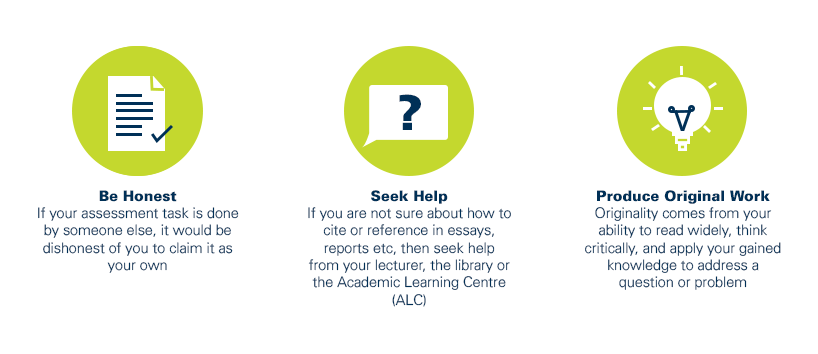
As a CQUniversity student you are expected to act honestly in all aspects of your academic work.
Any assessable work undertaken or submitted for review or assessment must be your own work. Assessable work is any type of work you do to meet the assessment requirements in the unit, including draft work submitted for review and feedback and final work to be assessed.
When you use the ideas, words or data of others in your assessment, you must thoroughly and clearly acknowledge the source of this information by using the correct referencing style for your unit. Using others’ work without proper acknowledgement may be considered a form of intellectual dishonesty.
Participating honestly, respectfully, responsibly, and fairly in your university study ensures the CQUniversity qualification you earn will be valued as a true indication of your individual academic achievement and will continue to receive the respect and recognition it deserves.
As a student, you are responsible for reading and following CQUniversity’s policies, including the Student Academic Integrity Policy and Procedure. This policy sets out CQUniversity’s expectations of you to act with integrity, examples of academic integrity breaches to avoid, the processes used to address alleged breaches of academic integrity, and potential penalties.
What is a breach of academic integrity?
A breach of academic integrity includes but is not limited to plagiarism, self-plagiarism, collusion, cheating, contract cheating, and academic misconduct. The Student Academic Integrity Policy and Procedure defines what these terms mean and gives examples.
Why is academic integrity important?
A breach of academic integrity may result in one or more penalties, including suspension or even expulsion from the University. It can also have negative implications for student visas and future enrolment at CQUniversity or elsewhere. Students who engage in contract cheating also risk being blackmailed by contract cheating services.
Where can I get assistance?
For academic advice and guidance, the Academic Learning Centre (ALC) can support you in becoming confident in completing assessments with integrity and of high standard.
What can you do to act with integrity?