Overview
This unit will provide you with knowledge of navigational procedures applicable to light commercial aircraft operations. You will learn the aeronautical knowledge requirements of the Civil Aviation Safety Authority Commercial Pilot Licence Navigation Syllabus. You will learn the form of the Earth including latitude and longitude, magnetic and true poles, and directions. By reference to an aeronautical chart and the various chart projections, you will learn how to navigate an airplane. You will learn to convert between Coordinated Universal Time (UTC) and local mean and standard times. You will also be able to use a navigation computer to convert between various airspeeds and ground speeds and perform critical point calculations. Students who have completed the corresponding external CASA exam and want to be exempt from Assessment 1 (Quizzes) should contact the Unit Coordinator.
Details
Pre-requisites or Co-requisites
Students must meet all requisites: 1. AVAT11002 Basic Aeronautical Knowledge OR (AVAT11012 Aviation Practice AND AVAT11013 Introduction to Aviation); AND 2. AVAT11005 Flight Fundamentals; AND 3. AVAT11010 Aviation Safety Fundamentals OR AVAT11007 Flight Planning, Performance and Operation.
Important note: Students enrolled in a subsequent unit who failed their pre-requisite unit, should drop the subsequent unit before the census date or within 10 working days of Fail grade notification. Students who do not drop the unit in this timeframe cannot later drop the unit without academic and financial liability. See details in the Assessment Policy and Procedure (Higher Education Coursework).
Offerings For Term 1 - 2026
Attendance Requirements
All on-campus students are expected to attend scheduled classes - in some units, these classes are identified as a mandatory (pass/fail) component and attendance is compulsory. International students, on a student visa, must maintain a full time study load and meet both attendance and academic progress requirements in each study period (satisfactory attendance for International students is defined as maintaining at least an 80% attendance record).
Recommended Student Time Commitment
Each 6-credit Undergraduate unit at CQUniversity requires an overall time commitment of an average of 12.5 hours of study per week, making a total of 150 hours for the unit.
Class Timetable
Assessment Overview
Assessment Grading
This is a graded unit: your overall grade will be calculated from the marks or grades for each assessment task, based on the relative weightings shown in the table above. You must obtain an overall mark for the unit of at least 50%, or an overall grade of 'pass' in order to pass the unit. If any 'pass/fail' tasks are shown in the table above they must also be completed successfully ('pass' grade). You must also meet any minimum mark requirements specified for a particular assessment task, as detailed in the 'assessment task' section (note that in some instances, the minimum mark for a task may be greater than 50%). Consult the University's Grades and Results Policy for more details of interim results and final grades.
All University policies are available on the CQUniversity Policy site.
You may wish to view these policies:
- Grades and Results Policy
- Assessment Policy and Procedure (Higher Education Coursework)
- Review of Grade Procedure
- Student Academic Integrity Policy and Procedure
- Academic Progression Policy and Procedure
- Student Refund and Credit Balance Policy and Procedure
- Complaints Policy and Procedure
- Information and Communications Technology Acceptable Use Policy and Procedure
This list is not an exhaustive list of all University policies. The full list of University policies are available on the CQUniversity Policy site.
Feedback, Recommendations and Responses
Every unit is reviewed for enhancement each year. At the most recent review, the following staff and student feedback items were identified and recommendations were made.
Feedback from SUTE
Break down large navigation problems step by step with each step objective labelled.
Detailed procedural methods should be demonstrated for solving complex navigational problems.
Feedback from SUTE
Assessment feedback was insufficient.
Update the assessment rubric and feedback format to make it easier to provide detailed feedback.
- Demonstrate competencies on the Navigation components of CPL (Commercial Pilot License); as detailed in Schedule 3 of Part 61, MOS (Manual of Standards) of CASR (Civil Aviation Safety Regulations)
- Plan and plot a three-leg navigation exercise on a World Aeronautical Chart and provide the flight plan details including various airspeeds and ground speeds for the exercise to be completed in flight
- Describe the various global navigation chart projections and their use on national flights
- Convert time zones to Coordinated Universal Time (UTC), Local Mean Time (LMT), and Local Sidereal Time (LST)
- Explain the operation and limitations of radio navigation aids
- Discuss the altimetry procedures used on national flights
- Calculate critical points for normal and asymmetric operations.
N/A
Alignment of Assessment Tasks to Learning Outcomes
| Assessment Tasks | Learning Outcomes | ||||||
|---|---|---|---|---|---|---|---|
| 1 | 2 | 3 | 4 | 5 | 6 | 7 | |
| 1 - Online Test - 40% | |||||||
| 2 - Examination - 60% | |||||||
Alignment of Graduate Attributes to Learning Outcomes
| Graduate Attributes | Learning Outcomes | ||||||
|---|---|---|---|---|---|---|---|
| 1 | 2 | 3 | 4 | 5 | 6 | 7 | |
| 1 - Communication | |||||||
| 2 - Problem Solving | |||||||
| 3 - Critical Thinking | |||||||
| 4 - Information Literacy | |||||||
| 5 - Team Work | |||||||
| 6 - Information Technology Competence | |||||||
| 7 - Cross Cultural Competence | |||||||
| 8 - Ethical practice | |||||||
| 9 - Social Innovation | |||||||
| 10 - First Nations Knowledges | |||||||
| 11 - Aboriginal and Torres Strait Islander Cultures | |||||||
Textbooks
Navigation for the Private & Commercial Pilot Licences
- Edition: Reprinted 2016 (2016)
- Authors: Robson D.
- Aviation Theory Centre Pty Ltd
- Brisbane Brisbane , Qld , Australia
- ISBN: 978-875537-85-3
- Binding: Other
IT Resources
- CQUniversity Student Email
- Internet
- Unit Website (Moodle)
No referencing style set.
a.ranganathan@cqu.edu.au
Week 1
Begin Date: 09 Mar 2026Module/Topic
Fundamentals of Air Navigation
Chapter
1. Fundamentals of Air Navigation
Events and Submissions/Topic
Week 2
Begin Date: 16 Mar 2026Module/Topic
Time
Chapter
2. Time
Events and Submissions/Topic
Quiz 1
Week 3
Begin Date: 23 Mar 2026Module/Topic
Charts
Chapter
3. Charts & Publications
Events and Submissions/Topic
Week 4
Begin Date: 30 Mar 2026Module/Topic
Publications
Chapter
3. Charts & Publications
Events and Submissions/Topic
Quiz 2
Week 5
Begin Date: 06 Apr 2026Module/Topic
Navigation Computations - Part 1
Chapter
4. Computations
Events and Submissions/Topic
Week 6
Begin Date: 13 Apr 2026Module/Topic
Navigation Computations - Part 2
Chapter
4. Computations
Events and Submissions/Topic
Quiz 3
Vacation Week
Begin Date: 20 Apr 2026Module/Topic
Chapter
Events and Submissions/Topic
Week 7
Begin Date: 27 Apr 2026Module/Topic
Visual Navigation
Chapter
5. Visual Navigation Procedures
Events and Submissions/Topic
Week 8
Begin Date: 04 May 2026Module/Topic
NDB
Chapter
6. NDB and ADF
Events and Submissions/Topic
Quiz 4
Week 9
Begin Date: 11 May 2026Module/Topic
ADF
Chapter
6. NDB and ADF
Events and Submissions/Topic
Week 10
Begin Date: 18 May 2026Module/Topic
VOR and DME
Chapter
7. VOR
8. DME
Events and Submissions/Topic
Week 11
Begin Date: 25 May 2026Module/Topic
GNSS
Chapter
9. GPS Navigation
Events and Submissions/Topic
Week 12
Begin Date: 01 Jun 2026Module/Topic
Revision
Chapter
Revision (all Chapters)
Events and Submissions/Topic
Exam Week
Begin Date: 08 Jun 2026Module/Topic
Chapter
Events and Submissions/Topic
Vacation/Exam Week
Begin Date: 15 Jun 2026Module/Topic
Chapter
Events and Submissions/Topic
1 Online Test
1. Four quizzes (fortnightly) will be conducted, each worth 10 marks (weightage 10%). Each quiz consists of multiple-choice and short-calculation questions.
2. Schedule of the Quizzes: Quiz 1 (in Week 2); Quiz 2 (in Week 4); Quiz 3 (in Week 6); and Quiz 4 (in Week 8).
3. The syllabus will cover the concepts that are taught during the lectures of the preceding two weeks. Reviewing the lecture recordings before attempting the quiz is strongly recommended.
4. The duration of the test is one hour. If you experience issues with the online quizzes, notify the unit coordinator as soon as possible (through email a.ranganathan@cqu.edu.au).
5. The details of the dates and timings of the fortnightly quizzes will be promulgated in Moodle in Week 1 (after the first lecture).
6. Please ensure your availability for these four quizzes. Only one attempt is allowed. Absentees will not be given another chance.
7. Total marks: 40 (10 for each quiz); Weightage 40% for overall grade.
8. Return of Results/Feedback. The debrief for every quiz will be completed during the following week of that specific quiz. For example, the debrief of Quiz 1 will be completed during the Week 3 lectures and tutorial.
NOTE: This assessment is exempted from the 72-hour submission grace period and must be completed by the stated submission date/time.
NOTE: AI ASSESSMENT SCALE - NO AI. You must not use Al at any point during the assessment. You must demonstrate your core skills and knowledge.
The Learning Outcome Assessed: Demonstrate competencies on the Navigation components of CPL (Commercial Pilot License); as detailed in Schedule 3 of Part 61, MOS (Manual of Standards) of CASR (Civil Aviation Safety Regulations).
The Quizzes will be MCQ type for assessment of the understanding of the concepts and applications of navigational procedures taught during the lectures.
Correct numerical answer or selection of the best answer among the available multiple-choice options.
- Demonstrate competencies on the Navigation components of CPL (Commercial Pilot License); as detailed in Schedule 3 of Part 61, MOS (Manual of Standards) of CASR (Civil Aviation Safety Regulations)
- Describe the various global navigation chart projections and their use on national flights
- Convert time zones to Coordinated Universal Time (UTC), Local Mean Time (LMT), and Local Sidereal Time (LST)
- Discuss the altimetry procedures used on national flights
- Calculate critical points for normal and asymmetric operations.
Examination
Calculator - non-programmable, no text retrieval, silent only
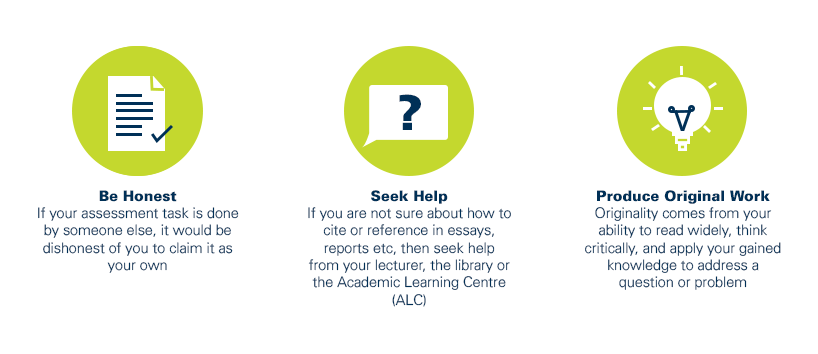
As a CQUniversity student you are expected to act honestly in all aspects of your academic work.
Any assessable work undertaken or submitted for review or assessment must be your own work. Assessable work is any type of work you do to meet the assessment requirements in the unit, including draft work submitted for review and feedback and final work to be assessed.
When you use the ideas, words or data of others in your assessment, you must thoroughly and clearly acknowledge the source of this information by using the correct referencing style for your unit. Using others’ work without proper acknowledgement may be considered a form of intellectual dishonesty.
Participating honestly, respectfully, responsibly, and fairly in your university study ensures the CQUniversity qualification you earn will be valued as a true indication of your individual academic achievement and will continue to receive the respect and recognition it deserves.
As a student, you are responsible for reading and following CQUniversity’s policies, including the Student Academic Integrity Policy and Procedure. This policy sets out CQUniversity’s expectations of you to act with integrity, examples of academic integrity breaches to avoid, the processes used to address alleged breaches of academic integrity, and potential penalties.
What is a breach of academic integrity?
A breach of academic integrity includes but is not limited to plagiarism, self-plagiarism, collusion, cheating, contract cheating, and academic misconduct. The Student Academic Integrity Policy and Procedure defines what these terms mean and gives examples.
Why is academic integrity important?
A breach of academic integrity may result in one or more penalties, including suspension or even expulsion from the University. It can also have negative implications for student visas and future enrolment at CQUniversity or elsewhere. Students who engage in contract cheating also risk being blackmailed by contract cheating services.
Where can I get assistance?
For academic advice and guidance, the Academic Learning Centre (ALC) can support you in becoming confident in completing assessments with integrity and of high standard.
What can you do to act with integrity?