Overview
In this unit you will explore fundamental pathophysiology (alteration in function as seen in disease) of the cardiovascular, respiratory, endocrine, nervous, haematological systems, and the pharmacology of drugs used in the treatment and management of disease. Throughout the unit, there is an integrated focus on body systems contrasting normal and abnormal, and how disease states may be managed therapeutically. The unit concentrates on common major diseases of these body systems which facilitates a comprehensive study of the pathophysiology encountered in these disease states, as well as gaining an understanding of normal physiology. This is complemented by the study of the treatment and management of these diseases, whilst also focusing on the professional and legal responsibilities that underpin the use of medicines in the treatment of human disease.
Details
Pre-requisites or Co-requisites
Pre-requisite:BIOH11005 Introductory Anatomy and Physiology
Important note: Students enrolled in a subsequent unit who failed their pre-requisite unit, should drop the subsequent unit before the census date or within 10 working days of Fail grade notification. Students who do not drop the unit in this timeframe cannot later drop the unit without academic and financial liability. See details in the Assessment Policy and Procedure (Higher Education Coursework).
Offerings For Term 2 - 2021
Attendance Requirements
All on-campus students are expected to attend scheduled classes - in some units, these classes are identified as a mandatory (pass/fail) component and attendance is compulsory. International students, on a student visa, must maintain a full time study load and meet both attendance and academic progress requirements in each study period (satisfactory attendance for International students is defined as maintaining at least an 80% attendance record).
Recommended Student Time Commitment
Each 6-credit Undergraduate unit at CQUniversity requires an overall time commitment of an average of 12.5 hours of study per week, making a total of 150 hours for the unit.
Class Timetable
Assessment Overview
Assessment Grading
This is a graded unit: your overall grade will be calculated from the marks or grades for each assessment task, based on the relative weightings shown in the table above. You must obtain an overall mark for the unit of at least 50%, or an overall grade of 'pass' in order to pass the unit. If any 'pass/fail' tasks are shown in the table above they must also be completed successfully ('pass' grade). You must also meet any minimum mark requirements specified for a particular assessment task, as detailed in the 'assessment task' section (note that in some instances, the minimum mark for a task may be greater than 50%). Consult the University's Grades and Results Policy for more details of interim results and final grades.
All University policies are available on the CQUniversity Policy site.
You may wish to view these policies:
- Grades and Results Policy
- Assessment Policy and Procedure (Higher Education Coursework)
- Review of Grade Procedure
- Student Academic Integrity Policy and Procedure
- Monitoring Academic Progress (MAP) Policy and Procedure - Domestic Students
- Monitoring Academic Progress (MAP) Policy and Procedure - International Students
- Student Refund and Credit Balance Policy and Procedure
- Student Feedback - Compliments and Complaints Policy and Procedure
- Information and Communications Technology Acceptable Use Policy and Procedure
This list is not an exhaustive list of all University policies. The full list of University policies are available on the CQUniversity Policy site.
Feedback, Recommendations and Responses
Every unit is reviewed for enhancement each year. At the most recent review, the following staff and student feedback items were identified and recommendations were made.
Feedback from Have Your Say and student communication
Having a registered nurse (RN) conduct one of the weekly tutorials helped the students to contextualise their learning by providing real world case studies and anecdotes.
Continue to have a registered nurse deliver content in the unit to help the students with application of weekly content to nursing practice.
Feedback from Have Your Say
Students commented that there is a lot of content to remember for a closed book exam that covers all 12 weeks, especially when doing a placement unit at the same time.
Consider splitting the assessment of content so that concepts that underpin the pathophysiology and pharmacology principles are assessed earlier in term and the application of these principles to specific disease states and treatments is at the end of term.
Feedback from Have Your Say and Self-reflection
Students enjoyed the combination of assessment tasks, particularly the case study which allowed them to focus on a specific disease.
More case studies will be developed for future terms to expand the variety of disease topics for students to select from for their assessment.
- Apply knowledge of the cardiovascular, respiratory, endocrine, nervous and haematological systems to discuss pathophysiological processes, signs and symptoms of various relevant diseases
- Evaluate appropriate pharmacological interventions in disease processes of the cardiovascular, respiratory, endocrine, nervous and haematological systems
- Explain basic pharmacological principles; pharmacokinetics, pharmacodynamics and pharmacotherapeutics
- Outline the nurse’s professional and legal responsibilities in the quality use of medicines.
Alignment of Assessment Tasks to Learning Outcomes
| Assessment Tasks | Learning Outcomes | |||
|---|---|---|---|---|
| 1 | 2 | 3 | 4 | |
| 1 - Online Quiz(zes) - 20% | ||||
| 2 - Case Study - 30% | ||||
| 3 - Examination - 50% | ||||
Alignment of Graduate Attributes to Learning Outcomes
| Graduate Attributes | Learning Outcomes | |||
|---|---|---|---|---|
| 1 | 2 | 3 | 4 | |
| 1 - Communication | ||||
| 2 - Problem Solving | ||||
| 3 - Critical Thinking | ||||
| 4 - Information Literacy | ||||
| 5 - Team Work | ||||
| 6 - Information Technology Competence | ||||
| 7 - Cross Cultural Competence | ||||
| 8 - Ethical practice | ||||
| 9 - Social Innovation | ||||
| 10 - First Nations Knowledges | ||||
| 11 - Aboriginal and Torres Strait Islander Cultures | ||||
Alignment of Assessment Tasks to Graduate Attributes
| Assessment Tasks | Graduate Attributes | ||||||||||
|---|---|---|---|---|---|---|---|---|---|---|---|
| 1 | 2 | 3 | 4 | 5 | 6 | 7 | 8 | 9 | 10 | 11 | |
| 1 - Online Quiz(zes) - 20% | |||||||||||
| 2 - Case Study - 30% | |||||||||||
| 3 - Examination - 50% | |||||||||||
Textbooks
Pathophysiology and Pharmacology for Nurses (Volume 1 and 2 - Custom Value Pack)
- Edition: 1st (2021)
- Authors: Shane Bullock, Elizabeth Manias, Majella Hales, Elaine Marieb, Katja Hoehn, Suzanne Keller, Michael Adams, Matthew Sorenson
- Pearson
- Australia
- ISBN: 9780655798767
- Binding: Paperback
IT Resources
- CQUniversity Student Email
- Internet
- Unit Website (Moodle)
All submissions for this unit must use the referencing style: American Psychological Association 7th Edition (APA 7th edition)
For further information, see the Assessment Tasks.
r.clapperton@cqu.edu.au
c.torres@cqu.edu.au
Week 1
Begin Date: 12 Jul 2021Module/Topic
Introduction to Pathophysiology and Pharmacology
Chapter
Module 1: Introduction to Pathophysiology and Pharmacology.
Chapters 1 to 8.
Events and Submissions/Topic
Week 2
Begin Date: 19 Jul 2021Module/Topic
Pharmacology Principles
Chapter
Module 2: Pharmacology Principles.
Chapters 9 to 14.
Events and Submissions/Topic
Week 3
Begin Date: 26 Jul 2021Module/Topic
Inflammation, Anti-Inflammatory Medications and Analgesics.
Chapter
Module 3: Analgesics and Anti-Inflammatory.
Chapters 15 to 18.
Events and Submissions/Topic
Online Quiz 1: opens Friday, 5:00pm AEST (QLD).
Week 4
Begin Date: 02 Aug 2021Module/Topic
Haematology Pathophysiology and Pharmacology
Chapter
Module 4: Haematology Pathophysiology and Pharmacology.
Chapters 19 to 21.
Events and Submissions/Topic
Case Study Topic Selection: closes Monday, 5:00pm AEST (QLD)
Online Quiz 1: closes Friday, 5:00pm AEST (QLD).
Week 5
Begin Date: 09 Aug 2021Module/Topic
Cardiovascular Pathophysiology and Pharmacology - Part 1
Chapter
Modules 5 and 6: Cardiovascular Pathophysiology and Pharmacology.
Chapters 22 to 27.
Events and Submissions/Topic
Vacation Week
Begin Date: 16 Aug 2021Module/Topic
Chapter
Events and Submissions/Topic
Week 6
Begin Date: 23 Aug 2021Module/Topic
Cardiovascular Pathophysiology and Pharmacology - Part 2
Chapter
Modules 5 and 6: Cardiovascular Pathophysiology and Pharmacology.
Chapters 22, 24, 25, 26, 28, 29 and 30.
Events and Submissions/Topic
Case Study Online Component: closes Monday, 5:00pm AEST (QLD)
Week 7
Begin Date: 30 Aug 2021Module/Topic
Respiratory Pathophysiology and Pharmacology - Part 1
Chapter
Modules 7 and 8: Respiratory Pathophysiology and Associated Pharmacology.
Chapters 31, 32, 34 and 35.
Events and Submissions/Topic
Week 8
Begin Date: 06 Sep 2021Module/Topic
Respiratory Pathophysiology and Pharmacology - Part 2
Chapter
Modules 7 and 8: Respiratory Pathophysiology and Associated Pharmacology.
Chapters 33, 34 and 36.
Events and Submissions/Topic
Week 9
Begin Date: 13 Sep 2021Module/Topic
Neurological Pathophysiology and Pharmacology - Part 1
Chapter
Modules 11 and 12: Neurological Pathophysiology and Associated Pharmacology.
Chapters 45, 46, 47, 48, 50 and 55.
Events and Submissions/Topic
Week 10
Begin Date: 20 Sep 2021Module/Topic
Neurological Pathophysiology and Pharmacology - Part 2
Chapter
Modules 11 and 12: Neurological Pathophysiology and Associated Pharmacology.
Chapters 54, 56 and 61.
Events and Submissions/Topic
Week 11
Begin Date: 27 Sep 2021Module/Topic
Endocrine Pathophysiology and Pharmacology - Part 1
Chapter
Modules 9 and 10: Endocrine Pathophysiology and Associated Pharmacology.
Chapters 37, 38, 39, 40 and 43.
Events and Submissions/Topic
Online Quiz 2: opens Friday, 5:00pm AEST (QLD).
Week 12
Begin Date: 04 Oct 2021Module/Topic
Endocrine Pathophysiology and Pharmacology - Part 2
Chapter
Modules 9 and 10: Endocrine Pathophysiology and Associated Pharmacology.
Chapters 38, 41 and 44.
Events and Submissions/Topic
Online Quiz 2: closes Friday, 5:00pm AEST (QLD).
Review/Exam Week
Begin Date: 11 Oct 2021Module/Topic
Chapter
Events and Submissions/Topic
Invigilated Exam: held during the university examination period at your selected exam centre. Date to be confirmed during the term.
Exam Week
Begin Date: 18 Oct 2021Module/Topic
Chapter
Events and Submissions/Topic
The unit coordinator is Ms Roslyn Clapperton.
The best way to contact the unit coordinator is:
Email: r.clapperton@cqu.edu.au
Phone: 07 4930 9603
The lectures in this unit will be pre-recorded and primarily delivered by Roslyn Clapperton and Dr Debra Carlson. These pre-recorded lectures will be released progressively throughout the term on the Moodle site. It is expected that students will review the weekly content, including the assigned readings and pre-recorded lectures prior to attending the tutorials.
Roslyn Clapperton has completed a Bachelor of Science (Sports and Exercise) and a Bachelor of Science (Honours) in exercise physiology. Roslyn is currently in the final stages of a Doctorate of Philosophy on skeletal muscle capillarisation in patients with peripheral arterial disease. Dr Debra Carlson is a remedial therapist with a Bachelor of Health Science, Bachelor of Science (Honours) majoring in physiology, conducted cardiovascular research for her PhD in Exercise Physiology and has a Graduate Certificate in Tertiary and Adult Education.
As per Australian educational standards, you are expected to commit 150 hours of engagement to your study of this unit. A recommended breakdown of study hours is given below:
- 2-3 hours per week watching recorded lectures and revising the content through study notes.
- 2-3 hours per week attending the weekly tutorials and reflecting on your answers to the weekly study questions.
- 2-3 hours per week revising content from this week and previous weeks.
- 2-3 hours per week preparing for your assessments or studying for online quizzes and final exam.
1 Online Quiz(zes)
The purpose of the online quizzes is to challenge your knowledge and understanding of the content as you progress through the unit. The two quizzes will be available for a period of one (1) week and must be completed by the closing date listed in the table below.
- There will be two separate online quizzes to assess your knowledge of the unit material.
- You will be allowed two attempts at each quiz. The highest grade you achieve will serve as your final mark for that quiz.
- Your mark from quiz one (1) will contribute 5% and quiz two (2) will contribute 15% to your final grade (2 quizzes 5% + 15% = 20%).
- There is a minimum requirement for the assessment task: you need to achieve 50% of the combined marks for the two quizzes.
- In the absence of an approved extension, there will be no opportunity to complete the task after the assigned date.
| Quiz Number | Weeks Covered | Time / Date the Quiz Opens | Time / Date the Quiz Closes |
| 1 | Week 1, 2 and 3. | Week 3, Friday, 5:00pm AEST (QLD) | Week 4, Friday, 5:00pm AEST (QLD) |
| 2 | Weeks 4 to 11 inclusive. | Week 11, Friday, 5:00pm AEST (QLD) | Week 12, Friday, 5:00pm AEST (QLD) |
2
Other
All of the quizzes will be available for a period of one (1) week and must be completed by the closing date listed in the table and on the Moodle site.
Marks will be available upon completing the assessment task.
Questions will be automatically marked as correct or incorrect. The maximum mark than can be accumulated from the two online quizzes equals 20% of the total unit marks.
- Apply knowledge of the cardiovascular, respiratory, endocrine, nervous and haematological systems to discuss pathophysiological processes, signs and symptoms of various relevant diseases
- Explain basic pharmacological principles; pharmacokinetics, pharmacodynamics and pharmacotherapeutics
- Communication
- Problem Solving
- Critical Thinking
- Information Technology Competence
- Cross Cultural Competence
- Ethical practice
2 Case Study
There are two parts to this assessment task. Part one: you will be provided with an authentic clinical case study on the Moodle site in the form of a quiz. You are required to complete the quiz and gather information about the case study to use in the written component of this assessment. Part two: written response to four questions related to your case study.
The following information will be made available to you throughout the case study: clinical presentation, patient history, physical examination, pathophysiology, diagnosis and treatment. As you progress through the case study you will be required to answer questions relating to the information provided in the case study to demonstrate your understanding of the underlying pathophysiology and pharmacology of the case study.
This quiz component is worth 5% of the marks allocated for this assessment.
You are then required to complete a written response to four questions related to your case study, in which you will demonstrate your understanding of the links between pathophysiology, risk factors, clinical manifestations, diagnosis and treatment. This assessment requires you to develop the level of understanding required to give evidence based advice, within your scope of practice, to manage / educate your patients and close the gaps in healthcare.
This written component is worth 25% of the marks allocated for this assessment.
Guidelines to complete the written response and the marking rubric will be available on the Moodle site.
Week 9 Monday (13 Sept 2021) 5:00 pm AEST
The online case study quiz answers are automatically saved in Moodle. The written response is to be submitted online.
Week 11 Friday (1 Oct 2021)
The assessment marks and feedback will be available by close of business on Friday of Week 11.
The case study assessment equals 30% of your total unit marks.
Your submission will be assessed according to a detailed marking rubric, which will be available on the BIOH12011 Moodle site.
Please note that all late submissions will be penalised 5% per calendar day unless an application for an extension has been approved.
All extension requests must be made through the extension request system on Moodle with the appropriate documentation. Assessments that have been submitted more than 20 calendar days late will not be marked unless an extension request has been approved.
- Apply knowledge of the cardiovascular, respiratory, endocrine, nervous and haematological systems to discuss pathophysiological processes, signs and symptoms of various relevant diseases
- Evaluate appropriate pharmacological interventions in disease processes of the cardiovascular, respiratory, endocrine, nervous and haematological systems
- Outline the nurse’s professional and legal responsibilities in the quality use of medicines.
- Communication
- Problem Solving
- Critical Thinking
- Cross Cultural Competence
- Ethical practice
Examination
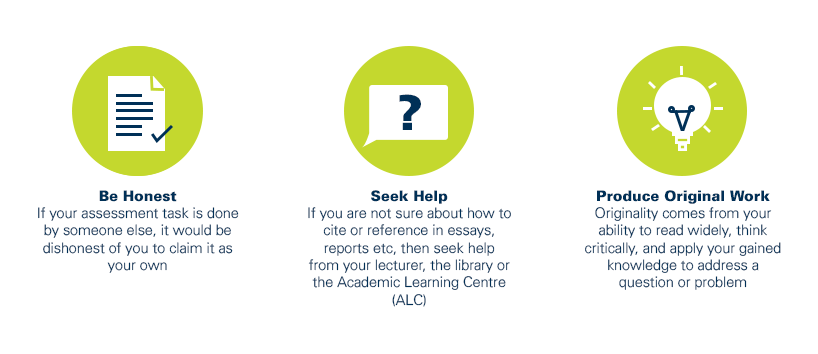
As a CQUniversity student you are expected to act honestly in all aspects of your academic work.
Any assessable work undertaken or submitted for review or assessment must be your own work. Assessable work is any type of work you do to meet the assessment requirements in the unit, including draft work submitted for review and feedback and final work to be assessed.
When you use the ideas, words or data of others in your assessment, you must thoroughly and clearly acknowledge the source of this information by using the correct referencing style for your unit. Using others’ work without proper acknowledgement may be considered a form of intellectual dishonesty.
Participating honestly, respectfully, responsibly, and fairly in your university study ensures the CQUniversity qualification you earn will be valued as a true indication of your individual academic achievement and will continue to receive the respect and recognition it deserves.
As a student, you are responsible for reading and following CQUniversity’s policies, including the Student Academic Integrity Policy and Procedure. This policy sets out CQUniversity’s expectations of you to act with integrity, examples of academic integrity breaches to avoid, the processes used to address alleged breaches of academic integrity, and potential penalties.
What is a breach of academic integrity?
A breach of academic integrity includes but is not limited to plagiarism, self-plagiarism, collusion, cheating, contract cheating, and academic misconduct. The Student Academic Integrity Policy and Procedure defines what these terms mean and gives examples.
Why is academic integrity important?
A breach of academic integrity may result in one or more penalties, including suspension or even expulsion from the University. It can also have negative implications for student visas and future enrolment at CQUniversity or elsewhere. Students who engage in contract cheating also risk being blackmailed by contract cheating services.
Where can I get assistance?
For academic advice and guidance, the Academic Learning Centre (ALC) can support you in becoming confident in completing assessments with integrity and of high standard.
What can you do to act with integrity?