Overview
In this unit you will explore fundamental anatomy, physiology and pathophysiology alteration in function as seen in disease of the cardiovascular, respiratory, endocrine, nervous, and haematological systems, along with the pharmacology of drugs used in the treatment and management of a health alteration within these systems. Throughout the unit, there is an integrated focus on body systems contrasting normal and abnormal, and how changes in health status may be managed therapeutically. The unit concentrates on common major acute and chronic health alterations of these body systems which facilitates a comprehensive study of the pathophysiology encountered in these states, as well as gaining an understanding of normal physiology. This is complemented by the study of the treatment and management of these health alterations. The unit is scheduled to complement Nursing Practice in Context 1, where the nursing responsibilities and care of consumers experiencing these health alterations are explored.
Details
Pre-requisites or Co-requisites
Pre-requisites: Enrolment in Master of Nursing (Graduate Entry).
Important note: Students enrolled in a subsequent unit who failed their pre-requisite unit, should drop the subsequent unit before the census date or within 10 working days of Fail grade notification. Students who do not drop the unit in this timeframe cannot later drop the unit without academic and financial liability. See details in the Assessment Policy and Procedure (Higher Education Coursework).
Offerings For Term 3 - 2026
Attendance Requirements
All on-campus students are expected to attend scheduled classes - in some units, these classes are identified as a mandatory (pass/fail) component and attendance is compulsory. International students, on a student visa, must maintain a full time study load and meet both attendance and academic progress requirements in each study period (satisfactory attendance for International students is defined as maintaining at least an 80% attendance record).
Recommended Student Time Commitment
Each 6-credit Postgraduate unit at CQUniversity requires an overall time commitment of an average of 12.5 hours of study per week, making a total of 150 hours for the unit.
Class Timetable
Assessment Overview
| Assessment Task | Part Weighting (% of assessment) |
Assessment Security Level | Gen AI Guidance Levels |
|---|---|---|---|
| 1. ASSESSMENT 1 (20% of unit · 1 part ) | |||
| Part 1 – Assessment 1: Online Quiz (Online Quiz(zes)) | 100% of 20% | Low | No Gen AI Use |
| 2. ASSESSMENT 2 (30% of unit · 1 part ) | |||
| Part 1 – Assessment 2: Case Study (Case Study) | 100% of 30% | Low | No Gen AI Use |
| 3. ASSESSMENT 3 (50% of unit · 1 part ) | |||
| Part 1 – Assessment 3: Online Test (Online Test) | 100% of 50% | Low | No Gen AI Use |
Assessment Grading
This is a graded unit: your overall grade will be calculated from the marks or grades for each assessment task, based on the relative weightings shown in the table above. You must obtain an overall mark for the unit of at least 50%, or an overall grade of 'pass' in order to pass the unit. If any 'pass/fail' tasks are shown in the table above they must also be completed successfully ('pass' grade). You must also meet any minimum mark requirements specified for a particular assessment task, as detailed in the 'assessment task' section (note that in some instances, the minimum mark for a task may be greater than 50%). Consult the University's Grades and Results Policy for more details of interim results and final grades.
All University policies are available on the CQUniversity Policy site.
You may wish to view these policies:
- Grades and Results Policy
- Assessment Policy and Procedure (Higher Education Coursework)
- Review of Grade Procedure
- Student Academic Integrity Policy and Procedure
- Academic Progression Policy and Procedure
- Student Refund and Credit Balance Policy and Procedure
- Complaints Policy and Procedure
- Information and Communications Technology Acceptable Use Policy and Procedure
This list is not an exhaustive list of all University policies. The full list of University policies are available on the CQUniversity Policy site.
Feedback, Recommendations and Responses
Every unit is reviewed for enhancement each year. At the most recent review, the following staff and student feedback items were identified and recommendations were made.
Feedback from SUTE
Students requested more baseline anatomy and physiology be incorporated into the unit coursework.
Recommendation to spend additional time in the lecture series to draw parallel to normal A & P to allow a more comprehensive understanding of pathophysiological changes.
Feedback from SUTE
Students enjoy the clinical application of the case study assessment.
Continue to implement the case study assessment, ensuring strong alignment between assessment, weekly content and learning objectives.
Feedback from SUTE
Additional tutorial time requested to go through Q & A review worksheets.
The Q & A review documents resource was provided as an optional study resource for students. Perhaps in future, the tutorial timeslot could be extended to allow for a weekly concept deep-dive as well as discussion of the clinical scenarios presented in the Q & A recourse to enhance learning.
- Synthesise knowledge of the cardiovascular, respiratory, endocrine, nervous and haematological systems to interpret pathophysiological processes, signs and symptoms of various relevant health alterations.
- Evaluate appropriate pharmacological interventions in disease processes of the cardiovascular, respiratory, endocrine, nervous and haematological systems.
- Interpret and apply pharmacological principles (pharmacokinetics, pharmacodynamics and pharmacotherapeutics) to appropriate pathophysiological conditions.
This unit is part of the Master of Nursing (graduate entry) course which will be accredited by the Australian Nursing and Midwifery Accreditation Council.
Alignment of Assessment Tasks to Learning Outcomes
| Assessment Tasks | Learning Outcomes | ||
|---|---|---|---|
| 1 | 2 | 3 | |
|
1.
Assessment 1
(20% of unit)
Part 1 -
Online Quiz(zes)
|
|||
|
2.
Assessment 2
(30% of unit)
Part 1 -
Case Study
|
|||
|
3.
Assessment 3
(50% of unit)
Part 1 -
Online Test
|
|||
Alignment of Graduate Attributes to Learning Outcomes
| Graduate Attributes | Learning Outcomes | ||
|---|---|---|---|
| 1 | 2 | 3 | |
| 1 - Knowledge | |||
| 2 - Communication | |||
| 3 - Cognitive, technical and creative skills | |||
| 4 - Research | |||
| 5 - Self-management | |||
| 6 - Ethical and Professional Responsibility | |||
| 7 - Leadership | |||
| 8 - First Nations Knowledges | |||
| 9 - Aboriginal and Torres Strait Islander Cultures | |||
Textbooks
Pathophysiology and Pharmacology for Nurses 1
- Edition: 1st (2021)
- Authors: Debra Carlson and Roslyn Clapperton (from Shane Bullock, Elizabeth Manias, Majella Hales, Elaine Marieb, Katja Hoehn, Suzanne Keller, Michael Adams and Matthew Sorenson)
- Pearson
- Melbourne Melbourne , VIC , Australia
- ISBN: 9780655704294
IT Resources
- CQUniversity Student Email
- Internet
- Unit Website (Moodle)
- Zoom
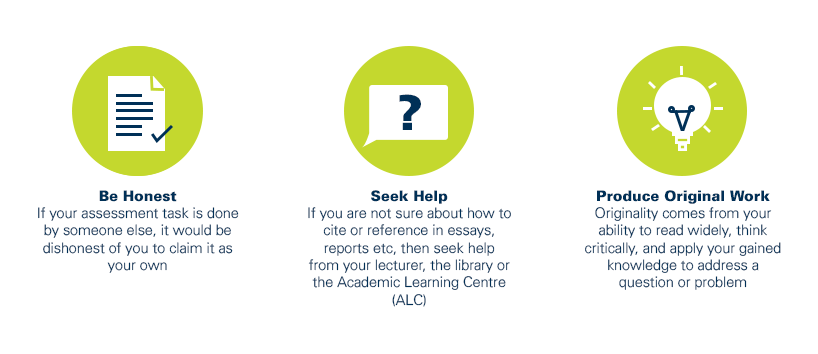
As a CQUniversity student you are expected to act honestly in all aspects of your academic work.
Any assessable work undertaken or submitted for review or assessment must be your own work. Assessable work is any type of work you do to meet the assessment requirements in the unit, including draft work submitted for review and feedback and final work to be assessed.
When you use the ideas, words or data of others in your assessment, you must thoroughly and clearly acknowledge the source of this information by using the correct referencing style for your unit. Using others’ work without proper acknowledgement may be considered a form of intellectual dishonesty.
Participating honestly, respectfully, responsibly, and fairly in your university study ensures the CQUniversity qualification you earn will be valued as a true indication of your individual academic achievement and will continue to receive the respect and recognition it deserves.
As a student, you are responsible for reading and following CQUniversity’s policies, including the Student Academic Integrity Policy and Procedure. This policy sets out CQUniversity’s expectations of you to act with integrity, examples of academic integrity breaches to avoid, the processes used to address alleged breaches of academic integrity, and potential penalties.
What is a breach of academic integrity?
A breach of academic integrity includes but is not limited to plagiarism, self-plagiarism, collusion, cheating, contract cheating, and academic misconduct. The Student Academic Integrity Policy and Procedure defines what these terms mean and gives examples.
Why is academic integrity important?
A breach of academic integrity may result in one or more penalties, including suspension or even expulsion from the University. It can also have negative implications for student visas and future enrolment at CQUniversity or elsewhere. Students who engage in contract cheating also risk being blackmailed by contract cheating services.
Where can I get assistance?
For academic advice and guidance, the Academic Learning Centre (ALC) can support you in becoming confident in completing assessments with integrity and of high standard.
What can you do to act with integrity?