Overview
In Animal and Plant Physiology you will study the basic functioning of plants and animals. You will explore a number of major themes in biology including the integral relationship between structure and function, the maintenance of homeostasis and the principles of evolution and adaptation. You will examine major functions of living organisms such as locomotion, nutrition, respiration, circulation and reproduction. In the practical component you will gain hands-on experience of relevant laboratory and field procedures.
Details
Pre-requisites or Co-requisites
Pre-requisite: BIOL11102 Life Science Laboratory
Important note: Students enrolled in a subsequent unit who failed their pre-requisite unit, should drop the subsequent unit before the census date or within 10 working days of Fail grade notification. Students who do not drop the unit in this timeframe cannot later drop the unit without academic and financial liability. See details in the Assessment Policy and Procedure (Higher Education Coursework).
Offerings For Term 1 - 2026
Attendance Requirements
All on-campus students are expected to attend scheduled classes - in some units, these classes are identified as a mandatory (pass/fail) component and attendance is compulsory. International students, on a student visa, must maintain a full time study load and meet both attendance and academic progress requirements in each study period (satisfactory attendance for International students is defined as maintaining at least an 80% attendance record).
Recommended Student Time Commitment
Each 6-credit Undergraduate unit at CQUniversity requires an overall time commitment of an average of 12.5 hours of study per week, making a total of 150 hours for the unit.
Class Timetable
Assessment Overview
Assessment Grading
This is a graded unit: your overall grade will be calculated from the marks or grades for each assessment task, based on the relative weightings shown in the table above. You must obtain an overall mark for the unit of at least 50%, or an overall grade of 'pass' in order to pass the unit. If any 'pass/fail' tasks are shown in the table above they must also be completed successfully ('pass' grade). You must also meet any minimum mark requirements specified for a particular assessment task, as detailed in the 'assessment task' section (note that in some instances, the minimum mark for a task may be greater than 50%). Consult the University's Grades and Results Policy for more details of interim results and final grades.
All University policies are available on the CQUniversity Policy site.
You may wish to view these policies:
- Grades and Results Policy
- Assessment Policy and Procedure (Higher Education Coursework)
- Review of Grade Procedure
- Student Academic Integrity Policy and Procedure
- Academic Progression Policy and Procedure
- Student Refund and Credit Balance Policy and Procedure
- Complaints Policy and Procedure
- Information and Communications Technology Acceptable Use Policy and Procedure
This list is not an exhaustive list of all University policies. The full list of University policies are available on the CQUniversity Policy site.
Feedback, Recommendations and Responses
Every unit is reviewed for enhancement each year. At the most recent review, the following staff and student feedback items were identified and recommendations were made.
Feedback from Staff reflections.
Review assessment rubrics to ensure they are fit for purpose.
All assessment rubrics should be reviewed before the next offering.
Feedback from Informal feedback and staff reflections.
ALC sessions were well received and had a positive impact.
Continue embedded ALC involvement.
Feedback from SUTE
Residential school was well received but improvements could be made to schedule and content.
Review residential school daily schedule and content of practical sessions.
Feedback from SUTE
Assessment was quiz heavy.
Consider further creative assessment types.
- Describe the function of the major organ systems in plants and animals
- Discuss the relationship between the structure and function of living organisms
- Apply the concepts of homeostasis to various organ systems in plants and animals
- Discuss the evolution and adaptation of plant and animal function in relation to the environment
- Perform a range of practical procedures in the laboratory and the field relating to the physiology of plants and animals.
Alignment of Assessment Tasks to Learning Outcomes
| Assessment Tasks | Learning Outcomes | ||||
|---|---|---|---|---|---|
| 1 | 2 | 3 | 4 | 5 | |
| 1 - Online Quiz(zes) - 20% | |||||
| 2 - Written Assessment - 30% | |||||
| 3 - Practical Assessment - 0% | |||||
| 4 - Online Quiz(zes) - 50% | |||||
Alignment of Graduate Attributes to Learning Outcomes
| Graduate Attributes | Learning Outcomes | ||||
|---|---|---|---|---|---|
| 1 | 2 | 3 | 4 | 5 | |
| 1 - Communication | |||||
| 2 - Problem Solving | |||||
| 3 - Critical Thinking | |||||
| 4 - Information Literacy | |||||
| 5 - Team Work | |||||
| 6 - Information Technology Competence | |||||
| 7 - Cross Cultural Competence | |||||
| 8 - Ethical practice | |||||
| 9 - Social Innovation | |||||
| 10 - First Nations Knowledges | |||||
| 11 - Aboriginal and Torres Strait Islander Cultures | |||||
Textbooks
Campbell Biology: Australian and New Zealand Version
- Edition: 12th edn (2021)
- Authors: Reece, J
- Pearson Australia
- Sydney Sydney , NSW , Australia
- ISBN: 9781488613715
- Binding: Hardcover
IT Resources
- CQUniversity Student Email
- Internet
- Unit Website (Moodle)
All submissions for this unit must use the referencing style: Harvard (author-date)
For further information, see the Assessment Tasks.
n.english@cqu.edu.au
Week 1
Begin Date: 09 Mar 2026Module/Topic
General Concepts in Functional Biology
Chapter
Study Guide Week 1
Events and Submissions/Topic
Week 2
Begin Date: 16 Mar 2026Module/Topic
Genetics and reproduction
Chapter
Study Guide Week 2
Events and Submissions/Topic
Confirm your choice of mythical creature with Unit Coordinator by email. Due Friday, 11:59PM.
Week 3
Begin Date: 23 Mar 2026Module/Topic
Development and dispersal
Chapter
Study Guide Week 3
Events and Submissions/Topic
Week 4
Begin Date: 30 Mar 2026Module/Topic
Energy and Metabolism
Chapter
Study Guide Week 4
Events and Submissions/Topic
Online Theory Quiz A closes (Monday 8AM AEST)
Week 5
Begin Date: 06 Apr 2026Module/Topic
Nutrition and digestion
Chapter
Study Guide Week 5
Events and Submissions/Topic
Week 6
Begin Date: 13 Apr 2026Module/Topic
No lectures this week
Chapter
Events and Submissions/Topic
Residential School/Block Practicals (Compulsory) in Rockhampton.
Online Theory Quiz B closes (Monday 8AM AEST)
Vacation Week
Begin Date: 20 Apr 2026Module/Topic
Chapter
Events and Submissions/Topic
Week 7
Begin Date: 27 Apr 2026Module/Topic
Nutrients, Water and Waste
Chapter
Study Guide Week 7
Events and Submissions/Topic
Week 8
Begin Date: 04 May 2026Module/Topic
Circulation and Gas Exchange
Chapter
Study Guide Week 8
Events and Submissions/Topic
Online Theory Quiz C closes (Monday 8AM AEST)
Week 9
Begin Date: 11 May 2026Module/Topic
Defence and Protection
Chapter
Study Guide Week 9
Events and Submissions/Topic
Week 10
Begin Date: 18 May 2026Module/Topic
Locomotion
Chapter
Study Guide Week 10
Events and Submissions/Topic
Online Theory Quiz D closes (Monday 8AM AEST)
Written Assessment: Mythical Creature Due: Week 10 Monday (18 May 2026) 11:59 pm AEST
Week 11
Begin Date: 25 May 2026Module/Topic
Signaling and Coordination
Chapter
Study Guide Week 11
Events and Submissions/Topic
Week 12
Begin Date: 01 Jun 2026Module/Topic
Ecophysiology and Unit Review
Chapter
Study Guide Week 12
Events and Submissions/Topic
Online Theory Quiz E closes (Monday 8AM AEST)
End of Term Online Quiz Due: Week 12 Thursday (4 June 2026) 11:59 pm AEST
Exam Week
Begin Date: 08 Jun 2026Module/Topic
Chapter
Events and Submissions/Topic
Vacation/Exam Week
Begin Date: 15 Jun 2026Module/Topic
Chapter
Events and Submissions/Topic
1 Online Quiz(zes)
Online Theory Quizzes are based on lecture and study material (so please revise the lecture and reading material associated with the weeks covered by the quiz).
For ALL students, the Online Theory Quizzes open the Friday after the weeks covered in the quiz (e.g. Theory Quiz A covers material in Weeks 1 and 2 and so opens on Friday in Week 2) and is open for 1 week + 1 weekend.
You have 30 minutes to complete each Online Theory Quiz; make sure to submit your answers within the 30 minutes.
You can attempt each quiz a second time, but there is a 60 minute enforced delay between attempts and your highest score of the attempt/s will be the score recorded. You must make the attempt while the quiz is open.
Questions are true/false, multiple choice, mix-and-match and other formats. Because the questions are drawn at random from a question bank, you will most likely receive different questions if you make a second attempt, and you will likely receive different questions from your peers. You may not share your quiz questions with other students as this may disadvantage other students and it will be considered academic misconduct.
The 72 hour grace period does not apply to any portion of this assessment.
Level of GenAI use allowed:
Level 1: You must not use Al at any point during the assessment. You must demonstrate your core skills and knowledge.
Weeks 4, 6, 8, 10 and 12.
On completion of the quiz.
Your answers will be marked on completeness and correctness of answers.
- Describe the function of the major organ systems in plants and animals
- Perform a range of practical procedures in the laboratory and the field relating to the physiology of plants and animals.
2 Written Assessment
You will be asked to select and describe the biology of a mythical creature. Your task is to write an essay of approximately 1000 to 1500 words about the creature, using all of the unit content from weeks one to ten. Specifically, we would like you to describe how the mythical creature could exist on Earth and perform the functions that it does, based on your knowledge of the biological content of this unit.
You are expected to consult the textbook and other resources such as journal articles, credible online web sources and books when preparing your assignment. You must cite at least 4 scientific journals that are related to the proposed physiology of the mythical creature you have chosen. All scientific article citations must include a Digital Object Identifier (DOI: e.g. doi.org/10.1071/BT25033) that when entered into a web browser leads to the cited article.
Please describe your creature in an email to the unit coordinator by the end of Week 2. The coordinator will confirm your choice of creature by return email. You may not use a creature that is a hybrid of two or more real-life creatures (e.g. centaur, griffin) or a creature too similar to existing or extinct taxa (e.g. Yeti, dinosaur).
Level of GenAI use allowed:
Level 2: You may use Al for planning, idea development, and research. Your final submission should show how you have developed and refined these ideas. You must also submit a completed Assessment AI Declaration form with your assessment.
Week 10 Monday (18 May 2026) 11:59 pm AEST
Week 12 Monday (1 June 2026)
A comprehensive assessment criteria sheet and marked exemplar are available on Moodle.
You will be assessed on:
1. Information literacy (finding and using at least 4 citations/references appropriate to the subject matter and from scientific journals) 10%;
2. Problem solving (your ability to come up with creative and feasible ideas about how the mythical creature functions) 30%;
3. Critical thinking (your ability to correctly apply your knowledge of Animal and Plant Physiology in a new and unfamiliar context) 30%;
4. Communication (your ability to write using grammatically correct, clear and concise Australian English and to demonstrate your ability to adhere to discipline-specific academic conventions such as biological nomenclature and referencing of sources) 30%.
- Discuss the relationship between the structure and function of living organisms
- Apply the concepts of homeostasis to various organ systems in plants and animals
- Discuss the evolution and adaptation of plant and animal function in relation to the environment
3 Practical Assessment
After completing Practicals 1-6 at the Residential School/Block Practical in Rockhampton, you will be required to undertake 6 ten-minute, multiple choice Online Practical Quizzes on Moodle.
You have 10 minutes to complete each Online Practical Quiz; make sure to submit your answers within the 10 minutes.
You can attempt each Online Practical Quiz a second time, but there is a 60 minute enforced delay between attempts and your highest score of the attempt/s will be the score recorded. You must make the attempt while the quiz is open.
Questions are true/false, multiple choice, mix-and-match and other formats. Because the questions are drawn at random from a question bank, you will most likely receive different questions if you make a second attempt, and you will likely receive different questions from your peers. You may not share your quiz questions with other students as this may disadvantage other students and it will be considered academic misconduct.
Students must attend the Residential School/Block Practicals before attempting the Online Practical Quizzes. To pass this assessment, you must obtain 50% of the marks or above for the combined six quizzes (for example, if there are 6 quizzes worth 10 pts each (60 pts total for the assessment), you must get a total of 30 points or above to pass the assessment).
The 72 hour grace period does not apply to any portion of this assessment.
Level of GenAI use allowed:
Level 1: You must not use Al at any point during the assessment. You must demonstrate your core skills and knowledge.
Week 7 Monday (27 Apr 2026) 11:59 pm AEST
Week 7 Monday (27 Apr 2026)
Results will be available upon completion of each quiz.
You will be marked on completeness and correctness of answers.
- Perform a range of practical procedures in the laboratory and the field relating to the physiology of plants and animals.
4 Online Quiz(zes)
You will only get one attempt to complete the End of Term Online Quiz and have 90 minutes to complete it once you start. You may complete the quiz anytime within the 24 hour window it is open (please begin 90 minutes before the closing time to give yourself the full time to complete the quiz). The quiz is worth 75 marks, and the marks are divided in the following manner:
- 5 Sections and each section has one 1 mark question, one 4 mark question, and one 10 mark question (15 marks per section, 75 marks total).
The questions in each section are selected from a question bank and are balanced for difficulty and type. The marks are a relative guide to how long is required to answer each question (1 mark ~ 1 minute). For each question, type your answer in the box provided. It is an open book quiz (however, no GenAI assistance is allowed), but your answers must be your own work, I will be checking answers against answers available in textbooks or on ChatGPT/Google/Reddit/Duck Duck Go/etc. Spelling and grammar are not my primary concern in marking (you won't lose marks for misspelling or poor punctuation), but you will not get full marks if your ideas are hindered or obscured by poor spelling/grammar.
Some questions ask you to submit a hand-drawn sketch with your answer. Before beginning the quiz, you must have a digital camera/smart phone to take pictures with and a means to upload the images to moodle from that camera before the quiz attempt ends. Please confirm that you can transfer pictures from your camera or phone to your computer before you begin. If you need to, you may email photos of your drawings to the Unit Coordinator. Please write your initials and the question # on the drawing and email them within the time you are taking the quiz.
The 72 hour grace period does not apply to any portion of this assessment.
Level of GenAI use allowed:
Level 1: You must not use Al at any point during the assessment. You must demonstrate your core skills and knowledge.
Week 12 Thursday (4 June 2026) 11:59 pm AEST
The End of Term Online Quiz will open Thursday, June 4 at 0:01 AM AEST and close same day at 11:59PM AEST.
Exam Week Friday (12 June 2026)
You will be marked on completeness and correctness of answers.
- Describe the function of the major organ systems in plants and animals
- Discuss the relationship between the structure and function of living organisms
- Apply the concepts of homeostasis to various organ systems in plants and animals
- Discuss the evolution and adaptation of plant and animal function in relation to the environment
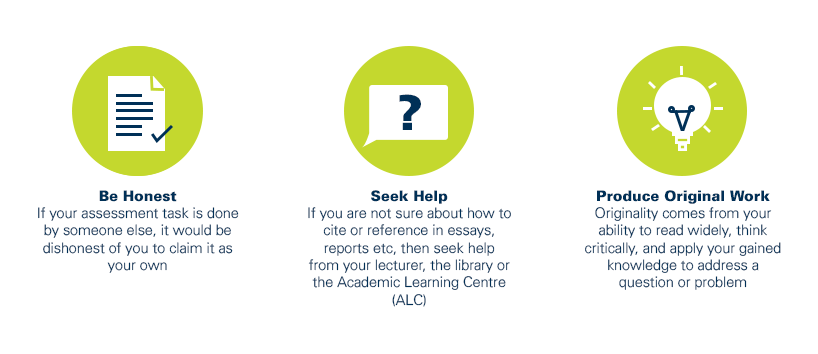
As a CQUniversity student you are expected to act honestly in all aspects of your academic work.
Any assessable work undertaken or submitted for review or assessment must be your own work. Assessable work is any type of work you do to meet the assessment requirements in the unit, including draft work submitted for review and feedback and final work to be assessed.
When you use the ideas, words or data of others in your assessment, you must thoroughly and clearly acknowledge the source of this information by using the correct referencing style for your unit. Using others’ work without proper acknowledgement may be considered a form of intellectual dishonesty.
Participating honestly, respectfully, responsibly, and fairly in your university study ensures the CQUniversity qualification you earn will be valued as a true indication of your individual academic achievement and will continue to receive the respect and recognition it deserves.
As a student, you are responsible for reading and following CQUniversity’s policies, including the Student Academic Integrity Policy and Procedure. This policy sets out CQUniversity’s expectations of you to act with integrity, examples of academic integrity breaches to avoid, the processes used to address alleged breaches of academic integrity, and potential penalties.
What is a breach of academic integrity?
A breach of academic integrity includes but is not limited to plagiarism, self-plagiarism, collusion, cheating, contract cheating, and academic misconduct. The Student Academic Integrity Policy and Procedure defines what these terms mean and gives examples.
Why is academic integrity important?
A breach of academic integrity may result in one or more penalties, including suspension or even expulsion from the University. It can also have negative implications for student visas and future enrolment at CQUniversity or elsewhere. Students who engage in contract cheating also risk being blackmailed by contract cheating services.
Where can I get assistance?
For academic advice and guidance, the Academic Learning Centre (ALC) can support you in becoming confident in completing assessments with integrity and of high standard.
What can you do to act with integrity?