Overview
This unit provides a broad introduction to the history and theories of building design with a specific focus on the cultural importance, practical uses, construction, and stylistic designs of those buildings. The fundamental knowledge gained in this unit will underpin many design processes and decisions that you will encounter in your work as licensed building designers. The study topics and assessment tasks will develop skills that will enable you to identify and evaluate the successes and failures of historic and contemporary building types as well as the suitability of those buildings for conservation, re-use, or re-development.
Details
Pre-requisites or Co-requisites
Prerequisite: BLAR11045
Important note: Students enrolled in a subsequent unit who failed their pre-requisite unit, should drop the subsequent unit before the census date or within 10 working days of Fail grade notification. Students who do not drop the unit in this timeframe cannot later drop the unit without academic and financial liability. See details in the Assessment Policy and Procedure (Higher Education Coursework).
Offerings For Term 3 - 2026
Attendance Requirements
All on-campus students are expected to attend scheduled classes - in some units, these classes are identified as a mandatory (pass/fail) component and attendance is compulsory. International students, on a student visa, must maintain a full time study load and meet both attendance and academic progress requirements in each study period (satisfactory attendance for International students is defined as maintaining at least an 80% attendance record).
Recommended Student Time Commitment
Each 6-credit Undergraduate unit at CQUniversity requires an overall time commitment of an average of 12.5 hours of study per week, making a total of 150 hours for the unit.
Class Timetable
Assessment Overview
| Assessment Task | Part Weighting (% of assessment) |
Assessment Security Level | Gen AI Guidance Levels |
|---|---|---|---|
| 1. Case Study (30% of unit ) | |||
| Case study (Case Study) | 100% of 30% | Medium | AI-Assisted (Guided Collaboration) |
| 2. Case Study and Presentation (50% of unit · 2 parts ) | |||
| Part 1 – Case Study (Case Study) | 60% of 50% | Medium | AI-Assisted (Guided Collaboration) |
| Part 2 – Presentation (Presentation) | 40% of 50% | High | AI-Assisted (Guided Collaboration) |
| 3. Online Test (20% of unit ) | |||
| Online Test (Online Test) | 100% of 20% | Medium | No Gen AI Use |
Assessment Grading
This is a graded unit: your overall grade will be calculated from the marks or grades for each assessment task, based on the relative weightings shown in the table above. You must obtain an overall mark for the unit of at least 50%, or an overall grade of 'pass' in order to pass the unit. If any 'pass/fail' tasks are shown in the table above they must also be completed successfully ('pass' grade). You must also meet any minimum mark requirements specified for a particular assessment task, as detailed in the 'assessment task' section (note that in some instances, the minimum mark for a task may be greater than 50%). Consult the University's Grades and Results Policy for more details of interim results and final grades.
All University policies are available on the CQUniversity Policy site.
You may wish to view these policies:
- Grades and Results Policy
- Assessment Policy and Procedure (Higher Education Coursework)
- Review of Grade Procedure
- Student Academic Integrity Policy and Procedure
- Academic Progression Policy and Procedure
- Student Refund and Credit Balance Policy and Procedure
- Complaints Policy and Procedure
- Information and Communications Technology Acceptable Use Policy and Procedure
This list is not an exhaustive list of all University policies. The full list of University policies are available on the CQUniversity Policy site.
Feedback, Recommendations and Responses
Every unit is reviewed for enhancement each year. At the most recent review, the following staff and student feedback items were identified and recommendations were made.
Feedback from Students' written comments in SUTE survey
Students suggested that some learning materials were outdated and were not accessible via the library.
A formal review of the learning materials should be conducted to include up-to-date resources. Requests to obtain any required materials will be submitted through the library.
Feedback from The teaching team reflection
Lecture slides, in some instances, require further written details to complement the highly useful visual materials used.
Lecture slides should be thoroughly reviewed and updated to include additional texts describing the visual materials used.
- Analyse the historical development of building design and construction
- Explain culturally diverse values in buildings and spaces
- Recognise, discuss and compare the major stylistic trends of building design around the world
- Describe the historic and contemporary styles of building design in Australia
- Constructively discuss and collaborate within an online team environment to explore and propose potential design solutions for the renovation and extensions of heritage buildings.
Alignment of Assessment Tasks to Learning Outcomes
| Assessment Tasks | Learning Outcomes | ||||
|---|---|---|---|---|---|
| 1 | 2 | 3 | 4 | 5 | |
|
1.
Assessment 1
(30% of unit )
Case Study
|
|||||
|
2.
Assessment 2
(50% of unit · 2 parts
)
Part 1 -
Case Study
Part 2 -
Presentation
|
|||||
|
3.
Assessment 3
(20% of unit )
Online Test
|
|||||
Alignment of Graduate Attributes to Learning Outcomes
| Graduate Attributes | Learning Outcomes | ||||
|---|---|---|---|---|---|
| 1 | 2 | 3 | 4 | 5 | |
| 1 - Communication | |||||
| 2 - Problem Solving | |||||
| 3 - Critical Thinking | |||||
| 4 - Information Literacy | |||||
| 5 - Team Work | |||||
| 6 - Information Technology Competence | |||||
| 7 - Cross Cultural Competence | |||||
| 8 - Ethical practice | |||||
| 9 - Social Innovation | |||||
| 10 - First Nations Knowledges | |||||
Textbooks
There are no required textbooks.
IT Resources
- CQUniversity Student Email
- Internet
- Unit Website (Moodle)
- Microphone and camera for use with Zoom
- MS Office or equivalent software
All submissions for this unit must use the referencing style: Harvard (author-date)
For further information, see the Assessment Tasks.
i.kenawy@cqu.edu.au
Week 1
Begin Date: 09 Nov 2026Module/Topic
Buildings of the Ancient World
Chapter
Events and Submissions/Topic
Week 2
Begin Date: 16 Nov 2026Module/Topic
Ancient and Classical Greece and the Roman Empire
Chapter
Events and Submissions/Topic
Week 3
Begin Date: 23 Nov 2026Module/Topic
Buildings of the Eastern World
Chapter
Events and Submissions/Topic
Week 4
Begin Date: 30 Nov 2026Module/Topic
Medieval Times: Romanesque and Gothic Architecture
Chapter
Events and Submissions/Topic
Week 5
Begin Date: 07 Dec 2026Module/Topic
Renaissance and Baroque Architecture
Chapter
Events and Submissions/Topic
Week 6
Begin Date: 14 Dec 2026Module/Topic
Buildings of the French and Industrial Revolutions
Chapter
Events and Submissions/Topic
Mid-Term Break
Begin Date: 21 Dec 2026Module/Topic
Chapter
Events and Submissions/Topic
Week 7
Begin Date: 04 Jan 2027Module/Topic
Architecture in the late 19th and 20th Centuries
Chapter
Events and Submissions/Topic
Week 8
Begin Date: 11 Jan 2027Module/Topic
20th Century Design Theories and Movements
Chapter
Events and Submissions/Topic
Week 9
Begin Date: 18 Jan 2027Module/Topic
Early Australian Building Before and After Settlement
Chapter
Events and Submissions/Topic
Week 10
Begin Date: 25 Jan 2027Module/Topic
Federation and inter-war Australian Building Design
Chapter
Events and Submissions/Topic
Presentation Due: Week 10 Wednesday (27 Jan 2027) 11:45 pm AEST
Week 11
Begin Date: 01 Feb 2027Module/Topic
Australian Post War and late 20th Century Building
Chapter
Events and Submissions/Topic
Week 12
Begin Date: 08 Feb 2027Module/Topic
Review for Online Test
Chapter
Events and Submissions/Topic
Exam Week
Begin Date: 15 Feb 2027Module/Topic
Chapter
Events and Submissions/Topic
1. Case Study ( 30% of unit )
Case Study
Assignment 1 is an individual case study report with images and sketches. The assignment will focus on Topics 1, 2, 3 and 4. Full and detailed briefing for this assignment will be available in the Assessment Block in Moodle.
AI Assessment Scale = AI-Assisted (Guided). You may use Gen AI only for the specific tasks permitted in the assessment brief, such as brainstorming, locating sources and checking language. You must not use Gen AI to produce the analysis you submit. You must acknowledge any use of Gen AI, and critically evaluate any AI-generated content and verify all sources.
Week 5 Wednesday (9 Dec 2026) 11:45 pm AEST
Week 7 Wednesday (6 Jan 2027)
Marks will be allocated as specified in the marking rubric of the Assessment Task located in the Assessment Block in Moodle. The assessment criteria used include:
Cohesive analysis of the historical development of building design and construction
Insightful explanation of culturally diverse values in buildings and spaces
Conceptual comparison of major stylistic trends of building design around the world
Critical discussion of the conservation, state of repair and current use of a World Heritage site
Clarity of presentation, use of images and sketches, and accuracy of referencing
- Analyse the historical development of building design and construction
- Explain culturally diverse values in buildings and spaces
- Recognise, discuss and compare the major stylistic trends of building design around the world
2. Case Study and Presentation ( 50% of unit · 2 parts )
Part 1 - Case Study
Part 1, Case Study (30% of the unit): an individual case study report with images and sketches. The assignment will focus on Topics 5, 6, 7 and 8. Full and detailed briefing for this assignment will be available in the Assessment Block in Moodle.
AI Assessment Scale = AI-Assisted (Guided). You may use Gen AI only for the specific tasks permitted in the assessment brief, such as brainstorming, locating sources and checking language. You must not use Gen AI to produce the analysis you submit. You must acknowledge any use of Gen AI, and critically evaluate any AI-generated content and verify all sources.
Week 10 Wednesday (27 Jan 2027) 11:45 pm AEST
Week 12 Wednesday (10 Feb 2027)
Marks will be allocated as specified in the assignment brief in the Assessment Block in Moodle. The assessment criteria used include:
Cohesive analysis of the historical development of building design and construction
Insightful explanation of culturally diverse values in buildings and spaces
Conceptual comparison of major stylistic trends of building design around the world, including precedents and influences
Accurate identification of building styles
Informed discussion of heritage protections and design solutions for the renovation and extension of heritage buildings
Clarity of the report, use of images and sketches, and accuracy of referencing
- Explain culturally diverse values in buildings and spaces
- Recognise, discuss and compare the major stylistic trends of building design around the world
- Describe the historic and contemporary styles of building design in Australia
- Constructively discuss and collaborate within an online team environment to explore and propose potential design solutions for the renovation and extensions of heritage buildings.
Part 2 - Presentation
A presentation of your Case Study submission.
AI Assessment Scale = AI-Assisted (Guided). You may use Gen AI only for the specific tasks permitted in the assessment brief, such as brainstorming, locating sources and checking language. You must not use Gen AI to produce the analysis or presentation content you submit, and you must be able to explain your work in your own words. You must acknowledge any use of Gen AI, and critically evaluate any AI-generated content and verify all sources.
Week 10 Wednesday (27 Jan 2027) 11:45 pm AEST
Week 12 Wednesday (10 Feb 2027)
Marks will be allocated as specified in the assignment brief in the Assessment Block in Moodle. The assessment criteria used include:
Clear and well-structured communication of the key findings of the case study
Depth of understanding shown in explaining and justifying the analysis in your own words
Effective use of visual material, such as images, plans and sketches, to support the presentation
Confident and engaging delivery within the set time limit
Ability to respond to questions or feedback on the case study
No submission method provided.
- Explain culturally diverse values in buildings and spaces
- Recognise, discuss and compare the major stylistic trends of building design around the world
- Describe the historic and contemporary styles of building design in Australia
- Constructively discuss and collaborate within an online team environment to explore and propose potential design solutions for the renovation and extensions of heritage buildings.
3. Online Test ( 20% of unit )
Online Test
The online test will open during the class time in week 13. The test has a 90-minute time limit from the time you start the test after which it will auto submit. This is a "one attempt only" test and will cover the unit content.
Please note: Results for this assessment will be made available to students after the date of the quiz closing.
AI ASSESSMENT SCALE - NO AI - You must not use Al at any point during the assessment. You must demonstrate your core skills and knowledge
Exam Week Thursday (18 Feb 2027) 7:00 pm AEST
Two weeks from the due date
Test and apply knowledge based on the unit topics.
- Analyse the historical development of building design and construction
- Explain culturally diverse values in buildings and spaces
- Recognise, discuss and compare the major stylistic trends of building design around the world
- Describe the historic and contemporary styles of building design in Australia
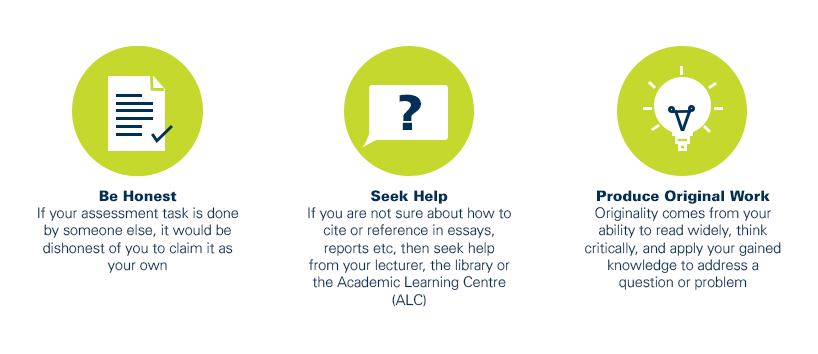
As a CQUniversity student you are expected to act honestly in all aspects of your academic work.
Any assessable work undertaken or submitted for review or assessment must be your own work. Assessable work is any type of work you do to meet the assessment requirements in the unit, including draft work submitted for review and feedback and final work to be assessed.
When you use the ideas, words or data of others in your assessment, you must thoroughly and clearly acknowledge the source of this information by using the correct referencing style for your unit. Using others’ work without proper acknowledgement may be considered a form of intellectual dishonesty.
Participating honestly, respectfully, responsibly, and fairly in your university study ensures the CQUniversity qualification you earn will be valued as a true indication of your individual academic achievement and will continue to receive the respect and recognition it deserves.
As a student, you are responsible for reading and following CQUniversity’s policies, including the Student Academic Integrity Policy and Procedure. This policy sets out CQUniversity’s expectations of you to act with integrity, examples of academic integrity breaches to avoid, the processes used to address alleged breaches of academic integrity, and potential penalties.
What is a breach of academic integrity?
A breach of academic integrity includes but is not limited to plagiarism, self-plagiarism, collusion, cheating, contract cheating, and academic misconduct. The Student Academic Integrity Policy and Procedure defines what these terms mean and gives examples.
Why is academic integrity important?
A breach of academic integrity may result in one or more penalties, including suspension or even expulsion from the University. It can also have negative implications for student visas and future enrolment at CQUniversity or elsewhere. Students who engage in contract cheating also risk being blackmailed by contract cheating services.
Where can I get assistance?
For academic advice and guidance, the Academic Learning Centre (ALC) can support you in becoming confident in completing assessments with integrity and of high standard.
What can you do to act with integrity?