Overview
As you study this unit, your overall aim is to: understand macro economics, the markets and their dimensions, World and local economies and policy instruments; fully understand the effect of supply, demand prices and stocks; and become familiar with procedures, principles and methods of project costing, bills of quantities and life cycle analysis.
Details
Pre-requisites or Co-requisites
There are no requisites for this unit.
Important note: Students enrolled in a subsequent unit who failed their pre-requisite unit, should drop the subsequent unit before the census date or within 10 working days of Fail grade notification. Students who do not drop the unit in this timeframe cannot later drop the unit without academic and financial liability. See details in the Assessment Policy and Procedure (Higher Education Coursework).
Offerings For Term 1 - 2026
Attendance Requirements
All on-campus students are expected to attend scheduled classes - in some units, these classes are identified as a mandatory (pass/fail) component and attendance is compulsory. International students, on a student visa, must maintain a full time study load and meet both attendance and academic progress requirements in each study period (satisfactory attendance for International students is defined as maintaining at least an 80% attendance record).
Recommended Student Time Commitment
Each 6-credit Undergraduate unit at CQUniversity requires an overall time commitment of an average of 12.5 hours of study per week, making a total of 150 hours for the unit.
Class Timetable
Assessment Overview
Assessment Grading
This is a graded unit: your overall grade will be calculated from the marks or grades for each assessment task, based on the relative weightings shown in the table above. You must obtain an overall mark for the unit of at least 50%, or an overall grade of 'pass' in order to pass the unit. If any 'pass/fail' tasks are shown in the table above they must also be completed successfully ('pass' grade). You must also meet any minimum mark requirements specified for a particular assessment task, as detailed in the 'assessment task' section (note that in some instances, the minimum mark for a task may be greater than 50%). Consult the University's Grades and Results Policy for more details of interim results and final grades.
All University policies are available on the CQUniversity Policy site.
You may wish to view these policies:
- Grades and Results Policy
- Assessment Policy and Procedure (Higher Education Coursework)
- Review of Grade Procedure
- Student Academic Integrity Policy and Procedure
- Academic Progression Policy and Procedure
- Student Refund and Credit Balance Policy and Procedure
- Complaints Policy and Procedure
- Information and Communications Technology Acceptable Use Policy and Procedure
This list is not an exhaustive list of all University policies. The full list of University policies are available on the CQUniversity Policy site.
Feedback, Recommendations and Responses
Every unit is reviewed for enhancement each year. At the most recent review, the following staff and student feedback items were identified and recommendations were made.
Feedback from Student Unit Teaching Evaluation Unit Comments Report - T1, 2025
The gap between the feedback for the previous assessment and the next assessment submission due date could be increased to ensure an effective and successful submission.
There were delays in providing feedback on some assessments. Hence, returning feedback within two weeks of the submission due date, normally set for each assessment, could not be maintained for some assessments due to the lecturer's personal issues. However, the teaching team is obliged to maintain this in the next and future deliveries. The teaching team found that the gap between each assessment due date in the current delivery is close to 4 weeks, which is sufficient for students to prepare their next assessment, provided that feedback on the previous assessment is given within 2 weeks. This will be recommended to continue in future deliveries.
Feedback from The Lecturer and the Unit Coordinator communication
Teaching team suggests applying guest lectures in future deliveries
It is recommended to have a guest lecturer or special speaker in some weeks to keep the students engaged with practical examples or industry situations. These sessions are intended to expand the students' knowledge on life cycle cost analysis and bills of quantities. One such session is planned to conduct towards the end of the teaching term making it an addition support for students to the last assessment task.
- Describe the various activities, and marketplace relationships that exist in the national economy
- Explain the need for economic policy and the ability for policy to resolve economic problems
- Describe the impact of supply and demand on the construction industry
- Describe the basic requirements, procedures and benefits of building lifecycle costing and project cost estimating
- Have an understanding of how computer based estimating tools can assist the preparation of project costing, estimating and administration
Alignment of Assessment Tasks to Learning Outcomes
| Assessment Tasks | Learning Outcomes | ||||
|---|---|---|---|---|---|
| 1 | 2 | 3 | 4 | 5 | |
| 1 - Written Assessment - 30% | |||||
| 2 - Written Assessment - 35% | |||||
| 3 - Written Assessment - 35% | |||||
Alignment of Graduate Attributes to Learning Outcomes
| Graduate Attributes | Learning Outcomes | ||||
|---|---|---|---|---|---|
| 1 | 2 | 3 | 4 | 5 | |
| 1 - Communication | |||||
| 2 - Problem Solving | |||||
| 3 - Critical Thinking | |||||
| 4 - Information Literacy | |||||
| 5 - Team Work | |||||
| 6 - Information Technology Competence | |||||
| 7 - Cross Cultural Competence | |||||
| 8 - Ethical practice | |||||
| 9 - Social Innovation | |||||
| 10 - First Nations Knowledges | |||||
| 11 - Aboriginal and Torres Strait Islander Cultures | |||||
Alignment of Assessment Tasks to Graduate Attributes
| Assessment Tasks | Graduate Attributes | ||||||||||
|---|---|---|---|---|---|---|---|---|---|---|---|
| 1 | 2 | 3 | 4 | 5 | 6 | 7 | 8 | 9 | 10 | 11 | |
| 1 - Written Assessment - 30% | |||||||||||
| 2 - Written Assessment - 35% | |||||||||||
| 3 - Written Assessment - 35% | |||||||||||
Textbooks
Construction Economics: A New Approach
- Edition: 5th (2022)
- Authors: Danny Myers
- Taylor & Francis Ltd
- ISBN: 9781032262611
- Binding: Paperback
Basic Building Economics
- (1999)
- Authors: J. Sierra
- Australian Institute of Quantity Surveyors
- ISBN: 1876389036
- Binding: Paperback
Construction Industry Specifications
- Edition: 1st (1995)
- Authors: David. Standen
- The Royal Australian Institute of Architects
- ISBN: 9780909825300
- Binding: Paperback
IT Resources
- CQUniversity Student Email
- Internet
- Unit Website (Moodle)
- Endnote
- MS Office or equivalent software
- Webcam and microphone/headset
- MS Teams
All submissions for this unit must use the referencing style: Harvard (author-date)
For further information, see the Assessment Tasks.
p.kalutara@cqu.edu.au
Week 1
Begin Date: 09 Mar 2026Module/Topic
Topic 1: Introduction to economics
Chapter
Events and Submissions/Topic
Week 2
Begin Date: 16 Mar 2026Module/Topic
Topic 2: Macro economics
Chapter
Events and Submissions/Topic
Week 3
Begin Date: 23 Mar 2026Module/Topic
Topic 3: Micro economics - Supply and demand
Chapter
Events and Submissions/Topic
Week 4
Begin Date: 30 Mar 2026Module/Topic
Topic 3: Micro economics - Supply and demand (continued)
Chapter
Events and Submissions/Topic
Week 5
Begin Date: 06 Apr 2026Module/Topic
Topic 4: Life cycle cost analysis
Chapter
Events and Submissions/Topic
Week 6
Begin Date: 13 Apr 2026Module/Topic
Topic 4: Life cycle cost analysis (continued)
Chapter
Events and Submissions/Topic
Vacation Week
Begin Date: 20 Apr 2026Module/Topic
No class.
Chapter
Events and Submissions/Topic
Week 7
Begin Date: 27 Apr 2026Module/Topic
Topic 5: Project costing and estimating
Chapter
Events and Submissions/Topic
Week 8
Begin Date: 04 May 2026Module/Topic
Topic 5: Project costing and estimating (continued)
Chapter
Events and Submissions/Topic
Week 9
Begin Date: 11 May 2026Module/Topic
Topic 6: Bills of quantities
Chapter
Events and Submissions/Topic
Week 10
Begin Date: 18 May 2026Module/Topic
Topic 6: Bills of quantities (continued)
Chapter
Events and Submissions/Topic
Week 11
Begin Date: 25 May 2026Module/Topic
Topic 7: Computer based costing
Chapter
Events and Submissions/Topic
Week 12
Begin Date: 01 Jun 2026Module/Topic
Topic 7: Computer based costing (continued)
Chapter
Events and Submissions/Topic
Exam Week
Begin Date: 08 Jun 2026Module/Topic
Chapter
Events and Submissions/Topic
Vacation/Exam Week
Begin Date: 15 Jun 2026Module/Topic
Chapter
Events and Submissions/Topic
1 Written Assessment
- Describe the various activities, and marketplace relationships that exist in the national economy
- Explain the need for economic policy and the ability for policy to resolve economic problems
- Describe the impact of supply and demand on the construction industry
Week 5 Tuesday (7 Apr 2026) 11:45 pm AEST
Submitted via Turnitin
Vacation Week Tuesday (21 Apr 2026)
Within two weeks of the submission.
Presentation and layout—includes demonstrated ability to prepare a professional technical report as part of the audit process, use of grammar, the selection of typeface, written and general appearance of the document or assignment, attention to detail and quality of arrangement with regard to page numbering, headings, margins, footnotes and similar details to provide a professional document presentation.
Content—includes the accuracy and relevance of the information supplied in relation to the set task, using an ‘easy to read’ language style.
References—includes the use of the Harvard Referencing System to reference information, data, tables or images used when preparing a response to the set task.
- Describe the various activities, and marketplace relationships that exist in the national economy
- Explain the need for economic policy and the ability for policy to resolve economic problems
- Describe the impact of supply and demand on the construction industry
- Communication
- Problem Solving
- Critical Thinking
- Information Literacy
- Information Technology Competence
2 Written Assessment
3. Describe the impact of supply and demand on the construction industry
4. Describe the basic requirements, procedures and benefits of building lifecycle costing and project cost estimating
Week 9 Monday (11 May 2026) 11:45 pm AEST
Submitted via Turnitin
Week 11 Monday (25 May 2026)
Within two weeks of the submission.
Presentation and layout—includes demonstrated ability to prepare a professional technical report as part of the audit process, use of grammar, the selection of typeface, written and general appearance of the document or assignment, attention to detail and quality of arrangement with regard to page numbering, headings, margins, footnotes and similar details to provide a professional document presentation.
Content—includes the accuracy and relevance of the information supplied in relation to the set task, using an ‘easy to read’ language style.
References—includes the use of the Harvard Referencing System to reference information, data, tables or images used when preparing a response to the set task.
- Describe the impact of supply and demand on the construction industry
- Describe the basic requirements, procedures and benefits of building lifecycle costing and project cost estimating
- Communication
- Problem Solving
- Critical Thinking
- Information Literacy
- Information Technology Competence
3 Written Assessment
5. Have an understanding of how computer based estimating tools can assist the preparation of project costing, estimating and administration
Exam Week Monday (8 June 2026) 11:45 pm AEST
Submited via Turnitin
Vacation/Exam Week Friday (19 June 2026)
Within two weeks of the submission (23/06/2025) but before the certification of grades
Presentation and layout—includes demonstrated ability to prepare a professional technical report as part of the audit process, use of grammar, the selection of typeface, written and general appearance of the document or assignment, attention to detail and quality of arrangement with regard to page numbering, headings, margins, footnotes and similar details to provide a professional document presentation.
Content—includes the accuracy and relevance of the information supplied in relation to the set task, using an ‘easy to read’ language style.
References—includes the use of the Harvard Referencing System to reference information, data, tables or images used when preparing a response to the set task.
- Describe the basic requirements, procedures and benefits of building lifecycle costing and project cost estimating
- Have an understanding of how computer based estimating tools can assist the preparation of project costing, estimating and administration
- Communication
- Problem Solving
- Critical Thinking
- Information Literacy
- Information Technology Competence
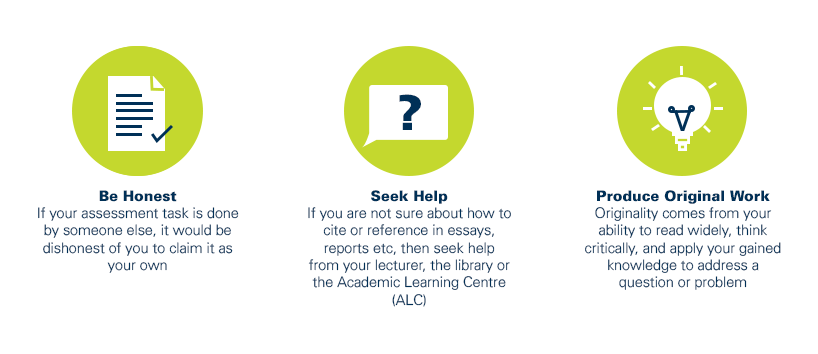
As a CQUniversity student you are expected to act honestly in all aspects of your academic work.
Any assessable work undertaken or submitted for review or assessment must be your own work. Assessable work is any type of work you do to meet the assessment requirements in the unit, including draft work submitted for review and feedback and final work to be assessed.
When you use the ideas, words or data of others in your assessment, you must thoroughly and clearly acknowledge the source of this information by using the correct referencing style for your unit. Using others’ work without proper acknowledgement may be considered a form of intellectual dishonesty.
Participating honestly, respectfully, responsibly, and fairly in your university study ensures the CQUniversity qualification you earn will be valued as a true indication of your individual academic achievement and will continue to receive the respect and recognition it deserves.
As a student, you are responsible for reading and following CQUniversity’s policies, including the Student Academic Integrity Policy and Procedure. This policy sets out CQUniversity’s expectations of you to act with integrity, examples of academic integrity breaches to avoid, the processes used to address alleged breaches of academic integrity, and potential penalties.
What is a breach of academic integrity?
A breach of academic integrity includes but is not limited to plagiarism, self-plagiarism, collusion, cheating, contract cheating, and academic misconduct. The Student Academic Integrity Policy and Procedure defines what these terms mean and gives examples.
Why is academic integrity important?
A breach of academic integrity may result in one or more penalties, including suspension or even expulsion from the University. It can also have negative implications for student visas and future enrolment at CQUniversity or elsewhere. Students who engage in contract cheating also risk being blackmailed by contract cheating services.
Where can I get assistance?
For academic advice and guidance, the Academic Learning Centre (ALC) can support you in becoming confident in completing assessments with integrity and of high standard.
What can you do to act with integrity?