Overview
This unit provides a broad and coherent study of urban design with some depth in specialist areas. These studies will develop your creative skills and critical judgement of urban design issues that are essential in professional practice, thus necessary content in the Bachelor of Building Design course. Topics review and deepen your existing knowledge of sustainable communities, environmental issues, and the movement of pedestrians and traffic in urban development. Specialist focus on heritage, diverse cultures, urban poverty, human behaviour, and emergency management in urban locations will be introduced. These studies and assessment tasks will develop skills in the exercise of critical thinking and judgement in identifying and solving problems. You will undertake teamwork to collaboratively and responsibly evaluate strategies in urban design.
Details
Pre-requisites or Co-requisites
Prerequisites: BLAR11045 and BLAR12036
Important note: Students enrolled in a subsequent unit who failed their pre-requisite unit, should drop the subsequent unit before the census date or within 10 working days of Fail grade notification. Students who do not drop the unit in this timeframe cannot later drop the unit without academic and financial liability. See details in the Assessment Policy and Procedure (Higher Education Coursework).
Offerings For Term 3 - 2026
Attendance Requirements
All on-campus students are expected to attend scheduled classes - in some units, these classes are identified as a mandatory (pass/fail) component and attendance is compulsory. International students, on a student visa, must maintain a full time study load and meet both attendance and academic progress requirements in each study period (satisfactory attendance for International students is defined as maintaining at least an 80% attendance record).
Recommended Student Time Commitment
Each 6-credit Undergraduate unit at CQUniversity requires an overall time commitment of an average of 12.5 hours of study per week, making a total of 150 hours for the unit.
Class Timetable
Assessment Overview
| Assessment Task | Part Weighting (% of assessment) |
Assessment Security Level | Gen AI Guidance Levels |
|---|---|---|---|
| 1. Assessment 1 (25% of unit ) | |||
| Assessment 1 (Case Study) | 100% of 25% | Medium | AI-Assisted (Guided Collaboration) |
| 2. ASSESSMENT 2 (60% of unit · 2 parts ) | |||
| Part 1 – Project (Project (applied)) | 67% of 60% | Medium | AI-Assisted (Guided Collaboration) |
| Part 2 – Presentation (Presentation) | 33% of 60% | High | AI-Assisted (Guided Collaboration) |
| 3. ASSESSMENT 3 (15% of unit ) | |||
| Online Test (Online Test) | 100% of 15% | Medium | No Gen AI Use |
Assessment Grading
This is a graded unit: your overall grade will be calculated from the marks or grades for each assessment task, based on the relative weightings shown in the table above. You must obtain an overall mark for the unit of at least 50%, or an overall grade of 'pass' in order to pass the unit. If any 'pass/fail' tasks are shown in the table above they must also be completed successfully ('pass' grade). You must also meet any minimum mark requirements specified for a particular assessment task, as detailed in the 'assessment task' section (note that in some instances, the minimum mark for a task may be greater than 50%). Consult the University's Grades and Results Policy for more details of interim results and final grades.
All University policies are available on the CQUniversity Policy site.
You may wish to view these policies:
- Grades and Results Policy
- Assessment Policy and Procedure (Higher Education Coursework)
- Review of Grade Procedure
- Student Academic Integrity Policy and Procedure
- Academic Progression Policy and Procedure
- Student Refund and Credit Balance Policy and Procedure
- Complaints Policy and Procedure
- Information and Communications Technology Acceptable Use Policy and Procedure
This list is not an exhaustive list of all University policies. The full list of University policies are available on the CQUniversity Policy site.
Feedback, Recommendations and Responses
Every unit is reviewed for enhancement each year. At the most recent review, the following staff and student feedback items were identified and recommendations were made.
Feedback from Student Feedback
Students reported that collaborating within the team using the online tools provided worked very well.
Students will continue to be provided with a Teams channel and Zoom link specific to their team to support sharing of plans, research and documents and communication with other members of the team.
Feedback from Student feedback
Developing a large site as a team is a good challenge and prepares for work in the industry as a professional Building Designer.
Students will continue to work in teams on the development of large sites to prepare for work as industry professionals.
- Analyse heritage and environmental issues in urban development
- Reflect on and propose creative strategies to accommodate the diversity of human behaviour in the design of public urban spaces
- Compare and modify movement of pedestrians and traffic within urban design
- Adapt knowledge and skills to include diverse cultural needs and sustainable communities in urban design
- Participate effectively in collaborative team activities.
Alignment of Assessment Tasks to Learning Outcomes
| Assessment Tasks | Learning Outcomes | ||||
|---|---|---|---|---|---|
| 1 | 2 | 3 | 4 | 5 | |
|
1.
Assessment 1
(25% of unit )
Case Study
|
|||||
|
2.
Assessment 2
(60% of unit · 2 parts
)
Part 1 -
Project (applied)
Part 2 -
Presentation
|
|||||
|
3.
Assessment 3
(15% of unit )
Online Test
|
|||||
Alignment of Graduate Attributes to Learning Outcomes
| Graduate Attributes | Learning Outcomes | ||||
|---|---|---|---|---|---|
| 1 | 2 | 3 | 4 | 5 | |
| 1 - Communication | |||||
| 2 - Problem Solving | |||||
| 3 - Critical Thinking | |||||
| 4 - Information Literacy | |||||
| 5 - Team Work | |||||
| 6 - Information Technology Competence | |||||
| 7 - Cross Cultural Competence | |||||
| 8 - Ethical practice | |||||
| 9 - Social Innovation | |||||
| 10 - First Nations Knowledges | |||||
Textbooks
There are no required textbooks.
IT Resources
- CQUniversity Student Email
- Internet
- Unit Website (Moodle)
- Microphone and camera for use with Zoom
- Microsoft Teams
All submissions for this unit must use the referencing style: Harvard (author-date)
For further information, see the Assessment Tasks.
i.kenawy@cqu.edu.au
Week 1
Begin Date: 09 Nov 2026Module/Topic
What is Urban Design?
Chapter
Events and Submissions/Topic
Week 2
Begin Date: 16 Nov 2026Module/Topic
Humans in the Urban Environment
Chapter
Events and Submissions/Topic
Week 3
Begin Date: 23 Nov 2026Module/Topic
The Basics: Access, Mix and Density
Chapter
Events and Submissions/Topic
Week 4
Begin Date: 30 Nov 2026Module/Topic
Teamwork
Chapter
Events and Submissions/Topic
Week 5
Begin Date: 07 Dec 2026Module/Topic
Human Behaviour and Urban Design: Action, Drama, Interface
Chapter
Events and Submissions/Topic
Week 6
Begin Date: 14 Dec 2026Module/Topic
Presentation of Initial Project Ideas
Chapter
Events and Submissions/Topic
Mid-Term Break
Begin Date: 21 Dec 2026Module/Topic
Chapter
Events and Submissions/Topic
Week 7
Begin Date: 04 Jan 2027Module/Topic
Urban Identity: Image, Place, Character, & Creative Clusters
Chapter
Events and Submissions/Topic
Week 8
Begin Date: 11 Jan 2027Module/Topic
Draft Project Presentations
Chapter
Events and Submissions/Topic
Week 9
Begin Date: 18 Jan 2027Module/Topic
Commercial, Recreational and Transport Issues in Urban Desvelopment
Chapter
Events and Submissions/Topic
Week 10
Begin Date: 25 Jan 2027Module/Topic
Regulation, Finances and Marketing in Urban Development
Chapter
Events and Submissions/Topic
Week 11
Begin Date: 01 Feb 2027Module/Topic
Team Project Presentations
Chapter
Events and Submissions/Topic
Assignment 2 Team Presentation
Project Due: Week 11 Monday (1 Feb 2027) 11:45 pm AEST
Presentation Due: Week 11 Monday (1 Feb 2027) 11:45 pm AEST
Week 12
Begin Date: 08 Feb 2027Module/Topic
Review for Online Test
Chapter
Events and Submissions/Topic
Exam Week
Begin Date: 15 Feb 2027Module/Topic
Chapter
Events and Submissions/Topic
1. Assessment 1 ( 25% of unit )
Case Study
This assessment task comprises a case study with plans. You will analyse a given city and one of the city’s suburbs in order to gain an understanding of the context of a development site from an urban perspective. Full and detailed briefing for this assignment will be available in the Assessment Block in Moodle.
Week 4 Monday (30 Nov 2026) 11:45 pm AEST
Week 6 Monday (14 Dec 2026)
The assessment criteria used include:
Comprehensive analysis of heritage and environmental issues in urban renewal
Propose creative strategies to accommodate the diversity of human behaviour in the design of public urban spaces
Compare and modify movement of pedestrians and traffic within urban design in a way that is sensitive to the
surrounding environment as well as the needs of the user
Marks will be allocated as specified in the assignment brief in the Assessment Block in Moodle.
- Analyse heritage and environmental issues in urban development
- Reflect on and propose creative strategies to accommodate the diversity of human behaviour in the design of public urban spaces
- Compare and modify movement of pedestrians and traffic within urban design
2. ASSESSMENT 2 ( 60% of unit · 2 parts )
Part 1 - Project (applied)
This assessment task comprises a project with plans and has a team work component. Within your team, you will design a development located in the suburb that was researched in the first assignment. The design will be presented in draft version within the term, and the final design will be presented in Week 11. A self and peer assessment (SPA) survey will be conducted during the course of the assessment in which you will have the opportunity to review your own and the team's performance in addition to a contribution sheet.
Full and detailed briefing for this assignment will be available in the Assessment Block in Moodle.
Week 11 Monday (1 Feb 2027) 11:45 pm AEST
Exam Week Monday (15 Feb 2027)
The assessment criteria used include:
Comprehensive analysis of heritage and environmental issues in urban renewal
Propose creative strategies to accommodate the diversity of human behaviour in the design of public urban spaces
Compare and modify movement of pedestrians and traffic within urban design in a way that is sensitive to the surrounding environment as well as the needs of the user
Convincingly adapt knowledge and skills to include diverse cultural needs and sustainable communities in urban design
Participate effectively in collaborative team activities.
Marks will be allocated as specified in the assignment brief in the Assessment Block in Moodle.
- Analyse heritage and environmental issues in urban development
- Reflect on and propose creative strategies to accommodate the diversity of human behaviour in the design of public urban spaces
- Compare and modify movement of pedestrians and traffic within urban design
- Adapt knowledge and skills to include diverse cultural needs and sustainable communities in urban design
- Participate effectively in collaborative team activities.
Part 2 - Presentation
You will be asked to present your work in the project as a team. The oral presentation is assessed individually, so each member in the team has to present online. The mark is also individual.
Week 11 Monday (1 Feb 2027) 11:45 pm AEST
Via the Moodle submission portal and online presentation
Exam Week Monday (15 Feb 2027)
The assessment criteria include:
Clear and well-structured communication for the project
Depth of understanding shown in explaining and justifying the project in your own words
Effective use of visual material, such as images, plans and sketches, to support the presentation
Confident and engaging delivery within the set time limit
Ability to respond to questions or feedback on the case study
Marks will be allocated as specified in the assignment brief in the Assessment Block in Moodle.
- Analyse heritage and environmental issues in urban development
- Reflect on and propose creative strategies to accommodate the diversity of human behaviour in the design of public urban spaces
- Compare and modify movement of pedestrians and traffic within urban design
- Adapt knowledge and skills to include diverse cultural needs and sustainable communities in urban design
- Participate effectively in collaborative team activities.
3. ASSESSMENT 3 ( 15% of unit )
Online Test
The online test will open during class in week 13 and has a 90-minute duration after which it will auto submit. This is a "one attempt only" test and will cover the unit content. Further information will be available on the Moodle site.
Results for this assessment will be made available to students after the date of the quiz closing.
Exam Week Monday (15 Feb 2027) 11:45 pm AEST
Two weeks from the due date
Test and apply knowledge based on the unit topics.
- Analyse heritage and environmental issues in urban development
- Reflect on and propose creative strategies to accommodate the diversity of human behaviour in the design of public urban spaces
- Compare and modify movement of pedestrians and traffic within urban design
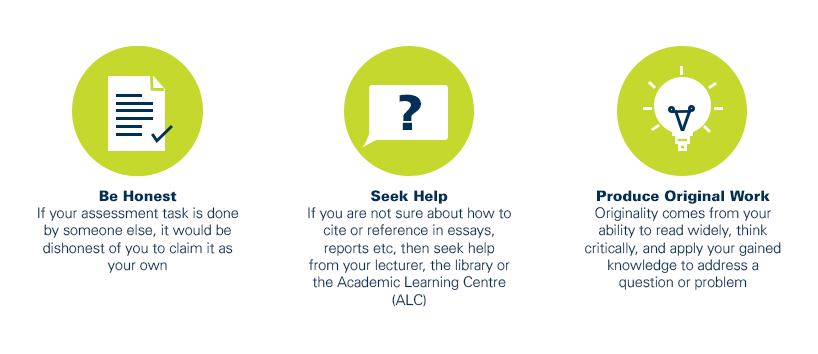
As a CQUniversity student you are expected to act honestly in all aspects of your academic work.
Any assessable work undertaken or submitted for review or assessment must be your own work. Assessable work is any type of work you do to meet the assessment requirements in the unit, including draft work submitted for review and feedback and final work to be assessed.
When you use the ideas, words or data of others in your assessment, you must thoroughly and clearly acknowledge the source of this information by using the correct referencing style for your unit. Using others’ work without proper acknowledgement may be considered a form of intellectual dishonesty.
Participating honestly, respectfully, responsibly, and fairly in your university study ensures the CQUniversity qualification you earn will be valued as a true indication of your individual academic achievement and will continue to receive the respect and recognition it deserves.
As a student, you are responsible for reading and following CQUniversity’s policies, including the Student Academic Integrity Policy and Procedure. This policy sets out CQUniversity’s expectations of you to act with integrity, examples of academic integrity breaches to avoid, the processes used to address alleged breaches of academic integrity, and potential penalties.
What is a breach of academic integrity?
A breach of academic integrity includes but is not limited to plagiarism, self-plagiarism, collusion, cheating, contract cheating, and academic misconduct. The Student Academic Integrity Policy and Procedure defines what these terms mean and gives examples.
Why is academic integrity important?
A breach of academic integrity may result in one or more penalties, including suspension or even expulsion from the University. It can also have negative implications for student visas and future enrolment at CQUniversity or elsewhere. Students who engage in contract cheating also risk being blackmailed by contract cheating services.
Where can I get assistance?
For academic advice and guidance, the Academic Learning Centre (ALC) can support you in becoming confident in completing assessments with integrity and of high standard.
What can you do to act with integrity?