Overview
Construction Measurement is the measurement and quantification for cost planning and documentation of building works and associated civil engineering works. In this unit, you will learn how to measure, quantify and cost construction work including civil engineering works associated with buildings. You will be referring to Australian Standard Method of Measurement (ASMM) of Building Works as a uniform basis for the measurement of building works. With the comprehensive knowledge of measurement, you will then gain in-depth knowledge of unit rate estimating and project pricing associated with the acquisition of materials and labour on building and construction sites. Having fundamental knowledge, you will then be directed to software to perform 2D and 3D electronic measurement and estimating associated with Computer Aided Design (CAD). You will be introduced to architectural and project coordination software to signify the integral part of cost planning in a construction project.
Details
Pre-requisites or Co-requisites
Prerequisite: Construction Technology
Important note: Students enrolled in a subsequent unit who failed their pre-requisite unit, should drop the subsequent unit before the census date or within 10 working days of Fail grade notification. Students who do not drop the unit in this timeframe cannot later drop the unit without academic and financial liability. See details in the Assessment Policy and Procedure (Higher Education Coursework).
Offerings For Term 1 - 2026
Attendance Requirements
All on-campus students are expected to attend scheduled classes - in some units, these classes are identified as a mandatory (pass/fail) component and attendance is compulsory. International students, on a student visa, must maintain a full time study load and meet both attendance and academic progress requirements in each study period (satisfactory attendance for International students is defined as maintaining at least an 80% attendance record).
Recommended Student Time Commitment
Each 6-credit Postgraduate unit at CQUniversity requires an overall time commitment of an average of 12.5 hours of study per week, making a total of 150 hours for the unit.
Class Timetable
Assessment Overview
Assessment Grading
This is a graded unit: your overall grade will be calculated from the marks or grades for each assessment task, based on the relative weightings shown in the table above. You must obtain an overall mark for the unit of at least 50%, or an overall grade of 'pass' in order to pass the unit. If any 'pass/fail' tasks are shown in the table above they must also be completed successfully ('pass' grade). You must also meet any minimum mark requirements specified for a particular assessment task, as detailed in the 'assessment task' section (note that in some instances, the minimum mark for a task may be greater than 50%). Consult the University's Grades and Results Policy for more details of interim results and final grades.
All University policies are available on the CQUniversity Policy site.
You may wish to view these policies:
- Grades and Results Policy
- Assessment Policy and Procedure (Higher Education Coursework)
- Review of Grade Procedure
- Student Academic Integrity Policy and Procedure
- Academic Progression Policy and Procedure
- Student Refund and Credit Balance Policy and Procedure
- Complaints Policy and Procedure
- Information and Communications Technology Acceptable Use Policy and Procedure
This list is not an exhaustive list of all University policies. The full list of University policies are available on the CQUniversity Policy site.
Feedback, Recommendations and Responses
Every unit is reviewed for enhancement each year. At the most recent review, the following staff and student feedback items were identified and recommendations were made.
Feedback from Student Feedback Self Reflection
Students value the inclusion of real-world examples in the unit, as this helps bridge theoretical concepts with professional practice and enhances engagement and understanding.
It is recommended that real-world examples continue to be integrated throughout lectures and assessments. Incorporating case studies, industry scenarios, or guest insights where possible would further strengthen connections between learning, practical applications, and professional contexts.
Feedback from Student Feedback
Students requested more hands-on practice during lectures to actively apply concepts and reinforce learning through practical exercises.
It is recommended that additional in-class exercises and interactive activities be incorporated to provide students with opportunities to apply key concepts. Problem-solving tasks and collaborative group work could be included to enhance engagement and consolidate understanding.
Feedback from Student Feedback Self Reflection
Students suggested the inclusion of incentives to encourage active attendance and engagement during lectures, ensuring they are both physically present and mentally involved.
It is recommended that strategies be introduced to motivate active participation, such as brief participation-based tasks. These approaches can increase engagement, reinforce learning, and encourage consistent attendance.
- Critically analyse and describe the standard method of measurement for various building components
- Evaluate construction measurement and estimate software to select the most appropriate package for a given construction type
- Reflect, critically evaluate and integrate technology and measurement to cost construction projects.
Alignment of Assessment Tasks to Learning Outcomes
| Assessment Tasks | Learning Outcomes | ||
|---|---|---|---|
| 1 | 2 | 3 | |
| 1 - Written Assessment - 25% | |||
| 2 - Laboratory/Practical - 40% | |||
| 3 - Case Study - 35% | |||
Alignment of Graduate Attributes to Learning Outcomes
| Graduate Attributes | Learning Outcomes | ||
|---|---|---|---|
| 1 | 2 | 3 | |
| 1 - Knowledge | |||
| 2 - Communication | |||
| 3 - Cognitive, technical and creative skills | |||
| 4 - Research | |||
| 5 - Self-management | |||
| 6 - Ethical and Professional Responsibility | |||
| 7 - Leadership | |||
| 8 - First Nations Knowledges | |||
| 9 - Aboriginal and Torres Strait Islander Cultures | |||
Alignment of Assessment Tasks to Graduate Attributes
| Assessment Tasks | Graduate Attributes | ||||||||
|---|---|---|---|---|---|---|---|---|---|
| 1 | 2 | 3 | 4 | 5 | 6 | 7 | 8 | 9 | |
| 1 - Written Assessment - 25% | |||||||||
| 2 - Laboratory/Practical - 40% | |||||||||
| 3 - Case Study - 35% | |||||||||
Textbooks
There are no required textbooks.
IT Resources
- CQUniversity Student Email
- Internet
- Unit Website (Moodle)
- Microsoft Office or equivalent software
- Microphone and headset (and preferably a camera) to participate in Zoom sessions
All submissions for this unit must use the referencing style: Harvard (author-date)
For further information, see the Assessment Tasks.
k.mirzaei@cqu.edu.au
Week 1
Begin Date: 09 Mar 2026Module/Topic
Topic 1 –Introduction to construction measurement and estimating
Chapter
Please refer to the Moodle unit site for additional information.
Events and Submissions/Topic
Week 2
Begin Date: 16 Mar 2026Module/Topic
Topic 2 –Measurement and take-off basics
Chapter
Please refer to the Moodle unit site for additional information.
Events and Submissions/Topic
Week 3
Begin Date: 23 Mar 2026Module/Topic
Topic 3 – Measurement and Construction Documentation
Chapter
Please refer to the Moodle unit site for additional information.
Events and Submissions/Topic
Week 4
Begin Date: 30 Mar 2026Module/Topic
Topic 4 – Estimating Methods
Chapter
Please refer to the Moodle unit site for additional information.
Events and Submissions/Topic
Week 5
Begin Date: 06 Apr 2026Module/Topic
Topic 5 – Measuring sub and super-structure
Chapter
Please refer to the Moodle unit site for additional information.
Events and Submissions/Topic
Assessment 1 is due on Week 5 Monday.
Assessment 1 Due: Week 5 Monday (6 Apr 2026) 11:59 pm AEST
Week 6
Begin Date: 13 Apr 2026Module/Topic
Topic 6 – Measuring services, furnishings, fixtures and equipment
Chapter
Please refer to the Moodle unit site for additional information.
Events and Submissions/Topic
Vacation Week
Begin Date: 20 Apr 2026Module/Topic
No classes. Enjoy the break!
Chapter
Use the time to work on an assessment or take a wellness break.
Events and Submissions/Topic
Week 7
Begin Date: 27 Apr 2026Module/Topic
Topic 7 – Pricing Labour & Materials
Chapter
Please refer to the Moodle unit site for additional information.
Events and Submissions/Topic
Assignment hand in date
Week 8
Begin Date: 04 May 2026Module/Topic
Topic 8 – Pricing and Reviewing Sub-contractor work
Chapter
Please refer to the Moodle unit site for additional information.
Events and Submissions/Topic
Week 9
Begin Date: 11 May 2026Module/Topic
Topic 9 – Pricing Preliminaries, Overheads and Profit
Chapter
Please refer to the Moodle unit site for additional information.
Events and Submissions/Topic
Assessment 2 is due on Week 9 Thursday.
Assessment 2 Due: Week 9 Thursday (14 May 2026) 11:59 pm AEST
Week 10
Begin Date: 18 May 2026Module/Topic
Topic 10 – Closing the bid (tendering)
Chapter
Please refer to the Moodle unit site for additional information.
Events and Submissions/Topic
Assignment hand in date
Week 11
Begin Date: 25 May 2026Module/Topic
Topic 11– Measuring activities post-job award
Chapter
Please refer to the Moodle unit site for additional information.
Events and Submissions/Topic
Week 12
Begin Date: 01 Jun 2026Module/Topic
Topic 12 – Revision
Chapter
Please refer to the Moodle unit site for additional information.
Events and Submissions/Topic
Assessment 3A is due on Week 12 Monday.
Assessment 3B should be presented in-class week 12.
Assessment 3 Due: Week 12 Thursday (4 June 2026) 11:59 pm AEST
Exam Week
Begin Date: 08 Jun 2026Module/Topic
Exam period concludes.
Chapter
Events and Submissions/Topic
Vacation/Exam Week
Begin Date: 15 Jun 2026Module/Topic
Chapter
Events and Submissions/Topic
1 Written Assessment
Assessment 1 is designed to evaluate students’ understanding of construction measurement and estimating principles. Students are required to demonstrate critical engagement with relevant standards, industry practices, documentation, and estimating methodologies. The assessment involves independent research, analysis of professional standards, evaluation of measurement approaches, and comparison of different information sources. Responses must be well-structured, clearly referenced where appropriate, and demonstrate the ability to apply theoretical knowledge to practical construction scenarios.
AI Assessment Scale: AI Planning (You may use Al for planning, idea development, and research. Your final submission should show how you have developed and refined these ideas).
It is essential that your submission is entirely your own. If you use any sources, they must be appropriately cited in accordance with the CQU Harvard referencing style, as outlined in the CQU Harvard referencing guide.
Additional guidance and information about the assessment requirements can be found on the unit's Moodle site.
Week 5 Monday (6 Apr 2026) 11:59 pm AEST
Submit via Moodle Learning site
Week 7 Monday (27 Apr 2026)
Via Moodle Learning site. Students will be advised if a delay emerges.
The assessment will be based on the following:
Clarity of expression and comprehensive coverage of issues;
Use of quality supporting documentation as appropriate;
Use of original thought and content;
Overall presentation and ability to communicate using correct spelling, grammar and punctuation and the use of appropriate diagrams and other visual communication; and
Demonstration of core knowledge and demonstration of appropriate application of knowledge.
Marks will be allocated as specified in the assignment brief in Moodle.
- Critically analyse and describe the standard method of measurement for various building components
- Knowledge
2 Laboratory/Practical
In this assignment task, you will be taking off the quantities and preparing a BOQ of a given project in a group of 2-3.
AI ASSESSMENT SCALE - AI PLANNING
You may use AI for planning, idea development, and research. Your final submission should show how you have developed and refined these ideas.
Week 9 Thursday (14 May 2026) 11:59 pm AEST
Submit via Moodle Learning site
Week 11 Thursday (28 May 2026)
via Moodle Learning site. Students will be advised if a delay emerges.
The assessment will be based on the following:
- Clarity of expression and comprehensive coverage of issues;
- Use of quality supporting documentation as appropriate;
- Use of original thought and content;
- Overall presentation and ability to communicate using correct spelling, grammar and punctuation and the use of appropriate diagrams and other visual communication; and
- Demonstration of core knowledge and demonstration of appropriate application of knowledge.
Marks will be allocated as specified in the assignment brief in Moodle.
- Evaluate construction measurement and estimate software to select the most appropriate package for a given construction type
- Reflect, critically evaluate and integrate technology and measurement to cost construction projects.
- Knowledge
- Cognitive, technical and creative skills
3 Case Study
Students will research and present on a specific building element or measurement method, explaining how it is measured, what standards or rules apply (e.g. ASMM), and the practical implications for construction estimating and cost control.
AI ASSESSMENT SCALE - AI PLANNING
You may use Al for planning, idea development, and research. Your final submission should show how you have developed and refined these ideas.
Week 12 Thursday (4 June 2026) 11:59 pm AEST
Present during workshop
Exam Week Friday (12 June 2026)
Marks will be released before the certification of grades date
The assessment will be based on the following:
- Clarity of expression and comprehensive coverage of issues;
- Use of quality supporting documentation as appropriate;
- Use of original thought and content;
- Overall presentation and ability to communicate using correct spelling, grammar and punctuation and the use of appropriate diagrams and other visual communication; and
- Demonstration of core knowledge and demonstration of appropriate application of knowledge.
Marks will be allocated as specified in the assignment brief in Moodle.
- Evaluate construction measurement and estimate software to select the most appropriate package for a given construction type
- Reflect, critically evaluate and integrate technology and measurement to cost construction projects.
- Cognitive, technical and creative skills
- Research
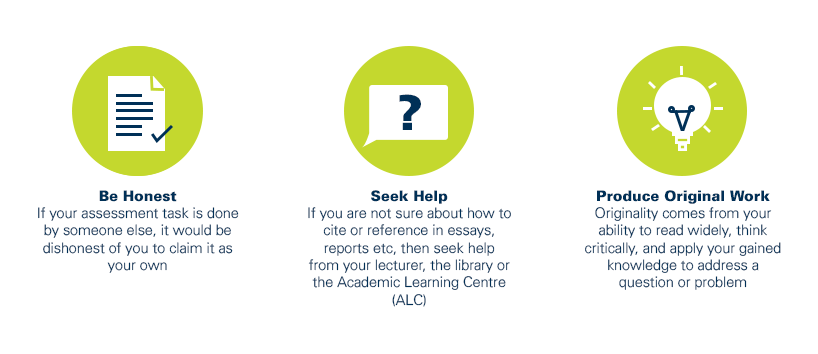
As a CQUniversity student you are expected to act honestly in all aspects of your academic work.
Any assessable work undertaken or submitted for review or assessment must be your own work. Assessable work is any type of work you do to meet the assessment requirements in the unit, including draft work submitted for review and feedback and final work to be assessed.
When you use the ideas, words or data of others in your assessment, you must thoroughly and clearly acknowledge the source of this information by using the correct referencing style for your unit. Using others’ work without proper acknowledgement may be considered a form of intellectual dishonesty.
Participating honestly, respectfully, responsibly, and fairly in your university study ensures the CQUniversity qualification you earn will be valued as a true indication of your individual academic achievement and will continue to receive the respect and recognition it deserves.
As a student, you are responsible for reading and following CQUniversity’s policies, including the Student Academic Integrity Policy and Procedure. This policy sets out CQUniversity’s expectations of you to act with integrity, examples of academic integrity breaches to avoid, the processes used to address alleged breaches of academic integrity, and potential penalties.
What is a breach of academic integrity?
A breach of academic integrity includes but is not limited to plagiarism, self-plagiarism, collusion, cheating, contract cheating, and academic misconduct. The Student Academic Integrity Policy and Procedure defines what these terms mean and gives examples.
Why is academic integrity important?
A breach of academic integrity may result in one or more penalties, including suspension or even expulsion from the University. It can also have negative implications for student visas and future enrolment at CQUniversity or elsewhere. Students who engage in contract cheating also risk being blackmailed by contract cheating services.
Where can I get assistance?
For academic advice and guidance, the Academic Learning Centre (ALC) can support you in becoming confident in completing assessments with integrity and of high standard.
What can you do to act with integrity?