Overview
Building Information Modelling (BIM), evolving into Building Lifecycle Management (BLM), is transforming the design, construction, and operation of built assets. Governments and industry sectors worldwide increasingly mandate BIM, making competency in BIM essential for construction professionals. In this unit, you will develop advanced knowledge and practical skills in BIM visualisation, modelling, coordination, and data management. You will explore contemporary BIM standards, collaborative workflows, lifecycle modelling concepts, project information requirements, and model-based communication. You will also examine the client's post-construction use of BIM and evaluate how BIM supports improved constructability, risk mitigation, and asset management. Throughout the term, you will apply BIM methodologies to realistic project environments, critically analyse professional BIM practices, and develop the skills required for successful BIM adoption in construction management.
Details
Pre-requisites or Co-requisites
Prerequisites: BLCN29003 Construction Measurement AND PPMP20008 Initiating and Planning Projects
Important note: Students enrolled in a subsequent unit who failed their pre-requisite unit, should drop the subsequent unit before the census date or within 10 working days of Fail grade notification. Students who do not drop the unit in this timeframe cannot later drop the unit without academic and financial liability. See details in the Assessment Policy and Procedure (Higher Education Coursework).
Offerings For Term 1 - 2026
Attendance Requirements
All on-campus students are expected to attend scheduled classes - in some units, these classes are identified as a mandatory (pass/fail) component and attendance is compulsory. International students, on a student visa, must maintain a full time study load and meet both attendance and academic progress requirements in each study period (satisfactory attendance for International students is defined as maintaining at least an 80% attendance record).
Recommended Student Time Commitment
Each 6-credit Postgraduate unit at CQUniversity requires an overall time commitment of an average of 12.5 hours of study per week, making a total of 150 hours for the unit.
Class Timetable
Assessment Overview
Assessment Grading
This is a graded unit: your overall grade will be calculated from the marks or grades for each assessment task, based on the relative weightings shown in the table above. You must obtain an overall mark for the unit of at least 50%, or an overall grade of 'pass' in order to pass the unit. If any 'pass/fail' tasks are shown in the table above they must also be completed successfully ('pass' grade). You must also meet any minimum mark requirements specified for a particular assessment task, as detailed in the 'assessment task' section (note that in some instances, the minimum mark for a task may be greater than 50%). Consult the University's Grades and Results Policy for more details of interim results and final grades.
All University policies are available on the CQUniversity Policy site.
You may wish to view these policies:
- Grades and Results Policy
- Assessment Policy and Procedure (Higher Education Coursework)
- Review of Grade Procedure
- Student Academic Integrity Policy and Procedure
- Academic Progression Policy and Procedure
- Student Refund and Credit Balance Policy and Procedure
- Complaints Policy and Procedure
- Information and Communications Technology Acceptable Use Policy and Procedure
This list is not an exhaustive list of all University policies. The full list of University policies are available on the CQUniversity Policy site.
Feedback, Recommendations and Responses
Every unit is reviewed for enhancement each year. At the most recent review, the following staff and student feedback items were identified and recommendations were made.
Feedback from SUTE
Since this unit is very important, the Uit Coordinator should visit students at least once in 12 weeks so that he/she can share valuable information with the students.
Although the Unit Coordinator contacted students through forum posts, emails, etc., arranging some online sessions for Brisbane students might be a good idea.
Feedback from SUTE
The Unit Coordinator is one person, the lecturer is another, and the tutor is a third person. Because of this, it is not efficient to link all the unit learning information together.
Following the resignation of full-time staff, online lectures were organised for Brisbane students, and a casual academic was appointed to provide tutorial sessions. A new full-time employee has been appointed in Brisbane, and this issue will be addressed.
Feedback from SUTE
Short duration for the course, should be separate and available for two units.
BLCN29005 is an intensive unit in which students concurrently master many software applications. Nevertheless, it cannot be divided into distinct units owing to other unit requirements in CL82. Moreover, in a Master's program in construction management, most universities provide a single course on Building Information Modeling (BIM). This course offers a robust foundation in BIM, which students can further enhance through exploratory work.
- Critically analyse the development, purpose, and functions of Building Information Modelling (BIM) within contemporary construction practice
- Identify and evaluate the roles and responsibilities of affiliated professions involved in BIM adoption, coordination, and implementation across the project lifecycle
- Apply advanced, creative, and collaborative BIM and Building Lifecycle Modelling techniques to optimise constructability and reduce project risks
- Apply theoretical and professional knowledge in BIM and lifecycle modelling to design, plan, and execute a substantial research-based BIM project.
Alignment of Assessment Tasks to Learning Outcomes
| Assessment Tasks | Learning Outcomes | |||
|---|---|---|---|---|
| 1 | 2 | 3 | 4 | |
| 1 - Written Assessment - 20% | ||||
| 2 - Presentation - 10% | ||||
| 3 - Practical Assessment - 50% | ||||
| 4 - Online Quiz(zes) - 20% | ||||
Alignment of Graduate Attributes to Learning Outcomes
| Graduate Attributes | Learning Outcomes | |||
|---|---|---|---|---|
| 1 | 2 | 3 | 4 | |
| 1 - Knowledge | ||||
| 2 - Communication | ||||
| 3 - Cognitive, technical and creative skills | ||||
| 4 - Research | ||||
| 5 - Self-management | ||||
| 6 - Ethical and Professional Responsibility | ||||
| 7 - Leadership | ||||
| 8 - First Nations Knowledges | ||||
| 9 - Aboriginal and Torres Strait Islander Cultures | ||||
Textbooks
There are no required textbooks.
IT Resources
- CQUniversity Student Email
- Internet
- Unit Website (Moodle)
- ZOOM
- Online access Australian Standards (through CQU Library)
- Access to Microsoft software such as PowerPoint, MS Project and Visio
- CQUniveristy Library Resources
- Autodesk Navisworks Manage 2026 or the latest version
- Autodesk Revit 2026 or the latest version
All submissions for this unit must use the referencing style: Harvard (author-date)
For further information, see the Assessment Tasks.
h.khan@cqu.edu.au
Week 1
Begin Date: 09 Mar 2026Module/Topic
Introduction to BIM and Revit
Chapter
Events and Submissions/Topic
Work your way through the weekly materials as described below
- Read Week 01 Lecture Notes
- Participate in Week 01 Lecture
- Complete Learning Activity 01
- Participate in Week 01 Tutorial Class
By the end of this week, you will:
- Learning objective 1: Define BIM as an information management methodology relying on digitalisation and collaboration.
- Learning objective 2: Identify the power of BIM in 'I' – i.e., information.
- Learning objective 3: Identify the merits of object-oriented and parametric modelling compared to traditional CAD drafting.
- Learning objective 4: Explain Common Data Environment (CDE), and CDE's quality assurance requirements.
- Learning objective 5: Identify the purpose of BIM standards.
Week 2
Begin Date: 16 Mar 2026Module/Topic
BIM uses and deliverables over the project life cycle / Revit parameters and applications
Chapter
Events and Submissions/Topic
Work your way through the weekly materials as described below:
- Read Week 02 Lecture Notes
- Watch Week 02 Lecture
- Complete Learning Activity 01
- Participate in Week 02 Tutorial Class
- Respond to Moodle threads
You will achieve the following learning objectives:
- Objective 1: Identify BIM uses over the project lifecycle.
- Objective 2: Describe potential value from each BIM use and the challenges to implementing them in a project environment
- Objective 3: Align BIM potential uses with project management objectives and describe how a project team decides to implement a BIM use in a project
- Objective 4: Explain the concept of Level of Development (LOD)
Week 3
Begin Date: 23 Mar 2026Module/Topic
Interoperability issues and solutions, including Industry Foundation Classes (IFC)/modeling parametric objects using Revit
Chapter
Events and Submissions/Topic
Work your way through the weekly materials as described below:
- Discuss Task 1 and 2 of Week 2 (from the lecture) with your lecturer during the lecture
- Read Week 03 Lecture Notes
- Participate/Watch Week 03 Lecture
- Participate in Week 03 Tutorial Class
- Respond to Moodle threads created by the end of the week
You will achieve the following learning objectives:
- Objective 01. Define interoperability and identify its consequences for BIM implementation
- Objective 02. Discuss solutions to interoperability, including non-proprietary, neutral data formats
- Objective 03. Learn to create Revit families
Week 4
Begin Date: 30 Mar 2026Module/Topic
Defining and cascading Employer’s Information Requirements (EIR) using ISO 19650 fundamentals/Performance-based design using Revit
Chapter
Events and Submissions/Topic
Work your way through the weekly materials as described below:
- Download a copy of ISO 19650 – Part 1 (2019) from the CQU Library
- Read Week 04 Lecture Notes
- Participate/Watch Week 04 Lecture
- Participate in Week 04 Tutorial Class
- Respond to Moodle threads and Learning Activities created by the end of the week
You will achieve the following learning objectives:
- Objective 01. Identify why ISO 19650 standards are important for BIM implementation
- Objective 02. Be familiar with OIR, AIR, PIR and EIR
- Objective 03. Identify how the appointing party cascades OIRs down the supply chain
- Objective 04. Explain how design performance could be enhanced in design authoring through model-based collaboration
Week 5
Begin Date: 06 Apr 2026Module/Topic
Roles and responsibilities of the client and the supply chain under BIM implementation/Introduction to Navisworks: Federated model
Chapter
Events and Submissions/Topic
Work your way through the weekly materials as described below:
- Download a copy of ISO 19650 – Part 2 (2019) from the CQU Library
- Read Week 05 Lecture Notes
- Participate/Watch Week 05 Lecture
- Participate in Week 05 Tutorial Class
- Respond to Moodle threads and Learning Activities created by the end of the week
You will achieve the following learning objectives:
Lecture:
- Objective 01. Identify OIR, AIR and PIR with respect to a practical scenario
- Objective 02. Explain the information management process using ISO 19650: Part 1
- Objective 03. Recognise the generic structure of a BIM team
- Objective 04. Explain the activities associated with the information management process in the delivery phase using ISO 19650: Part 2
Tutorial:
- Objective 01. Be familiar with the Navisworks Manage 2023 interface
- Objective 02. Learn to create a federated model
- Objective 03. Identify Navisworks file types and their applications
- Objective 04. Learn basic Navisworks skills – such as navigating through a model, selection tree, and creating sets
Week 6
Begin Date: 13 Apr 2026Module/Topic
Quality assurance in the Common Data Environment (CDE) / Design review and validation using Navisworks
Chapter
Events and Submissions/Topic
ASSESSMENT 1 - DUE
Work your way through the weekly materials as described below:
- Read Week 06 Lecture Notes
- Participate/Watch Week 06 Lecture
- Participate in Week 06 Tutorial Class
- Respond to Moodle threads and Learning Activities created by the end of the week
- Refer to additional reading to enhance your knowledge of ISO 19650: Part 2 implementation
You will achieve the following learning objectives:
Lecture:
- Objective 01. Enhance student’s understanding of CDE
- Objective 02. Understand the need for a federation strategy
- Objective 03. Explain the importance of naming conventions for information containers
- Objective 04. Explain the necessity of metadata in document management
Tutorial:
- Objective 01. Master Navisworks navigation skills
- Objective 02. Understand and use Selection Tree efficiently
- Objective 03. Know Navisworks Selection Resolutions and the effect on Navisworks parameters
- Objective 04. Create selection and search sets and know the difference between them
- Objective 05. Use ‘Review’ and ‘Find Items’ to check design compliance
Assessment 1 Part A (Research -based written) 20% Due: Week 6 Thursday (16 Apr 2026) 11:59 pm AEST
Assessment 1 Part B (Presentation) 10% Due: Week 6 Thursday (16 Apr 2026) 11:59 pm AEST
Vacation Week
Begin Date: 20 Apr 2026Module/Topic
Chapter
Events and Submissions/Topic
Week 7
Begin Date: 27 Apr 2026Module/Topic
BIM Execution Plan: Part 1 / 4D modelling using Navisworks
Chapter
Events and Submissions/Topic
Work your way through the weekly materials as described below:
- Read Week 07 Lecture Notes
- Participate/Watch Week 07 Lecture
- Participate in Week 07 Tutorial Class
- Respond to Moodle threads and Learning Activities created by the end of the week
- Refer to additional reading to enhance your knowledge of ISO 19650: Part 2 implementation
You will achieve the following learning objectives:
Lecture:
- Objective 01. Explain the requirement of a BIM Execution Plan (BEP)
- Objective 02. Understand the process of creating BEP
- Objective 03. Understand the content of BEP
Tutorial:
- Objective 01. Understand the benefits and limitations of 4D modelling compared to other project planning software applications (MS Project)
- Objective 02. Use Revit Phases to communicate a design effectively
- Objective 03. Use Revit Phases for cost-driven decision making
- Objective 04. Use Navisworks Timeliner tools to create 4D models, including planned, and planned versus actual simulations
Week 8
Begin Date: 04 May 2026Module/Topic
BIM Execution Plan: Part 2 / Clash-detection using Navisworks
Chapter
Events and Submissions/Topic
Work your way through the weekly materials as described below:
- Read Week 08 Lecture Notes
- Participate/Watch Week 08 Lecture
- Participate in Week 08 Tutorial Class
You will achieve the following learning objectives:
Lecture:
- Objective 01. Develop information exchanges
- Objective 02. Define supporting infrastructure for BIM implementation
- Objective 03. Learn Fundamental Principles of information container-based collaborative working
- Objective 04. Know Delivery team capability and capacity
- Objective 05. Understand Responsibility matrix, Task Information Delivery Plans (TIDPs) and Master Information Delivery Plan (MIDP)
Tutorial:
- Objective 01. How to avoid clashes proactively
- Objective 02. Interference check while authoring design models
- Objective 03. Navisworks Manage Clash Detective
- Objective 04. Why practical considerations are critical for designing clash-detection tests
- Objective 05. Detailed process map for clash detection
Week 9
Begin Date: 11 May 2026Module/Topic
Guest lecture (Topic to be announced) and Use of Visio for BIM process mapping / Timeliner integrated Clash detection using Navisworks
Chapter
Events and Submissions/Topic
Work your way through the weekly materials as described below:
- Read Week 09 Guest Lecture Notes
- Participate/Watch Week 09 Guest Lecture
- Participate in Week 09 Tutorial Class
- Respond to Moodle threads and Learning Activities created by the end of the week
You will achieve the following learning objectives:
- Objective1. Develop our Visio skills to develop BIM process maps
- Objective2. Develop a Timeliner-integrated Clash Detective using Navisworks Manage to minimise clashes among MEP work packages
- Objective 3. Understand the practical applications of BIM in the Australian Construction Industry
Week 10
Begin Date: 18 May 2026Module/Topic
Construction Operations Building Information Exchange (COBie) and preparing a COBie output
Chapter
Events and Submissions/Topic
Work your way through the weekly materials as described below:
- Read Week 10 Lecture Notes
- Participate/Watch Week 10 Lecture
- Participate in Week 10 Tutorial Class
- Respond to Moodle threads and Learning Activities created by the end of the week
You will achieve the following learning objectives:
Lecture:
- Objective1. Understand COBie data schema
- Objective2. Understand COBie’s business value to clients, asset managers and facilities managers
- Objective3. Understand COBie process
Tutorial:
- Objective 1: Learn to use design authoring tools to produce a COBie outcome
Week 11
Begin Date: 25 May 2026Module/Topic
Integrated Project Delivery (IPD) and 5D BIM
Chapter
Events and Submissions/Topic
Work your way through the weekly materials as described below:
- Read Week 11 Lecture Notes
- Participate/Watch Week 11 Lecture
- Participate in Week 11 Tutorial Class
You will achieve the following learning objectives:
Lecture:
- Objective1. Understand contract arrangements facilitating collaborative BIM
- Objective2. Define IPD and its key values
Tutorial:
- Objective1. Understand 5D BIM
- Objective2. Practice Navisworks Quantification for automatic extraction of quantities
Week 12
Begin Date: 01 Jun 2026Module/Topic
Revision / Assessment support (Practical Assessment)
Chapter
Events and Submissions/Topic
ASSESSMENT 2 - DUE
Work your way through the weekly materials as described below:
- Watch Week 12 Lecture
- Participate in Week 12 Tutorial Class
You will achieve the following learning objectives:
Lecture:
- Objective1. Summarise the learning outcomes of the semester
Tutorial:
- Objective1. Get assistance with Assessment 03 issues
ASSSESSMENT 2 (PRACTICAL) 50% Due: Week 12 Thursday (4 June 2026) 11:59 pm AEST
Exam Week
Begin Date: 08 Jun 2026Module/Topic
ONLINE TEST: SPECIFIC DATE AND TIME TO BE ADVISED
Chapter
Events and Submissions/Topic
Vacation/Exam Week
Begin Date: 15 Jun 2026Module/Topic
Chapter
Events and Submissions/Topic
1 Written Assessment
Assessment 1 is a group assessment, and a group could consist of members up to 04.
Assessment 1 evaluates students' knowledge and skills in digitising and managing information related to construction projects using BIM. In addition to the first four topics (Weeks 1-5) discussed in the lecture, students will undertake substantial research to complete Assessment 1. Students will refer to a given scenario and identify the project and asset management objectives. After that, students will identify Organisational Information Requirements (OIRs) to pursue the identified project and asset management objectives. Students will demonstrate how OIRs are cascaded down the supply chain and how PIM (Project Information Model) and AIM (Asset Information Model) are delivered by the supply chain to fulfil OIRs. Students will align BIM uses with the information requirements and discuss challenges project stakeholders face under BIM implementation from information management perspectives.
AI ASSESSMENT SCALE - AI PLANNING
You may use Al for planning, idea development, and research. Your final submission should show how you have developed and refined these ideas.
Week 6 Thursday (16 Apr 2026) 11:59 pm AEST
Submission must be via Turnitin
Week 7 Thursday (30 Apr 2026)
Review of the assessment will be returned within two weeks of the submission due date.
SEE MOODLE FOR DETAILS
- Critically analyse the development, purpose, and functions of Building Information Modelling (BIM) within contemporary construction practice
- Identify and evaluate the roles and responsibilities of affiliated professions involved in BIM adoption, coordination, and implementation across the project lifecycle
2 Presentation
Building on the written analysis in Part A, students will work in small groups (maximum four members) to prepare and record a presentation based on the assigned BIM scenario. The presentation must be pre-recorded and uploaded to Moodle, with a total duration of approximately 10 minutes per group (around 2.5 minutes per student). Each student is required to present a clearly defined section of the group’s work, including the project objectives, Organisational Information Requirements (OIR), Exchange Information Requirements (EIR), relevant BIM uses, and key implementation challenges they have analysed.
The presentation should demonstrate critical understanding of ISO 19650 principles and clearly explain how information requirements and BIM processes are structured and managed across the project lifecycle. Although delivered collaboratively, marks will be awarded individually based on analytical depth, technical accuracy, clarity of explanation, and professional delivery.
AI ASSESSMENT SCALE - AI PLANNING
You may use Al for planning, idea development, and research. Your final submission should show how you have developed and refined these ideas.
Week 6 Thursday (16 Apr 2026) 11:59 pm AEST
Submission through Moodle
Week 7 Thursday (30 Apr 2026)
Review of the assessment will be returned within two weeks of the submission due date.
SEE MOODLE FOR DETAILS
- Critically analyse the development, purpose, and functions of Building Information Modelling (BIM) within contemporary construction practice
- Identify and evaluate the roles and responsibilities of affiliated professions involved in BIM adoption, coordination, and implementation across the project lifecycle
3 Practical Assessment
Assessment 2 evaluates knowledge of BIM and software skills concerning the delivery stage of construction projects. Students will use Autodesk Revit (2026- latest version) and Autodesk Navisworks (2026- latest version) to illustrate their skills in design changes, 3D coordination, and 4D (time integration) and 5D (cost integration) modelling. In addition to digital skill development, it is expected that students will understand the benefits and challenges of BIM compared to traditional project delivery.
A minimum score of 40% (20/50) is necessary to pass Assessment 2
AI ASSESSMENT SCALE - NO AI
You must not use Al at any point during the assessment. You must demonstrate your core skills and knowledge.
Week 12 Thursday (4 June 2026) 11:59 pm AEST
Submission through Moodle
Vacation/Exam Week Thursday (18 June 2026)
Review of the assessment will be returned within two weeks of the submission due date.
SEE MOODLE FOR DETAILS
- Apply advanced, creative, and collaborative BIM and Building Lifecycle Modelling techniques to optimise constructability and reduce project risks
- Apply theoretical and professional knowledge in BIM and lifecycle modelling to design, plan, and execute a substantial research-based BIM project.
4 Online Quiz(zes)
Assessment 3 evaluates students’ knowledge and skills about theoretical aspects and practical considerations of BIM. This online test will consist of multiple choices and short written responses. The questions are from the lecture contents from Week 5 to Week 11. Students will require a substantial understanding of ISO19650 and available Australian BIM implementation protocols. The quiz will focus on the following areas:
the roles and responsibilities of the client and the supply chain to manage information using the Common Data Environment (CDE)
Students’ knowledge of CDE and skills in managing practical issues under CDE implementation
Theoretical and practical aspects of a BIM Execution Plan (BXP)
Construction Operations Building Information Exchange (COBie)
Integrated Project Delivery (IPD)
AI ASSESSMENT SCALE - NO AI
You must not use Al at any point during the assessment. You must demonstrate your core skills and knowledge.
Note: “This assessment is exempted from the 72-hour submission grace period and must be completed by the stated submission date/time”
Exam Week Thursday (11 June 2026) 11:45 pm AEST
Completion via Moodle
Exam Week Thursday (11 June 2026)
Via Moodle
SEE MOODLE FOR DETAILS
- Critically analyse the development, purpose, and functions of Building Information Modelling (BIM) within contemporary construction practice
- Identify and evaluate the roles and responsibilities of affiliated professions involved in BIM adoption, coordination, and implementation across the project lifecycle
- Apply advanced, creative, and collaborative BIM and Building Lifecycle Modelling techniques to optimise constructability and reduce project risks
- Apply theoretical and professional knowledge in BIM and lifecycle modelling to design, plan, and execute a substantial research-based BIM project.
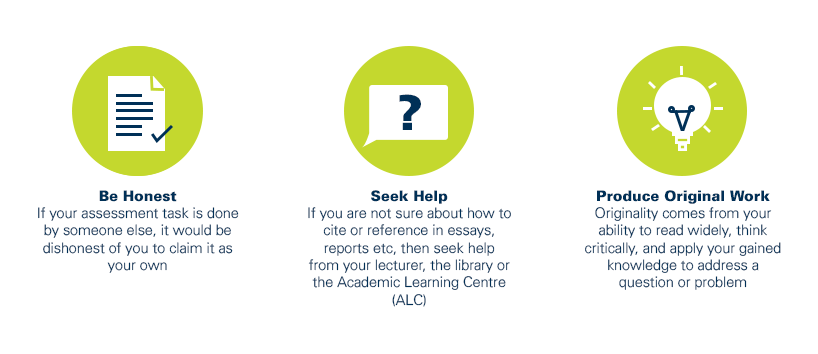
As a CQUniversity student you are expected to act honestly in all aspects of your academic work.
Any assessable work undertaken or submitted for review or assessment must be your own work. Assessable work is any type of work you do to meet the assessment requirements in the unit, including draft work submitted for review and feedback and final work to be assessed.
When you use the ideas, words or data of others in your assessment, you must thoroughly and clearly acknowledge the source of this information by using the correct referencing style for your unit. Using others’ work without proper acknowledgement may be considered a form of intellectual dishonesty.
Participating honestly, respectfully, responsibly, and fairly in your university study ensures the CQUniversity qualification you earn will be valued as a true indication of your individual academic achievement and will continue to receive the respect and recognition it deserves.
As a student, you are responsible for reading and following CQUniversity’s policies, including the Student Academic Integrity Policy and Procedure. This policy sets out CQUniversity’s expectations of you to act with integrity, examples of academic integrity breaches to avoid, the processes used to address alleged breaches of academic integrity, and potential penalties.
What is a breach of academic integrity?
A breach of academic integrity includes but is not limited to plagiarism, self-plagiarism, collusion, cheating, contract cheating, and academic misconduct. The Student Academic Integrity Policy and Procedure defines what these terms mean and gives examples.
Why is academic integrity important?
A breach of academic integrity may result in one or more penalties, including suspension or even expulsion from the University. It can also have negative implications for student visas and future enrolment at CQUniversity or elsewhere. Students who engage in contract cheating also risk being blackmailed by contract cheating services.
Where can I get assistance?
For academic advice and guidance, the Academic Learning Centre (ALC) can support you in becoming confident in completing assessments with integrity and of high standard.
What can you do to act with integrity?