Overview
This unit will enable students to develop their knowledge and understanding of biomolecules and cell function, including the structure and biological role of amino acids, proteins, nucleic acids, carbohydrates and lipids. They will develop a basic understanding of how these biomolecules are synthesised, catabolised and interconverted through key biochemical pathways to meet the needs of the cell and organism, and will provide the necessary knowledge to begin to study disease and drug treatment at the cellular level. Students will also develop a theoretical understanding of methods used in biochemical analysis and develop literature searching skills in the recognition and use of primary sources of scientific information.
Details
Pre-requisites or Co-requisites
Prerequisites: CHEM11041 Chemistry for the Life Sciences or CHEM11042 Fundamentals of Chemistry or CHEM11043 Atoms, Molecules and Matter
Important note: Students enrolled in a subsequent unit who failed their pre-requisite unit, should drop the subsequent unit before the census date or within 10 working days of Fail grade notification. Students who do not drop the unit in this timeframe cannot later drop the unit without academic and financial liability. See details in the Assessment Policy and Procedure (Higher Education Coursework).
Offerings For Term 1 - 2026
Attendance Requirements
All on-campus students are expected to attend scheduled classes - in some units, these classes are identified as a mandatory (pass/fail) component and attendance is compulsory. International students, on a student visa, must maintain a full time study load and meet both attendance and academic progress requirements in each study period (satisfactory attendance for International students is defined as maintaining at least an 80% attendance record).
Recommended Student Time Commitment
Each 6-credit Undergraduate unit at CQUniversity requires an overall time commitment of an average of 12.5 hours of study per week, making a total of 150 hours for the unit.
Class Timetable
Assessment Overview
Assessment Grading
This is a graded unit: your overall grade will be calculated from the marks or grades for each assessment task, based on the relative weightings shown in the table above. You must obtain an overall mark for the unit of at least 50%, or an overall grade of 'pass' in order to pass the unit. If any 'pass/fail' tasks are shown in the table above they must also be completed successfully ('pass' grade). You must also meet any minimum mark requirements specified for a particular assessment task, as detailed in the 'assessment task' section (note that in some instances, the minimum mark for a task may be greater than 50%). Consult the University's Grades and Results Policy for more details of interim results and final grades.
All University policies are available on the CQUniversity Policy site.
You may wish to view these policies:
- Grades and Results Policy
- Assessment Policy and Procedure (Higher Education Coursework)
- Review of Grade Procedure
- Student Academic Integrity Policy and Procedure
- Academic Progression Policy and Procedure
- Student Refund and Credit Balance Policy and Procedure
- Complaints Policy and Procedure
- Information and Communications Technology Acceptable Use Policy and Procedure
This list is not an exhaustive list of all University policies. The full list of University policies are available on the CQUniversity Policy site.
Feedback, Recommendations and Responses
Every unit is reviewed for enhancement each year. At the most recent review, the following staff and student feedback items were identified and recommendations were made.
Feedback from Student feedback
Weekly textbook chapters should be provided within Moodle content.
Supplementary readings will be added to each learning week of Moodle.
Feedback from Course Committee
TEQSA and AIMS accreditation guidelines suggest high-stakes assessments should not be conducted online.
Move to invigilated final exam from Term 2, 2026
- Demonstrate knowledge of the structure, function and biological roles of the major types of macromolecules and their building blocks
- Explain the various methods used to separate and characterise macromolecules
- Describe the relationship between structure and function of the components of biological membranes
- Outline the basic processes involved in metabolism of carbohydares, fats and proteins and their catabolism to synthesise ATP through cellular respiration.
Alignment of Assessment Tasks to Learning Outcomes
| Assessment Tasks | Learning Outcomes | |||
|---|---|---|---|---|
| 1 | 2 | 3 | 4 | |
| 1 - Online Test - 40% | ||||
| 2 - Online Test - 60% | ||||
Alignment of Graduate Attributes to Learning Outcomes
| Graduate Attributes | Learning Outcomes | |||
|---|---|---|---|---|
| 1 | 2 | 3 | 4 | |
| 1 - Communication | ||||
| 2 - Problem Solving | ||||
| 3 - Critical Thinking | ||||
| 4 - Information Literacy | ||||
| 5 - Team Work | ||||
| 6 - Information Technology Competence | ||||
| 7 - Cross Cultural Competence | ||||
| 8 - Ethical practice | ||||
| 9 - Social Innovation | ||||
| 10 - First Nations Knowledges | ||||
| 11 - Aboriginal and Torres Strait Islander Cultures | ||||
Alignment of Assessment Tasks to Graduate Attributes
| Assessment Tasks | Graduate Attributes | ||||||||||
|---|---|---|---|---|---|---|---|---|---|---|---|
| 1 | 2 | 3 | 4 | 5 | 6 | 7 | 8 | 9 | 10 | 11 | |
| 1 - Online Test - 40% | |||||||||||
| 2 - Online Test - 60% | |||||||||||
Textbooks
General, organic, & biological chemistry
- Edition: 3rd (2016)
- Authors: Janice Gorzynski Smith
- McGraw-Hill Education
- New York New York , NY , USA
- ISBN: 9780073511245
Medical Biochemistry at a Glance
- Edition: 3rd (2012)
- Authors: J.G. Salway
- Wiley-Blackwell
- Chichester Chichester , W Sussex , UK
- ISBN: 9780470654514
Principles of medical biochemistry
- Edition: 4th (2017)
- Authors: Meisenberg, G.
- Elsevier
- Philadelphia Philadelphia , PA , USA
- ISBN: 9780323296168
IT Resources
- CQUniversity Student Email
- Internet
- Unit Website (Moodle)
- Zoom Capacity (microphone required; webcam optional)
All submissions for this unit must use the referencing style: Vancouver
For further information, see the Assessment Tasks.
s.j.burgess@cqu.edu.au
Week 1
Begin Date: 09 Mar 2026Module/Topic
Body fluids and pH
Chapter
Chapter 1
Principles of Medical Biochemistry (S. Meisenberg, 4th Edition)
Events and Submissions/Topic
Introductory Tutorial
Tutorial covering Week 1 material
Week 2
Begin Date: 16 Mar 2026Module/Topic
Amino acids and proteins
Chapter
Chapter 1, 2
Principles of Medical Biochemistry (S. Meisenberg, 4th Edition)
Events and Submissions/Topic
Tutorial covering Week 2 material
ALC tutorial
Week 3
Begin Date: 23 Mar 2026Module/Topic
Enzymes
Chapter
Chapter 4, 5
Principles of Medical Biochemistry (S. Meisenberg, 4th Edition)
Events and Submissions/Topic
Tutorial covering Week 3 material
Week 4
Begin Date: 30 Mar 2026Module/Topic
Nucleic acids and protein synthesis
Chapter
Chapter 6
Principles of Medical Biochemistry (S. Meisenberg, 4th Edition)
Events and Submissions/Topic
Tutorial covering Week 4 material
Week 5
Begin Date: 06 Apr 2026Module/Topic
Lipids and carbohydrates
Chapter
Chapter 24, 25
Principles of Medical Biochemistry (S. Meisenberg, 4th Edition)
Events and Submissions/Topic
Tutorial covering Week 5 material
Week 6
Begin Date: 13 Apr 2026Module/Topic
Membrane transport
Chapter
Chapter 12
Principles of Medical Biochemistry (S. Meisenberg, 4th Edition)
Events and Submissions/Topic
Tutorial covering Week 6 material
Mid-term Online Test Due: Week 6 Friday (17 Apr 2026) 11:59 pm AEST
Break Week
Begin Date: 20 Apr 2026Module/Topic
No lecture or tutorial this week
Chapter
N/A
Events and Submissions/Topic
N/A
Week 7
Begin Date: 27 Apr 2026Module/Topic
Metabolism I
Chapter
Chapter 21, 22
Principles of Medical Biochemistry (S. Meisenberg, 4th Edition)
Events and Submissions/Topic
Tutorial covering Week 7 material
Week 8
Begin Date: 04 May 2026Module/Topic
Metabolism II
Chapter
Chapter 20, 22, 25, 28
Principles of Medical Biochemistry (S. Meisenberg, 4th Edition)
Events and Submissions/Topic
Tutorial covering Week 8 material
Week 9
Begin Date: 11 May 2026Module/Topic
Nucleic acid metabolism I
Chapter
Chapter 30
Principles of Medical Biochemistry (S. Meisenberg, 4th Edition)
Events and Submissions/Topic
Tutorial covering Week 9 material
Week 10
Begin Date: 18 May 2026Module/Topic
Nucleic acid metabolism II
Chapter
Chapter 30
Principles of Medical Biochemistry (S. Meisenberg, 4th Edition)
Events and Submissions/Topic
Tutorial covering Week 10 material
Week 11
Begin Date: 25 May 2026Module/Topic
Biochemical basis of diseases
Chapter
N/A
Events and Submissions/Topic
Tutorial covering Week 11 material
Week 12
Begin Date: 01 Jun 2026Module/Topic
Revision week
Chapter
N/A
Events and Submissions/Topic
Revision tutorial
Exam Week
Begin Date: 08 Jun 2026Module/Topic
Revision
Chapter
Events and Submissions/Topic
Your unit coordinator for BMSC11005 Foundations of Biochemistry is Sue Burgess. You can contact Sue using the forum on the unit's Moodle site or alternatively through email, s.j.burgess@cqu.edu.au. The forum for this unit is continuously monitored and you can expect a response within 24-48 hours of posting your question.
As the name suggests, this unit will provide you with foundational knowledge of biochemistry in relation to your profession. BMSC11005 Foundations of Biochemistry is a core unit in several courses, including:
Bachelor of Paramedic Sciences
Bachelor of Medical Science (Pathway to Medicine)
Bachelor of Medical Sciences (Specialisation)
Bachelor of Medical Laboratory Science (Honours)
Bachelor of Sciences (Chiropractic)
Bachelor of Science
Bachelor of Environmental Science
The relevance of biochemistry in each specific discipline will be exemplified through the use of discipline-specific examples provided throughout the lectures and tutorials. Tutorials are delivered each week in term 1 via ZOOM. During these tutorials, we will discuss clinical applications relevant to the week's content. We will also work through the weekly study questions that are provided to you on the Moodle site. These weekly study questions will help you apply knowledge learned during the weekly lecture and prepare you for the assessments. You are strongly encouraged to participate in tutorial and you will get the most benefit from the tutorials if you watch the weekly lectures beforehand and attempt the weekly study questions. Weekly revision quizzes are also provided to reinforce the knowledge you have gained from the lectures and to support your learning experience in this unit.
As per Australian educational standards, you are expected to commit 150 hours of engagement to your study of this unit. This is broken down as: 2 - 3 hours per week watching recorded lectures and revising the content through study notes; 3 - 4 hours per week completing the weekly study questions and weekly revision quizzes on the unit's Moodle site; 1 - 2 hours per week attending the weekly tutorial and reflecting on your answers to the weekly study questions; and 3 - 4 hours per week preparing your assessments or studying for your online test.
1 Online Test
An understanding of the biochemical composition of the human body is essential in many health professions. This includes knowledge of body fluids, biomolecules, and cell functions, along with the structure and biological roles of amino acids, proteins, nucleic acids, carbohydrates, and lipids. This assessment requires you to demonstrate your knowledge and understanding of these foundation topics.
You are required to complete the Mid-term Online Test through the Moodle site.
- This Online Test will assess the topics covered during Weeks 1 to 5.
- This Online Test will be due by the end of Week 6.
- You will be allowed one attempt at this Online Test.
- The Online Test will be automatically submitted at the completion of the specified time duration.
- In the absence of an approved extension, there will be no opportunity to complete this Online Test after the due date.
Your score from this Mid-term Online Test will contribute 40% to your final grade.
Level of GenAI use allowed:
Level 1: You must not use Al at any point during the assessment. You must demonstrate your core skills and knowledge.
The 72-hour grace period does not apply to this assessment.
Week 6 Friday (17 Apr 2026) 11:59 pm AEST
The test will open and close on 17th April 2026. You are required to finish the Online Test within the specified time duration (100 minutes). You are not required to use the entire time duration. The Online Test will be automatically submitted at the completion of the specified time duration.
Marks will be available before Week 9 following moderation by the academic team.
Questions will be marked and moderated by the academic team. Your total mark for this assessment task and marks for individual questions will be released. If you have any specific questions please contact your unit coordinator directly.
- Demonstrate knowledge of the structure, function and biological roles of the major types of macromolecules and their building blocks
- Explain the various methods used to separate and characterise macromolecules
- Describe the relationship between structure and function of the components of biological membranes
- Outline the basic processes involved in metabolism of carbohydares, fats and proteins and their catabolism to synthesise ATP through cellular respiration.
- Communication
- Problem Solving
- Information Literacy
2 Online Test
In your future profession, you may encounter many conditions that are caused by dysfunctional biochemical pathways. It is important that you understand the roles of biochemical metabolism in the human body, including how biomolecules are synthesised, catabolised and interconverted through key biochemical reactions. This assessment provides you with an opportunity to demonstrate your understanding of this knowledge.
You are required to complete the End-of-term Online Test through the Moodle site.
- This Online Test will assess the topics covered during Weeks 6 to 12.
- This Online Test will open and close during Exam Week.
- You will be allowed one attempt at this Online Test.
- The Online Test will be automatically submitted at the completion of the specified time duration.
- In the absence of an approved extension, there will be no opportunity to complete this Online Test after the due date.
Your score from End-of-term Online Test will contribute 60% to your final grade.
Level of GenAI use allowed:
Level 1: You must not use Al at any point during the assessment. You must demonstrate your core skills and knowledge.
The 72-hour grace period does not apply to this assessment.
Exam Week Friday (12 June 2026) 11:59 pm AEST
The test will open and close on 12th June 2026. You are required to finish the Online Test within the specified time duration (150 minutes). You are not required to use the entire time duration. The Online Test will be automatically submitted at the completion of the specified time duration.
Marks will be available following moderation by the academic team and the Certification of Grades.
Questions will be marked and moderated by the academic team. Your total mark for this assessment task and marks for individual questions will be released. If you have any specific questions please contact your unit coordinator directly.
- Demonstrate knowledge of the structure, function and biological roles of the major types of macromolecules and their building blocks
- Explain the various methods used to separate and characterise macromolecules
- Describe the relationship between structure and function of the components of biological membranes
- Outline the basic processes involved in metabolism of carbohydares, fats and proteins and their catabolism to synthesise ATP through cellular respiration.
- Communication
- Problem Solving
- Information Literacy
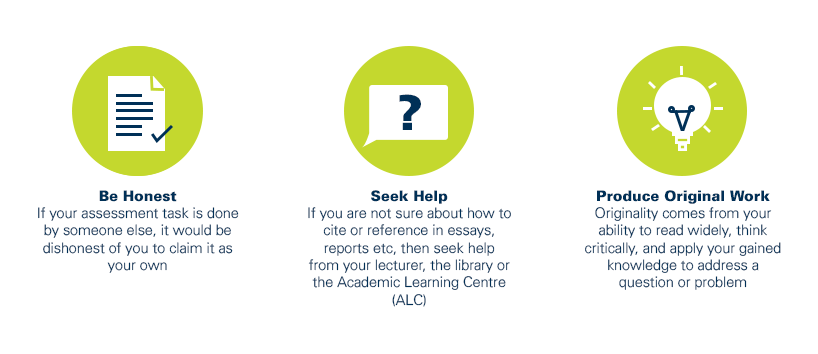
As a CQUniversity student you are expected to act honestly in all aspects of your academic work.
Any assessable work undertaken or submitted for review or assessment must be your own work. Assessable work is any type of work you do to meet the assessment requirements in the unit, including draft work submitted for review and feedback and final work to be assessed.
When you use the ideas, words or data of others in your assessment, you must thoroughly and clearly acknowledge the source of this information by using the correct referencing style for your unit. Using others’ work without proper acknowledgement may be considered a form of intellectual dishonesty.
Participating honestly, respectfully, responsibly, and fairly in your university study ensures the CQUniversity qualification you earn will be valued as a true indication of your individual academic achievement and will continue to receive the respect and recognition it deserves.
As a student, you are responsible for reading and following CQUniversity’s policies, including the Student Academic Integrity Policy and Procedure. This policy sets out CQUniversity’s expectations of you to act with integrity, examples of academic integrity breaches to avoid, the processes used to address alleged breaches of academic integrity, and potential penalties.
What is a breach of academic integrity?
A breach of academic integrity includes but is not limited to plagiarism, self-plagiarism, collusion, cheating, contract cheating, and academic misconduct. The Student Academic Integrity Policy and Procedure defines what these terms mean and gives examples.
Why is academic integrity important?
A breach of academic integrity may result in one or more penalties, including suspension or even expulsion from the University. It can also have negative implications for student visas and future enrolment at CQUniversity or elsewhere. Students who engage in contract cheating also risk being blackmailed by contract cheating services.
Where can I get assistance?
For academic advice and guidance, the Academic Learning Centre (ALC) can support you in becoming confident in completing assessments with integrity and of high standard.
What can you do to act with integrity?