Overview
In this unit you will study the structure and function of the immune system and be introduced to foundational concepts that underpin how the immune system works. You will explore the mechanisms that control the human body’s ability to detect, contain and remove or destroy harmful pathogens whilst retaining tolerance to its own cells. You will also demonstrate your competency in understanding and analysing laboratory tests in the assessment of the immune response. Depending on your discipline, you will be required to attend a residential school. Students enrolled in CM17 Bachelor of Medical Science (Pathway to Medicine), CL10 Bachelor of Medical Laboratory Science (Honours), and CG93 Bachelor of Medical Science (Specialisation) are required to attend the compulsory residential school to complete the portfolio assessment. Students enrolled in CM60 Bachelor of Nutrition and CM61 Bachelor of Nutrition / Master of Nutrition and Dietetics will not attend on‑campus or residential laboratory classes and will complete an equivalent portfolio assessment via Moodle.
Details
Pre-requisites or Co-requisites
Pre-requisites: BMSC11001 Human Body Systems 1 OR BMSC11007 Medical Anatomy and Physiology 1 OR BMSC11010 Human Anatomy and Physiology 1
Important note: Students enrolled in a subsequent unit who failed their pre-requisite unit, should drop the subsequent unit before the census date or within 10 working days of Fail grade notification. Students who do not drop the unit in this timeframe cannot later drop the unit without academic and financial liability. See details in the Assessment Policy and Procedure (Higher Education Coursework).
Offerings For Term 2 - 2026
Attendance Requirements
All on-campus students are expected to attend scheduled classes - in some units, these classes are identified as a mandatory (pass/fail) component and attendance is compulsory. International students, on a student visa, must maintain a full time study load and meet both attendance and academic progress requirements in each study period (satisfactory attendance for International students is defined as maintaining at least an 80% attendance record).
Recommended Student Time Commitment
Each 6-credit Undergraduate unit at CQUniversity requires an overall time commitment of an average of 12.5 hours of study per week, making a total of 150 hours for the unit.
Class Timetable
Assessment Overview
Assessment Grading
This is a graded unit: your overall grade will be calculated from the marks or grades for each assessment task, based on the relative weightings shown in the table above. You must obtain an overall mark for the unit of at least 50%, or an overall grade of 'pass' in order to pass the unit. If any 'pass/fail' tasks are shown in the table above they must also be completed successfully ('pass' grade). You must also meet any minimum mark requirements specified for a particular assessment task, as detailed in the 'assessment task' section (note that in some instances, the minimum mark for a task may be greater than 50%). Consult the University's Grades and Results Policy for more details of interim results and final grades.
All University policies are available on the CQUniversity Policy site.
You may wish to view these policies:
- Grades and Results Policy
- Assessment Policy and Procedure (Higher Education Coursework)
- Review of Grade Procedure
- Student Academic Integrity Policy and Procedure
- Academic Progression Policy and Procedure
- Student Refund and Credit Balance Policy and Procedure
- Complaints Policy and Procedure
- Information and Communications Technology Acceptable Use Policy and Procedure
This list is not an exhaustive list of all University policies. The full list of University policies are available on the CQUniversity Policy site.
Feedback, Recommendations and Responses
Every unit is reviewed for enhancement each year. At the most recent review, the following staff and student feedback items were identified and recommendations were made.
Feedback from SUTE and unit coordinator reflection.
Many students felt anxious about the invigilated exam as it was their first exposure to this format, even though mock exams were provided and reviewed in tutorials.
Enhance exam preparation scaffolding, including expanded practice questions, annotated exemplars, and clearer guidance on expected depth of responses, to better support students with limited prior exposure to invigilated assessment formats.
Feedback from Moodle, unit coordinator reflection and student feedback.
The unit introduces a substantial amount of new terminology, which many students experience as learning a new language in the early stages of the course.
Retain and further develop terminology flashcards as a core learning support, given the substantial volume of new discipline-specific language introduced in the unit.
- Outline the role of the major cells and tissues in the induction of an immune response
- Explain the processes of self/non-self-discrimination
- Describe how the non-specific and specific arms of the immune system work together to effect an immune response
- Explain how the structure and function of antigen recognition molecules facilitate interaction with antigens
- Outline the typical mammalian immune system responses to various challenges such as proteins, bacteria, viruses, protozoa, helminths, fungi and other representative multi-cellular organisms.
- Demonstrate competency in basic laboratory tests in the assessment of the immune response relevant to the discipline.
Alignment of Assessment Tasks to Learning Outcomes
| Assessment Tasks | Learning Outcomes | |||||
|---|---|---|---|---|---|---|
| 1 | 2 | 3 | 4 | 5 | 6 | |
| 1 - Online Quiz(zes) - 20% | ||||||
| 2 - Portfolio - 0% | ||||||
| 3 - Written Assessment - 30% | ||||||
| 4 - Examination - 50% | ||||||
Alignment of Graduate Attributes to Learning Outcomes
| Graduate Attributes | Learning Outcomes | |||||
|---|---|---|---|---|---|---|
| 1 | 2 | 3 | 4 | 5 | 6 | |
| 1 - Communication | ||||||
| 2 - Problem Solving | ||||||
| 3 - Critical Thinking | ||||||
| 4 - Information Literacy | ||||||
| 5 - Team Work | ||||||
| 6 - Information Technology Competence | ||||||
| 7 - Cross Cultural Competence | ||||||
| 8 - Ethical practice | ||||||
| 9 - Social Innovation | ||||||
| 10 - First Nations Knowledges | ||||||
| 11 - Aboriginal and Torres Strait Islander Cultures | ||||||
Textbooks
Basic Immunology: Functions and Disorders of the Immune System
- 7th Edition (2024)
- Authors: Abbas, Lichtmann & Pillai
- Elsevier
- Philadelphia Philadelphia , PA , USA
- ISBN: 9780443105197
Both paper and eBook copies can be purchased at the CQUni Bookshop here: http://bookshop.cqu.edu.au (search on the Unit code)
IT Resources
- CQUniversity Student Email
- Internet
- Unit Website (Moodle)
All submissions for this unit must use the referencing styles below:
For further information, see the Assessment Tasks.
a.vanwaveren@cqu.edu.au
Week 1
Begin Date: 13 Jul 2026Module/Topic
Introduction to the Immune System
Chapter
Chapter 1
Events and Submissions/Topic
Week 2
Begin Date: 20 Jul 2026Module/Topic
Innate Immunity
Chapter
Chapter 2
Events and Submissions/Topic
Week 3
Begin Date: 27 Jul 2026Module/Topic
Antigen Capture and Presentation to Lymphocytes
Chapter
Chapter 3
Events and Submissions/Topic
Week 4
Begin Date: 03 Aug 2026Module/Topic
Antigen Recognition in the Adaptive Immune System
Chapter
Chapter 4
Events and Submissions/Topic
Week 5
Begin Date: 10 Aug 2026Module/Topic
T Cell–Mediated Immunity
Chapter
Chapter 4
Events and Submissions/Topic
Week 6
Begin Date: 17 Aug 2026Module/Topic
Effector Mechanisms of T Cell–Mediated Immunity
Chapter
Chapter 5
Events and Submissions/Topic
Vacation Week
Begin Date: 24 Aug 2026Module/Topic
Chapter
Events and Submissions/Topic
Week 7
Begin Date: 31 Aug 2026Module/Topic
Humoral Immune Responses
Chapter
Chapter 7
Events and Submissions/Topic
Week 8
Begin Date: 07 Sep 2026Module/Topic
Effector Mechanisms of Humoral Immunity
Chapter
Chapter 8
Events and Submissions/Topic
Week 9
Begin Date: 14 Sep 2026Module/Topic
Residential School
Chapter
Events and Submissions/Topic
Week 10
Begin Date: 21 Sep 2026Module/Topic
Immunological Tolerance and Autoimmunity
Chapter
Chapter 9
Events and Submissions/Topic
Week 11
Begin Date: 28 Sep 2026Module/Topic
Revision
Chapter
Events and Submissions/Topic
Week 12
Begin Date: 05 Oct 2026Module/Topic
Revision
Chapter
Events and Submissions/Topic
Exam Week
Begin Date: 12 Oct 2026Module/Topic
Chapter
Events and Submissions/Topic
Vacation/Exam Week
Begin Date: 19 Oct 2026Module/Topic
Chapter
Events and Submissions/Topic
Teaching Team:
The teaching team for this unit consists of Dr. Alannah van Waveren (Unit coordinator). Alannah is based on the Rockhampton campus and will be delivering the tutorial sessions and facilitating the Rockhampton practical sessions and residential school. There will be another staff member assigned to the Bundaberg campus. Please direct all communications regarding the unit to the Unit Coordinator.
Portfolio Assessment – Bachelor of Medical Science- Pathway to Medicine (CM17), Bachelor of Medical Laboratory Science (CL10), Bachelor of Medical Science- Specialisation (CG93) (Lab Attendees)
Title: Immunology Lab Participation Portfolio
Requirements: The on campus/residential laboratory classes are an opportunity to learn and perform clinical diagnostic procedures in immunology. They will provide valuable practical experience in techniques performed in diagnostic clinical laboratories. This portion of the assessment will comprise of laboratory based exercises which will be completed during the Residential School, or during the on campus classes. You are required to complete a series of practical experiments as outlined in the laboratory manual. You will be assessed on your competency while carrying out practical tasks during the residential school/or on campus classes. The laboratory workbook and competencies will be available on the unit Moodle site. The 72-hour grace period does not apply to this assessment, as competencies are finalised as you complete laboratory tasks. All students are required to wear appropriate attire to all practical sessions, during practical classes and residential school, as professionalism will be continually assessed. Please ensure that you have the appropriate footwear (ie: closed-in shoes)
Portfolio Assessment – Bachelor of Nutrition (CM60) or Bachelor of Nutrition/Masters of Nutrition and Dietetics (CM61) (Non-Lab Students)
Title: Immunology Techniques Review Portfolio
Requirements: CM60, CM61 students, you will not attend the on-campus or residential laboratory classes. However, you are still expected to demonstrate foundational competency in immunological diagnostic techniques. Your assessment will simulate the laboratory experience by providing you with experimental data and images from ELISA, Western Blot, and RT-PCR procedures. You will be required to interpret these results and demonstrate an understanding of the purpose, process, and clinical relevance of each technique. This task reflects the core competencies assessed in the laboratory setting, such as understanding protocols, interpreting diagnostic outcomes, and applying immunological knowledge. All materials and instructions will be available on the unit Moodle site.
Level of GenAI use allowed:
Level 2: You may use Al for planning, idea development, and research. Your final submission should show how you have developed and refined your ideas.
Study Load:
As per Australian education standards, you are expected to commit 150 hours of engagement to your study of this unit.
For example, this can be broken as:
2-3 hours per week completing the weekly study questions and attending tutorials
1-2 hours per week for completing assigned reading
2-3 hours per week watching lectures and revising content through study notes
3-4 hours per week preparing your assessments or studying for your final exam
1 Online Quiz(zes)
This assessment accounts for 20% of your grade in this unit.
This will be based on the material covered in lectures, practical classes, quizzes, and any assigned homework from weeks 1-6. There are 3 sections. Section A is worth 10 marks and contains 10 multiple choice questions; Section B is worth 10 marks and consists of 5 short answer questions; Section C is worth 5 marks and consists of 2 long answers of which you are to answer ONLY ONE (1).
You have 1 hour to complete this assessment. The quiz will be open for 12hrs from 9am-9pm Friday week 6.
This quiz tests knowledge and understanding of class content from 1-6.
The 72-hour grace period does not apply to this assessment.
Level of GenAI use allowed:
Level 1: You must not use AI at any point during the assessment. You must demonstrate your core skills and knowledge.
Week 6 Friday (21 Aug 2026) 9:00 pm AEST
The quiz will be open for 12hrs from 9am-9pm Friday week 6.
Week 8 Friday (11 Sept 2026)
This tests will test your knowledge of the unit material in an online quiz. This onlinequiz covers week 1-6.
- There are 3 sections. Section A is worth 20 marks and contains 20 Multiple choice questions; Section B is worth 20 marks and consists of 10 short answer questions; Section C is worth 10 marks and consists of 2 long answers of which you are to answer ONLY ONE (1).
- You have 1 hour to complete this assessment. The quiz will be open for 12hrs from 9am-9pm Friday week 6.
- Outline the role of the major cells and tissues in the induction of an immune response
- Explain the processes of self/non-self-discrimination
- Describe how the non-specific and specific arms of the immune system work together to effect an immune response
- Explain how the structure and function of antigen recognition molecules facilitate interaction with antigens
2 Portfolio
Portfolio Assessment – Bachelor of Medical Science- Pathway to Medicine (CM17), Bachelor of Medical Laboratory Science (CL10), Bachelor of Medical Science- Specialisation (CG93) (Lab Attendees)
Title: Immunology Lab Participation Portfolio
Requirements: The on campus/residential laboratory classes are an opportunity to learn and perform clinical diagnostic procedures in immunology. They will provide valuable practical experience in techniques performed in diagnostic clinical laboratories. This portion of the assessment will comprise of laboratory based exercises which will be completed during the Residential School, or during the on campus classes. You are required to complete a series of practical experiments as outlined in the laboratory manual. You will be assessed on your competency while carrying out practical tasks during the residential school/or on campus classes. The laboratory workbook and competencies will be available on the unit Moodle site. The 72-hour grace period does not apply to this assessment, as competencies are finalised as you complete laboratory tasks. All students are required to wear appropriate attire to all practical sessions, during practical classes and residential school, as professionalism will be continually assessed. Please ensure that you have the appropriate footwear (ie: closed-in shoes)
Portfolio Assessment – Bachelor of Nutrition (CM60) or Bachelor of Nutrition/Masters of Nutrition and Dietetics (CM61) (Non-Lab Students)
Title: Immunology Techniques Review Portfolio
Requirements: CM60, CM61 students, you will not attend the on-campus or residential laboratory classes. However, you are still expected to demonstrate foundational competency in immunological diagnostic techniques. Your assessment will simulate the laboratory experience by providing you with experimental data and images from ELISA, Western Blot, and RT-PCR procedures. You will be required to interpret these results and demonstrate an understanding of the purpose, process, and clinical relevance of each technique. This task reflects the core competencies assessed in the laboratory setting, such as understanding protocols, interpreting diagnostic outcomes, and applying immunological knowledge. All materials and instructions will be available on the unit Moodle site.
Level of GenAI use allowed:
Level 2: You may use Al for planning, idea development, and research. Your final submission should show how you have developed and refined your ideas.
Week 12 Friday (9 Oct 2026) 11:59 pm AEST
Vacation/Exam Week Friday (23 Oct 2026)
- Demonstrate competency in basic laboratory tests in the assessment of the immune response relevant to the discipline.
3 Written Assessment
Scenario: The 2032 Novel Respiratory Virus Outbreak
In early 2032, a novel respiratory virus emerged in the city of Melbourne, causing a sharp increase in cases of severe respiratory illness. This previously unidentified virus quickly spread through the community, with no existing immunity or vaccine available.
The outbreak began in a university residential college and rapidly spread via respiratory droplets from coughing and sneezing. The virus infects the cells lining the respiratory tract, where it enters host cells and begins replicating. In some cases, infection progresses to the lower respiratory tract, leading to more severe disease.
The outbreak has highlighted the importance of understanding both innate and adaptive immune responses to viral infections, particularly how the immune system detects and eliminates infected cells.
Task Summary
You are to prepare a 2000-word outline that explains the innate and adaptive immune responses to a novel respiratory virus and demonstrates how the non-specific and specific arms of the immune system work together to mount an effective immune response.
Start with the scenario of someone sneezing or coughing near you, introducing the virus into your respiratory tract.
Your outline should:
- Describe the initial physical and chemical barriers involved in preventing viral infection (e.g., mucosal surfaces, mucus, cilia).
- Explain the innate immune response, including key cells and antiviral mechanisms.
- Detail the adaptive immune response, including the roles of B cells, T cells, and antibodies.
- Highlight how innate and adaptive immunity interact during infection.
- Conclude with how the virus is cleared and how immunological memory is formed.
- Hint: Viruses replicate inside host cells, so immune responses must focus on identifying and eliminating infected cells as well as preventing spread.
You are encouraged to include diagrams and flowcharts to support your explanation. Please ensure that these are your own work and follow procedure for referencing. Remember that this assessment is worth 30% of your final grade. It will require a significant amount of work to complete, so please do not leave this to the end of the term. Work through it as you learn each part of your immune system WEEK TO WEEK. Formatting: A cover page is required. Student name and student number are to be included in the footer. Double line spacing must be used. Either Arial or Times New Roman (12-point) should be used.
Level of GenAI use allowed:
Level 3: You may use Al to assist with specific tasks such as drafting text, refining and evaluating your work. You must critically evaluate and modify any Al-generated content you use.
Week 10 Friday (25 Sept 2026) 11:59 pm AEST
Assessment to be submitted via the assessment dropbox in Moodle
Exam Week Friday (16 Oct 2026)
The marking rubric will be available on the unit's Moodle site.
Assessment criteria will be based on:
Knowledge of theory
Application of foundational concepts
Correct use of terminology
Presentation of information
Referencing
If your assessment item is submitted after the due date/time without an approved extension, it will be penalised 5% per calendar day that it is overdue.
- Outline the role of the major cells and tissues in the induction of an immune response
- Describe how the non-specific and specific arms of the immune system work together to effect an immune response
Examination
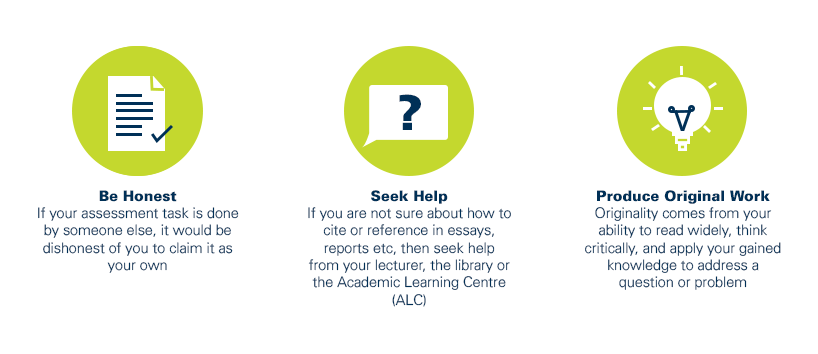
As a CQUniversity student you are expected to act honestly in all aspects of your academic work.
Any assessable work undertaken or submitted for review or assessment must be your own work. Assessable work is any type of work you do to meet the assessment requirements in the unit, including draft work submitted for review and feedback and final work to be assessed.
When you use the ideas, words or data of others in your assessment, you must thoroughly and clearly acknowledge the source of this information by using the correct referencing style for your unit. Using others’ work without proper acknowledgement may be considered a form of intellectual dishonesty.
Participating honestly, respectfully, responsibly, and fairly in your university study ensures the CQUniversity qualification you earn will be valued as a true indication of your individual academic achievement and will continue to receive the respect and recognition it deserves.
As a student, you are responsible for reading and following CQUniversity’s policies, including the Student Academic Integrity Policy and Procedure. This policy sets out CQUniversity’s expectations of you to act with integrity, examples of academic integrity breaches to avoid, the processes used to address alleged breaches of academic integrity, and potential penalties.
What is a breach of academic integrity?
A breach of academic integrity includes but is not limited to plagiarism, self-plagiarism, collusion, cheating, contract cheating, and academic misconduct. The Student Academic Integrity Policy and Procedure defines what these terms mean and gives examples.
Why is academic integrity important?
A breach of academic integrity may result in one or more penalties, including suspension or even expulsion from the University. It can also have negative implications for student visas and future enrolment at CQUniversity or elsewhere. Students who engage in contract cheating also risk being blackmailed by contract cheating services.
Where can I get assistance?
For academic advice and guidance, the Academic Learning Centre (ALC) can support you in becoming confident in completing assessments with integrity and of high standard.
What can you do to act with integrity?