Overview
This unit focuses on developing an understanding of how genomes are organised, how they function within the cell, how molecular medical treatments can be developed, ways in which we can manipulate genomes and utilise their components for a range of medical applications. You will explore the application of molecular techniques, such polymerase chain reaction and next generation sequencing, and their revolutionary impact on diagnostic testing.
Details
Pre-requisites or Co-requisites
Prerequisite BMSC11002 Human Body Systems 2 AND BMSC11005 Foundations of Biochemistry OR BMSC11008 Medical Anatomy and Physiology 2 AND BMSC11005 Foundations of Biochemistry OR BMSC11011 Human Anatomy and Physiology 2 AND BMSC11005 Foundations of Biochemistry
Important note: Students enrolled in a subsequent unit who failed their pre-requisite unit, should drop the subsequent unit before the census date or within 10 working days of Fail grade notification. Students who do not drop the unit in this timeframe cannot later drop the unit without academic and financial liability. See details in the Assessment Policy and Procedure (Higher Education Coursework).
Offerings For Term 1 - 2026
Attendance Requirements
All on-campus students are expected to attend scheduled classes - in some units, these classes are identified as a mandatory (pass/fail) component and attendance is compulsory. International students, on a student visa, must maintain a full time study load and meet both attendance and academic progress requirements in each study period (satisfactory attendance for International students is defined as maintaining at least an 80% attendance record).
Recommended Student Time Commitment
Each 6-credit Undergraduate unit at CQUniversity requires an overall time commitment of an average of 12.5 hours of study per week, making a total of 150 hours for the unit.
Class Timetable
Assessment Overview
Assessment Grading
This is a graded unit: your overall grade will be calculated from the marks or grades for each assessment task, based on the relative weightings shown in the table above. You must obtain an overall mark for the unit of at least 50%, or an overall grade of 'pass' in order to pass the unit. If any 'pass/fail' tasks are shown in the table above they must also be completed successfully ('pass' grade). You must also meet any minimum mark requirements specified for a particular assessment task, as detailed in the 'assessment task' section (note that in some instances, the minimum mark for a task may be greater than 50%). Consult the University's Grades and Results Policy for more details of interim results and final grades.
All University policies are available on the CQUniversity Policy site.
You may wish to view these policies:
- Grades and Results Policy
- Assessment Policy and Procedure (Higher Education Coursework)
- Review of Grade Procedure
- Student Academic Integrity Policy and Procedure
- Academic Progression Policy and Procedure
- Student Refund and Credit Balance Policy and Procedure
- Complaints Policy and Procedure
- Information and Communications Technology Acceptable Use Policy and Procedure
This list is not an exhaustive list of all University policies. The full list of University policies are available on the CQUniversity Policy site.
Feedback, Recommendations and Responses
Every unit is reviewed for enhancement each year. At the most recent review, the following staff and student feedback items were identified and recommendations were made.
Feedback from SUTE Comments
Students reported that some lectures were long and included repetition of content.
Streamline lectures to provide key overviews, and emphasise student self-directed study for additional learning.
Feedback from SUTE Comments
Students felt they would benefit from additional preparation for the short answer questions on the exam.
Develop short answer quizzes for weekly content to help students prepare for the final exam.
Feedback from Student feedback
Provide more guidance on scientific writing conventions.
Include information of scientific writing conventions for assessments.
- Demonstrate a clear understanding of the structure and organisation of cells at the molecular level
- Demonstrate a clear understanding of the genome including its manipulation and sequencing
- Accurately review and evaluate the strategies associated with the transformation of micro-organisms and animals
- Explain the process of identifying genetic changes and their significance
- Apply knowledge of molecular biology techniques in the laboratory.
The learning outcomes achieved are linked to the objectives of the accrediting body, Australian Institute of Medical and Clinical Scientists (AIMS).
Alignment of Assessment Tasks to Learning Outcomes
| Assessment Tasks | Learning Outcomes | ||||
|---|---|---|---|---|---|
| 1 | 2 | 3 | 4 | 5 | |
| 1 - Written Assessment - 30% | |||||
| 2 - Laboratory/Practical - 0% | |||||
| 3 - Practical Assessment - 30% | |||||
| 4 - Examination - 40% | |||||
Alignment of Graduate Attributes to Learning Outcomes
| Graduate Attributes | Learning Outcomes | ||||
|---|---|---|---|---|---|
| 1 | 2 | 3 | 4 | 5 | |
| 1 - Communication | |||||
| 2 - Problem Solving | |||||
| 3 - Critical Thinking | |||||
| 4 - Information Literacy | |||||
| 5 - Team Work | |||||
| 6 - Information Technology Competence | |||||
| 7 - Cross Cultural Competence | |||||
| 8 - Ethical practice | |||||
| 9 - Social Innovation | |||||
| 10 - First Nations Knowledges | |||||
| 11 - Aboriginal and Torres Strait Islander Cultures | |||||
Textbooks
Fundamental Molecular Biology ( Binder Ready Version )
- Edition: 3rd en (2021)
- Authors: Lizabeth A. Allison
- WILEY
- ISBN: 978-1-119-15629-1
- Binding: Hardcover
IT Resources
- CQUniversity Student Email
- Internet
- Unit Website (Moodle)
- ZOOM
All submissions for this unit must use the referencing styles below:
For further information, see the Assessment Tasks.
a.balzer@cqu.edu.au
Week 1
Begin Date: 09 Mar 2026Module/Topic
Introduction to Molecular Biology
DNA Replication
Chapter
1
2, 6, 7
Events and Submissions/Topic
Week 2
Begin Date: 16 Mar 2026Module/Topic
RNA
Chapter
3, 11, 12
Events and Submissions/Topic
Week 3
Begin Date: 23 Mar 2026Module/Topic
Genome Organisation
Chapter
5, 7
Events and Submissions/Topic
Week 4
Begin Date: 30 Mar 2026Module/Topic
Nucleic acid isolation, characterisation, PCR and electrophoresis
Chapter
13, 14
Events and Submissions/Topic
Week 5
Begin Date: 06 Apr 2026Module/Topic
Epigenetics
Chapter
13
Events and Submissions/Topic
Assessment 1 Part A: due Friday April 10 2026 17:00 AEST
Week 6
Begin Date: 13 Apr 2026Module/Topic
DNA Cloning
Chapter
10
Events and Submissions/Topic
Vacation Week
Begin Date: 20 Apr 2026Module/Topic
Break Week
Chapter
Events and Submissions/Topic
Week 7
Begin Date: 27 Apr 2026Module/Topic
DNA Sequencing
Chapter
14
Events and Submissions/Topic
Assessment 2: Mixed Mode and Rockhampton students Residential School
Assessment 3: Lab Workbook due at completion of Residential School
Week 8
Begin Date: 04 May 2026Module/Topic
High throughput analyses
Chapter
14
Events and Submissions/Topic
Week 9
Begin Date: 11 May 2026Module/Topic
Genetically Modified Organisms
Chapter
13
Events and Submissions/Topic
Assessment 1 Part B: due Friday May 15 2026 17:00 AEST
Week 10
Begin Date: 18 May 2026Module/Topic
Gene Therapy
Chapter
15
Events and Submissions/Topic
Week 11
Begin Date: 25 May 2026Module/Topic
Revision
Chapter
Events and Submissions/Topic
Assessment 2: Bundaberg students Residential School
Assessment 3: Lab Workbook due at completion of Residential School
Week 12
Begin Date: 01 Jun 2026Module/Topic
Revision
Chapter
Events and Submissions/Topic
Exam Week
Begin Date: 08 Jun 2026Module/Topic
Chapter
Events and Submissions/Topic
Vacation/Exam Week
Begin Date: 15 Jun 2026Module/Topic
Chapter
Events and Submissions/Topic
Each week students will be expected to complete the following:
2 hour lecture (online, face to face, or recorded)
1 hour tutorial (online, face to face, or recorded)
3-5 hours of self-directed study
3-5 hours preparing assessments
Online sessions will be facilitated via Zoom and meeting links will be provided on the Moodle site. Recordings of lectures and tutorials will be made available on the unit Moodle site.
This unit contains a mandatory 3 day residential school (Assessment 2). Please check the timetable for dates and complete class registration in MyCQU. No late submissions are allowed for this assessment item.
The forum for this unit is continuously monitored and you can expect a response within 24 working hours of posting your question. We strongly encourage you to post questions and discussions to facilitate peer to peer learning.
Alternatively enquiries can be directed to the unit coordinator:
Dr. Anna Balzer (a.balzer@cqu.edu.au), 8.30am - 4.30pm, Monday - Friday
1 Written Assessment
Universally the volume of genetic, epigenetic and transcriptomic data that has been generated in the past decade has been increasing exponentially, and has effectively increased understanding of the impacts of genetic changes to the wider public and their health. Public repositories of this data have allowed for large scale insights including genome wide association studies, meta-analyses, and novel re-analysis. In this assessment, students will use publicly available databases and tools to apply their knowledge of molecular biology to data, interpret findings, communicate application of theory and embed their understanding of molecular biology. They will also communicate their knowledge in manners suitable for scientific counterparts, as well as the general public.
This assessment has 2 parts. The tutorials will be partly dedicated to guiding students on the use of public databases and tools so that they can effectively complete their written assignment.
Part A
In part A you will be provided with a theoretical genetic test. This will be provided in the form of a genomic sequence. You will use online tools to identify the origin (gene name, chromosomal location, etc.) of the sequences provided, and answer questions about your findings and their interpretation. You will also undertake literature research to provide a summary of your gene of interest, it's features and functions, suitable for presentation to a research community.
Part B
In part B, you will also investigate a well characterized, real world example of a known genetic condition which is routinely tested for in Australia. Through researching the gene and testing methods, you must then produce a fact sheet (suitable for non-science background / the general public) which can be provided to an individual or individuals family member undergoing the test. The fact sheet must include: the gene affected and its function, how this mutation is tested, how the test works, inheritance patterns, how the mutation affects the expression or function of the protein, the consequences for the condition of interest, and other relevant information as indicated in the task sheet.
Level of GenAI use allowed:
Level 3: You may use AI to assist with specific tasks such as drafting text, refining and evaluating your work. You must critically evaluate and modify any AI generated content you use.
Part A due Friday April 10 2026 17:00 AEST (Week 5), Part B due May 15 2026 17:00 AEST (Week 9).
Assessments with feedback will be returned within 2 working weeks of submission.
Marks will be allocated based on the following criteria:
1) Correctness of answers to questions.
2) Understanding and application of molecular biology concepts and knowledge.
3) Written communication skills (both scientific / technical and science communication for the public).
4) Referencing.
5) Ability to conduct literature searches and present accurate information in a suitable format.
A full marking rubric will be provided on Moodle.
- Demonstrate a clear understanding of the structure and organisation of cells at the molecular level
- Demonstrate a clear understanding of the genome including its manipulation and sequencing
- Explain the process of identifying genetic changes and their significance
2 Laboratory/Practical
Students must complete experimental tasks and meet all competencies to pass the residential school. Please see the timetable for dates and times. Register via MyCQU.
During the residential school you will learn several essential molecular biology techniques, implementing them in a series of experiments including nucleic acid isolation, transformation, gene amplification, and genetic analysis.
Students will be assessed on safe and competent operation in a molecular laboratory when completing these tasks.
Level of GenAI use allowed:
Level 3: You may use AI to assist with specific tasks such as drafting text, refining and evaluating your work. You must critically evaluate and modify any AI generated content you use.
Other information:
The three day grace period does not apply to this assessment item. No late submissions allowed.
Please see the timetable for dates and times. Register via MyCQU. You will be assessed on competencies during the residential school. No late submission is allowed for this assessment. The three day grace period does not apply to this assessment item.
Feedback and grading will be completed throughout the residential school.
You will be assessed on the application of molecular biology techniques in a laboratory setting including:
- safe operation in a laboratory
- correct use of PPE
- safe handling of biological samples
- correct management of laboratory waste
- sample handling (including contamination minimisation)
- generation and interpretation of results for experiments including nucleic acid isolation, transformation, gene amplification, and genetic analysis
A full list of competencies will be included in the laboratory manual (available via the Moodle site). No late submissions are allowed for this assessment. The three day grace period does not apply to this assessment item.
- Accurately review and evaluate the strategies associated with the transformation of micro-organisms and animals
- Apply knowledge of molecular biology techniques in the laboratory.
3 Practical Assessment
During the residential school you will be required to perform experimental protocols involving, for example, transformation of bacteria with plasmid DNA, restriction endonuclease digestion of DNA and amplification of DNA using polymerase chain reaction (PCR). In your residential school you will be expected to complete a workbook and perform experimental calculations, report experimental results, answer questions about experimental procedures and interpret results. Clearly label the workbook with student name and student number. The laboratory workbook can be scanned, or completed digitally and the workbook can be uploaded onto the Moodle site. Hard copy submissions will also be accepted. The workbook will be available in Moodle as a digital file.
Level of GenAI use allowed:
Level 3: You may use AI to assist with specific tasks such as drafting text, refining and evaluating your work. You must critically evaluate and modify any AI generated content you use.
Lab workbooks will be due at completion of your allocated residential school, 17:00 AEST. Upload to the assessment submission portal in Moodle in .pdf or .doc(x) format or hand hard copies directly to the Unit Coordinator or delegate.
Assessment will be returned within 2 working weeks of submission.
Marks will be allocated based on the correctness of calculations, correct presentation of laboratory results, analysis of results, and correct answers to questions, demonstrating understanding and application of techniques.
- Demonstrate a clear understanding of the genome including its manipulation and sequencing
- Apply knowledge of molecular biology techniques in the laboratory.
Examination
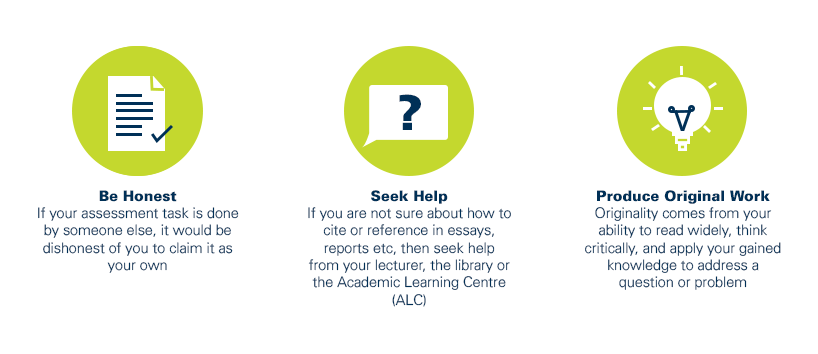
As a CQUniversity student you are expected to act honestly in all aspects of your academic work.
Any assessable work undertaken or submitted for review or assessment must be your own work. Assessable work is any type of work you do to meet the assessment requirements in the unit, including draft work submitted for review and feedback and final work to be assessed.
When you use the ideas, words or data of others in your assessment, you must thoroughly and clearly acknowledge the source of this information by using the correct referencing style for your unit. Using others’ work without proper acknowledgement may be considered a form of intellectual dishonesty.
Participating honestly, respectfully, responsibly, and fairly in your university study ensures the CQUniversity qualification you earn will be valued as a true indication of your individual academic achievement and will continue to receive the respect and recognition it deserves.
As a student, you are responsible for reading and following CQUniversity’s policies, including the Student Academic Integrity Policy and Procedure. This policy sets out CQUniversity’s expectations of you to act with integrity, examples of academic integrity breaches to avoid, the processes used to address alleged breaches of academic integrity, and potential penalties.
What is a breach of academic integrity?
A breach of academic integrity includes but is not limited to plagiarism, self-plagiarism, collusion, cheating, contract cheating, and academic misconduct. The Student Academic Integrity Policy and Procedure defines what these terms mean and gives examples.
Why is academic integrity important?
A breach of academic integrity may result in one or more penalties, including suspension or even expulsion from the University. It can also have negative implications for student visas and future enrolment at CQUniversity or elsewhere. Students who engage in contract cheating also risk being blackmailed by contract cheating services.
Where can I get assistance?
For academic advice and guidance, the Academic Learning Centre (ALC) can support you in becoming confident in completing assessments with integrity and of high standard.
What can you do to act with integrity?