Overview
In this unit, you will develop an understanding of the fundamental principles of pharmacology and pharmacotherapy relevant to your health profession. You will explore the mechanism of action of major drug classes used in pharmacological interventions or procedures in patient management relevant to your profession. You will be required to demonstrate critical analysis of this content and align this with current practice in your respective professions.
Details
Pre-requisites or Co-requisites
Pre-requisites: Pre-requisite for all courses except CB66, CV69 and CB86: BMSC11005 Foundations of Biochemistry Pre-requisite for CB66: BMSC11007 Medical Anatomy and Physiology 1 AND BMSC11008 Medical Anatomy and Physiology 2 Pre-requisite for CV69: ECHO11004 Biochemistry for Cardiac Pharmacology Pre-requisite for CB86: MPAT12001 Pathophysiology Co-requisite for CB86: MBIO12013 Microbiology for Health Professionals
Important note: Students enrolled in a subsequent unit who failed their pre-requisite unit, should drop the subsequent unit before the census date or within 10 working days of Fail grade notification. Students who do not drop the unit in this timeframe cannot later drop the unit without academic and financial liability. See details in the Assessment Policy and Procedure (Higher Education Coursework).
Offerings For Term 2 - 2026
Attendance Requirements
All on-campus students are expected to attend scheduled classes - in some units, these classes are identified as a mandatory (pass/fail) component and attendance is compulsory. International students, on a student visa, must maintain a full time study load and meet both attendance and academic progress requirements in each study period (satisfactory attendance for International students is defined as maintaining at least an 80% attendance record).
Recommended Student Time Commitment
Each 6-credit Undergraduate unit at CQUniversity requires an overall time commitment of an average of 12.5 hours of study per week, making a total of 150 hours for the unit.
Class Timetable
Assessment Overview
Assessment Grading
This is a graded unit: your overall grade will be calculated from the marks or grades for each assessment task, based on the relative weightings shown in the table above. You must obtain an overall mark for the unit of at least 50%, or an overall grade of 'pass' in order to pass the unit. If any 'pass/fail' tasks are shown in the table above they must also be completed successfully ('pass' grade). You must also meet any minimum mark requirements specified for a particular assessment task, as detailed in the 'assessment task' section (note that in some instances, the minimum mark for a task may be greater than 50%). Consult the University's Grades and Results Policy for more details of interim results and final grades.
All University policies are available on the CQUniversity Policy site.
You may wish to view these policies:
- Grades and Results Policy
- Assessment Policy and Procedure (Higher Education Coursework)
- Review of Grade Procedure
- Student Academic Integrity Policy and Procedure
- Academic Progression Policy and Procedure
- Student Refund and Credit Balance Policy and Procedure
- Complaints Policy and Procedure
- Information and Communications Technology Acceptable Use Policy and Procedure
This list is not an exhaustive list of all University policies. The full list of University policies are available on the CQUniversity Policy site.
Feedback, Recommendations and Responses
Every unit is reviewed for enhancement each year. At the most recent review, the following staff and student feedback items were identified and recommendations were made.
Feedback from SUTE; Student comments; Unit coordinator
Students would benefit from assessment tasks that more clearly communicate expectations and better demonstrate the relevance of pharmacological knowledge to professional practice.
Continue refining assessment design, assessment support resources and formative learning opportunities to improve assessment clarity while maintaining academic rigour.
Feedback from SUTE; Unit coordinator
Students value the learning resources and lecture delivery but reported challenges associated with content volume and lecture length.
Review learning materials to improve conciseness, relevance and alignment with Australian healthcare practice.
Feedback from SUTE; Student comments
Students would benefit from additional opportunities to apply pharmacological knowledge through authentic clinical scenarios and assessment-aligned tutorial activities.
Develop interactive, case-based tutorial activities that strengthen links between lectures, assessments and professional practice.
- Discuss the basic principles of pharmacology, including pharmacodynamics, pharmacokinetics and drug design.
- Discuss the indications, pharmacological action, routes of administration, contraindications, side effects and precautions of the major medication groups used in your health profession.
- Discuss pharmacological applications associated with common procedures undertaken with your health profession.
- Critically analyse the scientific literature relating to drugs and medicines within your health profession.
Alignment of Assessment Tasks to Learning Outcomes
| Assessment Tasks | Learning Outcomes | |||
|---|---|---|---|---|
| 1 | 2 | 3 | 4 | |
| 1 - Written Assessment - 30% | ||||
| 2 - Online Quiz(zes) - 20% | ||||
| 3 - Online Test - 50% | ||||
Alignment of Graduate Attributes to Learning Outcomes
| Graduate Attributes | Learning Outcomes | |||
|---|---|---|---|---|
| 1 | 2 | 3 | 4 | |
| 1 - Communication | ||||
| 2 - Problem Solving | ||||
| 3 - Critical Thinking | ||||
| 4 - Information Literacy | ||||
| 5 - Team Work | ||||
| 6 - Information Technology Competence | ||||
| 7 - Cross Cultural Competence | ||||
| 8 - Ethical practice | ||||
| 9 - Social Innovation | ||||
| 10 - First Nations Knowledges | ||||
| 11 - Aboriginal and Torres Strait Islander Cultures | ||||
Textbooks
There are no required textbooks.
IT Resources
- CQUniversity Student Email
- Internet
- Unit Website (Moodle)
All submissions for this unit must use the referencing styles below:
For further information, see the Assessment Tasks.
l.robilliard@cqu.edu.au
Week 1
Begin Date: 13 Jul 2026Module/Topic
Week 1 | Introduction to Pharmacology I
- All Students – Introduction to Pharmacology
Chapter
Week 1 Lecture Notes (available on Moodle)
Events and Submissions/Topic
Tutorial on Week 1
Week 2
Begin Date: 20 Jul 2026Module/Topic
Week 2 | Introduction to Pharmacology II
- All Students – Introduction to Pharmacodynamics
Chapter
Week 2 Lecture Notes (available on Moodle)
Events and Submissions/Topic
Tutorial on Week 2
Week 3
Begin Date: 27 Jul 2026Module/Topic
Week 3 | Introduction to Pharmacology III
- All Students – Introduction to Pharmacokinetics
Chapter
Week 3 Lecture Notes (available on Moodle)
Events and Submissions/Topic
Tutorial on Week 3
Week 4
Begin Date: 03 Aug 2026Module/Topic
Week 4 | Introduction to Pharmacology IIII
- All students – Introduction to Drug Design and Drug Calculations
Chapter
Week 4 Lecture Notes (available on Moodle)
Events and Submissions/Topic
Tutorial on Week 4
Week 5
Begin Date: 10 Aug 2026Module/Topic
Week 5 | Common Prescription Drugs I
- All students – Common Prescription Cardiovascular Drugs
Chapter
Week 5 Lecture Notes (available on Moodle)
Events and Submissions/Topic
Tutorial on Week 5
Introductory Pharmacology Quiz Opens: Week 5 Friday (14 Aug 2026) 09:00 AM AEST
Week 6
Begin Date: 17 Aug 2026Module/Topic
Week 6 | Common Prescription Drugs II
- All students - Common Prescription Antidiabetic Drugs
Chapter
Week 6 Lecture Notes (available on Moodle)
Events and Submissions/Topic
Tutorial on Week 6
Introductory Pharmacology Quiz Due: Week 6 Monday (17 Aug 2026) 5:00 pm AEST
Vacation Week
Begin Date: 24 Aug 2026Module/Topic
Vacation Week | Catch-up, Assessment Preparation, Revision
Chapter
Events and Submissions/Topic
Week 7
Begin Date: 31 Aug 2026Module/Topic
Module 7 | Common Prescription Drugs III
- All students - Common Antidepressants, Psychedelics, and Illicit Drugs
Chapter
Week 7 Lecture Notes (available on Moodle)
Events and Submissions/Topic
Tutorial on Week 7
Written Assignment Due: Week 7 Friday (4 Sept 2026) 11:59 pm AEST
Week 8
Begin Date: 07 Sep 2026Module/Topic
Week 8 | Pharmacology in Practice I
- Paramedics (CG95/CM40) – Emergency Cardiovascular Drugs
- Echocardiographers (CV69) – Drugs for Echocardiography procedures
- Podiatrists (CB86) – Antimicrobials in Healthcare
- Nutritionists (CM60/CM61) – Antimicrobials in Healthcare
- Other Allied Health Professionals (CB66) – Antimicrobials in Healthcare
Chapter
Week 8 Lecture Notes (available on Moodle)
Events and Submissions/Topic
Tutorial on Week 8
Week 9
Begin Date: 14 Sep 2026Module/Topic
Week 9 | Pharmacology in Practice II
- Paramedics (CG95/CM40) – Emergency CNS, analgesics and antidotes
- Echocardiographers (CV69) – Drugs that impact Echocardiographic procedures
- Podiatrists (CB86) – Drug considerations in foot health
- Nutritionists (CM60/CM61) – Drugs that affect Nutrition
- Other Allied Health Professionals (CB66) – Drug considerations in foot health
Chapter
Week 9 Lecture Notes (available on Moodle)
Events and Submissions/Topic
Tutorial on Week 9
Week 10
Begin Date: 21 Sep 2026Module/Topic
Week 10 | Pharmacology in Practice III
- Paramedics (CG95/CM40) – Emergency Respiratory, allergic, and endocrine conditions
- Echocardiographers (CV69) – Cardiotoxic Drugs
- Podiatrists (CB86) – Anti-inflammatories, Immunomodulators and Rheumatological Drugs for Foot Conditions
- Nutritionists (CM60/CM61) – Foods that affect drugs
- Other Allied Health Professionals (CB66) – Drug considerations in Movement and Speech
Chapter
Week 10 Lecture Notes (available on Moodle)
Events and Submissions/Topic
Tutorial on Week 10
Week 11
Begin Date: 28 Sep 2026Module/Topic
Revision
Chapter
Events and Submissions/Topic
Online Test Opens: Week 11 Friday (5 Oct 2026) 09:00 AM AEST
Week 12
Begin Date: 05 Oct 2026Module/Topic
Revision
Chapter
Events and Submissions/Topic
Exam Week
Begin Date: 12 Oct 2026Module/Topic
Chapter
Events and Submissions/Topic
Vacation/Exam Week
Begin Date: 19 Oct 2026Module/Topic
Chapter
Events and Submissions/Topic
Contact Details for Teaching Staff
The unit coordinator for BMSC12014 is Laverne Robilliard. Laverne can be reached via email at
l.robilliard@@cqu.edu.au, and through the Q&A forum on Moodle.
Unit Modules
BMSC12014 comprises three main blocks of content: 'Introductory Pharmacology' (Modules 1 to 4), 'Common
Prescription Drugs' (Modules 5, 6 and 7) and 'Profession-Specific Pharmacology' (Modules 8, 9 and 10). Students from all
courses complete the same 'Introductory Pharmacology' and 'Common Prescription Drugs' modules. The 'Pharmacology
in Practice' modules are course-specific to ensure that you learn about drugs directly relevant to your healthcare
profession.
Lectures and Tutorials
The lectures for this unit are pre-recorded and available on the unit’s Moodle site. Live tutorials are delivered weekly on
Zoom. Please refer to the CQUniversity Handbook for specific times and dates. The tutorials are also recorded and made
available for later viewing on the Moodle site.
Readings
All core readings for this unit are available for free on the Moodle site. There is no prescribed textbook for this unit.
Unit Study Commitment
In line with Australian education standards, this unit requires a total study commitment of 150 hours over the 12-week
term (approximately 12.5 hours per week). The following outlines a suggested weekly study schedule for BMSC12014:
3-4 hours watching lectures
1-2 hours completing weekly readings
2-3 hours attending or watching tutorials and completing weekly revision activities
2-3 hours revising and preparing for the unit’s assessment tasks
1 Online Quiz(zes)
Task Rationale:
A strong and confident knowledge of fundamental pharmacological principles is crucial for safe and effective pharmacotherapy. Accordingly, the aim of this assessment task is to evaluate your understanding of the basic principles of pharmacodynamics, pharmacokinetics and drug design.
Level of Gen-AI Use Allowed:
- Level 1: You must not use Al at any point during the assessment. You must demonstrate your core skills and knowledge.
What You Need to Do:
- Complete an online quiz assessing your knowledge of Modules 1, 2, 3 and 4.
Transferrable Skills:
- Critical thinking
- Attention to detail
- Performing under time pressure
Grace Period:
- The 72-hour grace period does not apply to this assessment.
Time:
Open: 14 August 2026, 09:00 AM AEST
Close: 17 August 2026, 05:00 PM AEST
Week 6 Monday (17 Aug 2026) 5:00 pm AEST
The Introductory Pharmacology Quiz will end once you click submit, when the time limit is exhausted, or when the due date and time are reached.
Week 8 Tuesday (8 Sept 2026)
The Introductory Pharmacology Quiz will be graded manually, and the results will be returned via Moodle within two (2) weeks of the due date.
Marks will be awarded for correct responses.
- Discuss the basic principles of pharmacology, including pharmacodynamics, pharmacokinetics and drug design.
2 Written Assessment
Task Rationale:
The ability to critically evaluate scientific literature, including distinguishing robust research from poorly designed studies, is fundamental to evidence-based healthcare. Accordingly, the aim of this assessment task is to develop your critical thinking skills through the analysis of scientific literature.
Level of Gen-AI Use Allowed:
Level 1: You must not use Al at any point during the assessment. You must demonstrate your core skills and knowledge.
What You Need to Do:
- Write a concise evaluation comparing an alternative drug with a drug used in standard practice using peer-reviewed literature. Include screenshots to verify that the assessment is your own original work.
Detailed guidelines for this task are also available on Moodle.
Transferrable Skills:
- Critical thinking
- Evidence-based decision making
- Attention to detail
- Effective communication
Grace Period:
- Students can submit their work up to 72 hours post the due date without incurring late penalties.
Week 7 Friday (4 Sept 2026) 11:59 pm AEST
In the absence of an approved extension, a 5% late penalty will be applied for each day the assignment remains unsubmitted.
Week 10 Monday (21 Sept 2026)
Results and feedback will be returned via Moodle within two (2) weeks of the due date.
Overview:
-
Evaluation (25 marks): Critically assess the validity of the argument that an alternative drug is better suited than a drug used in standard practice. The evaluation must be it supported by scientific literature. Accurately identify any significant oversights or unsupported claims.
-
Critical Analysis of the Scientific Literature (20 marks): Critically evaluate the quality of the studies cited by identifying their strengths, limitations and any notable discrepancies or gaps in the evidence base.
-
Referencing (5 marks): All references must be accurate, complete and follow a recognised citation style.
-
Writing and Word Limits (5 marks): The submission must be clearly and concisely written, using your own words. Do not use ChatGPT or similar tools to refine the language. The specified word limit must not be exceeded.
-
Screenshots (5 marks): Include clear and verifiable screenshots of the sources used to prepare the submission. The written analysis should demonstrate a solid understanding of, and alignment with, the evidence presented in the screenshots.
- Discuss the indications, pharmacological action, routes of administration, contraindications, side effects and precautions of the major medication groups used in your health profession.
- Discuss pharmacological applications associated with common procedures undertaken with your health profession.
- Critically analyse the scientific literature relating to drugs and medicines within your health profession.
3 Online Test
Task Rationale:
Healthcare professionals must have a thorough understanding of the drugs used in their field. This knowledge is essential for minimising patient risk and optimising therapeutic outcomes. Accordingly, the aim of this assessment task is to evaluate your understanding of the indications, pharmacological actions, routes of administration, contraindications, precautions and side effects associated with the medications relevant to your health profession.
Level of Gen-AI Use Allowed:
- Level 1: You must not use Al at any point during the assessment. You must demonstrate your core skills and knowledge.
What You Need to Do:
- Complete an online test assessing your knowledge of Modules 5, 6, 7, 8, 9 and 10.
Transferrable Skills:
- Critical thinking
- Attention to detail
- Performing under time pressure
Grace Period:
- The 72-hour grace period does not apply to this assessment.
Time:
Open: 2 October 2026, 09:00 AM AEST
Close: 5 October 2026, 05:00 PM AEST
Week 12 Monday (5 Oct 2026) 5:00 pm AEST
The Online Test will end once you click submit, when the time limit is exhausted, or when the due date and time are reached.
Vacation/Exam Week Tuesday (20 Oct 2026)
The Online Test will be graded manually, and the results will be returned via Moodle within two (2) weeks of the due date.
Marks will be awarded for correct responses.
- Discuss the basic principles of pharmacology, including pharmacodynamics, pharmacokinetics and drug design.
- Discuss the indications, pharmacological action, routes of administration, contraindications, side effects and precautions of the major medication groups used in your health profession.
- Discuss pharmacological applications associated with common procedures undertaken with your health profession.
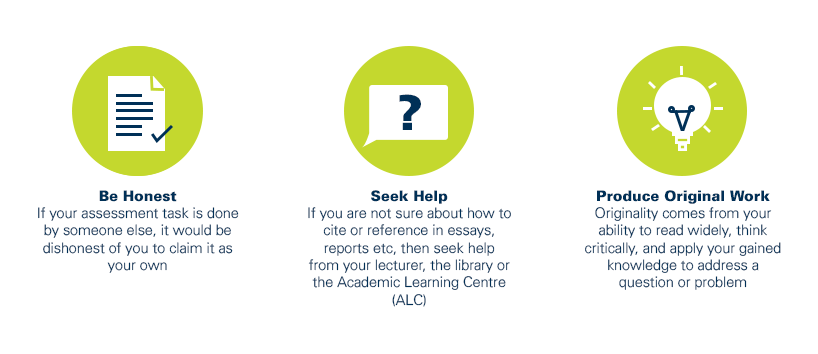
As a CQUniversity student you are expected to act honestly in all aspects of your academic work.
Any assessable work undertaken or submitted for review or assessment must be your own work. Assessable work is any type of work you do to meet the assessment requirements in the unit, including draft work submitted for review and feedback and final work to be assessed.
When you use the ideas, words or data of others in your assessment, you must thoroughly and clearly acknowledge the source of this information by using the correct referencing style for your unit. Using others’ work without proper acknowledgement may be considered a form of intellectual dishonesty.
Participating honestly, respectfully, responsibly, and fairly in your university study ensures the CQUniversity qualification you earn will be valued as a true indication of your individual academic achievement and will continue to receive the respect and recognition it deserves.
As a student, you are responsible for reading and following CQUniversity’s policies, including the Student Academic Integrity Policy and Procedure. This policy sets out CQUniversity’s expectations of you to act with integrity, examples of academic integrity breaches to avoid, the processes used to address alleged breaches of academic integrity, and potential penalties.
What is a breach of academic integrity?
A breach of academic integrity includes but is not limited to plagiarism, self-plagiarism, collusion, cheating, contract cheating, and academic misconduct. The Student Academic Integrity Policy and Procedure defines what these terms mean and gives examples.
Why is academic integrity important?
A breach of academic integrity may result in one or more penalties, including suspension or even expulsion from the University. It can also have negative implications for student visas and future enrolment at CQUniversity or elsewhere. Students who engage in contract cheating also risk being blackmailed by contract cheating services.
Where can I get assistance?
For academic advice and guidance, the Academic Learning Centre (ALC) can support you in becoming confident in completing assessments with integrity and of high standard.
What can you do to act with integrity?