Overview
On completion of this unit, you will be able to evaluate the evidence base for biochemical tests used in the diagnosis and management of diseases in the major organ systems of the body. Problem solving and decision making skills will be developed through use of authentic case studies. Skill development in instrument calibration, best practice measurement, interpretation of test results and test quality control monitoring will occur through practical exercises. You will be required to attend a residential school at the biochemistry laboratory on campus. The exception to this is for nutrition students enrolled in CM60, CM61, or CM62. For these students, you will meet the learning outcomes required for your degree through an alternative assessment and are not required to attend the on-campus residential school. However, If you wish to gain laboratory skills, you may enrol for the on-campus residential school activity.
Details
Pre-requisites or Co-requisites
Pre-requisites: BMSC12010 and (BUSN11016 or BMSC11003 or HLTH11027).
Important note: Students enrolled in a subsequent unit who failed their pre-requisite unit, should drop the subsequent unit before the census date or within 10 working days of Fail grade notification. Students who do not drop the unit in this timeframe cannot later drop the unit without academic and financial liability. See details in the Assessment Policy and Procedure (Higher Education Coursework).
Offerings For Term 2 - 2026
Attendance Requirements
All on-campus students are expected to attend scheduled classes - in some units, these classes are identified as a mandatory (pass/fail) component and attendance is compulsory. International students, on a student visa, must maintain a full time study load and meet both attendance and academic progress requirements in each study period (satisfactory attendance for International students is defined as maintaining at least an 80% attendance record).
Recommended Student Time Commitment
Each 6-credit Undergraduate unit at CQUniversity requires an overall time commitment of an average of 12.5 hours of study per week, making a total of 150 hours for the unit.
Class Timetable
Assessment Overview
Assessment Grading
This is a graded unit: your overall grade will be calculated from the marks or grades for each assessment task, based on the relative weightings shown in the table above. You must obtain an overall mark for the unit of at least 50%, or an overall grade of 'pass' in order to pass the unit. If any 'pass/fail' tasks are shown in the table above they must also be completed successfully ('pass' grade). You must also meet any minimum mark requirements specified for a particular assessment task, as detailed in the 'assessment task' section (note that in some instances, the minimum mark for a task may be greater than 50%). Consult the University's Grades and Results Policy for more details of interim results and final grades.
All University policies are available on the CQUniversity Policy site.
You may wish to view these policies:
- Grades and Results Policy
- Assessment Policy and Procedure (Higher Education Coursework)
- Review of Grade Procedure
- Student Academic Integrity Policy and Procedure
- Academic Progression Policy and Procedure
- Student Refund and Credit Balance Policy and Procedure
- Complaints Policy and Procedure
- Information and Communications Technology Acceptable Use Policy and Procedure
This list is not an exhaustive list of all University policies. The full list of University policies are available on the CQUniversity Policy site.
Feedback, Recommendations and Responses
Every unit is reviewed for enhancement each year. At the most recent review, the following staff and student feedback items were identified and recommendations were made.
Feedback from Student feedback
Students appreciated the quiz questions included in the tutorials.
Based on the positive feedback, quiz questions will continue to be included in future sessions.
Feedback from Student feedback & Self reflection
The residential school was engaging and helped to develop confidence and laboratory skills.
Continue to deliver the engaging residential school in future offerings.
Feedback from Self reflection
Students would like more feedback on their assessment task.
More detailed feedback will be provided.
- Explain the various processes involved in biochemical method evaluation, interpretation and development
- Explore the limitations of laboratory procedures, regulatory aspects including external quality assurance and accreditation bodies
- Describe the rationale and clinical correlation of specialised biochemical tests used in the detection and monitoring of processes affecting the major organ systems
- Demonstrate competency in biochemical instrumentation, including specimen handling and test processing in automated systems and institution of appropriate corrective action as required in response to errors in automated instrumentation function where required by discipline-related competencies
- Evaluate biochemical clinical cases to derive a provisional diagnosis.
Alignment of Assessment Tasks to Learning Outcomes
| Assessment Tasks | Learning Outcomes | ||||
|---|---|---|---|---|---|
| 1 | 2 | 3 | 4 | 5 | |
| 1 - Case Study - 20% | |||||
| 2 - Learning logs / diaries / Journal / log books - 0% | |||||
| 3 - Case Study - 30% | |||||
| 4 - Examination - 50% | |||||
Alignment of Graduate Attributes to Learning Outcomes
| Graduate Attributes | Learning Outcomes | ||||
|---|---|---|---|---|---|
| 1 | 2 | 3 | 4 | 5 | |
| 1 - Communication | |||||
| 2 - Problem Solving | |||||
| 3 - Critical Thinking | |||||
| 4 - Information Literacy | |||||
| 5 - Team Work | |||||
| 6 - Information Technology Competence | |||||
| 7 - Cross Cultural Competence | |||||
| 8 - Ethical practice | |||||
| 9 - Social Innovation | |||||
| 10 - First Nations Knowledges | |||||
| 11 - Aboriginal and Torres Strait Islander Cultures | |||||
Textbooks
Clinical Chemistry: Principles, Techniques, and Correlations
- Edition: 9th (2023)
- Authors: Michael L. Bishop; Edward P. Fody; Carleen Van Siclen; James March Mistler; Michelle Moy
- Jones and Bartlett Learning
- Burlington Burlington , Massachusetts , United States of America
- ISBN: 9781284238860
- Binding: Hardcover
IT Resources
- CQUniversity Student Email
- Internet
- Unit Website (Moodle)
- Zoom (both microphone and webcam capability)
All submissions for this unit must use the referencing style: Vancouver
For further information, see the Assessment Tasks.
a.siddiq@cqu.edu.au
Week 1
Begin Date: 13 Jul 2026Module/Topic
Analytical Techniques, Automation & POCT
Chapter
Clinical Chemistry, Principles, Techniques and Correlations: 4, 5 & 29
Events and Submissions/Topic
Zoom tutorial - Introduction
Week 2
Begin Date: 20 Jul 2026Module/Topic
Kidney Functions & Electrolytes
Chapter
Clinical Chemistry, Principles, Techniques and Correlations: 21 & 11
Events and Submissions/Topic
Zoom tutorial - covering Week 1
Week 3
Begin Date: 27 Jul 2026Module/Topic
Acid Base Balance
Chapter
Clinical Chemistry, Principles, Techniques and Correlations: 12
Events and Submissions/Topic
Zoom tutorial - covering Week 2
Week 4
Begin Date: 03 Aug 2026Module/Topic
Cardiovascular System
Chapter
Clinical Chemistry, Principles, Techniques and Correlations: 20
Events and Submissions/Topic
Zoom tutorial - covering Week 3
Week 5
Begin Date: 10 Aug 2026Module/Topic
Liver, Pancreatic & GIT Function
Chapter
Clinical Chemistry, Principles, Techniques and Correlations:19 & 22
Events and Submissions/Topic
Zoom tutorial - covering Week 4
Case Study Report Due: Week 5 Friday (14 Aug 2026) 5:00 pm AEST
Week 6
Begin Date: 17 Aug 2026Module/Topic
Carbohydrates Metabolism
Chapter
Clinical Chemistry, Principles, Techniques and Correlations: 9
Events and Submissions/Topic
Zoom tutorial - covering Week 5
Vacation Week
Begin Date: 24 Aug 2026Module/Topic
No lecture
Chapter
N/A
Events and Submissions/Topic
No Tutorial
Week 7
Begin Date: 31 Aug 2026Module/Topic
QC & EQAP
Chapter
Clinical Chemistry, Principles, Techniques and Correlations: 3
Events and Submissions/Topic
Zoom tutorial - covering Week 6
Week 8
Begin Date: 07 Sep 2026Module/Topic
Lipid Metabolism & Nutrition
Residential School
Chapter
Clinical Chemistry, Principles, Techniques and Correlations: 10 & 27
A Laboratory Workbook will be provided.
Events and Submissions/Topic
Zoom tutorial - covering Week 7
Practical Assessment (Practical Assessment 30%) Due: Week 8 Friday (11 Sept 2026) 11:00 am AEST
Week 9
Begin Date: 14 Sep 2026Module/Topic
Endocrinology basics
Chapter
Clinical Chemistry, Principles, Techniques and Correlations: 13
Events and Submissions/Topic
Zoom tutorial - covering Week 8
Week 10
Begin Date: 21 Sep 2026Module/Topic
Tumor markers
Chapter
Clinical Chemistry, Principles, Techniques and Correlations: 28
Events and Submissions/Topic
Zoom tutorial - covering Week 9
Laboratory Workbook Due: Week 10 Monday (21 Sept 2026) 5:00 pm AEST
Week 11
Begin Date: 28 Sep 2026Module/Topic
Revision
Chapter
Events and Submissions/Topic
Zoom tutorial - covering Week-10
Week 12
Begin Date: 05 Oct 2026Module/Topic
Review and Examination Preparation
Chapter
Events and Submissions/Topic
Exam Week
Begin Date: 12 Oct 2026Module/Topic
Chapter
Events and Submissions/Topic
An invigilated examination will be scheduled during the CQUniversity examination period. The exact date will be communicated to all students.
Vacation/Exam Week
Begin Date: 19 Oct 2026Module/Topic
Chapter
Events and Submissions/Topic
The Unit Coordinator for this Unit is Dr Amer Siddiq, who can be contacted by email (a.siddiq@cqu.edu.au) or via the Moodle forums.
Lectures will all be pre-recorded and will be posted on the Moodle page.
There are weekly tutorials that will be linked to Zoom to enable remote attendance, and these sessions will also be recorded and posted to the Moodle page. Please note that in each tutorial, we will be discussing and applying knowledge gained in the preceding week's lectures.
These tutorials will summarise the weekly lecture content and provide an opportunity for you to discuss the lecture content. I encourage you to engage with the tutorials, preferably by attending in person or virtually via Zoom, or if that is not possible, review the video on Moodle.
If scheduled tutorials fall on a public holiday, they will be pre-recorded and posted on the Moodle page.
This unit also includes a Compulsory Residential School, and your attendance and completion of associated tasks are required to pass the unit.
1 Case Study
You will be provided with a clinical case study on the Moodle page.
You will be provided with information regarding the clinical presentation, patient history and specific biochemical parameters (provided by an automated analyser) for this clinical case study. You are required to write a report using a case study approach describing the pathophysiology, specific biochemical profile characteristics observed that led to the provisional diagnosis, differential diagnoses and potential treatment options. You may also recommended further tests that will assist in confirming the diagnosis. Further details on the case, a template and an exemplar will be provided to you on the Moodle site to assist in preparation.
Level of GenAI use allowed:
Level 2: AI PLANNING
Al may be used for pre-task activities such as brainstorming, outlining and initial research. This level focuses on the effective use of Al for planning, synthesis, and ideation, but assessments should emphasise the ability to develop and refine these ideas independently.
Week 5 Friday (14 Aug 2026) 5:00 pm AEST
The case study report should be uploaded in Moodle in word Document file
Feedback will be provided within two to three (2-3 ) weeks of submission.
The assessment task is marked according to how well you have met the specific requirements and in accordance with the criteria outlined below:
Presentation: The report is presented in the provided template with clarity of purpose and coherence of expression (spelling, grammar, syntax) in a clear and organised manner.
Abstract: Provides a clear overview and overall summary of the case study.
Introduction: Provides necessary background information and pathophysiology of the case. Does not discuss the final diagnosis, rather supports the intended diagnosis via arguments.
Materials and Methods: Briefly describes all the methods used to aid in diagnosis. Discusses further tests to be employed in order to confirm the diagnosis.
Results: All data presented clearly with reference ranges. Layout is clear with further tests and expected results discussed.
Discussion: Clear discussion of the results with supporting arguments and reasoning for arriving at the final diagnosis.
References: Correct referencing system used with appropriate in-text references.
- Describe the rationale and clinical correlation of specialised biochemical tests used in the detection and monitoring of processes affecting the major organ systems
- Evaluate biochemical clinical cases to derive a provisional diagnosis.
2 Learning logs / diaries / Journal / log books
You will be provided with a laboratory workbook on the Moodle page. This workbook will contain all the tasks that need to be completed during the residential school. It will also contain a series of short questions and patient reports to be completed in relation to the authentic cases provided. Group experimental activities during the residential school will foster team work and provide hands-on experience of the biochemical techniques used in pathology laboratories. Completion of the workbook will evidence student engagement and understanding of the principles behind the Biochemical tests. Laboratory staff or demonstrators will assess your individual experimental capability during residential school to ensure your understanding of the learning outcomes.
Level of GenAI use allowed:
Level 1: You must not use AI at any point during the assessment. You must demonstrate your core skills and knowledge.
Week 10 Monday (21 Sept 2026) 5:00 pm AEST
A scanned version of the laboratory workbook (PDF format) will be submitted on the Moodle page following the Residential School.
Results will be posted on the Moodle page within two to three (2-3 ) weeks of submission.
Residential school Workbook component:
Each section will have the respective assigned marks as indicated on the provided workbook.
The Workbook is a PASS/FAIL Assessment.
The laboratory staff will provide immediate verbal feedback to you on the practical hands-on aspect of this assessment item.
The laboratory workbook template will contain the weighting of marks associated with the tasks and subsequent questions/reports to be completed.
The 72-hour grace period does not apply to this assessment
- Demonstrate competency in biochemical instrumentation, including specimen handling and test processing in automated systems and institution of appropriate corrective action as required in response to errors in automated instrumentation function where required by discipline-related competencies
3 Case Study
On Day 3 of your residential school, you will have a final practical assessment.
You will be required to interpret ten (10) authentic clinical case studies and ten (10) QC/QAP results for interpretation.
Further details regarding the practical assessment will be available on the Moodle page.
Level of GenAI use allowed:
Level 1: You must not use AI at any point during the assessment. You must demonstrate your core skills and knowledge.
Week 8 Friday (11 Sept 2026) 11:00 am AEST
The Practical Assessment will be conducted in class on the last day of the Residential School.
Results of the Practical Assessment will be posted on the Moodle page with in two to three (2-3 ) weeks of submission.
This assessment task aims to evaluate your ability to apply clinical laboratory knowledge in a case study analysis and demonstrate an understanding of quality control and quality assurance concepts essential for medical laboratory science. Detailed marking criteria and marks allocated for each question will be provided with this assessment. Marks will range from 1-2 marks for short responses and 3-4 marks where more detailed information will be required. You will be provided with support and examples of the types of questions you are likely to encounter in this assessment during your residential school, and this will assist you in learning and understanding the expectations of this assessment.
The 72-hour grace period does not apply to this assessment.
- Explore the limitations of laboratory procedures, regulatory aspects including external quality assurance and accreditation bodies
- Evaluate biochemical clinical cases to derive a provisional diagnosis.
Examination
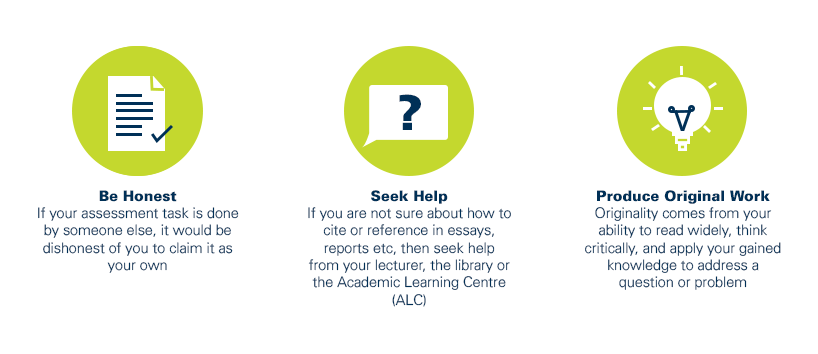
As a CQUniversity student you are expected to act honestly in all aspects of your academic work.
Any assessable work undertaken or submitted for review or assessment must be your own work. Assessable work is any type of work you do to meet the assessment requirements in the unit, including draft work submitted for review and feedback and final work to be assessed.
When you use the ideas, words or data of others in your assessment, you must thoroughly and clearly acknowledge the source of this information by using the correct referencing style for your unit. Using others’ work without proper acknowledgement may be considered a form of intellectual dishonesty.
Participating honestly, respectfully, responsibly, and fairly in your university study ensures the CQUniversity qualification you earn will be valued as a true indication of your individual academic achievement and will continue to receive the respect and recognition it deserves.
As a student, you are responsible for reading and following CQUniversity’s policies, including the Student Academic Integrity Policy and Procedure. This policy sets out CQUniversity’s expectations of you to act with integrity, examples of academic integrity breaches to avoid, the processes used to address alleged breaches of academic integrity, and potential penalties.
What is a breach of academic integrity?
A breach of academic integrity includes but is not limited to plagiarism, self-plagiarism, collusion, cheating, contract cheating, and academic misconduct. The Student Academic Integrity Policy and Procedure defines what these terms mean and gives examples.
Why is academic integrity important?
A breach of academic integrity may result in one or more penalties, including suspension or even expulsion from the University. It can also have negative implications for student visas and future enrolment at CQUniversity or elsewhere. Students who engage in contract cheating also risk being blackmailed by contract cheating services.
Where can I get assistance?
For academic advice and guidance, the Academic Learning Centre (ALC) can support you in becoming confident in completing assessments with integrity and of high standard.
What can you do to act with integrity?