Overview
Identification of the characteristic histopathological and cytopathological features of human organ systems and the hallmarks of pathological dysregulation of tissue organisation is fundamental to the work of the medical laboratory scientist. In this unit you will study normal and abnormal histopathological features of a range of tissues along with normal and abnormal cytopathological features of a range of cells. The relationship between cellular injury, immune response, tumour formation, infection and pathological dysregulation of tissue organisation will be explored in relation to clinical cases you may encounter. You will be provided with the knowledge and skill to perform microscopic examination of tissues and cells. Case studies will include new developments in immunohistochemistry and fluorescence imaging. Attendance at residential school practical activities in Rockhampton is a requirement of this unit.
Details
Pre-requisites or Co-requisites
Prerequisites BMSC12001 Histological and Cytological Techniques
Important note: Students enrolled in a subsequent unit who failed their pre-requisite unit, should drop the subsequent unit before the census date or within 10 working days of Fail grade notification. Students who do not drop the unit in this timeframe cannot later drop the unit without academic and financial liability. See details in the Assessment Policy and Procedure (Higher Education Coursework).
Offerings For Term 1 - 2026
Attendance Requirements
All on-campus students are expected to attend scheduled classes - in some units, these classes are identified as a mandatory (pass/fail) component and attendance is compulsory. International students, on a student visa, must maintain a full time study load and meet both attendance and academic progress requirements in each study period (satisfactory attendance for International students is defined as maintaining at least an 80% attendance record).
Recommended Student Time Commitment
Each 6-credit Undergraduate unit at CQUniversity requires an overall time commitment of an average of 12.5 hours of study per week, making a total of 150 hours for the unit.
Class Timetable
Assessment Overview
Assessment Grading
This is a graded unit: your overall grade will be calculated from the marks or grades for each assessment task, based on the relative weightings shown in the table above. You must obtain an overall mark for the unit of at least 50%, or an overall grade of 'pass' in order to pass the unit. If any 'pass/fail' tasks are shown in the table above they must also be completed successfully ('pass' grade). You must also meet any minimum mark requirements specified for a particular assessment task, as detailed in the 'assessment task' section (note that in some instances, the minimum mark for a task may be greater than 50%). Consult the University's Grades and Results Policy for more details of interim results and final grades.
All University policies are available on the CQUniversity Policy site.
You may wish to view these policies:
- Grades and Results Policy
- Assessment Policy and Procedure (Higher Education Coursework)
- Review of Grade Procedure
- Student Academic Integrity Policy and Procedure
- Academic Progression Policy and Procedure
- Student Refund and Credit Balance Policy and Procedure
- Complaints Policy and Procedure
- Information and Communications Technology Acceptable Use Policy and Procedure
This list is not an exhaustive list of all University policies. The full list of University policies are available on the CQUniversity Policy site.
Feedback, Recommendations and Responses
Every unit is reviewed for enhancement each year. At the most recent review, the following staff and student feedback items were identified and recommendations were made.
Feedback from SUTE and self reflection
Students appreciated the breakdown of content into smaller portions, as it helped them organise their study.
Maintain the structure of the learning resources.
Feedback from SUTE and self reflection
Residential school is well organised, insightful and helpful.
Maintain structure of residential school. Keep experienced sessionals to help demonstrate.
Feedback from Self reflection
Student engagement may be enhanced further through the provision of more comprehensive learning resources and interactive instructional tools.
Consider increasing the variety and accessibility of learning materials and incorporating interactive elements to foster deeper engagement with weekly content in future iterations.
- Distinguish histopathological and cytopathological specimens according to body system, pathology and artefactual morphology
- Analyse the features of inflammatory disease processes and the range of tissue responses
- Perform techniques and explain the principles, mechanisms and requirements of use for special stain procedures and specialised fixation techniques
- Describe the neoplastic process, grading systems for staging malignant neoplasms and correlation with gene expression
- Discuss the principles, mechanisms, requirements and the application of use for special stain procedures and specialised fixation techniques of new molecular and hybridisation techniques in histology and cytology.
The learning outcomes achieved are linked to the objectives of the accrediting body, Australian Institute of Medical and Clinical Scientists (AIMS).
Alignment of Assessment Tasks to Learning Outcomes
| Assessment Tasks | Learning Outcomes | ||||
|---|---|---|---|---|---|
| 1 | 2 | 3 | 4 | 5 | |
| 1 - Practical Assessment - 40% | |||||
| 2 - Case Study - 20% | |||||
| 3 - Examination - 40% | |||||
Alignment of Graduate Attributes to Learning Outcomes
| Graduate Attributes | Learning Outcomes | ||||
|---|---|---|---|---|---|
| 1 | 2 | 3 | 4 | 5 | |
| 1 - Communication | |||||
| 2 - Problem Solving | |||||
| 3 - Critical Thinking | |||||
| 4 - Information Literacy | |||||
| 5 - Team Work | |||||
| 6 - Information Technology Competence | |||||
| 7 - Cross Cultural Competence | |||||
| 8 - Ethical practice | |||||
| 9 - Social Innovation | |||||
| 10 - First Nations Knowledges | |||||
| 11 - Aboriginal and Torres Strait Islander Cultures | |||||
Textbooks
Functional Histology
- Edition: Second (2010)
- Authors: Jeffrey B Kerr
- Elsevier
- Chatswood Chatswood , NSW , Australia
- ISBN: 9780729538374
- Binding: Paperback
Wheater's Functional Histology A Text and Colour Atlas
- Edition: Sixth (2014)
- Authors: Young, B., O'Dowd, G., Woodford, P.
- Elsevier
- Philadelphia Philadelphia , PA , USA
- ISBN: 978-0-7020-4747-3
- Binding: Paperback
IT Resources
- CQUniversity Student Email
- Internet
- Unit Website (Moodle)
- Zoom (both microphone and webcam capability)
All submissions for this unit must use the referencing styles below:
For further information, see the Assessment Tasks.
i.christiansen@cqu.edu.au
c.ramlogan-steel@cqu.edu.au
Module 1
Begin Date: 09 Mar 2026Module/Topic
The Cell, Tissue Types and Body Systems
Chapter
Kerr: 1, 2, 4, 5, 6, 7 and
Young et al.:1, 4, 5, 6, 7
Events and Submissions/Topic
Tutorial
Module 2
Begin Date: 16 Mar 2026Module/Topic
Injury, Inflammation, Repair, Cell Death and the "-plasias"
Chapter
No specific readings
Events and Submissions/Topic
Tutorial
Module 3
Begin Date: 23 Mar 2026Module/Topic
The Integumentary and Respiratory Systems
Chapter
Kerr: 9, 12 and
Young et al.: 9, 12
Events and Submissions/Topic
Tutorial
Module 4
Begin Date: 30 Mar 2026Module/Topic
The Digestive System
Chapter
Kerr: 14, 15 and
Young et al.: 14, 15
Events and Submissions/Topic
Tutorial
Module 5
Begin Date: 06 Apr 2026Module/Topic
The Reproductive Systems
Chapter
Kerr: 18, 19 and
Young et al.: 18, 19
Events and Submissions/Topic
Tutorial
Module 6
Begin Date: 13 Apr 2026Module/Topic
The Cardiovascular System and Blood, Endocrine and Lymphatic systems.
Chapter
Kerr: 3, 8, 11, 17 and
Young et al.: 3, 8, 11, 17
Events and Submissions/Topic
Tutorial
Case Study Report Due: Week 6 Tuesday (14 Apr 2026) 11:45 pm AEST
Vacation Week
Begin Date: 20 Apr 2026Module/Topic
Break Week
Chapter
Events and Submissions/Topic
Module 7
Begin Date: 27 Apr 2026Module/Topic
The Musculoskeletal System
Chapter
Kerr: 6, 10 and
Young et al.: 6, 10
Events and Submissions/Topic
Tutorial
Week 8
Begin Date: 04 May 2026Module/Topic
Residential School
Chapter
Events and Submissions/Topic
Module 8
Begin Date: 11 May 2026Module/Topic
The Renal and Nervous Systems
Chapter
Kerr: 16, 7 and
Young et al.: 16, 7, 20
Events and Submissions/Topic
Tutorial
Module 9
Begin Date: 18 May 2026Module/Topic
Diagnostic Cytopathology
Chapter
Kerr: 1, 2, 18 and
Young et al.: 1, 19
Events and Submissions/Topic
Tutorial
Module 10
Begin Date: 25 May 2026Module/Topic
Autopsies, Post Mortems and Quality Assurance
Chapter
Events and Submissions/Topic
Tutorial
Revision Module - Week 12
Begin Date: 01 Jun 2026Module/Topic
Revision
Chapter
Events and Submissions/Topic
Exam Week
Begin Date: 08 Jun 2026Module/Topic
Chapter
Events and Submissions/Topic
Exam will be held during the scheduled exam period. Students will be notified of the date closer to this period.
Vacation/Exam Week
Begin Date: 15 Jun 2026Module/Topic
Chapter
Events and Submissions/Topic
Exam will be held during the scheduled exam period. Students will be notified of the date closer to this period.
Your unit coordinator for BMSC13016 Advanced Histopathology and Cytopathology is Ingrid Christiansen. You can contact Ingrid using a number of methods:
- The forum on the unit's Moodle site (The forum for this unit is continuously monitored and you can expect a response within one (1) business day of posting your question); or
- Through email (i.christiansen@cqu.edu.au); or
- Via telephone on 07 4930 6518.
As the name suggests, this unit will extend your knowledge of histology and cytology, along with some of the pathologies identified in these laboratory spaces. BMSC13016 Advanced Histopathology and Cytopathology is a core unit in one course:
CL10 - Bachelor of Medical Laboratory Science (Honours)
Tutorials are delivered each week face-to-face on the Rockhampton campus and via Zoom. Students enrolled in distance delivery mode can also attend the live tutorials using Zoom. These tutorials will also be recorded for the benefit of those students who are unable to attend the live tutorial. During these tutorials, the weekly study questions will be addressed (that are provided to you on the Moodle site). These weekly study questions will help you to apply knowledge learned during the weekly lecture and prepare you for the assessments. You will get the most benefit from the tutorials if you watch the weekly lectures beforehand and attempt the weekly study questions. You are strongly encouraged to participate in tutorials. Weekly revision quizzes are also provided to reinforce the knowledge you have gained from the lectures and to support your learning experience in this unit.
You will be provided an opportunity to explore how to apply the knowledge learned in lecture material in a compulsory residential school. Here you will extend on the microtomy techniques you have already learnt, and begin training in identification of basic tissue types and special stains which are associated with these tissues.
As per Australian educational standards, you are expected to commit 150 hours of engagement to your study of this unit. This is broken down as:
2 - 3 hours per week watching recorded lectures and revising the content through study notes
3 - 4 hours per week completing the weekly study questions and weekly revision quizzes on the unit's Moodle site.
1 - 2 hours per week attending the weekly tutorial and reflecting on your answers to the weekly study questions
3 - 4 hours per week preparing your assessments or studying for your exam
1 Case Study
There are three (3) parts to this assessment task.
Part 1: You will be provided with an authentic clinical case study on the Moodle site.
The following information regarding the case will be available to you: clinical presentation, patient history, tissue image(s), and special stain images (if any).
You are then required to answer a series of questions via a Moodle quiz, and this will constitute 20% of the marks for this assessment. This Moodle quiz will also provide you with further information and test results for the case study to use in the rest of the assessment.
Part 2:
You must generate a prompt that requests a Generative Artificial Intelligence (Gen AI) tool of your choice to describe the evolution of the histological diagnostic tools used in your case study. Ensure the response generated is no more than 100 words. You must include this prompt and the response, and reference the Gen AI tool you have used to obtain maximum marks.
Part 3:
You are then required to write a report critiquing new developments in (immuno)histochemical staining and diagnosis relating to your specific case (around 1,500 words). Your report will use the the Generative Artificial Intelligence (GenAI) response (from part 2) and utilise a critique approach describing the pathology observed, aetiology, specific morphological or histological characteristics observed that led to the diagnosis, differential diagnosis, treatment options and any recommended further tests. You can research primary research articles and review articles to gain insight into methods used, extra results from ancillary tests and images supporting the diagnosis (while paying attention to referencing).
Parts 2 and 3 are worth a collective 80% of Assessment 1.
Guidelines to complete the report, marking rubric and a template will be available on the Moodle site.
Use of Generative AI
The submitted assessment item must be your own work, but you may be assisted by the use of Generative AI tools (GenAI/LLM). However, it is important to note that GenAI/LLM generated responses are not peer-reviewed. Therefore, if material for an assessment is generated through your engagement with GenAI/LLMs, it is important that this information is:
Verified through rigorous comparison with peer-reviewed scholarly sources
Paraphrased
Referenced to peer-reviewed scholarly sources
Correctly referenced as being generated via GenAI/LLM (See APA Guide)
Note: Cutting and pasting of GenAI/LLM material into assessments may be considered contract cheating and/or plagiarism. Further information regarding the appropriate use of GenAI/LLM for this assessment item is available on the unit Moodle page. If you have questions about the appropriate use of GenAI/LLM material, please speak with your lecturer and/or contact an ALC advisor.
Level of GenAI use allowed:
Level 3: You may use AI to assist with specific tasks such as drafting text, refining and evaluating your work. You must critically evaluate and modify any AI-generated content you use.
Week 6 Tuesday (14 Apr 2026) 11:45 pm AEST
Part 1: Quiz answers automatically saved in Moodle; and Parts 2 and 3: The case report to be submitted online.
Week 7 Tuesday (28 Apr 2026)
The written assessment task is marked according to the criteria outlined below, and the marking rubric provided on the Moodle site:
Presentation: Clarity of purpose and coherence of expression (spelling, grammar, syntax); clear and organised flow of information.
Introduction/Summary: Provides necessary background information and pathophysiology of the case. Does not discuss the final diagnosis, rather supports the intended diagnosis via arguments.
Critique: Provides demonstration of critiquing the GenAI response and understanding the response via drawing comparisons with current literature. Discussion of further testing is demonstrated.
References: Harvard or APA referencing system used with appropriate in-text references. GenAI tool and articles all referenced properly.
- Analyse the features of inflammatory disease processes and the range of tissue responses
- Describe the neoplastic process, grading systems for staging malignant neoplasms and correlation with gene expression
- Discuss the principles, mechanisms, requirements and the application of use for special stain procedures and specialised fixation techniques of new molecular and hybridisation techniques in histology and cytology.
2 Practical Assessment
Over the three (3) days of the residential school / block practical you will perform microtomy, learn how to recognise different tissue types, simulate a Fine Needle Aspirate (FNA) and prepare a series of stains in accordance with instructions in the practical manual. You will be assessed on the quality of those stains by academic staff with expertise in histology. You must achieve a collective minimum of 50% (skills plus theory components) to pass this assessment. The practical will include:
Theory component:
This assessment must be handed to the assessor for marking on completion or by the end of day two. This part of the assessment is worth 25% of assessment 2 (or 10% of the overall grade). Items assessed include:
- Identification of ten (10) tissue blocks.
- Completion of the workbook. A series of questions will assess your knowledge and understanding of histology, cytology and histological/cytological technique. It is recommended that you to do some pre-reading prior to residential school / block practical.
Skills component:
This assessment must be handed to the assessor for marking on completion, or by midday on day three. This part of the assessment is worth 75% of assessment 2 (or 30% of the overall grade). You must achieve a minimum of 50% of the available marks of this component in order to pass the assessment. Items assessed include:
- Microtomy and H&E staining. You will section 10 different blocks of tissue, stain them using H&E staining, and label the slide accordingly.
- Four different special histochemical stains. The stains selected will depend on the type of tissues that can be obtained, full details to perform the stains will be given in the laboratory manual.
- Simulated fine needle aspirate collection followed by preparation of slides and cytology staining.
- Fluorescent/Molecular staining (either Immunofluorescence (IF) or in situ Hybridisation (ISH))
Students who fail to achieve 50% (Pass) on the first attempt of the skills component will be granted a second attempt. The maximum mark for the second attempt will be 50% of the allocated marks. The second attempt will be conducted in the afternoon on day three, prior to the completion of the residential school.
Use of Generative AI
The submitted assessment item must be your own work, and not written, prepared, or composed using Generative AI tools (GenAI/LLM). This includes the manipulation or analysis of images and data.
Note: Cutting and pasting of GenAI/LLM material into assessments may be considered contract cheating and/or plagiarism. If you have questions about the appropriate use of GenAI/LLM material, please speak with your lecturer and/or contact an ALC advisor.
Level of GenAI use allowed:
Level 1: You must not use Al at any point during the assessment. You must demonstrate your core skills and knowledge.
Week 8 Thursday (7 May 2026) 3:00 pm AEST
The practical portfolio is to be submitted at the completion of the residential school.
Week 9 Friday (15 May 2026)
Assessment of the slides will be done by academic staff with expertise in histology and cytology. A maximum of seventeen (17) slides will be handed in with a workbook.
Skills
- Microtomy and H&E staining: There will be 5 marks for each produced slide (5 marks per slide x 10 slides = 50 marks in total). These will be handed in at the end of day two for assessment.
- Fine needle aspirate collection, preparation of slides and staining will be assessed in this FNA simulation (3 marks per slide x 2 slides = 6 marks in total). These will be handed in at the end of day two for assessment.
- Fluorescent staining (either Immunofluorescence or FISH): one slide will be assessed and marked as a Pass/Fail. This will be handed in at the end of day two for assessment.
- Special stains: There will be 6 marks for each of the stains produced (6 marks per stain x 4 slides = 24 marks in total). These will be handed in by 12:00 midday on day three for assessment.
Theory
- Identification of 10 tissue blocks (10 marks available). These will be handed in at the end of day 2 for assessment.
- The workbook will be marked against a set of correct answers (10 marks available). These will be handed in by 12:00 midday on day 3 for assessment.
The 72-hour grace period does not apply to this assessment.
- Distinguish histopathological and cytopathological specimens according to body system, pathology and artefactual morphology
- Perform techniques and explain the principles, mechanisms and requirements of use for special stain procedures and specialised fixation techniques
Examination
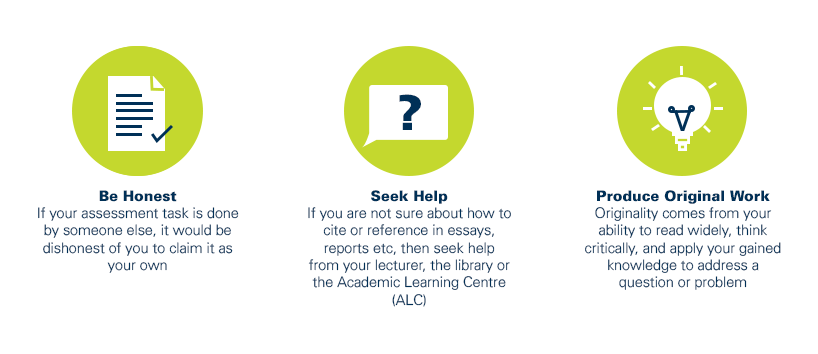
As a CQUniversity student you are expected to act honestly in all aspects of your academic work.
Any assessable work undertaken or submitted for review or assessment must be your own work. Assessable work is any type of work you do to meet the assessment requirements in the unit, including draft work submitted for review and feedback and final work to be assessed.
When you use the ideas, words or data of others in your assessment, you must thoroughly and clearly acknowledge the source of this information by using the correct referencing style for your unit. Using others’ work without proper acknowledgement may be considered a form of intellectual dishonesty.
Participating honestly, respectfully, responsibly, and fairly in your university study ensures the CQUniversity qualification you earn will be valued as a true indication of your individual academic achievement and will continue to receive the respect and recognition it deserves.
As a student, you are responsible for reading and following CQUniversity’s policies, including the Student Academic Integrity Policy and Procedure. This policy sets out CQUniversity’s expectations of you to act with integrity, examples of academic integrity breaches to avoid, the processes used to address alleged breaches of academic integrity, and potential penalties.
What is a breach of academic integrity?
A breach of academic integrity includes but is not limited to plagiarism, self-plagiarism, collusion, cheating, contract cheating, and academic misconduct. The Student Academic Integrity Policy and Procedure defines what these terms mean and gives examples.
Why is academic integrity important?
A breach of academic integrity may result in one or more penalties, including suspension or even expulsion from the University. It can also have negative implications for student visas and future enrolment at CQUniversity or elsewhere. Students who engage in contract cheating also risk being blackmailed by contract cheating services.
Where can I get assistance?
For academic advice and guidance, the Academic Learning Centre (ALC) can support you in becoming confident in completing assessments with integrity and of high standard.
What can you do to act with integrity?