Overview
This integrated pathology unit builds on the knowledge, skill, technical and cognitive ability developed during previous study. You will evaluate laboratory-based information to diagnose complex diseases through application of knowledge of multiple clinical disciplines within medical laboratory science. You will apply your advanced-level knowledge of clinical biochemistry, haematology, histopathology, transfusion science, immunology, molecular pathology and quality management to 'real life' clinical scenarios and case studies focused on metabolic, neoplastic, cardiovascular and age-related diseases. Use of case studies will integrate advanced-level knowledge of the aetiology, pathophysiology, and investigation of metabolic, neoplastic, cardiovascular and age-related diseases that significantly affect the morbidity, mortality and economics of healthcare. At residential school you will perform laboratory tests using advanced methodology and instrumentation. This will further develop your analytical, evaluative and communication skills.
Details
Pre-requisites or Co-requisites
Prerequisites: BMSC13001 Advanced Haematology AND BMSC13002 Advanced Clinical Biochemistry AND BMSC13003 Medical Microbiology 2 AND BMSC13009 Immunology OR BMSC13023 Applied Immunology AND BMSC13010 Pharmacology OR BMSC13020 Drug Discovery and Clinical Trials AND BMSC13011 Advanced Transfusion Science OR BMSC13015 Molecular Targeted Therapies AND BMSC13016 Advanced Histopathology and Cytopathology
Important note: Students enrolled in a subsequent unit who failed their pre-requisite unit, should drop the subsequent unit before the census date or within 10 working days of Fail grade notification. Students who do not drop the unit in this timeframe cannot later drop the unit without academic and financial liability. See details in the Assessment Policy and Procedure (Higher Education Coursework).
Offerings For Term 1 - 2026
Attendance Requirements
All on-campus students are expected to attend scheduled classes - in some units, these classes are identified as a mandatory (pass/fail) component and attendance is compulsory. International students, on a student visa, must maintain a full time study load and meet both attendance and academic progress requirements in each study period (satisfactory attendance for International students is defined as maintaining at least an 80% attendance record).
Recommended Student Time Commitment
Each 12-credit Undergraduate unit at CQUniversity requires an overall time commitment of an average of 25 hours of study per week, making a total of 300 hours for the unit.
Class Timetable
Assessment Overview
Assessment Grading
This is a graded unit: your overall grade will be calculated from the marks or grades for each assessment task, based on the relative weightings shown in the table above. You must obtain an overall mark for the unit of at least 50%, or an overall grade of 'pass' in order to pass the unit. If any 'pass/fail' tasks are shown in the table above they must also be completed successfully ('pass' grade). You must also meet any minimum mark requirements specified for a particular assessment task, as detailed in the 'assessment task' section (note that in some instances, the minimum mark for a task may be greater than 50%). Consult the University's Grades and Results Policy for more details of interim results and final grades.
All University policies are available on the CQUniversity Policy site.
You may wish to view these policies:
- Grades and Results Policy
- Assessment Policy and Procedure (Higher Education Coursework)
- Review of Grade Procedure
- Student Academic Integrity Policy and Procedure
- Academic Progression Policy and Procedure
- Student Refund and Credit Balance Policy and Procedure
- Complaints Policy and Procedure
- Information and Communications Technology Acceptable Use Policy and Procedure
This list is not an exhaustive list of all University policies. The full list of University policies are available on the CQUniversity Policy site.
Feedback, Recommendations and Responses
Every unit is reviewed for enhancement each year. At the most recent review, the following staff and student feedback items were identified and recommendations were made.
Feedback from SUTE data
Add microbiology specific instructions to the Laboratory Manual.
This recommendation was implemented for BMSC14003 in term 2 2025 and will be implemented for BMSC14001 in term 1 2026.
Feedback from SUTE data
Improve the clarity of the instructions for carrying out molecular testing in the residential school.
The instructions for both the standard PCR and qPCR protocols will be reviewed to enhance their clarity.
- Differentiate the aetiology, pathophysiology and clinical investigation of complex medical conditions with a focus on metabolic, neoplastic, cardiovascular and age-related disease
- Perform medical laboratory tests demonstrating advanced methodology and instrumentation
- Evaluate pathological mechanisms and analytical techniques in the laboratory-based diagnosis of metabolic, neoplastic, cardiovascular and age-related disease
- Evaluate data and present information concerning pathological issues in an ethical and scientific context.
The learning outcomes achieved are linked to the objectives of the accrediting body, Australian Institute of Medical Scientists (AIMS).
Alignment of Assessment Tasks to Learning Outcomes
| Assessment Tasks | Learning Outcomes | |||
|---|---|---|---|---|
| 1 | 2 | 3 | 4 | |
| 1 - Case Study - 25% | ||||
| 2 - Practical Assessment - 35% | ||||
| 3 - Examination - 40% | ||||
Alignment of Graduate Attributes to Learning Outcomes
| Graduate Attributes | Learning Outcomes | |||
|---|---|---|---|---|
| 1 | 2 | 3 | 4 | |
| 1 - Communication | ||||
| 2 - Problem Solving | ||||
| 3 - Critical Thinking | ||||
| 4 - Information Literacy | ||||
| 5 - Team Work | ||||
| 6 - Information Technology Competence | ||||
| 7 - Cross Cultural Competence | ||||
| 8 - Ethical practice | ||||
| 9 - Social Innovation | ||||
| 10 - First Nations Knowledges | ||||
| 11 - Aboriginal and Torres Strait Islander Cultures | ||||
Textbooks
There are no required textbooks.
IT Resources
- CQUniversity Student Email
- Internet
- Unit Website (Moodle)
- Zoom (both microphone and webcam capability)
All submissions for this unit must use the referencing styles below:
For further information, see the Assessment Tasks.
w.deasy@cqu.edu.au
Week 1
Begin Date: 09 Mar 2026Module/Topic
Cystic Fibrosis
Chapter
A weekly reading list will be provided on the Moodle page.
Events and Submissions/Topic
Introductory tutorial
Week 2
Begin Date: 16 Mar 2026Module/Topic
Diabetes mellitus
Chapter
A weekly reading list will be provided on the Moodle page.
Events and Submissions/Topic
Tutorial covering Week 1 topics
Week 3
Begin Date: 23 Mar 2026Module/Topic
Acute Myeloid Leukaemia
Chapter
A weekly reading list will be provided on the Moodle page.
Events and Submissions/Topic
Tutorial covering Week 2 topics
Week 4
Begin Date: 30 Mar 2026Module/Topic
Plasma Cell Leukaemia
Chapter
A weekly reading list will be provided on the Moodle page.
Events and Submissions/Topic
Tutorial covering Week 3 topics
Week 5
Begin Date: 06 Apr 2026Module/Topic
Burns
Chapter
A weekly reading list will be provided on the Moodle page.
Events and Submissions/Topic
Tutorial covering Week 4 topics
Week 6
Begin Date: 13 Apr 2026Module/Topic
Rheumatoid Arthritis
Chapter
A weekly reading list will be provided on the Moodle page.
Events and Submissions/Topic
Tutorial covering Week 5 topics
Residential School: 14/04/2026 to 17/04/2026
Vacation Week
Begin Date: 20 Apr 2026Module/Topic
No Lecture
Chapter
N/A
Events and Submissions/Topic
Self-directed study
Week 7
Begin Date: 27 Apr 2026Module/Topic
Systemic Lupus Erythematosus
Chapter
A weekly reading list will be provided on the Moodle page.
Events and Submissions/Topic
Tutorial covering Week 6 topics
Residential School Practical Due: Week 7 Friday (1 May 2026) 5:00 pm AEST
Week 8
Begin Date: 04 May 2026Module/Topic
Multiple Myeloma
Chapter
A weekly reading list will be provided on the Moodle page.
Events and Submissions/Topic
Tutorial covering Week 7 topics
Week 9
Begin Date: 11 May 2026Module/Topic
Chronic Kidney Disease
Chapter
A weekly reading list will be provided on the Moodle page.
Events and Submissions/Topic
Tutorial covering Week 8 topics
Week 10
Begin Date: 18 May 2026Module/Topic
Haemachromatosis
Chapter
A weekly reading list will be provided on the Moodle page.
Events and Submissions/Topic
Tutorial covering Week 9 topics
Laboratory Diagnostics Review Due: Week 10 Thursday (21 May 2026) 5:00 pm AEST
Week 11
Begin Date: 25 May 2026Module/Topic
Revision and Case Presentations
Chapter
N/A
Events and Submissions/Topic
Tutorial covering Week 10 topics
Week 12
Begin Date: 01 Jun 2026Module/Topic
Revision
Chapter
N/A
Events and Submissions/Topic
Revision tutorial
Exam Week
Begin Date: 08 Jun 2026Module/Topic
Exam - Date TBA
Chapter
N/A
Events and Submissions/Topic
N/A
All lectures are pre-recorded by Will Deasy & Wayne Pederick.
All tutorials will be run live on Zoom and will be recorded for those who can't attend the live sessions. These sessions will be run by Will Deasy.
1 Practical Assessment
The Residential School is an opportunity to learn and perform a range of interdisciplinary clinical diagnostic procedures and compliment the theoretical knowledge of integrated pathology.
The residential school will provide valuable practical experience in techniques currently performed in medical laboratories.
This unit has a compulsory 4-day residential school that runs on the Rockhampton North Campus.
The laboratory practical tasks will comprise of laboratory-based exercises which will be completed during the four (4) day Residential School.
The exercises will be described in the laboratory workbook and will involve completion of laboratory exercises, calculation and presentation of results.
A detailed rubric of assessment criteria for laboratory manual will be available on the unit Moodle page.
Competed laboratory workbooks will be submitted via the Assessment Dropbox provided on Moodle.
The 72-hour grace period does not apply to this assessment.
Level of GenAI use allowed: Level 1: You must not use AI at any point during the assessment. You must demonstrate
your core skills and knowledge.
Week 7 Friday (1 May 2026) 5:00 pm AEST
Submission of the Laboratory Practical Workbook is via the Unit Moodle Page
Week 9 Friday (15 May 2026)
Feedback will be provided on Moodle via Turnitin Feedback Studio
Assessment of the laboratory manual will be based on the presentation of laboratory results including calculations, and answers to questions related to the cases studies.
Answers provided in the laboratory manual must be clearly presented and legible.
- Perform medical laboratory tests demonstrating advanced methodology and instrumentation
- Evaluate pathological mechanisms and analytical techniques in the laboratory-based diagnosis of metabolic, neoplastic, cardiovascular and age-related disease
2 Case Study
Part A
You will choose a disease and describe in detail the various laboratory-based tests that are performed on a patient’s sample when investigating the disease or monitoring management.
The disease may be one that we are studying in this unit or another disease if you wish.
Write a 2500-word essay, supported by up to ten (10) references outlining the advances in the understanding the disease and the laboratory-based diagnosis.
Part B
Review and critique in detail two (2) scientific papers which have contributed to and advanced knowledge associated with pathogenesis and diagnosis.
Your critical appraisal of a major scientific paper should include a summary of the outcomes of the described research, how these findings were a significant advance in either pathogenesis/diagnosis.
What methodology was used and what further developments have occurred based on the original paper?
The paper critique is expected to be concise, between 750 and 1000 words.
Level of GenAI use allowed: Level 2: You may use AI for planning, idea development, and research. Your final submission should show how you have developed and refined these ideas.
Week 10 Thursday (21 May 2026) 5:00 pm AEST
Submissions via Unit Moodle Page
Week 12 Thursday (4 June 2026)
Feedback will be provided on Moodle via TurnItIn feedback studio.
The assessment is worth 25% of your overall grade. The marking for this assessment is broken down as follows
A total of 100 marks are available broken down as follows
- 60 marks for Part A, the disease review
- 40 marks for Part B, the scientific paper critiques (20 marks per paper).
A detailed marking rubric is available on the Moodle site
Student are permitted to use Generative AI for this assessment in the following ways:
- Developing literature search strategies
- Compiling suitable literature sources and locating data
- Guidance for structuring the assignment
If Generative AI is used in any way, it must be cited as per the CQU Guidelines (Academic Learning Centre).
If students choose to use generative AI, the following statement must be completed and included on the front page of the uploaded assessment: "I have used (insert technology) to (insert how you used this) in accordance with the requirements of this unit. The reason I used this was to (explain why you used it). The details of how I used it as (insert how). I hereby declare that the submission is an appropriate representation of my individual skills and abilities to meet the requirements of the task/s."
As per academic writing requirements and assessment criteria; citations of information should be of the primary source (i.e statistics returned by AI must be fact-checked and referenced from their original source as well as the AI source). Failure to cite primary sources as well as AI sources could be considered breach of academic integrity.
Your use of Generative AI must be clearly outlined in an appendix as a separate file which includes the prompt used and Generative AI response (in line with marking rubric). Failure to include an appendix may result in academic integrity investigation.
- Differentiate the aetiology, pathophysiology and clinical investigation of complex medical conditions with a focus on metabolic, neoplastic, cardiovascular and age-related disease
- Evaluate pathological mechanisms and analytical techniques in the laboratory-based diagnosis of metabolic, neoplastic, cardiovascular and age-related disease
- Evaluate data and present information concerning pathological issues in an ethical and scientific context.
Examination
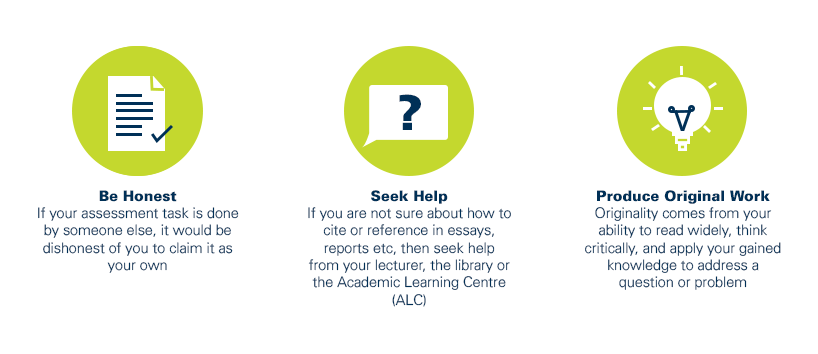
As a CQUniversity student you are expected to act honestly in all aspects of your academic work.
Any assessable work undertaken or submitted for review or assessment must be your own work. Assessable work is any type of work you do to meet the assessment requirements in the unit, including draft work submitted for review and feedback and final work to be assessed.
When you use the ideas, words or data of others in your assessment, you must thoroughly and clearly acknowledge the source of this information by using the correct referencing style for your unit. Using others’ work without proper acknowledgement may be considered a form of intellectual dishonesty.
Participating honestly, respectfully, responsibly, and fairly in your university study ensures the CQUniversity qualification you earn will be valued as a true indication of your individual academic achievement and will continue to receive the respect and recognition it deserves.
As a student, you are responsible for reading and following CQUniversity’s policies, including the Student Academic Integrity Policy and Procedure. This policy sets out CQUniversity’s expectations of you to act with integrity, examples of academic integrity breaches to avoid, the processes used to address alleged breaches of academic integrity, and potential penalties.
What is a breach of academic integrity?
A breach of academic integrity includes but is not limited to plagiarism, self-plagiarism, collusion, cheating, contract cheating, and academic misconduct. The Student Academic Integrity Policy and Procedure defines what these terms mean and gives examples.
Why is academic integrity important?
A breach of academic integrity may result in one or more penalties, including suspension or even expulsion from the University. It can also have negative implications for student visas and future enrolment at CQUniversity or elsewhere. Students who engage in contract cheating also risk being blackmailed by contract cheating services.
Where can I get assistance?
For academic advice and guidance, the Academic Learning Centre (ALC) can support you in becoming confident in completing assessments with integrity and of high standard.
What can you do to act with integrity?