Overview
This unit provides the essential skills and techniques for scoping workplace problems and developing an effective research proposal for investigating and solving the problem. It provides an in-depth introduction to the critical thinking and planning required in the initial stages of a workplace research project. You will undertake research problem definition and design a research project. You will also consider appropriate methods for your analysis. This unit is designed as the pre-requisite for the successful completion of a professional project major.
Details
Pre-requisites or Co-requisites
There are no requisites for this unit.
Important note: Students enrolled in a subsequent unit who failed their pre-requisite unit, should drop the subsequent unit before the census date or within 10 working days of Fail grade notification. Students who do not drop the unit in this timeframe cannot later drop the unit without academic and financial liability. See details in the Assessment Policy and Procedure (Higher Education Coursework).
Offerings For Term 1 - 2026
Attendance Requirements
All on-campus students are expected to attend scheduled classes - in some units, these classes are identified as a mandatory (pass/fail) component and attendance is compulsory. International students, on a student visa, must maintain a full time study load and meet both attendance and academic progress requirements in each study period (satisfactory attendance for International students is defined as maintaining at least an 80% attendance record).
Recommended Student Time Commitment
Each 6-credit Undergraduate unit at CQUniversity requires an overall time commitment of an average of 12.5 hours of study per week, making a total of 150 hours for the unit.
Class Timetable
Assessment Overview
Assessment Grading
This is a pass/fail (non-graded) unit. To pass the unit, you must pass all of the individual assessment tasks shown in the table above.
All University policies are available on the CQUniversity Policy site.
You may wish to view these policies:
- Grades and Results Policy
- Assessment Policy and Procedure (Higher Education Coursework)
- Review of Grade Procedure
- Student Academic Integrity Policy and Procedure
- Academic Progression Policy and Procedure
- Student Refund and Credit Balance Policy and Procedure
- Complaints Policy and Procedure
- Information and Communications Technology Acceptable Use Policy and Procedure
This list is not an exhaustive list of all University policies. The full list of University policies are available on the CQUniversity Policy site.
- Identify a workplace problem that can be developed into a concise research project
- Choose and apply appropriate research strategies and techniques that best address the research problem
- Identify and employ ethical practices that consider the social, cultural and legal responsibilities of the researcher in a workplace situation
- Prepare and communicate a comprehensive research proposal.
Not applicable.
Alignment of Assessment Tasks to Learning Outcomes
| Assessment Tasks | Learning Outcomes | |||
|---|---|---|---|---|
| 1 | 2 | 3 | 4 | |
| 1 - Written Assessment - 0% | ||||
| 2 - Research Proposal - 0% | ||||
Alignment of Graduate Attributes to Learning Outcomes
| Graduate Attributes | Learning Outcomes | |||
|---|---|---|---|---|
| 1 | 2 | 3 | 4 | |
| 1 - Communication | ||||
| 2 - Problem Solving | ||||
| 3 - Critical Thinking | ||||
| 4 - Information Literacy | ||||
| 5 - Team Work | ||||
| 6 - Information Technology Competence | ||||
| 7 - Cross Cultural Competence | ||||
| 8 - Ethical practice | ||||
| 9 - Social Innovation | ||||
| 10 - First Nations Knowledges | ||||
| 11 - Aboriginal and Torres Strait Islander Cultures | ||||
Textbooks
There are no required textbooks.
IT Resources
- CQUniversity Student Email
- Internet
- Unit Website (Moodle)
All submissions for this unit must use the referencing style: American Psychological Association 7th Edition (APA 7th edition)
For further information, see the Assessment Tasks.
q.nisar@cqu.edu.au
Week 1
Begin Date: 09 Mar 2026Module/Topic
Introduction to Action Research
Chapter
This week, the principal readings will come from McNiff (2013) Action Research: Principles and Practices.
Read Chapters 1, 11 & 12.
Events and Submissions/Topic
Workbook activities.
Week 2
Begin Date: 16 Mar 2026Module/Topic
Theoretical Foundations
Chapter
This week, the principal readings will come from McNiff (2013) Action Research: Principles and Practices.
Read Chapters 2 & 3.
Events and Submissions/Topic
Workbook activities.
Week 3
Begin Date: 23 Mar 2026Module/Topic
Identifying a Research Problem
Chapter
This week we turn to a different source of readings: McNiff, J., & Whitehead, J. (2010). You and your action research project (3rd ed.). Routledge. You can find this in your e-Reading List.
Readings for this week:
Chapter 4 Working with others in organisational and institutional settings
Chapter 5 Influence and ethics.
These readings do not tell you what to research, or how to identify specific problems. Rather, they inform you of the organisational settings you will be involved in, and how to navigate your way through them to arrive at a workable problem definition.
Events and Submissions/Topic
Workbook activities.
Week 4
Begin Date: 30 Mar 2026Module/Topic
Literature Review & Contextualisation
Chapter
This week builds upon the readings of Week 3. In addition, please read:
McNiff (2013) Action Research: Principles and Practices, Chapter 4
McNiff, J., & Whitehead, J. (2010). You and your action research project (3rd ed.). Routledge, Chapter 6.
Events and Submissions/Topic
Workbook activities.
Week 5
Begin Date: 06 Apr 2026Module/Topic
Research Proposal Development
Chapter
There are no new readings this week. Instead, you should review the previous weeks’ readings, as they all apply to this proposal.
Events and Submissions/Topic
The research proposal
A template for your research proposal is provided for you in the Assessment section of this Moodle site. Additionally, a guidance sheet and a worked example are provided for you below. You must not copy or paraphrase any part of the worked example in your own proposal. It is provided for contextual and learning purposes only.
Week 6
Begin Date: 13 Apr 2026Module/Topic
Submit Research Proposal
Chapter
No further readings. Complete your proposal.
Events and Submissions/Topic
Submit Research Proposal
Research Proposal Due: Week 6 Friday (17 Apr 2026) 11:55 pm AEST
Vacation Week
Begin Date: 20 Apr 2026Module/Topic
Chapter
Events and Submissions/Topic
Week 7
Begin Date: 27 Apr 2026Module/Topic
Designing the Research Plan
Chapter
This week, your readings will be Chapters 6 and 7 of McNiff, J., & Whitehead, J. (2010). You and your action research project (3rd ed.). Routledge.
Events and Submissions/Topic
Commence work on your research plan.
Week 8
Begin Date: 04 May 2026Module/Topic
Research plan: Implementation planning
Chapter
Continue with Chapters 6 and 7 of McNiff, J., & Whitehead, J. (2010). You and your action research project (3rd ed.). Routledge.
Events and Submissions/Topic
Continue with your research plan.
Week 9
Begin Date: 11 May 2026Module/Topic
Finalise your research plan
Chapter
Continue with Chapters 6 and 7 of McNiff, J., & Whitehead, J. (2010). You and your action research project (3rd ed.). Routledge.
Events and Submissions/Topic
Finalise your draft research plan. Discuss with your workplace mentor. Amend where needed.
Week 10
Begin Date: 18 May 2026Module/Topic
Submit your research plan
Chapter
Events and Submissions/Topic
Submit your research plan.
Week 11
Begin Date: 25 May 2026Module/Topic
Reflections and workbook
Chapter
Events and Submissions/Topic
Make sure your workbook completions are complete.
Week 12
Begin Date: 01 Jun 2026Module/Topic
Workbook sign-off and submission.
Chapter
Events and Submissions/Topic
Make time to sit with your workplace mentor and review your workbook. Your workplace mentor must sign off on your activities prior to submission.
Exam Week
Begin Date: 08 Jun 2026Module/Topic
Chapter
Events and Submissions/Topic
1 Research Proposal
Using the template provided in Moodle, you will construct a viable research proposal, with guidance from your workplace mentor and your unit coordinator. This template will identify the problem being investigated, the research questions, theories used and a literature review. It will form the basis for your upcoming research plan.
Week 6 Friday (17 Apr 2026) 11:55 pm AEST
Week 7 Friday (1 May 2026)
The return date only applies to assessments submitted by the due date.
- The research proposal identifies a sufficiently complex problem that would benefit from a 12 week research project.
- The research proposal provides appropriate research questions.
- The research proposal provides an adequate and appropriate literature review.
- The research proposal identifies an appropriate theory to guide the project.
- The research proposal is considered to be at a satisfactory level by both the workplace mentor and the unit coordinator.
- Choose and apply appropriate research strategies and techniques that best address the research problem
- Identify and employ ethical practices that consider the social, cultural and legal responsibilities of the researcher in a workplace situation
- Prepare and communicate a comprehensive research proposal.
2 Written Assessment
Using the template provided in Moodle, you will construct a viable research plan, with guidance from your workplace mentor and your unit coordinator. The plan will specify how the problem identified in your earlier research proposal can be satisfactorily investigated during a 12-week project. Your plan must be approved by your workplace mentor.
Submit via your secure upload link in Moodle. Your plan must be submitted by Friday of Week 10 and your workbook must be submitted by Friday of Week 12.
Assessments are returned on Certification Day.
- The project is sufficiently detailed to be successfully completed during a 12-week period.
- The project plan and workbook are considered to be at a satisfactory level by the workplace mentor.
- The project plan and workbook are considered to be at a satisfactory level by the unit coordinator.
- Identify a workplace problem that can be developed into a concise research project
- Choose and apply appropriate research strategies and techniques that best address the research problem
- Identify and employ ethical practices that consider the social, cultural and legal responsibilities of the researcher in a workplace situation
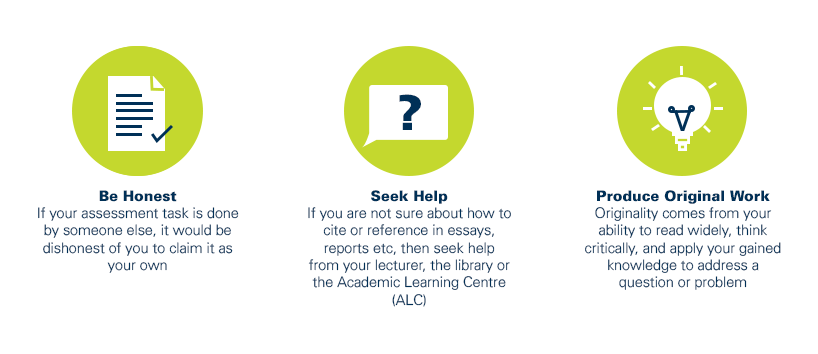
As a CQUniversity student you are expected to act honestly in all aspects of your academic work.
Any assessable work undertaken or submitted for review or assessment must be your own work. Assessable work is any type of work you do to meet the assessment requirements in the unit, including draft work submitted for review and feedback and final work to be assessed.
When you use the ideas, words or data of others in your assessment, you must thoroughly and clearly acknowledge the source of this information by using the correct referencing style for your unit. Using others’ work without proper acknowledgement may be considered a form of intellectual dishonesty.
Participating honestly, respectfully, responsibly, and fairly in your university study ensures the CQUniversity qualification you earn will be valued as a true indication of your individual academic achievement and will continue to receive the respect and recognition it deserves.
As a student, you are responsible for reading and following CQUniversity’s policies, including the Student Academic Integrity Policy and Procedure. This policy sets out CQUniversity’s expectations of you to act with integrity, examples of academic integrity breaches to avoid, the processes used to address alleged breaches of academic integrity, and potential penalties.
What is a breach of academic integrity?
A breach of academic integrity includes but is not limited to plagiarism, self-plagiarism, collusion, cheating, contract cheating, and academic misconduct. The Student Academic Integrity Policy and Procedure defines what these terms mean and gives examples.
Why is academic integrity important?
A breach of academic integrity may result in one or more penalties, including suspension or even expulsion from the University. It can also have negative implications for student visas and future enrolment at CQUniversity or elsewhere. Students who engage in contract cheating also risk being blackmailed by contract cheating services.
Where can I get assistance?
For academic advice and guidance, the Academic Learning Centre (ALC) can support you in becoming confident in completing assessments with integrity and of high standard.
What can you do to act with integrity?