Overview
In this unit, you will apply fundamental principles of analytical science and study analytical techniques, such as quantitative molecular spectrophotometry; atomic spectrometry; chromatographic methods; mass spectrometry; and the use of electrodes. You will interpret analytical data; examine error analysis, data handling and manipulation; and understand quality assurance. During a compulsory residential school, you will apply analytical theory, use advanced analytical instrumentation and enhance your laboratory skills.
Details
Pre-requisites or Co-requisites
CHEM11043 Atoms, Molecules and Matter or CHEM11041 Chemistry for the Life Sciences
Important note: Students enrolled in a subsequent unit who failed their pre-requisite unit, should drop the subsequent unit before the census date or within 10 working days of Fail grade notification. Students who do not drop the unit in this timeframe cannot later drop the unit without academic and financial liability. See details in the Assessment Policy and Procedure (Higher Education Coursework).
Offerings For Term 2 - 2026
Attendance Requirements
All on-campus students are expected to attend scheduled classes - in some units, these classes are identified as a mandatory (pass/fail) component and attendance is compulsory. International students, on a student visa, must maintain a full time study load and meet both attendance and academic progress requirements in each study period (satisfactory attendance for International students is defined as maintaining at least an 80% attendance record).
Recommended Student Time Commitment
Each 6-credit Undergraduate unit at CQUniversity requires an overall time commitment of an average of 12.5 hours of study per week, making a total of 150 hours for the unit.
Class Timetable
Assessment Overview
Assessment Grading
This is a graded unit: your overall grade will be calculated from the marks or grades for each assessment task, based on the relative weightings shown in the table above. You must obtain an overall mark for the unit of at least 50%, or an overall grade of 'pass' in order to pass the unit. If any 'pass/fail' tasks are shown in the table above they must also be completed successfully ('pass' grade). You must also meet any minimum mark requirements specified for a particular assessment task, as detailed in the 'assessment task' section (note that in some instances, the minimum mark for a task may be greater than 50%). Consult the University's Grades and Results Policy for more details of interim results and final grades.
All University policies are available on the CQUniversity Policy site.
You may wish to view these policies:
- Grades and Results Policy
- Assessment Policy and Procedure (Higher Education Coursework)
- Review of Grade Procedure
- Student Academic Integrity Policy and Procedure
- Academic Progression Policy and Procedure
- Student Refund and Credit Balance Policy and Procedure
- Complaints Policy and Procedure
- Information and Communications Technology Acceptable Use Policy and Procedure
This list is not an exhaustive list of all University policies. The full list of University policies are available on the CQUniversity Policy site.
Feedback, Recommendations and Responses
Every unit is reviewed for enhancement each year. At the most recent review, the following staff and student feedback items were identified and recommendations were made.
Feedback from Reflective practice
There is still considerable overlap between Assessments 2 and 3.
A review of the assessment structure will continue to be undertaken to minimise duplication.
Feedback from Reflective practice
Gen-AI is a part of analysis and reporting, but this is not being reflected in the unit or its assessments.
An assessment task incorporating Gen-AI awareness and compliance will be introduced.
- Explain the theory and applications of contemporary techniques in analytical science
- Demonstrate practical laboratory skills in the use of advanced analytical instrumentation to make reliable analytical measurements
- Demonstrate problem solving and analytical skills in the fundamentals of analytical science
- Research the developments and trends in analytical science for a diverse range of applications.
Alignment of Assessment Tasks to Learning Outcomes
| Assessment Tasks | Learning Outcomes | |||
|---|---|---|---|---|
| 1 | 2 | 3 | 4 | |
| 1 - Presentation - 20% | ||||
| 2 - Written Assessment - 20% | ||||
| 3 - Practical and Written Assessment - 20% | ||||
| 4 - Online Test - 40% | ||||
Alignment of Graduate Attributes to Learning Outcomes
| Graduate Attributes | Learning Outcomes | |||
|---|---|---|---|---|
| 1 | 2 | 3 | 4 | |
| 1 - Communication | ||||
| 2 - Problem Solving | ||||
| 3 - Critical Thinking | ||||
| 4 - Information Literacy | ||||
| 5 - Team Work | ||||
| 6 - Information Technology Competence | ||||
| 7 - Cross Cultural Competence | ||||
| 8 - Ethical practice | ||||
| 9 - Social Innovation | ||||
| 10 - First Nations Knowledges | ||||
| 11 - Aboriginal and Torres Strait Islander Cultures | ||||
Alignment of Assessment Tasks to Graduate Attributes
| Assessment Tasks | Graduate Attributes | ||||||||||
|---|---|---|---|---|---|---|---|---|---|---|---|
| 1 | 2 | 3 | 4 | 5 | 6 | 7 | 8 | 9 | 10 | 11 | |
| 1 - Presentation - 20% | |||||||||||
| 2 - Written Assessment - 20% | |||||||||||
| 3 - Practical and Written Assessment - 20% | |||||||||||
| 4 - Online Test - 40% | |||||||||||
Textbooks
Quantitative Chemical Analysis
- (2025)
- Authors: Daniel C. Harris, Charles A. Lucy
- ISBN: 9781319589974
IT Resources
- CQUniversity Student Email
- Internet
- Unit Website (Moodle)
- EndNote Bibliographical application
- Microsoft Office (Word, Excel and PowerPoint)
- Zoom (both microphone and webcam capability)
- Camera or mobile phone capable of capturing photos/videos for practical tasks
- Microsoft Teams (both microphone and webcam capability)
All submissions for this unit must use the referencing style: Vancouver
For further information, see the Assessment Tasks.
s.chandra@cqu.edu.au
Week 1
Begin Date: 13 Jul 2026Module/Topic
Analytical Science, Analysis and Analytical tools
Chapter
0-5 (and others as necessary - specified in the lectures)
Events and Submissions/Topic
Week 2
Begin Date: 20 Jul 2026Module/Topic
Reliability of analytical data
Chapter
3-5 (and others as necessary - specified in the lectures)
Events and Submissions/Topic
Week 3
Begin Date: 27 Jul 2026Module/Topic
Sampling and sample preparation
Chapter
13 (and others as necessary - specified in the lectures)
Events and Submissions/Topic
Week 4
Begin Date: 03 Aug 2026Module/Topic
Quality Assurance
Chapter
5 (and others as necessary - specified in the lectures)
Events and Submissions/Topic
Week 5
Begin Date: 10 Aug 2026Module/Topic
Acid-base equilibria and EDTA titrations
Chapter
8- 12 (and others as necessary - specified in the lectures)
Events and Submissions/Topic
Week 6
Begin Date: 17 Aug 2026Module/Topic
Electrochemical analysis
Chapter
14 - 17 (and others as necessary - specified in the lectures)
Events and Submissions/Topic
Vacation Week
Begin Date: 24 Aug 2026Module/Topic
Chapter
Events and Submissions/Topic
Week 7
Begin Date: 31 Aug 2026Module/Topic
Molecular and atomic spectroscopy
Chapter
18 - 21 (and others as necessary - specific sections as directed in lectures)
Events and Submissions/Topic
Week 8
Begin Date: 07 Sep 2026Module/Topic
Analytical separations - Part 1
Chapter
23-25 (and others as necessary - specified in the lectures)
Events and Submissions/Topic
Week 9
Begin Date: 14 Sep 2026Module/Topic
Analytical separations - Part 2
Chapter
23-25 (and others as necessary - specified in the lectures)
Events and Submissions/Topic
Week 10
Begin Date: 21 Sep 2026Module/Topic
Mass spectrometry
Chapter
22 (and others as necessary - specified in the lectures)
Events and Submissions/Topic
Week 11
Begin Date: 28 Sep 2026Module/Topic
Automation, discrete and flow analysis
Chapter
19 (and others as necessary - specified in the lectures)
Events and Submissions/Topic
Week 12
Begin Date: 05 Oct 2026Module/Topic
Chapter
Events and Submissions/Topic
Exam Week
Begin Date: 12 Oct 2026Module/Topic
Chapter
Events and Submissions/Topic
Vacation/Exam Week
Begin Date: 19 Oct 2026Module/Topic
Chapter
Events and Submissions/Topic
1 Presentation
Representative sampling, sample preparation, method optimization, method validation and quality control are key components of analytical science. Additionally, analytical scientists are required to use a variety of sophisticated techniques and instrumentation to investigate and analyze, both known and unknown samples, with precision and accuracy. In a rapidly-changing world of AI, all of these have become quite fluid as well. Finally, being able to communicate your technical knowledge in a succinct, time-conscious manner is essential. This assessment task combines these attributes and expectations.
You are an analytical scientist presenting findings in video format to a client (industry, court, regulator, or research team). Your task is to explain how two modern analytical methods (one AI-enabled and one conventional) can be used to solve a real-world problem involving an unknown or complex sample. You must critically evaluate the role of Artificial Intelligence (AI) within the analytical workflow and its impact on data quality, reliability, and decision-making.
Your video must:
- Define the Problem & Constraints
- Clearly introduce the scenario and analytical challenge
- Include sample complexity (e.g., matrix, contamination, trace levels)
- Consider a realistic constraint (e.g., limited budget, time, or instrumentation access)
- Compare Two Analytical Approaches
- One conventional method
- One AI-enabled method
- Focus on how each solves the problem
- Apply Core Analytical Science Principles
Demonstrate how each method addresses (via an integrated discussion, not separate definitions):- Sampling
- Sample preparation
- Method optimisation
- Validation (accuracy, precision, detection limits)
- Evaluate the Role of AI
- Where AI is used in the workflow
- Advantages (e.g., data handling, pattern recognition, efficiency)
- Limitations (e.g., bias, interpretability, validation challenges)
- Make a Justified Recommendation
- Identify the best method under your constraint
- Clearly justify your choice based on:
- Reliability
- Data quality
- Practical limitations
- State whether AI enhances or compromises confidence in results
- Address Quality & Communication
- Briefly explain quality control and reproducibility
- Communicate clearly and professionally within 5 minutes
Superficial descriptions of AI (e.g., “AI is faster/better”) will not receive high marks. Responses must be linked to analytical performance and data reliability.
Level of GenAI use allowed:
Level 3: You may use Al to assist with specific tasks such as drafting text, refining and evaluating your work. You must critically evaluate and modify any Al-generated content you use.
A 72-hour grace period applies to this assessment task.
Week 4 Monday (3 Aug 2026) 9:00 am AEST
To be submitted via Moodle
Week 7 Monday (31 Aug 2026)
Returned with feedback via Moodle
| Criterion | Marks | Evidence |
| Problem Framing & Constraints | 15 | Clear, realistic scenario + meaningful constraint |
| Method comparison | 20 | Accurate, relevant comparison of conventional vs AI method |
| Application of Analytical Principles | 25 | Integrated understanding of sampling, prep, optimisation, validation |
| AI Evaluation | 15 | Specific, critical (not generic), linked to workflow and reliability |
| Recommendation & Justification | 15 | Clear, well-justified decision under constraint |
| Communication & Quality Consideration | 10 | Clarity, structure, timing + QC/reproducibility |
- Explain the theory and applications of contemporary techniques in analytical science
- Research the developments and trends in analytical science for a diverse range of applications.
- Communication
- Critical Thinking
- Information Literacy
- Information Technology Competence
2 Written Assessment
Analytical laboratories produce large amounts of measurement data. The ability to correctly process, interpret, and assess this data is a vital skill for scientists.
Assessment 2 has been designed to enhance your problem solving, data interpretation, and data presentation skills. You will complete a series of data processing, calculation, and short answer questions, to interpret real datasets generated from analytical instruments that you will later operate during your Residential School. Working through Assessment 2 will familiarise you with some of the measurement techniques you will use during the Residential School. It will also prepare you for data generation, processing, and interpretation aspects of standard analytical laboratory work.
Handwritten content will not be accepted.
Additional details and instructions will be provided via the CHEM13080 Moodle site.
Level of GenAI use allowed:
Level 3: You may use Al to assist with specific tasks such as drafting text, refining and evaluating your work. You must critically evaluate and modify any Al-generated content you use.
A 72-hour grace period applies to this assessment task.
Week 6 Monday (17 Aug 2026) 9:00 am AEST
To be submitted via Moodle.
Week 9 Monday (14 Sept 2026)
Returned with feedback via Moodle
- Data interpretation 25%
- Data processing and presentation 25%
- Correct calculations 25%
- Correctly answering questions 20%
- Correct use of referencing to answer questions (including DOI links to peer-reviewed literature) 5%
- Demonstrate problem solving and analytical skills in the fundamentals of analytical science
- Communication
- Problem Solving
- Critical Thinking
- Information Literacy
- Information Technology Competence
3 Practical and Written Assessment
Working in a laboratory requires you to understand scientific theory and be able to correctly execute and troubleshoot techniques to obtain useful, valid data. Additionally, laboratory work requires you to have good planning and organisational skills, often to work as part of a team of analysts, to produce high quality results.
During the laboratory component of the compulsory residential school, you will enhance your proficiency in sample and standard preparation; chemical concentration calculations; instrument operation; method validation and overall technical competency as an analytical scientist.
In Assessment 3, you will work in pairs or groups to plan your work, to prepare samples and standards, to carry out experiments, and to utilise a variety of analytical instrumentation. You will then, individually, write a full scientific report for one of the completed practicals. The report should clearly demonstrate your understanding of the analysis and any steps you took to increase data quality or troubleshoot unexpected results.
Additional details and instructions will be provided via the CHEM13080 Moodle site.
Level of GenAI use allowed:
Level 3: You may use Al to assist with specific tasks such as drafting text, refining and evaluating your work. You must critically evaluate and modify any Al-generated content you use.
A 72 hour grace period applies to this assessment.
Week 11 Friday (2 Oct 2026) 11:00 am AEST
To be submitted via Moodle.
Exam Week Wednesday (14 Oct 2026)
Via Moodle with feedback
- Planning, effort and teamwork during residential school – 20%
- Demonstrated understanding of methodology and accurate sample and standard preparation; evidenced by correctly calculated results and/or description of procedural error - 30%
- Sound interpretation of data and discussion of results – 30%
- Correct formatting and presentation of report – 10 %
- Correct referencing (with DOI links) and evidence of research to support conclusions – 10%
- Demonstrate practical laboratory skills in the use of advanced analytical instrumentation to make reliable analytical measurements
- Demonstrate problem solving and analytical skills in the fundamentals of analytical science
- Research the developments and trends in analytical science for a diverse range of applications.
- Communication
- Problem Solving
- Critical Thinking
- Information Literacy
- Team Work
- Information Technology Competence
4 Online Test
Assessment 4 - Online test - End of Term Assessment, will be comprised of short answer, problem solving and critical thinking questions that address the learning outcomes of this unit.
The assessment will be conducted online, through the Moodle Quiz facility, and will be timed.
You will have two hours to complete the test once you begin. The test will automatically close either when the two-hour time limit expires or at the end of the 24-hour availability period, whichever occurs first.
A scientific calculator and Periodic Table may be required for some questions.
Please ensure you have a good, stable internet connection during the assessment period.
Additional details and instructions will be provided via the CHEM13080 Moodle site.
Level of GenAI use allowed:
Level 1: You must not use Al at any point during the assessment. You must demonstrate your core skills and knowledge.
The 72 hour grace period does not apply to this assessment.
Week 12 Wednesday (7 Oct 2026) 11:00 am AEST
Available for 24 hours with a 2-hour time limit once started.
Vacation/Exam Week Friday (23 Oct 2026)
Available via Moodle
Assessment will be based on the completeness and correctness of the answers provided.
- Explain the theory and applications of contemporary techniques in analytical science
- Demonstrate problem solving and analytical skills in the fundamentals of analytical science
- Problem Solving
- Critical Thinking
As a CQUniversity student you are expected to act honestly in all aspects of your academic work.
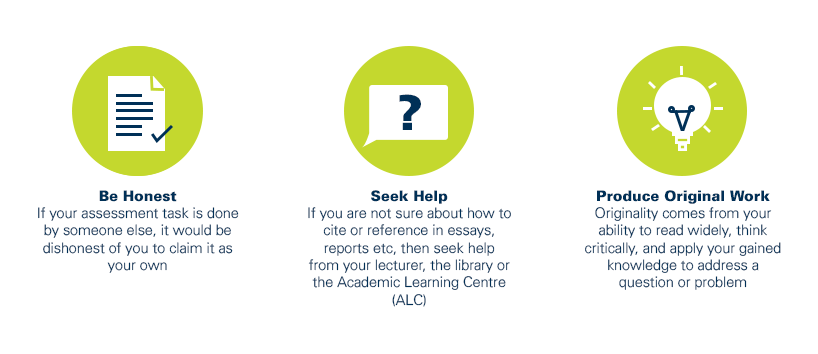
Any assessable work undertaken or submitted for review or assessment must be your own work. Assessable work is any type of work you do to meet the assessment requirements in the unit, including draft work submitted for review and feedback and final work to be assessed.
When you use the ideas, words or data of others in your assessment, you must thoroughly and clearly acknowledge the source of this information by using the correct referencing style for your unit. Using others’ work without proper acknowledgement may be considered a form of intellectual dishonesty.
Participating honestly, respectfully, responsibly, and fairly in your university study ensures the CQUniversity qualification you earn will be valued as a true indication of your individual academic achievement and will continue to receive the respect and recognition it deserves.
As a student, you are responsible for reading and following CQUniversity’s policies, including the Student Academic Integrity Policy and Procedure. This policy sets out CQUniversity’s expectations of you to act with integrity, examples of academic integrity breaches to avoid, the processes used to address alleged breaches of academic integrity, and potential penalties.
What is a breach of academic integrity?
A breach of academic integrity includes but is not limited to plagiarism, self-plagiarism, collusion, cheating, contract cheating, and academic misconduct. The Student Academic Integrity Policy and Procedure defines what these terms mean and gives examples.
Why is academic integrity important?
A breach of academic integrity may result in one or more penalties, including suspension or even expulsion from the University. It can also have negative implications for student visas and future enrolment at CQUniversity or elsewhere. Students who engage in contract cheating also risk being blackmailed by contract cheating services.
Where can I get assistance?
For academic advice and guidance, the Academic Learning Centre (ALC) can support you in becoming confident in completing assessments with integrity and of high standard.
What can you do to act with integrity?