Overview
Nanotechnology and nanoscience are emerging, revolutionary areas of science that will lead to exciting developments in health, medicine, the environment, information technology and engineering (among other industries). In this unit, you will become familiar with existing uses of nanotechnology along with future opportunities in the nanoscience domain. Medical and environmental applications and the development of 'emerging technologies' will be discussed and the technical, environmental and social impacts of these technological advances explored.
Details
Pre-requisites or Co-requisites
Pre-requisites: CHEM19085 Environmental Chemistry OR CHEM12077 Food Science and Analysis OR CHEM12079 Structure and Reactivity OR CHEM12080 Organic and Bio-Organic Chemistry
Important note: Students enrolled in a subsequent unit who failed their pre-requisite unit, should drop the subsequent unit before the census date or within 10 working days of Fail grade notification. Students who do not drop the unit in this timeframe cannot later drop the unit without academic and financial liability. See details in the Assessment Policy and Procedure (Higher Education Coursework).
Offerings For Term 1 - 2026
Attendance Requirements
All on-campus students are expected to attend scheduled classes - in some units, these classes are identified as a mandatory (pass/fail) component and attendance is compulsory. International students, on a student visa, must maintain a full time study load and meet both attendance and academic progress requirements in each study period (satisfactory attendance for International students is defined as maintaining at least an 80% attendance record).
Recommended Student Time Commitment
Each 6-credit Undergraduate unit at CQUniversity requires an overall time commitment of an average of 12.5 hours of study per week, making a total of 150 hours for the unit.
Class Timetable
Assessment Overview
Assessment Grading
This is a graded unit: your overall grade will be calculated from the marks or grades for each assessment task, based on the relative weightings shown in the table above. You must obtain an overall mark for the unit of at least 50%, or an overall grade of 'pass' in order to pass the unit. If any 'pass/fail' tasks are shown in the table above they must also be completed successfully ('pass' grade). You must also meet any minimum mark requirements specified for a particular assessment task, as detailed in the 'assessment task' section (note that in some instances, the minimum mark for a task may be greater than 50%). Consult the University's Grades and Results Policy for more details of interim results and final grades.
All University policies are available on the CQUniversity Policy site.
You may wish to view these policies:
- Grades and Results Policy
- Assessment Policy and Procedure (Higher Education Coursework)
- Review of Grade Procedure
- Student Academic Integrity Policy and Procedure
- Academic Progression Policy and Procedure
- Student Refund and Credit Balance Policy and Procedure
- Complaints Policy and Procedure
- Information and Communications Technology Acceptable Use Policy and Procedure
This list is not an exhaustive list of all University policies. The full list of University policies are available on the CQUniversity Policy site.
Feedback, Recommendations and Responses
Every unit is reviewed for enhancement each year. At the most recent review, the following staff and student feedback items were identified and recommendations were made.
Feedback from Unit coordinator
Residential school activities should be expanded.
Residential school activities should be re-evaluated before the next offering.
Feedback from Student feedback
Students suggested that the lecture material could be updated.
Lecture material should be updated in the next offering.
- Explain and apply key principles of nanoscience, nanotechnology, and biomaterials
- Critically evaluate and synthesise research on nanomaterials and biomaterials
- Analyse the societal, environmental, and biological impacts of nanotechnology and biomaterials
- Design innovative solutions using nanotechnology and biomaterials in applied contexts.
Not applicable
Alignment of Assessment Tasks to Learning Outcomes
| Assessment Tasks | Learning Outcomes | |||
|---|---|---|---|---|
| 1 | 2 | 3 | 4 | |
| 1 - Written Assessment - 40% | ||||
| 2 - Practical and Written Assessment - 40% | ||||
| 3 - Take Home Exam - 20% | ||||
Alignment of Graduate Attributes to Learning Outcomes
| Graduate Attributes | Learning Outcomes | |||
|---|---|---|---|---|
| 1 | 2 | 3 | 4 | |
| 1 - Communication | ||||
| 2 - Problem Solving | ||||
| 3 - Critical Thinking | ||||
| 4 - Information Literacy | ||||
| 5 - Team Work | ||||
| 6 - Information Technology Competence | ||||
| 7 - Cross Cultural Competence | ||||
| 8 - Ethical practice | ||||
| 9 - Social Innovation | ||||
| 10 - First Nations Knowledges | ||||
| 11 - Aboriginal and Torres Strait Islander Cultures | ||||
Textbooks
There are no required textbooks.
IT Resources
- CQUniversity Student Email
- Internet
- Unit Website (Moodle)
- EndNote Bibliographical application
- MS Office
All submissions for this unit must use the referencing style: Vancouver
For further information, see the Assessment Tasks.
s.chandra@cqu.edu.au
Week 1
Begin Date: 09 Mar 2026Module/Topic
Nanotechnology: An Introduction
Chapter
Peer reviewed literature will be provided
Events and Submissions/Topic
Week 2
Begin Date: 16 Mar 2026Module/Topic
History of the Nanotechnology Discipline
Chapter
Peer reviewed literature will be provided
Events and Submissions/Topic
Week 3
Begin Date: 23 Mar 2026Module/Topic
Types of Nanoparticles
Chapter
Peer reviewed literature will be provided
Events and Submissions/Topic
Week 4
Begin Date: 30 Mar 2026Module/Topic
Biomaterials and Nanomaterials
Chapter
Peer reviewed literature will be provided
Events and Submissions/Topic
Week 5
Begin Date: 06 Apr 2026Module/Topic
Biosensors
Chapter
Peer reviewed literature will be provided
Events and Submissions/Topic
Week 6
Begin Date: 13 Apr 2026Module/Topic
Biomaterials for Environmental Monitoring and Remediation
Chapter
Peer reviewed literature will be provided
Events and Submissions/Topic
Vacation Week
Begin Date: 20 Apr 2026Module/Topic
Chapter
Events and Submissions/Topic
Week 7
Begin Date: 27 Apr 2026Module/Topic
Multifunctional Nanocomposite Sensors for Environmental Applications
Chapter
Peer reviewed literature will be provided
Events and Submissions/Topic
Week 8
Begin Date: 04 May 2026Module/Topic
Nanotechnology in Drug Delivery
Chapter
Peer reviewed literature will be provided
Events and Submissions/Topic
Week 9
Begin Date: 11 May 2026Module/Topic
Nanotoxicology and Ecotoxicology
Chapter
Peer reviewed literature will be provided
Events and Submissions/Topic
Residential School
Week 10
Begin Date: 18 May 2026Module/Topic
Nanotechnology Emerging Health Issues
Chapter
Peer reviewed literature will be provided
Events and Submissions/Topic
Week 11
Begin Date: 25 May 2026Module/Topic
Chapter
Events and Submissions/Topic
Week 12
Begin Date: 01 Jun 2026Module/Topic
Revision
Chapter
Events and Submissions/Topic
Exam Week
Begin Date: 08 Jun 2026Module/Topic
Chapter
Events and Submissions/Topic
Vacation/Exam Week
Begin Date: 15 Jun 2026Module/Topic
Chapter
Events and Submissions/Topic
1 Written Assessment
In this assessment, you are required to prepare an individual written research grant application in response to a simulated funding call known as the Student Innovation Grant Scheme (SIGS).
This task has been designed to replicate the structure and expectations of a competitive research funding process commonly encountered in academic, government, and industry settings. You will propose a chemistry-led research project that explicitly incorporates nanoscience or nanotechnology principles to address a current or emerging environmental or health-related challenge.
You must identify a clearly defined and topical problem, from this list:
- Emerging contaminants
- Microplastics
- PFAS
- Traumatic brain injury
You must justify its significance using recent peer-reviewed scientific literature. Your proposal must demonstrate how a nanotechnology-enabled approach provides a clear advantage over conventional bulk-scale chemical methods.
The grant application must include a critical literature review, clearly articulated research aims and hypotheses, an appropriate and feasible methodology, and a justification of the project’s innovation, risks, ethical considerations, and anticipated outcomes. You are also required to prepare a realistic, itemised research budget aligned with the proposed experimental design.
Projects must be scoped to a 12-month undergraduate-level research timeframe and be feasible within a laboratory, analytical, or applied chemistry context. Where health-related topics are selected, proposals must be pre-clinical and non-invasive. Clinical trials, human testing, or patient-based studies are not permitted.
This assessment develops your ability to apply nanotechnology concepts within chemistry, critically evaluate scientific literature, design applied research, and communicate scientific ideas in a professional grant-writing format.
A 72 hour grace period applies to this Assessment Task.
Level of Gen-AI use allowed: Level 3 - You may use Al to assist with specific tasks such as drafting text, refining and evaluating your work. You must critically evaluate and modify any Al-generated content you use.
Week 6 Friday (17 Apr 2026) 11:00 am AEST
To be submitted via Moodle
Week 9 Wednesday (13 May 2026)
Returned with feedback via Moodle
Identification of Research Problem: 15%
Literature Review and Evidence Base: 20%
Research Aims and Hypotheses: 10%
Methodology and Experimental Design: 20%
Nanotechnology and Chemistry Insight: 10%
Feasibility, Risk, and Ethics: 10%
Budget and Justification: 5%
Communication and Writing Quality: 10%
- Explain and apply key principles of nanoscience, nanotechnology, and biomaterials
- Critically evaluate and synthesise research on nanomaterials and biomaterials
2 Practical and Written Assessment
The Assessment Task relates to the compulsory Residential School. At the Residential School, you may work in pairs or groups on experiments. For the Assessment Task, you will write up an individual scientific report of the experiments and activities undertaken during the Residential School.
A 72 hour grace period applies to this Assessment Task.
Level of Gen-AI use allowed: Level 3 - You may use Al to assist with specific tasks such as drafting text, refining and evaluating your work. You must critically evaluate and modify any Al-generated content you use.
Week 11 Friday (29 May 2026) 11:00 am AEST
To be submitted via Moodle
Week 12 Friday (5 June 2026)
Returned with feedback via Moodle
Introduction and Background: 30%
Very convincing justifications for the merits of the experiments and why the work is important
Demonstration of theory to analytical applications
Literature: 10%
Scientific literature, externally cited in the correct format to justify claims and explanations
Data Analysis and Interpretation: 50%
Correct calculations
Data interpretation well-positioned to reinforce the argument(s)
Data tabulated and graphs generated on computer
Correctly labelled figures and tables
Overall Presentation: 10%
No typos, cohesive and very easy to follow arguments
- Critically evaluate and synthesise research on nanomaterials and biomaterials
- Design innovative solutions using nanotechnology and biomaterials in applied contexts.
3 Take Home Exam
The Take Home Exam will contain a mix of short-answer and longer, descriptive-answer questions. It will cover content from the teaching term, including the Residential School. The mark allocations per question will be provided on the Assessment.
The Take Home Exam will be available for 24 hours.
Duration of Exam: 2 hours
You must open the Take Home Exam within the 24 hour period and submit it. Please ensure that you have given yourself sufficient time to attempt all the questions and upload your answers.
No grace period applies to this Assessment Task.
Level of Gen-AI use allowed: Level 1 (No AI) - The assessment is completed entirely without Al assistance in a controlled environment, ensuring that you rely solely on your existing knowledge, understanding, and skills. You must not use Al at any point during the assessment. You must demonstrate your core skills and knowledge.
Week 12 Thursday (4 June 2026) 11:00 am AEST
To be submitted via Moodle
Exam Week Thursday (11 June 2026)
Marked and returned via Moodle
The Online Test will be an assortment of problem-solving and extended-answer questions. The mark allocations per question will be provided on the Assessment with each question.
- Explain and apply key principles of nanoscience, nanotechnology, and biomaterials
- Critically evaluate and synthesise research on nanomaterials and biomaterials
- Analyse the societal, environmental, and biological impacts of nanotechnology and biomaterials
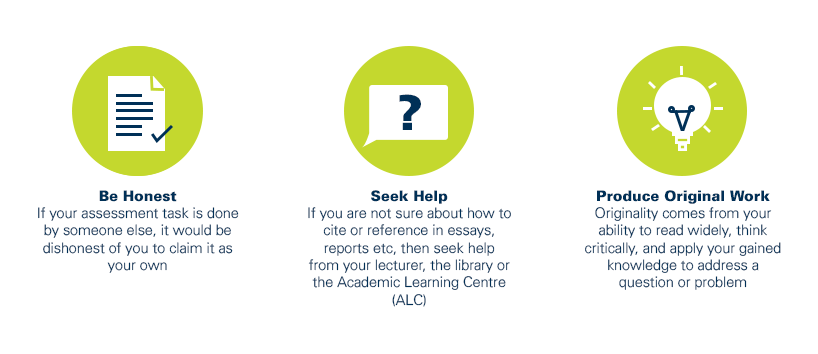
As a CQUniversity student you are expected to act honestly in all aspects of your academic work.
Any assessable work undertaken or submitted for review or assessment must be your own work. Assessable work is any type of work you do to meet the assessment requirements in the unit, including draft work submitted for review and feedback and final work to be assessed.
When you use the ideas, words or data of others in your assessment, you must thoroughly and clearly acknowledge the source of this information by using the correct referencing style for your unit. Using others’ work without proper acknowledgement may be considered a form of intellectual dishonesty.
Participating honestly, respectfully, responsibly, and fairly in your university study ensures the CQUniversity qualification you earn will be valued as a true indication of your individual academic achievement and will continue to receive the respect and recognition it deserves.
As a student, you are responsible for reading and following CQUniversity’s policies, including the Student Academic Integrity Policy and Procedure. This policy sets out CQUniversity’s expectations of you to act with integrity, examples of academic integrity breaches to avoid, the processes used to address alleged breaches of academic integrity, and potential penalties.
What is a breach of academic integrity?
A breach of academic integrity includes but is not limited to plagiarism, self-plagiarism, collusion, cheating, contract cheating, and academic misconduct. The Student Academic Integrity Policy and Procedure defines what these terms mean and gives examples.
Why is academic integrity important?
A breach of academic integrity may result in one or more penalties, including suspension or even expulsion from the University. It can also have negative implications for student visas and future enrolment at CQUniversity or elsewhere. Students who engage in contract cheating also risk being blackmailed by contract cheating services.
Where can I get assistance?
For academic advice and guidance, the Academic Learning Centre (ALC) can support you in becoming confident in completing assessments with integrity and of high standard.
What can you do to act with integrity?