Overview
Introductory Chemistry will provide you with a foundation for university study in the chemical sciences. This unit will provide fundamental principles of chemistry by introducing topics such as matter, molecules, bonding, chemical reactions, stoichiometry, acids and bases, and organic chemistry. In addition to gaining an introductory understanding of chemical concepts, you will learn to perform chemical calculations.
Details
Pre-requisites or Co-requisites
There are no requisites for this unit.
Important note: Students enrolled in a subsequent unit who failed their pre-requisite unit, should drop the subsequent unit before the census date or within 10 working days of Fail grade notification. Students who do not drop the unit in this timeframe cannot later drop the unit without academic and financial liability. See details in the Assessment Policy and Procedure (Higher Education Coursework).
Offerings For Term 2 - 2026
Attendance Requirements
All on-campus students are expected to attend scheduled classes - in some units, these classes are identified as a mandatory (pass/fail) component and attendance is compulsory. International students, on a student visa, must maintain a full time study load and meet both attendance and academic progress requirements in each study period (satisfactory attendance for International students is defined as maintaining at least an 80% attendance record).
Recommended Student Time Commitment
Each 6-credit Non-award unit at CQUniversity requires an overall time commitment of an average of 12.5 hours of study per week, making a total of 150 hours for the unit.
Class Timetable
Assessment Overview
Assessment Grading
This is a graded unit: your overall grade will be calculated from the marks or grades for each assessment task, based on the relative weightings shown in the table above. You must obtain an overall mark for the unit of at least 50%, or an overall grade of 'pass' in order to pass the unit. If any 'pass/fail' tasks are shown in the table above they must also be completed successfully ('pass' grade). You must also meet any minimum mark requirements specified for a particular assessment task, as detailed in the 'assessment task' section (note that in some instances, the minimum mark for a task may be greater than 50%). Consult the University's Grades and Results Policy for more details of interim results and final grades.
All University policies are available on the CQUniversity Policy site.
You may wish to view these policies:
- Grades and Results Policy
- Assessment Policy and Procedure (Higher Education Coursework)
- Review of Grade Procedure
- Student Academic Integrity Policy and Procedure
- Academic Progression Policy and Procedure
- Student Refund and Credit Balance Policy and Procedure
- Complaints Policy and Procedure
- Information and Communications Technology Acceptable Use Policy and Procedure
This list is not an exhaustive list of all University policies. The full list of University policies are available on the CQUniversity Policy site.
Feedback, Recommendations and Responses
Every unit is reviewed for enhancement each year. At the most recent review, the following staff and student feedback items were identified and recommendations were made.
Feedback from Unit Coordinators
Assessment structure required changing.
Introduce interactive oral assessments as a means to engage students and foster learning.
Feedback from Unit Coordinators
Unit materials lack interactivity and could be improved.
Develop the textbook into a Moodle book to add an alternate way for students to engage with the material.
Feedback from Unit Coordinators
Virtual laboratory could be further developed.
Expand the existing virtual laboratory to include more detail and interactivity. Consider the introduction of an assessment relating to laboratory skills and equipment.
- Describe the structure of atoms and ions, including sub-atomic particles and relate these to the design of the Periodic Table
- Explain the nature of chemical bonding that is present in ionic and covalent compounds
- Apply chemical concepts and calculations of quantities to solve chemistry problems
- Apply International Union of Pure and Applied Chemists (IUPAC) nomenclature, symbols, units and notations
- Perform calculations involving strong and weak acids and bases, including pH calculations
- Identify and distinguish between major classes of organic compounds based on functional groups and structural features
- Communicate chemical concepts, processes and reasoning accurately in both written responses and structured oral discussion.
Alignment of Assessment Tasks to Learning Outcomes
| Assessment Tasks | Learning Outcomes | ||||||
|---|---|---|---|---|---|---|---|
| 1 | 2 | 3 | 4 | 5 | 6 | 7 | |
| 1 - Interactive Oral Assessments - 30% | |||||||
| 2 - Interactive Oral Assessments - 50% | |||||||
| 3 - Written Assessment - 20% | |||||||
Alignment of Graduate Attributes to Learning Outcomes
| Graduate Attributes | Learning Outcomes | ||||||
|---|---|---|---|---|---|---|---|
| 1 | 2 | 3 | 4 | 5 | 6 | 7 | |
| 1 - Self Management | |||||||
| 2 - Communication | |||||||
| 3 - Information Literacy | |||||||
| 4 - Information Technology Competence | |||||||
| 5 - Problem Solving | |||||||
| 6 - Critical Thinking | |||||||
| 7 - Cross-Cultural Competence | |||||||
| 8 - Ethical Practice | |||||||
| 9 - Aboriginal and Torres Strait Islander Cultures | |||||||
| 10 - First Nations Knowledges | |||||||
Textbooks
CHEM40079 Introductory Chemistry Textbook
- Edition: 7.0 (2026)
- Authors: CQUniversity, School of Access Education
- School of Access Education, CQUniversity Australia
- Rockhampton Rockhampton , Queensland , Australia
- ISBN: xxxx
Additional Textbook Information
The textbook contains coloured text and diagrams. Students are encouraged to download a digital copy to fully access the coloured text, particularly if their printed version is in grayscale.
IT Resources
- CQUniversity Student Email
- Internet
- Unit Website (Moodle)
- Camera and microphone for attending Zoom tutorials and completing presentation assessment task
All submissions for this unit must use the referencing style: Harvard (author-date)
For further information, see the Assessment Tasks.
b.z.stewart@cqu.edu.au
p.stquintin@cqu.edu.au
Week 1
Begin Date: 13 Jul 2026Module/Topic
Module 1: Matter
Chapter
1
Events and Submissions/Topic
Read textbook Module 1.
Complete Module 1 review quiz.
Week 2
Begin Date: 20 Jul 2026Module/Topic
Module 2: Atoms and the periodic table
Chapter
2
Events and Submissions/Topic
Read textbook Module 2.
Complete Module 2 review quiz.
Week 3
Begin Date: 27 Jul 2026Module/Topic
Module 3: Molecules and ions
Chapter
3
Events and Submissions/Topic
Read textbook Module 3.
Complete Module 3 review quiz.
The written component of Interactive Oral Assessment 1 (IOA1) is available Week 3 Wednesday (29 July 2026)
Week 4
Begin Date: 03 Aug 2026Module/Topic
Module 4: Ionic and covalent compounds
Chapter
4
Events and Submissions/Topic
Read textbook Module 4.
IOA1 written component due Week 4 Monday (3 Aug 2026) 9:00 am AEST.
Book an appointment with your tutor via Interact for the oral component of IOA1 in Week 5.
Complete Module 4 review quiz.
Week 5
Begin Date: 10 Aug 2026Module/Topic
Oral component of IOA1
Chapter
Events and Submissions/Topic
Appointments for oral components are held from Wednesday to Friday.
Week 6
Begin Date: 17 Aug 2026Module/Topic
Module 5: Chemical reactions
Chapter
5
Events and Submissions/Topic
Read textbook Module 5.
Complete Module 5 review quiz.
Break Week
Begin Date: 24 Aug 2026Module/Topic
Chapter
Events and Submissions/Topic
Revise all modules covered so far.
Week 7
Begin Date: 31 Aug 2026Module/Topic
Module 6: Redox reactions
Chapter
6
Events and Submissions/Topic
Read textbook Module 6.
Complete Module 6 review quiz.
Week 8
Begin Date: 07 Sep 2026Module/Topic
Module 7: The mole
Chapter
7
Events and Submissions/Topic
Read textbook Module 7.
Complete Module 7 review quiz.
The written component of Interactive Oral Assessment 2 (IOA2) is available Week 8 Wednesday (9 September 2026).
Week 9
Begin Date: 14 Sep 2026Module/Topic
Module 8: Concentration and molarity
Chapter
8
Events and Submissions/Topic
Read textbook Module 8.
IOA 2 written component due Week 9 Monday (14 September 2026) 9:00 am AEST
Book an appointment with your tutor via Interact for the oral component of IOA2 in Week 10.
Complete Module 8 review quiz.
Week 10
Begin Date: 21 Sep 2026Module/Topic
Oral component of IOA2
Chapter
Events and Submissions/Topic
Appointments for oral components are held from Wednesday to Friday
Week 11
Begin Date: 28 Sep 2026Module/Topic
Module 9. Acids and bases
Chapter
9
Events and Submissions/Topic
Read textbook Module 9.
Complete Module 9 review quiz.
Assessment 3 - available Week 11 Friday (2 October 2026).
Week 12
Begin Date: 05 Oct 2026Module/Topic
Module 10. Organic chemistry
Chapter
10
Events and Submissions/Topic
Read textbook Module 10.
Complete Module 10 review quiz.
Written Assessment Due: Week 12 Thursday (8 Oct 2026) 11:59 pm AEST
Exam Week
Begin Date: 12 Oct 2026Module/Topic
Chapter
Events and Submissions/Topic
Vacation/Exam Week
Begin Date: 19 Oct 2026Module/Topic
Chapter
Events and Submissions/Topic
For any assistance and to organise one-on-one or group Zoom sessions please contact:
Unit Coordinator and Lecturer Dr Flavia Santamaria (Wednesdays to Fridays)
Email: f.santamaria@cqu.edu.au
Ph: (07) 4930 6978
And/or
Unit Coordinator and Lecturer Mr Paul St Quintin (Wednesdays and Fridays)
Email: p.stquintin@cqu.edu.au
Ph: (08) 9260 4043
1 Interactive Oral Assessments
Assessment 1 covers material from Modules 1, 2 and 3.
This Assessment has two components, a written component (available via the CHEM40079 Moodle site) and an oral component completed with the tutor.
- You must download, complete and upload the written component. The written component is worth 30% (of the total 30% for Assessment 1).
- You must book a 15-minute appointment (between Wednesday and Friday of Week 5) through Interact with the tutor for the oral component .
- During the oral component, you will be shown your written task and you will demonstrate your understanding of the assessed topics, and answer questions related to the written work. The oral component is worth 70% (of the total 30% for Assessment 1).
Please note: You must have access to a working camera and microphone to complete the oral component. It is strongly recommended that you test your camera, microphone and internet connection before your scheduled appointment to avoid technical issues during the assessment.
The written component does not require referencing because it is not a research task.
Use of Artificial Intelligence (AI): This assessment is to assess your knowledge and understanding of topics covered in the Unit. While you are permitted to access and use AI and external sources for your study during the term, you are strongly discouraged to use AI and external sources to complete the written component. The use of AI or external sources is prohibited during the oral component.
Written component due date: Week 4 Monday (3 Aug 2026) 9:00 am AEST. Oral component due date: Week 5 between Wednesday and Friday.
This assessment is exempt from the 72 hour grace period. Marks will be provided within two academic calendar weeks from due date or submission date, whichever is later.
Marks will be awarded for the correct response to multiple choice and short answer questions. Responses are scored
based on:
- correct use of terminology
- factual correctness of presented material
- correct use of scientific conventions (IUPAC)
- calculations which include units and formulas
- relevance of stated content to the question asked
- application of foundation concepts to the question asked
- clarity, thoroughness and completeness of explanations
- logic of explanations and problem-solving
- correct use of subscripts and superscripts.
Please note: The number of marks allocated on the written component to each question is detailed in the assessment sheet on Moodle. Answers to all questions must be handwritten on the assessment sheets, using additional paper if extra space is required, and clearly presented with full working provided in order to obtain the maximum allocation of marks.
You will be provided with a marking sheet for the oral component.
- Describe the structure of atoms and ions, including sub-atomic particles and relate these to the design of the Periodic Table
- Apply International Union of Pure and Applied Chemists (IUPAC) nomenclature, symbols, units and notations
- Communicate chemical concepts, processes and reasoning accurately in both written responses and structured oral discussion.
2 Interactive Oral Assessments
Assessment 2 covers material from Modules 4, 5, 6 and 7 in addition to fundamental concepts covered in earlier modules.
This Assessment has two components, a written component (available via the CHEM40079 Moodle site) and an oral component completed with the tutor.
- You must download, complete and upload the written component. The written component is worth 20% (of the total 50% for Assessment 2).
- You must book a 15-minute appointment (between Wednesday and Friday of Week 10) through Interact with the lecturer for the oral component.
- During the oral component, you will be shown your written assessment and you will demonstrate your understanding of the assessed topics, and answer questions related to the written task. The oral component is worth 80% (of the total 50% for Assessment 2).
Please note: You must have access to a working camera and microphone to complete the oral component. It is strongly recommended that you test your camera, microphone and internet connection before your scheduled appointment to avoid technical issues during the assessment.
The written component does not require referencing because it is not a research task.
Use of Artificial Intelligence (AI): This assessment is to assess your knowledge and understanding of topics covered in the Unit. While you are permitted to access and use AI and external sources for your study during the term, you are strongly discouraged to use AI and external sources to complete the written component. The use of AI or external sources is prohibited during the oral component.
Written component due date: Week 9 Monday (14 September 2026) 9:00 am AEST. Oral component due date: Week 10 between Wednesday and Friday.
This assessment is exempt from the 72 hour grace period. Marks will be provided within two academic calendar weeks from due date or submission date, whichever is later.
Marks are allocated for the following:
- appropriate setting of the solution
- correct sequence of steps
- relevant use of examples and diagrams
- accurate use of units, equations and formulas.
Please note: The number of marks allocated on the written component to each question is detailed in the assessment sheet on Moodle. Answers to all questions must be handwritten on the assessment sheets, using additional paper if extra space is required, and clearly presented with full working provided in order to obtain the maximum allocation of marks.
You will be provided with a marking sheet for the oral component.
- Explain the nature of chemical bonding that is present in ionic and covalent compounds
- Apply chemical concepts and calculations of quantities to solve chemistry problems
- Apply International Union of Pure and Applied Chemists (IUPAC) nomenclature, symbols, units and notations
- Communicate chemical concepts, processes and reasoning accurately in both written responses and structured oral discussion.
3 Written Assessment
Assessment 3 is available via the CHEM40079 Moodle site. It is a compulsory written assessment that covers material
from Modules 8, 9 and 10, in addition to fundamental concepts covered in earlier modules. The assessment
comprises various question types that require handwritten responses. Depending on the question, you may be required
to do one or more of the following:
- choose the correct response from multiple-choice questions
- perform simple or multi-step calculations, providing and using appropriate formulas and units where relevant
- provide short or extended answer responses using examples and diagrams to support your answer
- present information in the correct chemical format (i.e. use subscripts and superscripts, and balance equations,
including states of matter).
Please note: The written task does not require referencing because it is not a research task.
Use of Artificial Intelligence (AI): This assessment is to assess your knowledge and understanding of topics covered in the Unit. While you are permitted to access and use AI and external sources for your study during the term, you are strongly discouraged to use AI and external sources to complete the written component.
Week 12 Thursday (8 Oct 2026) 11:59 pm AEST
Exam Week Friday (16 Oct 2026)
This assessment is exempt from the 72 hour grace period. This assessment is due at due date unless an extension has been requested and approved.
Marks are allocated for the following:
- appropriate setting of the solution
- correct sequence of steps
- relevant use of examples and diagrams
- accurate use of units, equations and formulas.
- Apply International Union of Pure and Applied Chemists (IUPAC) nomenclature, symbols, units and notations
- Perform calculations involving strong and weak acids and bases, including pH calculations
- Identify and distinguish between major classes of organic compounds based on functional groups and structural features
- Communicate chemical concepts, processes and reasoning accurately in both written responses and structured oral discussion.
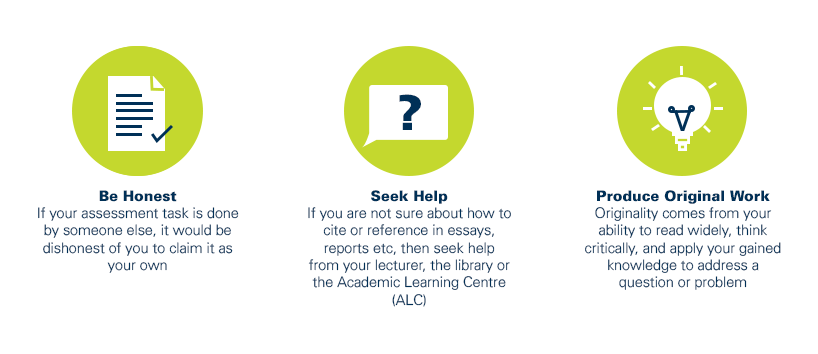
As a CQUniversity student you are expected to act honestly in all aspects of your academic work.
Any assessable work undertaken or submitted for review or assessment must be your own work. Assessable work is any type of work you do to meet the assessment requirements in the unit, including draft work submitted for review and feedback and final work to be assessed.
When you use the ideas, words or data of others in your assessment, you must thoroughly and clearly acknowledge the source of this information by using the correct referencing style for your unit. Using others’ work without proper acknowledgement may be considered a form of intellectual dishonesty.
Participating honestly, respectfully, responsibly, and fairly in your university study ensures the CQUniversity qualification you earn will be valued as a true indication of your individual academic achievement and will continue to receive the respect and recognition it deserves.
As a student, you are responsible for reading and following CQUniversity’s policies, including the Student Academic Integrity Policy and Procedure. This policy sets out CQUniversity’s expectations of you to act with integrity, examples of academic integrity breaches to avoid, the processes used to address alleged breaches of academic integrity, and potential penalties.
What is a breach of academic integrity?
A breach of academic integrity includes but is not limited to plagiarism, self-plagiarism, collusion, cheating, contract cheating, and academic misconduct. The Student Academic Integrity Policy and Procedure defines what these terms mean and gives examples.
Why is academic integrity important?
A breach of academic integrity may result in one or more penalties, including suspension or even expulsion from the University. It can also have negative implications for student visas and future enrolment at CQUniversity or elsewhere. Students who engage in contract cheating also risk being blackmailed by contract cheating services.
Where can I get assistance?
For academic advice and guidance, the Academic Learning Centre (ALC) can support you in becoming confident in completing assessments with integrity and of high standard.
What can you do to act with integrity?