Assessment number 4
Name: In-Class Test
Change details: Original date was 10/06/2026 09:00 am Wednesday. The new date is 08/06/2026 at 09:00 am Monday.
Overview
In this unit you will build upon your knowledge of the principles and practice of chiropractic management through the introduction of soft tissue and mobilisation techniques commonly used in chiropractic practice. You will further demonstrate your psychomotor skills through the application of these techniques in practical classes. You will continue to learn about the contemporary status and philosophy of the chiropractic profession as well as the biomechanical principles underpinning the practical procedures you are learning.
Details
Pre-requisites or Co-requisites
Pre-requisite: BMSC11002 Human Body Systems 2 or BMSC11011 Human Anatomy and Physiology 2 CHIR11003 Foundations of Chiropractic Practice 2 Co-requisite: CHIR12004 Neuromusculoskeletal Anatomy 1
Important note: Students enrolled in a subsequent unit who failed their pre-requisite unit, should drop the subsequent unit before the census date or within 10 working days of Fail grade notification. Students who do not drop the unit in this timeframe cannot later drop the unit without academic and financial liability. See details in the Assessment Policy and Procedure (Higher Education Coursework).
Offerings For Term 1 - 2026
Attendance Requirements
All on-campus students are expected to attend scheduled classes - in some units, these classes are identified as a mandatory (pass/fail) component and attendance is compulsory. International students, on a student visa, must maintain a full time study load and meet both attendance and academic progress requirements in each study period (satisfactory attendance for International students is defined as maintaining at least an 80% attendance record).
Recommended Student Time Commitment
Each 6-credit Undergraduate unit at CQUniversity requires an overall time commitment of an average of 12.5 hours of study per week, making a total of 150 hours for the unit.
Class Timetable
Assessment Overview
Assessment Grading
This is a graded unit: your overall grade will be calculated from the marks or grades for each assessment task, based on the relative weightings shown in the table above. You must obtain an overall mark for the unit of at least 50%, or an overall grade of 'pass' in order to pass the unit. If any 'pass/fail' tasks are shown in the table above they must also be completed successfully ('pass' grade). You must also meet any minimum mark requirements specified for a particular assessment task, as detailed in the 'assessment task' section (note that in some instances, the minimum mark for a task may be greater than 50%). Consult the University's Grades and Results Policy for more details of interim results and final grades.
All University policies are available on the CQUniversity Policy site.
You may wish to view these policies:
- Grades and Results Policy
- Assessment Policy and Procedure (Higher Education Coursework)
- Review of Grade Procedure
- Student Academic Integrity Policy and Procedure
- Academic Progression Policy and Procedure
- Student Refund and Credit Balance Policy and Procedure
- Complaints Policy and Procedure
- Information and Communications Technology Acceptable Use Policy and Procedure
This list is not an exhaustive list of all University policies. The full list of University policies are available on the CQUniversity Policy site.
Feedback, Recommendations and Responses
Every unit is reviewed for enhancement each year. At the most recent review, the following staff and student feedback items were identified and recommendations were made.
Feedback from SUTE
Students have requested a slightly slower paced tutorial for improved learning and assimilation of knowledge.
It is recommended that the Unit Coordinator introduce new techniques gradually—one or two at a time—to better support student learning and reduce cognitive overload.
- Discuss the principles and practice of chiropractic management in a diverse community
- Demonstrate psychomotor skills including mobilisation and soft tissue technique in a professional and competent manner
- Demonstrate knowledge of the current political status of the chiropractic profession
- Communicate the biomechanical and physiological principles underpinning mobilisation and soft tissue techniques to a variety of audiences.
Learning outcome 1 - competency 1 (1.2, 1.3), 3 (3.2, 3.4), and 4 (4.2)
Learning outcome 2 - competency 1 (1.2, 1.3) and 5 (5.2)
Learning outcome 3 - competency 1 (1.1, 1.3, 1.4)
Learning outcome 4 - competency 1 (1.2) and 2 (2.1)
Alignment of Assessment Tasks to Learning Outcomes
| Assessment Tasks | Learning Outcomes | |||
|---|---|---|---|---|
| 1 | 2 | 3 | 4 | |
| 1 - On-campus Activity - 0% | ||||
| 2 - In-class Test(s) - 25% | ||||
| 3 - Objective Structured Clinical Examinations (OSCEs) - 50% | ||||
| 4 - Portfolio - 25% | ||||
Alignment of Graduate Attributes to Learning Outcomes
| Graduate Attributes | Learning Outcomes | |||
|---|---|---|---|---|
| 1 | 2 | 3 | 4 | |
| 1 - Communication | ||||
| 2 - Problem Solving | ||||
| 3 - Critical Thinking | ||||
| 4 - Information Literacy | ||||
| 5 - Team Work | ||||
| 6 - Information Technology Competence | ||||
| 7 - Cross Cultural Competence | ||||
| 8 - Ethical practice | ||||
| 9 - Social Innovation | ||||
| 10 - First Nations Knowledges | ||||
| 11 - Aboriginal and Torres Strait Islander Cultures | ||||
Textbooks
There are no required textbooks.
IT Resources
- CQUniversity Student Email
- Internet
- Unit Website (Moodle)
All submissions for this unit must use the referencing style: American Psychological Association 7th Edition (APA 7th edition)
For further information, see the Assessment Tasks.
d.knight@cqu.edu.au
m.fernandez@cqu.edu.au
Week 1- Introduction and Gait
Begin Date: 10 Mar 2025Module/Topic
Lecture:
1) Welcome and introduction with unit outlines
2) Introduction to soft tissue techniques and mobilisation
3) Gait Analysis
Practical:
1) Lab Induction, informed consent and hygiene practices.
Introduction to soft tissue techniques
2) Gait Analysis
Chapter
Bergmann, T "Chiropractic Technique; Principles and Procedures, 3rd edition" pages 326-337 and 2-83 (intro) and 381-418 (soft tissue techniques)
Vizniak, N "Muscle Manual" pages 192-243
Events and Submissions/Topic
Week 2- Hand and Wrist
Begin Date: 09 Mar 2026Module/Topic
Lecture:
1) Mobilisation and soft tissue technique with integrated exam: hand and wrist
Practical:
1) Introduce soft tissue techniques of the hand and wrist
2) Mobilisation techniques and integrated exam of the hand and wrist
Chapter
Bergmann, T "Chiropractic Technique; Principles and Procedures, 3rd edition" pages 326-337 and 2-83 (intro) and 381-418 (soft tissue techniques)
Vizniak, N "Muscle Manual" pages 192-243
Events and Submissions/Topic
Week 3- Elbow and Knee
Begin Date: 16 Mar 2026Module/Topic
Lecture:
1) Mobilisation and soft tissue technique with integrated exam: elbow and knee
Practical:
1) Recap previous week; introduce this weeks soft tissue techniques of elbow and knee
2) Mobilisation techniques and integrated exam of elbow and knee
Chapter
Bergmann, T "Chiropractic Technique; Principles and Procedures, 3rd edition" pages 315-325 (elbow) pages 349-365
Vizniak, N "Muscle Manual" pages 249-302 (knee) pages 192-243 (elbow)
Events and Submissions/Topic
Week 4 - Shoulder
Begin Date: 23 Mar 2026Module/Topic
Lecture:
1) Mobilisation and soft tissue technique with integrated exam: shoulder
Practical:
1) Recap previous week; introduce this weeks soft tissue techniques of shoulder
2) Mobilisation techniques and integrated exam of shoulder
In class quiz 1
Chapter
Bergmann, T "Chiropractic Technique; Principles and Procedures, 3rd edition" pages 294-315
Vizniak, N "Muscle Manual" pages 153-190
Events and Submissions/Topic
Quiz 1: Held in the second practical class
Week 5 - Cervical Spine
Begin Date: 30 Mar 2026Module/Topic
Lecture:
1) Mobilisation and soft tissue technique with integrated exam: cervical spine
2) Lecture interview: working with Indigenous Australian and Torres Strait Islander peoples
Practical:
1) Recap previous week; introduce this weeks soft tissue techniques of cervical spine
2) Mobilisation techniques and integrated exam of cervical spine
Chapter
Bergmann, T "Chiropractic Technique; Principles and Procedures, 3rd edition" pages 326-337
Vizniak, N "Muscle Manual" pages 73-106
Events and Submissions/Topic
Week 6 OSCE 1
Begin Date: 13 Apr 2026Module/Topic
Practical:
1) OSCE 1
2) Public Holiday
Chapter
Periodic journal articles relative to the lecture material.
Events and Submissions/Topic
OSCE 1: held during the first practical class of week 6, specific schedule to be released prior on moodle.
Vacation Week
Begin Date: 20 Apr 2026Module/Topic
Vacation Week
Chapter
Vacation Week
Events and Submissions/Topic
Vacation Week
Week 7: TMJ and Cranium
Begin Date: 27 Apr 2026Module/Topic
Lecture:
1) Mobilisation and soft tissue technique with integrated exam: TMJ and cranium.
Practical:
1) OSCE Feedback, Recap where necessary and cervical spine. Integrated exam of TMJ and cranium with appropriate soft tissue techniques.
2) Mobilisation techniques of TMJ and cranium.
Chapter
Bergmann, T "Chiropractic Technique; Principles and Procedures, 3rd edition" pages 283-294 (TMJ)
Vizniak, N "Muscle Manual" pages 33-72
Events and Submissions/Topic
Week 8 - Thoracic Spine and Ribs
Begin Date: 04 May 2026Module/Topic
Lecture:
1) Mobilisation and soft tissue technique with integrated exam: thoracic spine and ribs
2) Lecture on the chiropractic profession and current political status
Practical:
1) Introduce this weeks soft tissue techniques of the thoracic spine and ribs
2) Mobilisation techniques and integrated exam of thoracic spine and ribs
Chapter
Bergmann, T "Chiropractic Technique; Principles and Procedures, 3rd edition" pages 189-233
Vizniak, N "Muscle Manual" pages 107-152
Events and Submissions/Topic
Quiz 2: Held in the second practical class
PORTFOLIO - In Class Quizzes (25%) Due: Week 8 Friday (8 May 2026) 9:00 pm AEST
Week 9 - Hip
Begin Date: 11 May 2026Module/Topic
Lecture:
1) Mobilisation and soft tissue technique with integrated exam: hip
Practical:
1) Recap previous week; introduce this weeks soft tissue techniques of the hip.
2) Mobilisation techniques and integrated exam of the hip
Chapter
Bergmann, T "Chiropractic Technique; Principles and Procedures, 3rd edition" pages 337-349
Vizniak, N "Muscle Manual" pages 245-302
Events and Submissions/Topic
Week 10: Lumber Spine and Pelvis
Begin Date: 18 May 2026Module/Topic
Lecture:
1) Mobilisation and soft tissue technique with integrated exam: lumbar and pelvis
Practical:
1) Recap previous week; introduce this weeks soft tissue techniques of the lumbar spine and pelvis
2) Mobilisation techniques and integrated exam of lumbar spine and pelvis
Chapter
Bergmann, T "Chiropractic Technique; Principles and Procedures, 3rd edition" pages 233-282 and 1-10
Vizniak, N "Muscle Manual" pages 117-152
Events and Submissions/Topic
Week 11- Foot and ankle
Begin Date: 25 May 2026Module/Topic
Lecture:
1) Mobilisation and soft tissue technique with integrated exam: foot and ankle
Practical:
1) Recap previous week; introduce this weeks soft tissue techniques of foot and ankle
2) Mobilisation techniques and integrated exam of foot and ankle and OSCE 2 Review
Chapter
Bergmann, T "Chiropractic Technique; Principles and Procedures, 3rd edition" pages 365-380
Vizniak, N "Muscle Manual" pages 303-344
Events and Submissions/Topic
Week 12 OSCE 2
Begin Date: 01 Jun 2026Module/Topic
Practical Class:
1. OSCE 2
Chapter
None
Events and Submissions/Topic
OSCE 2: held during the first practical class, specific student schedule to be released prior on moodle.
OBJECTIVE STRUCTURED CLINICAL EXAMINATIONS (OSCE) (50%) Due: Week 12 Friday (5 June 2026) 5:00 pm AEST
ON-CAMPUS ACTIVITY (0%) Due: Week 12 Friday (5 June 2026) 9:00 am AEST
Exam Week
Begin Date: 08 Jun 2026Module/Topic
Chapter
Events and Submissions/Topic
In Class Test: Wednesday 10/06/2025 09:00-11:00 AEST * subject to change
End of Term Test (25%) Due: Exam Week Wednesday (10 June 2026) 9:00 am AEST
Exam Week
Begin Date: 15 Jun 2026Module/Topic
Chapter
Events and Submissions/Topic
1 Portfolio
Your portfolio task will be made up of two quizzes, which will occur in weeks 4 and 8. Each quiz will be held in the second scheduled practical class time.
These quizzes will assess your understanding and knowledge of the theoretical content delivered in the lectures this term and the practical applications of techniques learnt in practical class time. The questions will be written to test your comprehension and application of the material provided in the preceding weeks.
Please note:
- This is a closed book task
- This is not a group activity
- The 72-hour grace period does not apply to this assessment.
AI Statement:
- NO AI: The assessment is to be completed entirely without AI assistance in a controlled environment, ensuring that students rely solely on their existing knowledge, understanding and skills.
- YOU MUST NOT USE AI AT ANY POINT DURING THE ASSESSMENT. YOU MUST DEMONSTRATE YOUR CORE SKILLS AND KNOWLEDGE.
Week 8 Friday (8 May 2026) 9:00 pm AEST
Both Quizzes will have been completed by week 9, 21:00.
Week 9 Friday (15 May 2026)
Feedback and grade to be provided via Moodle site once all student have completed the task and the unit coordinator has checked the assessment.
The assessment criteria will involve selecting or providing the most accurate and correct answers to the questions posed in each quiz.
AI Statement: 1. NO AI. The assessment is completed entirely without AI assistance in a controlled environment, ensuring that students rely solely on their existing knowledge, understanding and skills.
- Demonstrate knowledge of the current political status of the chiropractic profession
2 Objective Structured Clinical Examinations (OSCEs)
There are two practical examinations (OSCE) in the practical sessions of Week 6 and week 12.
Each OSCE is worth 25% of the total grade for this unit, equating to 50%.
Students must obtain a total of 50% or more to pass the practical assessment, as such each OSCE must be passed.
OSCE Assessment Criteria:
You will need to demonstrate competence in performing and evaluating mobilisation approaches and soft tissue techniques. Your performance will be graded, using a marking rubric; including an appropriate introduction, hygiene and consent; performance of soft tissue techniques and/or mobilisations of the spinal regions/extremity; patient handling; technical performance and the examiner's overall impression of the overall performance.
Please note
- All practical assessments will be video recorded for moderation purposes. Recordings will not be made available for general review but will be accessed by staff to ensure grades are appropriately awarded.
- The 72-hour grace period does not apply to this assessment.
Week 12 Friday (5 June 2026) 5:00 pm AEST
OSCE 1 results and feedback will be given at the next practical class following the OSCE. OSCE 2, the results will be disseminated the next business day.
Exam Week Monday (8 June 2026)
Grades will be returned via Moodle and in person where applicable.
The assessment criteria for this unit will seek to ensure that this assessment examines your newly developed clinical skills. A detailed rubric will be provided on Moodle.
The criteria will examine the following:
- Professionalism, communication and hygiene with your mock patient
- Select and competently perform the appropriate examination routine required to facilitate the recognition of specific disorders or disease states of the different systems taught in this unit.
- Clinical skills - performing relevant clinical physical examinations and competently perform basic clinical examination skills (observation, percussion, palpation and auscultation).
- Patient handling and considerations
- Demonstrate psychomotor skills including mobilisation and soft tissue technique in a professional and competent manner
- Communicate the biomechanical and physiological principles underpinning mobilisation and soft tissue techniques to a variety of audiences.
3 On-campus Activity
The on-campus activities in this unit will serve as a continuous assessment of your skill development. You will receive ongoing verbal feedback in class to develop your key chiropractic skills.
The weekly on-campus activities will vary in requirements and expectations. Each will be based on material from the previous week or current week, it is therefore essential that you review the material weekly.
The tasks will be completed during the first 10-15 minutes of each class. You will be provided with an on-campus activity sheet, which you will be required to bring to each class, and upon completion of the activity, have your in-class tutor sign and date it. It is your responsibility to ensure this sheet is completed and kept safe, as it is proof of completion. Once you have completed the assessment, you will need to upload the signed checklist sheet into Moodle at the end of Week 12.
This assignment requires 80% to pass. A maximum of 2 make up sessions will be offered in the event of illness or exceptional circumstances (with appropriate supporting documentation) otherwise you will need to consider applying for Consideration of Special Circumstances or receive a fail grade.
Please note:
- This is a pass/fail assessment task, which means if you do not achieve a pass for this task, you will NOT pass the unit.
- Supplementary assessments are NOT available for this pass/fail assessment item.
Week 12 Friday (5 June 2026) 9:00 am AEST
Please submit your on campus activity to moodle as a pdf, jpeg or word document.
Exam Week Friday (12 June 2026)
You may receive formative feedback following each activity during the term and your final result will be confirmed through Moodle.
The assessment criteria for this assessment task will involve completing 80% minimum of the on-campus activities.
These activities will involve and be assessed on the following:
- Completing a task (additional details of the weekly activities can be found on the on campus activity sheet).
- Receiving formative feedback
- Participating in group discussions
- Having the on-campus activity sheet signed after each activity
- Discuss the principles and practice of chiropractic management in a diverse community
- Demonstrate psychomotor skills including mobilisation and soft tissue technique in a professional and competent manner
4 In-class Test(s)
This end of term test will be undertaken in a CQUni computer lab on whichever campus that you are enrolled. The test will involve a mix of question types, including multiple choice, short answer and matching styles. The test will assess all content taught across weeks 1-12.
Please note:
- This is not a group activity.
- The 72-hour grace period does not apply to this assessment.
AI Statement:
- NO AI: The assessment is to be completed entirely without AI assistance in a controlled environment, ensuring that students rely solely on their existing knowledge, understanding and skills.
- YOU MUST NOT USE AI AT ANY POINT DURING THE ASSESSMENT. YOU MUST DEMONSTRATE YOUR CORE SKILLS AND KNOWLEDGE.
Exam Week Wednesday (10 June 2026) 9:00 am AEST
The in class test will be held on CQU campus computer labs Brisbane Campus Rooms 1.07 and 1.06
Vacation/Exam Week Friday (19 June 2026)
The grades will be released once all assessments have been checked by the unit coordinator.
The assessment criteria will involve selecting or providing the most accurate and correct answers to the questions posed in this in class test.
Please note: This is a closed book task, and not a group activity; you must refrain from using generative AI.
- Discuss the principles and practice of chiropractic management in a diverse community
- Demonstrate knowledge of the current political status of the chiropractic profession
- Communicate the biomechanical and physiological principles underpinning mobilisation and soft tissue techniques to a variety of audiences.
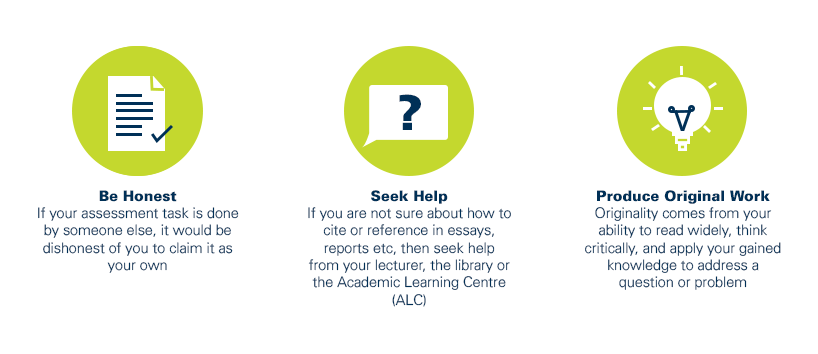
As a CQUniversity student you are expected to act honestly in all aspects of your academic work.
Any assessable work undertaken or submitted for review or assessment must be your own work. Assessable work is any type of work you do to meet the assessment requirements in the unit, including draft work submitted for review and feedback and final work to be assessed.
When you use the ideas, words or data of others in your assessment, you must thoroughly and clearly acknowledge the source of this information by using the correct referencing style for your unit. Using others’ work without proper acknowledgement may be considered a form of intellectual dishonesty.
Participating honestly, respectfully, responsibly, and fairly in your university study ensures the CQUniversity qualification you earn will be valued as a true indication of your individual academic achievement and will continue to receive the respect and recognition it deserves.
As a student, you are responsible for reading and following CQUniversity’s policies, including the Student Academic Integrity Policy and Procedure. This policy sets out CQUniversity’s expectations of you to act with integrity, examples of academic integrity breaches to avoid, the processes used to address alleged breaches of academic integrity, and potential penalties.
What is a breach of academic integrity?
A breach of academic integrity includes but is not limited to plagiarism, self-plagiarism, collusion, cheating, contract cheating, and academic misconduct. The Student Academic Integrity Policy and Procedure defines what these terms mean and gives examples.
Why is academic integrity important?
A breach of academic integrity may result in one or more penalties, including suspension or even expulsion from the University. It can also have negative implications for student visas and future enrolment at CQUniversity or elsewhere. Students who engage in contract cheating also risk being blackmailed by contract cheating services.
Where can I get assistance?
For academic advice and guidance, the Academic Learning Centre (ALC) can support you in becoming confident in completing assessments with integrity and of high standard.
What can you do to act with integrity?