Overview
This unit builds on the anatomy taught in Human Anatomy and physiology 1 and 2 (BMSC11010 and BMSC11011), as well as Neuromusculoskeletal Anatomy 1 (CHIR12004). Students will further develop their knowledge of anatomy and physiology, which will include studies in gross anatomy, embryology and histology, clinical and living anatomy. Students will integrate this, where appropriate, with other basic sciences. The focus for this unit is neuroanatomy and the anatomy of the head and neck region.
Details
Pre-requisites or Co-requisites
Prerequisites BMSC11010 Human Anatomy and Physiology 1 and BMSC11011 Human Anatomy and Physiology 2 OR BMSC11001 Human Body Systems 1 and BMSC11002 Human Body Systems 2
Important note: Students enrolled in a subsequent unit who failed their pre-requisite unit, should drop the subsequent unit before the census date or within 10 working days of Fail grade notification. Students who do not drop the unit in this timeframe cannot later drop the unit without academic and financial liability. See details in the Assessment Policy and Procedure (Higher Education Coursework).
Offerings For Term 2 - 2026
Attendance Requirements
All on-campus students are expected to attend scheduled classes - in some units, these classes are identified as a mandatory (pass/fail) component and attendance is compulsory. International students, on a student visa, must maintain a full time study load and meet both attendance and academic progress requirements in each study period (satisfactory attendance for International students is defined as maintaining at least an 80% attendance record).
Recommended Student Time Commitment
Each 6-credit Undergraduate unit at CQUniversity requires an overall time commitment of an average of 12.5 hours of study per week, making a total of 150 hours for the unit.
Class Timetable
Assessment Overview
Assessment Grading
This is a graded unit: your overall grade will be calculated from the marks or grades for each assessment task, based on the relative weightings shown in the table above. You must obtain an overall mark for the unit of at least 50%, or an overall grade of 'pass' in order to pass the unit. If any 'pass/fail' tasks are shown in the table above they must also be completed successfully ('pass' grade). You must also meet any minimum mark requirements specified for a particular assessment task, as detailed in the 'assessment task' section (note that in some instances, the minimum mark for a task may be greater than 50%). Consult the University's Grades and Results Policy for more details of interim results and final grades.
All University policies are available on the CQUniversity Policy site.
You may wish to view these policies:
- Grades and Results Policy
- Assessment Policy and Procedure (Higher Education Coursework)
- Review of Grade Procedure
- Student Academic Integrity Policy and Procedure
- Academic Progression Policy and Procedure
- Student Refund and Credit Balance Policy and Procedure
- Complaints Policy and Procedure
- Information and Communications Technology Acceptable Use Policy and Procedure
This list is not an exhaustive list of all University policies. The full list of University policies are available on the CQUniversity Policy site.
Feedback, Recommendations and Responses
Every unit is reviewed for enhancement each year. At the most recent review, the following staff and student feedback items were identified and recommendations were made.
Feedback from Self-reflection (Unit Coordinator)
Student performance was strongly influenced by the level of student engagement in the unit. Greater engagement with learning materials, resources, and class activities was associated with improved student performance.
It is recommended that the Unit Coordinator continue to embed and reinforce strategies that support active and self directed engagement, including encouraging students to utilise the full suite of available learning resources, integrating recorded lectures and core readings with active class participation to enhance the learning experience, student performance, and build clinical confidence.
Feedback from Student via SUTE Unit Comments Report - T2, 2025
In class tutorials were extremely helpful at understanding the topics and applying them to cases
It is recommended that the Unit Coordinator maintains engaging tutorials that foster active participation and learning integration.
Feedback from Student via SUTE Unit Comments Report - T2, 2025
The Unit Coordinator was very helpful in clearing up some of the confusing parts of the older course material.
It is recommended that the Unit Coordinator reviews the unit content and resources to ensure recency and authenticity.
Feedback from Student via SUTE Unit Comments Report - T2, 2025
The assessment feedback could be improved by providing the answers for the short response questions.
It is recommended that the Unit Coordinator continues to reinforce strategies to support active learning, the utilisation of the full suite of available learning resources and engagement in class participation to enhance student performance.
- Explain the embryologic processes that underpin anatomy, neuroanatomy and physiology of the human body
- Describe the osteology, arthrology, myology, arterial supply, venous and lymphatic drainage and innervation of the head and neck region
- Describe the structure, function and integration of components within the central and peripheral nervous system
- Identify, where appropriate, using bones, models, images and/or the living subject, the structures forming the nervous system and the head and neck region
- Apply your knowledge of anatomy, neuroanatomy and physiology to clinical case studies.
Alignment of Assessment Tasks to Learning Outcomes
| Assessment Tasks | Learning Outcomes | ||||
|---|---|---|---|---|---|
| 1 | 2 | 3 | 4 | 5 | |
| 1 - On-campus Activity - 0% | |||||
| 2 - Practical Assessment - 60% | |||||
| 3 - Online Test - 40% | |||||
Alignment of Graduate Attributes to Learning Outcomes
| Graduate Attributes | Learning Outcomes | ||||
|---|---|---|---|---|---|
| 1 | 2 | 3 | 4 | 5 | |
| 1 - Communication | |||||
| 2 - Problem Solving | |||||
| 3 - Critical Thinking | |||||
| 4 - Information Literacy | |||||
| 5 - Team Work | |||||
| 6 - Information Technology Competence | |||||
| 7 - Cross Cultural Competence | |||||
| 8 - Ethical practice | |||||
| 9 - Social Innovation | |||||
| 10 - First Nations Knowledges | |||||
| 11 - Aboriginal and Torres Strait Islander Cultures | |||||
Textbooks
Clinically Orientated Anatomy
- 8th Edition (2017)
- Authors: Keith L. Moore, Arthur F. Dalley II, Anne M. R. Agur
- Wolters Kluwer
- Philadelphia Philadelphia , PA , USA
- ISBN: 9781496347213
Photographic Atlas of Anatomy
- 9th Edition (2022)
- Authors: Johannes W. Rohem Chihiro Yokochi, and Elke Lutjen-Drecoll
- Schattauer GmbH and Wolters Kluwe
- ISBN: 9781975151348
IT Resources
- CQUniversity Student Email
- Internet
- Unit Website (Moodle)
All submissions for this unit must use the referencing style: American Psychological Association 7th Edition (APA 7th edition)
For further information, see the Assessment Tasks.
c.ieradi@cqu.edu.au
d.knight@cqu.edu.au
Week 1
Begin Date: 13 Jul 2026Module/Topic
Week 1
Introduction & overview of the unit
Embryology of the NMSK system
Chapter
Relevant reading and content will be available on Moodle.
Textbook:
Moore's Clinically Oriented Anatomy - Chapter 1: Overview and Basic Concepts, Chapter 2: Back, Chapter 3: Upper Limb, Chapter 4: Lower Limb, Chapter 8: Head, and Chapter 9: Neck
Events and Submissions/Topic
Week 2
Begin Date: 20 Jul 2026Module/Topic
Week 2:
Concepts of neurosciences:
Neurons, glial cells, action potential, synapses, neurotransmitters
Neuroanatomy:
Central and peripheral nervous system, key structures and functional (somatotopic) organisation
Chapter
Relevant reading and content will be available on Moodle.
Textbook:
Moore's Clinically Oriented Anatomy - Chapter 1: Overview and Basic Concepts, Chapter 2: Back, Chapter 3: Upper Limb, Chapter 4: Lower Limb, Chapter 8: Head, and Chapter 9: Neck
Events and Submissions/Topic
Week 3
Begin Date: 27 Jul 2026Module/Topic
Week 3:
Spinal cord anatomy
Main sensory ascending & motor descending pathways
Involuntary movements (spinal reflexes)
Chapter
Relevant reading and content will be available on Moodle.
Textbook:
Moore's Clinically Oriented Anatomy - Chapter 1: Overview and Basic Concepts, Chapter 2: Back, Chapter 8: Head, and Chapter 9: Neck
Events and Submissions/Topic
Week 4
Begin Date: 03 Aug 2026Module/Topic
Week 4:
Cranium cavity, venous sinuses, meninges, ventricles and arterial supply and brain
Chapter
Relevant reading and content will be available on Moodle.
Textbook:
Moore's Clinically Oriented Anatomy - Chapter 8: Head, and Chapter 9: Neck
Events and Submissions/Topic
Week 5
Begin Date: 10 Aug 2026Module/Topic
Week 5:
Brainstem nuclei and cranial nerves
Chapter
Relevant reading and content will be available on Moodle.
Textbook:
Moore's Clinically Oriented Anatomy - Chapter 8: Head, Chapter 9: Neck, Chapter 10: Cranial Nerves
Events and Submissions/Topic
Week 6
Begin Date: 17 Aug 2026Module/Topic
Week 6:
Neuroanatomy of the cerebellum and basal ganglia, and their inputs on voluntary motor control
Chapter
Relevant reading and content will be available on Moodle.
Textbook:
Moore's Clinically Oriented Anatomy - Chapter 8: Head
Events and Submissions/Topic
Vacation Week
Begin Date: 24 Aug 2026Module/Topic
Chapter
Events and Submissions/Topic
Week 7
Begin Date: 31 Aug 2026Module/Topic
Week 7:
Anatomy of the cervical spine
Nerve supply of head and neck: Cervical plexus
Chapter
Relevant reading and content will be available on Moodle.
Textbook:
Moore's Clinically Oriented Anatomy - Chapter 8: Head, Chapter 9: Neck, Chapter 10: Cranial Nerves
Events and Submissions/Topic
Assessment 2: OSPE (Part A) - Practical
Content from Weeks 1-6.
Due: Friday 4th September (during the scheduled tutorial class)
Please note: This assessment will take place on-campus, as an invigilated online test completed in-class.
Week 8
Begin Date: 07 Sep 2026Module/Topic
Week 8:
Anatomy of the anterior and posterior neck, and upper thorax:
Boundaries, muscles, innervation & vascularity
Chapter
Relevant reading and content will be available on Moodle.
Textbook:
Moore's Clinically Oriented Anatomy - Chapter 5: Thorax, Chapter 8: Head, and Chapter 9: Neck
Events and Submissions/Topic
Week 9
Begin Date: 14 Sep 2026Module/Topic
Week 9:
Anatomy of the face, eye, nasal cavity and paranasal sinuses
Chapter
Relevant reading and content will be available on Moodle.
Textbook:
Moore's Clinically Oriented Anatomy - Chapter 8: Head
Events and Submissions/Topic
Week 10
Begin Date: 21 Sep 2026Module/Topic
Week 10:
Anatomy of oral cavity, pharynx, larynx and thyroid gland and ear
Chapter
Relevant reading and content will be available on Moodle.
Textbook:
Moore's Clinically Oriented Anatomy - Chapter 8: Head, and Chapter 9: Neck
Events and Submissions/Topic
Week 11
Begin Date: 28 Sep 2026Module/Topic
Week 11:
Neurophysiology of pain, neuro-mechanisms of spinal manipulation and safety
Chapter
Relevant reading and content will be available on Moodle.
Textbook:
Moore's Clinically Oriented Anatomy - Chapter 2: Back, and Chapter 8: Head
Events and Submissions/Topic
Week 12
Begin Date: 05 Oct 2026Module/Topic
Week 12:
Revision Week
Chapter
Relevant reading and content will be available on Moodle.
Events and Submissions/Topic
REMINDER - Assessment 1: On-Campus Activity
Submission of completed On-Campus Activity sheet.
Due: Friday 9th October, by 5pm
Assessment 2: OSPE (Part B) - Practical (F2F)
Content from Weeks 7-11.
Due: Friday 9th October (during the scheduled tutorial class)
Please note: This assessment will take place on-campus
(BNE 8.07).
Assessment 1: On-Campus Activity Due: Week 12 Friday (9 Oct 2026) 5:00 pm AEST
Assessment 2: Closed-book OSPE Practical Assessment Due: Week 12 Friday (9 Oct 2026) 10:00 am AEST
Exam Week
Begin Date: 12 Oct 2026Module/Topic
Chapter
Events and Submissions/Topic
Assessment 3: End of Term Test
Content from all Weeks and materials.
Due: Thursday 15th October, 9.00am-11.00am
Please note: This assessment will take place on-campus
(BNE 1.06, 1.07, 5.11).
Assessment 3: Invigilated End of Term Test Due: Exam Week Thursday (15 Oct 2026) 11:00 am AEST
Vacation/Exam Week
Begin Date: 19 Oct 2026Module/Topic
Chapter
Events and Submissions/Topic
1 On-campus Activity
Most tutorial classes will have an associated on-campus activity, encompassing a range of exercises including quizzes, group discussions, and interaction with anatomical models and images. These will be based on the weekly topic, and require prior engagement with the theoretical (lecture & reading material) content in order to complete.
The activities are to be completed in-person, during the scheduled tutorial class.
Students will be provided with an on-campus activity sheet which they will be required to bring to each class.
It will be the responsibility of each student to ensure the activities are signed and dated by the tutor in each class, and that the on-campus activity sheet is kept safe and in good condition as proof of completion.
Once completed, students are to upload the on-campus activity sheet to Moodle, as indicated. This should occur by no later than 5pm on the Friday of Week 12.
This assessment is a Pass/Fail assessment. It requires 80% or greater completion of the on-campus activities to pass the unit. Failure to achieve 80% completion will result in the student being unable to pass the unit.
Failure to submit by the specified deadline will also result in the student being unable to pass the unit.
Please note that Supplementary Assessments are not available for pass/fail assessment items.
A maximum of 2 make up sessions will be offered in the event of illness or exceptional circumstances (with appropriate supporting documentation). Otherwise, students will need to consider applying for Consideration of Special Circumstances or receiving a fail grade.
NOTE:
- AI Descriptor 1: No AI - The assessment is completed entirely without Al assistance in a controlled environment, ensuring that students rely solely on their existing knowledge, understanding, and skills.
- There will be no grace period associated with this assessment.
Week 12 Friday (9 Oct 2026) 5:00 pm AEST
Activities will be due in-class, weekly. Final submission of the completed on-campus activity sheet should occur by no later than 5pm Friday of Week 12.
Vacation/Exam Week Friday (23 Oct 2026)
Feedback will be provided via Moodle or in person.
Weekly sign-off. Once completed, students are to upload the activity sheet to the On-Campus Activity Sheet assignment folder on Moodle, as instructed..
Submission of the final completed on-campus activity sheet must occur before 5pm on Friday of Week 12.
For activities to be considered complete please ensure the following:
- The on-campus activity sheet must be identifiable, including the student's first and last name, and their student number in legible writing.
- Activities have been completed in-person and in the designated tutorial class.
- The on-campus activity sheet is signed and dated by the tutor in each tutorial class.
- The on-campus activity sheet is in good condition and submitted by the due date (above).
This assessment is a Pass/Fail assessment. It requires 80% or greater completion of the on-campus activities to pass the unit. Failure to achieve 80% completion will result in the student being unable to pass the unit.
Failure to submit by the specified deadline will also result in the student being unable to pass the unit.
Please note that Supplementary Assessments are not available for pass/fail assessment items.
A maximum of 2 make up sessions will be offered in the event of illness or exceptional circumstances (with appropriate supporting documentation). Otherwise, students will need to consider applying for Consideration of Special Circumstances or receiving a fail grade.
- Explain the embryologic processes that underpin anatomy, neuroanatomy and physiology of the human body
- Describe the osteology, arthrology, myology, arterial supply, venous and lymphatic drainage and innervation of the head and neck region
- Describe the structure, function and integration of components within the central and peripheral nervous system
- Identify, where appropriate, using bones, models, images and/or the living subject, the structures forming the nervous system and the head and neck region
- Apply your knowledge of anatomy, neuroanatomy and physiology to clinical case studies.
2 Practical Assessment
This assessment is entirely closed-book.
Part A: (Online) In-class Assessment:
This assessment will occur in Week 7.
Students will be required to identify anatomical structures on labelled images and answer brief theoretical questions in relation to content covered in Weeks 1-6 (inclusive).
Part B: (Face-to-Face) In-class Assessment:
This assessment will occur in Week 12.
Students will be required to identify anatomical structures on labelled images/models and answer brief theoretical questions in relation to content covered in Weeks 7-11 (inclusive).
Each test will be equivalent to 30% of your final grade.
NOTE:
- AI Descriptor 1: No AI - The assessment is completed entirely without Al assistance in a controlled environment, ensuring that students rely solely on their existing knowledge, understanding, and skills.
- There will be no grace period associated with this assessment.
Week 12 Friday (9 Oct 2026) 10:00 am AEST
Part A OSPE (Online) is due in Week 7. Part B OSPE (Face-to-Face) will be completed in Week 12.
Vacation/Exam Week Friday (23 Oct 2026)
Feedback will be provided via Moodle or in person.
Students will be assessed on their ability to correctly identify anatomical structures and demonstrate correct theoretical knowledge of the structures provided.
NOTE:
- AI Descriptor 1: No AI - The assessment is completed entirely without Al assistance in a controlled environment, ensuring that students rely solely on their existing knowledge, understanding, and skills.
- There will be no 72-hour grace period associated with this assessment.
- Describe the structure, function and integration of components within the central and peripheral nervous system
- Identify, where appropriate, using bones, models, images and/or the living subject, the structures forming the nervous system and the head and neck region
- Apply your knowledge of anatomy, neuroanatomy and physiology to clinical case studies.
3 Online Test
This assessment will occur in an assigned computer lab on-campus and will be invigilated.
It will be based on the material provided and that covered in lectures, tutorial classes and quizzes from weeks 1-11.
Students will be given a variety of question types, including short answers, diagram labelling, fill-in-the-missing descriptions, and clinical case scenarios.
Students are to ensure they use the correct spelling, and correct anatomical terminology and names for structures including accepted anatomical abbreviations only.
NOTE:
- AI Descriptor 1: No AI - The assessment is completed entirely without Al assistance in a controlled environment, ensuring that students rely solely on their existing knowledge, understanding, and skills.
- There will be no 72-hour grace period associated with this assessment.
Exam Week Thursday (15 Oct 2026) 11:00 am AEST
Due at the end of End of Term Test in Exam Week. Student will need to submit via Moodle.
Vacation/Exam Week Friday (23 Oct 2026)
Feedback may be provided via Moodle or in person.
On-campus, invigilated, closed-book assessment.
Students will be assessed on their ability to provide the correct answers to the questions posed in this assessment.
Questions may include a variety of MCQ, true/false, short answer, image-based, diagram, matching and short case-based questions.
NOTE:
- AI Descriptor 1: No AI - The assessment is completed entirely without Al assistance in a controlled environment, ensuring that students rely solely on their existing knowledge, understanding, and skills.
- There will be no 72-hour grace period associated with this assessment.
- Explain the embryologic processes that underpin anatomy, neuroanatomy and physiology of the human body
- Describe the osteology, arthrology, myology, arterial supply, venous and lymphatic drainage and innervation of the head and neck region
- Describe the structure, function and integration of components within the central and peripheral nervous system
- Apply your knowledge of anatomy, neuroanatomy and physiology to clinical case studies.
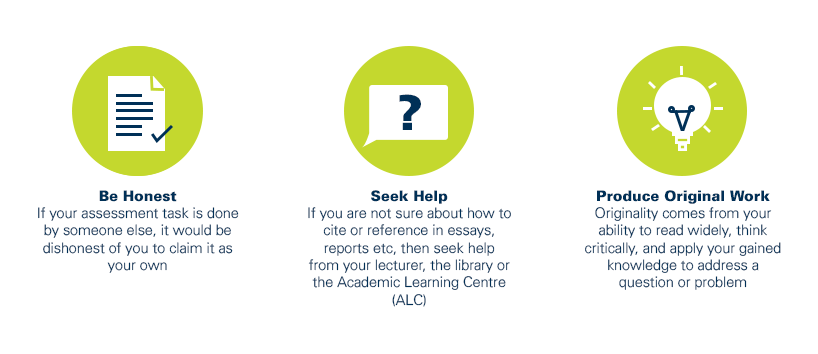
As a CQUniversity student you are expected to act honestly in all aspects of your academic work.
Any assessable work undertaken or submitted for review or assessment must be your own work. Assessable work is any type of work you do to meet the assessment requirements in the unit, including draft work submitted for review and feedback and final work to be assessed.
When you use the ideas, words or data of others in your assessment, you must thoroughly and clearly acknowledge the source of this information by using the correct referencing style for your unit. Using others’ work without proper acknowledgement may be considered a form of intellectual dishonesty.
Participating honestly, respectfully, responsibly, and fairly in your university study ensures the CQUniversity qualification you earn will be valued as a true indication of your individual academic achievement and will continue to receive the respect and recognition it deserves.
As a student, you are responsible for reading and following CQUniversity’s policies, including the Student Academic Integrity Policy and Procedure. This policy sets out CQUniversity’s expectations of you to act with integrity, examples of academic integrity breaches to avoid, the processes used to address alleged breaches of academic integrity, and potential penalties.
What is a breach of academic integrity?
A breach of academic integrity includes but is not limited to plagiarism, self-plagiarism, collusion, cheating, contract cheating, and academic misconduct. The Student Academic Integrity Policy and Procedure defines what these terms mean and gives examples.
Why is academic integrity important?
A breach of academic integrity may result in one or more penalties, including suspension or even expulsion from the University. It can also have negative implications for student visas and future enrolment at CQUniversity or elsewhere. Students who engage in contract cheating also risk being blackmailed by contract cheating services.
Where can I get assistance?
For academic advice and guidance, the Academic Learning Centre (ALC) can support you in becoming confident in completing assessments with integrity and of high standard.
What can you do to act with integrity?