Overview
This unit will build upon your conceptual understanding of the causes, mechanisms and consequences of disease and dysfunction of the non-musculoskeletal systems. You will critically evaluate the multifactorial symptoms of dysfunction in order to infer the likely causative pathophysiological condition. Importance will be placed on understanding that different pathologies frequently causing a suite of similar symptoms but can nevertheless be differentiated on the basis of the combination, intensity and development of those symptoms. This knowledge will be used in conjunction with the physical examination protocols and procedures, as well as understanding further medical testing, for example blood tests and urinalysis, in order to formulate a differential diagnosis.
Details
Pre-requisites or Co-requisites
Pre-requisites: BMSC11002 Human Body Systems 2 or BMSC11011 Human Anatomy and Physiology 2 and MBIO12013 Microbiology for Health Care and BIOH12008 Human Pathophysiology or MPAT12001 Medical Pathophysiology
Important note: Students enrolled in a subsequent unit who failed their pre-requisite unit, should drop the subsequent unit before the census date or within 10 working days of Fail grade notification. Students who do not drop the unit in this timeframe cannot later drop the unit without academic and financial liability. See details in the Assessment Policy and Procedure (Higher Education Coursework).
Offerings For Term 1 - 2026
Attendance Requirements
All on-campus students are expected to attend scheduled classes - in some units, these classes are identified as a mandatory (pass/fail) component and attendance is compulsory. International students, on a student visa, must maintain a full time study load and meet both attendance and academic progress requirements in each study period (satisfactory attendance for International students is defined as maintaining at least an 80% attendance record).
Recommended Student Time Commitment
Each 6-credit Undergraduate unit at CQUniversity requires an overall time commitment of an average of 12.5 hours of study per week, making a total of 150 hours for the unit.
Class Timetable
Assessment Overview
Assessment Grading
This is a graded unit: your overall grade will be calculated from the marks or grades for each assessment task, based on the relative weightings shown in the table above. You must obtain an overall mark for the unit of at least 50%, or an overall grade of 'pass' in order to pass the unit. If any 'pass/fail' tasks are shown in the table above they must also be completed successfully ('pass' grade). You must also meet any minimum mark requirements specified for a particular assessment task, as detailed in the 'assessment task' section (note that in some instances, the minimum mark for a task may be greater than 50%). Consult the University's Grades and Results Policy for more details of interim results and final grades.
All University policies are available on the CQUniversity Policy site.
You may wish to view these policies:
- Grades and Results Policy
- Assessment Policy and Procedure (Higher Education Coursework)
- Review of Grade Procedure
- Student Academic Integrity Policy and Procedure
- Academic Progression Policy and Procedure
- Student Refund and Credit Balance Policy and Procedure
- Complaints Policy and Procedure
- Information and Communications Technology Acceptable Use Policy and Procedure
This list is not an exhaustive list of all University policies. The full list of University policies are available on the CQUniversity Policy site.
Feedback, Recommendations and Responses
Every unit is reviewed for enhancement each year. At the most recent review, the following staff and student feedback items were identified and recommendations were made.
Feedback from SUTE
The content in this unit supports skill development in differential diagnosis. Some students suggested that tutorials could be divided into smaller groups and include more interactive activities to support their learning.
It is recommended that the Unit Coordinator incorporates case-based discussions and peer-to-peer activities while also reviewing scheduling options for upcoming cohorts.
- Compare the aetiology, epidemiology, pathogenesis and clinical manifestations of common diseases
- Explain the pathophysiological basis of symptoms and signs of common diseases, using your knowledge of anatomy, physiology, biochemistry, microbiology and pathology and the relevant diagnostic testing required.
- Analyse the combination, intensity and chronological development of a patient's symptoms, alongside a physical examination to infer the most likely pathological cause of the patient's presentation.
- Analyse the multifactorial nature of relevant disease processes and evaluate their implications for clinical chiropractic practice.
Alignment of Assessment Tasks to Learning Outcomes
| Assessment Tasks | Learning Outcomes | |||
|---|---|---|---|---|
| 1 | 2 | 3 | 4 | |
| 1 - On-campus Activity - 0% | ||||
| 2 - Objective Structured Clinical Examinations (OSCEs) - 60% | ||||
| 3 - In-class Test(s) - 40% | ||||
Alignment of Graduate Attributes to Learning Outcomes
| Graduate Attributes | Learning Outcomes | |||
|---|---|---|---|---|
| 1 | 2 | 3 | 4 | |
| 1 - Communication | ||||
| 2 - Problem Solving | ||||
| 3 - Critical Thinking | ||||
| 4 - Information Literacy | ||||
| 5 - Team Work | ||||
| 6 - Information Technology Competence | ||||
| 7 - Cross Cultural Competence | ||||
| 8 - Ethical practice | ||||
| 9 - Social Innovation | ||||
| 10 - First Nations Knowledges | ||||
| 11 - Aboriginal and Torres Strait Islander Cultures | ||||
Textbooks
There are no required textbooks.
Additional Textbook Information
Required Equipment for clinical examination: systems and pathology involves learning clinical examination skills such as auscultation, measuring blood pressure, and taking temperature. For this, special equipment is required. This equipment is essential to practice and is required to have during your internship and future use in chiropractic clinical practice.
The equipment required is listed below:
1-Stethoscope
2-Sphygmamanometer
3- Thermometer
4- Pen torch
5- Tongue depressors
6- Pulse Oximeter
IT Resources
- CQUniversity Student Email
- Internet
- Unit Website (Moodle)
All submissions for this unit must use the referencing style: American Psychological Association 7th Edition (APA 7th edition)
For further information, see the Assessment Tasks.
b.zietsman@cqu.edu.au
Week 1: Clinical Framework and Patient History
Begin Date: 09 Mar 2026Module/Topic
Module: Clinical Framework and Patient History
Chapter
The suggested clinical examinations reference books are:
L.S Bickley (2016). Bates' Guide to Physical Examination and History Taking (12th Edn). Wolters Kluwer. (Available at CQU libraries; hard copy)
J. A Innes, A Dover, K Fairhurst. Macleod's Clinical Examination. 14th Edn (2018). Elsevier. (Available at CQU libraries; hard copy)
NJ Talley and S O’Connor. Talley and O'Connor's Clinical Examination (8th Edn). Elsevier.
This weeks suggested readings:
Bate's - Ch 3: Interviewing and the Health History.
Tally and O'Connor - Chapter 1 and 2: The General Principles of History Taking
McLeod's - Ch 1: Managing Clinical Encounters with Patients; and Ch 2: General aspects of history taking
Events and Submissions/Topic
On Campus Activity
Week 2: Vital signs and physical examination
Begin Date: 16 Mar 2026Module/Topic
Module: Vital Signs and Physical Examination
Chapter
Bate's - Ch 4: Beginning the Physical Examination: General Survey, Vital Signs, and Pain.
Tally and O'Connor- Ch 3: The General Principles of Physical Examination
McLeod's - Ch 3: General Aspects of Examination
Events and Submissions/Topic
On Campus Activity
Week 3: Dermatology 1
Begin Date: 23 Mar 2026Module/Topic
Module: Dermatology 1
Chapter
Recommended Reading (any of the references below)
Bate's - Ch 6: The Skin, Hair and Nails
Tally and O'Connor - Section 12: 'The skin and lumps'
McLeod's Ch 14: The skin, hair and nails
Events and Submissions/Topic
On Campus Activity
Week 4: Dermatology 2
Begin Date: 30 Mar 2026Module/Topic
Module: Dermatology 2
Chapter
Recommended Reading (any of the references below)
Bate's - Ch 6: The Skin, Hair and Nails
Tally and O'Connor - Section 12: 'The skin and lumps'
McLeod's Ch 14: The skin, hair and nails
Events and Submissions/Topic
On Campus Activity
Week 5: Endocrine
Begin Date: 06 Apr 2026Module/Topic
Module: Endocrine 1
Chapter
Recommended Reading (any of the references below)
Tally and O'Connor Section 8: The Endocrine System
McLeod's- Ch 10: The endocrine system
Events and Submissions/Topic
On Campus Activity
Week 6: Endocrine 2 and OSCE
Begin Date: 13 Apr 2026Module/Topic
Module: Endocrine 2
Practical: OSCE 1
Chapter
Recommended Reading (any of the references below)
Tally and O'Connor Section 8: The Endocrine System
McLeod's- Ch 10: The endocrine system
Events and Submissions/Topic
OSCE 1 *In practical class. Individual timetable will be posted on moodle
Vacation Week
Begin Date: 20 Apr 2026Module/Topic
Vacation Week
Chapter
Vacation Week
Events and Submissions/Topic
Week 7: Female Health 1
Begin Date: 27 Apr 2026Module/Topic
Module: Female Health 1
Chapter
Bate's- Chpt 10,14, 19
Events and Submissions/Topic
On Campus Activity
Week 8: Female Health 2
Begin Date: 04 May 2026Module/Topic
Module: Female Health 2
Chapter
Bate's- Chpt 10,14, 19
Events and Submissions/Topic
On Campus Activity
Week 9: Abdomen 1
Begin Date: 11 May 2026Module/Topic
Module: Abdomen 1
Chapter
Recommended Reading (any of the references below)
Bates- chapter 11: The Genitourinary system
Tally and O’Connor: Section 5- The Genitourinary system
McLeod’s: Chapter 11: The reproductive system; Chapter 12: the renal system
Events and Submissions/Topic
On Campus Activity
Week 10: Abdomen 2
Begin Date: 18 May 2026Module/Topic
Module: Abdomen 2
Chapter
Bate's- Ch 11: The Abdomen
Tally and O'Connor- Section 4: The Gastrointestinal System System.
McLeod's- Ch 6: The Gastrointestinal System
Events and Submissions/Topic
On Campus Activity
Week 11: Ear and Eye
Begin Date: 25 May 2026Module/Topic
Module: Ear and Eye
Chapter
Bate's - Ch 7: The head and neck (the eye, the ear)
Tally and O'Connor - Section 12: 'The eye', 'The ears'
McLeod's Ch 8: The visual system; Ch 9: The Ear
Events and Submissions/Topic
On Campus Activity
Week 12: Integration, review and feedback
Begin Date: 01 Jun 2026Module/Topic
Module: Review and Feedback
Practical: OSCE
Chapter
Commence revision exercises on moodle
Events and Submissions/Topic
OSC 2: Thursday 4 June 2026 12:00-16:00 AEST * individual time slots will follow on moodle
On Campus Activity Due: Week 12 Friday (5 June 2026) 9:00 am AEST
OSCE Due: Week 12 Thursday (4 June 2026) 5:00 pm AEST
Exam Week
Begin Date: 08 Jun 2026Module/Topic
Chapter
Events and Submissions/Topic
In class test: Thursday 11 June 2026 09:00-11:00 AEST BNE computer labs 1.06/ 1.07
In Class Test Due: Exam Week Thursday (11 June 2026) 9:00 am AEST
You must attend practicals and have your full clinical kit with you at every session. Systems and pathology involves learning clinical examination skills such as auscultation, measuring blood pressure, and taking temperature. For this, special equipment is required. This equipment is essential to practice and is required to have during your internship and future use in chiropractic clinical practice
Please ensure that you have purchased your clinical kit by the start of term 1, week 1. The following is required:
1-Stethoscope
2-Sphygmamanometer
3- Thermometer
4- Pen torch
5- Tongue depressors
6- Pulse Oximeter
1 On-campus Activity
During practical classes there will be an associated on-campus activity. These will be a mix of activities; but could and will include things like; demonstrating clinical skills learned during the last class, participating in a discussion on the weekly theoretical topic or taking a short in class quiz. These activities are designed to develop your clinical skills and theoretical knowledge. The tasks will be completed during the last 15-30 minutes of each class. You will be provided with an on-campus activity sheet which you will be required to bring to each class and upon completion of the activity have your in-class tutor sign and date it. It is your responsibility to ensure this sheet is completed and kept safe as it is proof of completion. Once you have completed the assessment you will need to upload the sheet to Moodle.
Please note: This is a pass/fail assessment task, you MUST achieve 80% to pass this assessment. A maximum of 2 make up sessions will be offered in the event of illness or exceptional circumstances (with appropriate supporting documentation) otherwise you will need to consider applying for Consideration of Special Circumstances or receiving a fail grade.
Level of GenAI use allowed:
Level 1: You must not use Al at any point during the assessment. You must demonstrate your core skills and knowledge
There is no 72 hour grace period for this assessment.
Week 12 Friday (5 June 2026) 9:00 am AEST
Weekly, at the end of every tutorial class with feedback, Signed on campus activity sheet must be uploaded to moodle
Vacation/Exam Week Monday (15 June 2026)
Students will receive on going in class feedback, grrade to be provided via Moodle site once all student have completed the task and the unit coordinator has checked the assessment.
The assessment criteria for this unit will seek to ensure that this assessment examines your newly developed clinical skills.
The criteria will examine the following:
Professionalism and effective communication with your mock patient
Knowledge and clinical skills - demonstrating clinical diagnostic tests and patient assessments
Ethical practice
- Compare the aetiology, epidemiology, pathogenesis and clinical manifestations of common diseases
- Analyse the combination, intensity and chronological development of a patient's symptoms, alongside a physical examination to infer the most likely pathological cause of the patient's presentation.
- Analyse the multifactorial nature of relevant disease processes and evaluate their implications for clinical chiropractic practice.
2 Objective Structured Clinical Examinations (OSCEs)
There will be 2 OSCE's throughout the term.
OSCE 1 is in week 6 and includes assessment of taking vital signs, and physical examination skills of the endocrine system.
OSCE 2 is in week 12 and includes assessment of the physical examination skills of the gastrointestinal/genitourinary and abdomen.
Each OSCE is worth 30%. This component is worth 60% of the unit total grade.
These OSCEs will assess your competency in performing the following tasks:
1. Observation of the patient for a specified condition or clinical sign
2. Assessment of vital signs
3. Examination of digestive, endocrine, haematopoietic and integumentary systems:
a. demonstrate assessment protocol of a patient for a specific condition (a list of conditions will be provided)
b. demonstrate skills in palpation, percussion and auscultation
4. Professionalism- to include informed consent and appropriate hygiene
Please note; all practical assessments will be video recorded for moderation purposes. Recordings will not be made available for general review but will be accessed by staff to ensure grades are appropriately awarded.
Level of Gen AI use allowed:
Level 1: You must not use Al at any point during the assessment. You must demonstrate your core skills and knowledge
There is no 72 hour grace period for this assessment.
Week 12 Thursday (4 June 2026) 5:00 pm AEST
OSCE 1 results and feedback will be given at the next practical class following the OSCE. OSCE 2, the results will be disseminated the next business day.
Exam Week Friday (12 June 2026)
Grades will be returned via Moodle and in person where applicable.
The assessment criteria for this unit will seek to ensure that this assessment examines your newly developed clinical skills. A detailed rubric will be provided on Moodle.
The criteria will examine the following:
- Professionalism, communication and hygiene with your mock patient
- Select and competently perform the appropriate examination routine required to facilitate the recognition of specific disorders or disease states of the different systems taught in this unit.
- Clinical skills - performing relevant clinical physical examinations and competently perform basic clinical examination skills (observation, percussion, palpation and auscultation).
- Patient handling and considerations
- Competently assess a patient's pulse, blood pressure, respiratory rate, oxygen saturation and body temperature.
- Explain the pathophysiological basis of symptoms and signs of common diseases, using your knowledge of anatomy, physiology, biochemistry, microbiology and pathology and the relevant diagnostic testing required.
- Analyse the combination, intensity and chronological development of a patient's symptoms, alongside a physical examination to infer the most likely pathological cause of the patient's presentation.
3 In-class Test(s)
This in class test will be undertaken in a CQUni computer lab on whichever campus that you are enrolled. The test will involve a mix of question types including multiple choice, short answer and matching styles. The test will assess all theoretical content taught across weeks 1-12. The assessment criteria will involve selecting or providing the most accurate and correct answers to the questions posed in this in class test.
Student is able to demonstrate:
1. Understanding of the relationship between anatomy, physiology, pathology and diagnosis.
2. Understanding of the pathophysiological basis for a range of symptoms and signs.
3. Understanding indications for a system examination and the implications of its findings.
4. Knowledge of common clinical investigations of body systems and familiarity with management options of their disorders.
Level of GenAI use allowed:
Level 1: You must not use Al at any point during the assessment. You must demonstrate your core skills and knowledge
There is no 72 hour grace period for this assessment.
Exam Week Thursday (11 June 2026) 9:00 am AEST
The test will commence at 11am and finish at 1:00pm in a computer lab on your respective campus.
Vacation/Exam Week Friday (19 June 2026)
Via Moodle
Spelling must be accurate, any misspelled words will not result in any marks awarded- this is a clinical unit.
In the instance where you have provided more than 1 (One) answer where the question only asks for the most likely diagnosis/sign/symptom/disorder you WILL NOT be awarded any marks.
- Compare the aetiology, epidemiology, pathogenesis and clinical manifestations of common diseases
- Explain the pathophysiological basis of symptoms and signs of common diseases, using your knowledge of anatomy, physiology, biochemistry, microbiology and pathology and the relevant diagnostic testing required.
- Analyse the multifactorial nature of relevant disease processes and evaluate their implications for clinical chiropractic practice.
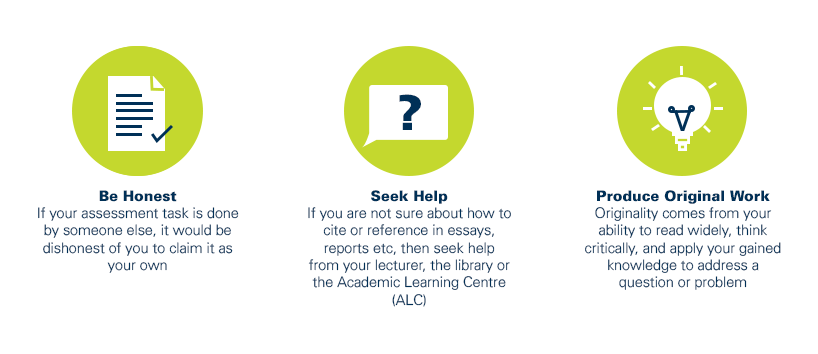
As a CQUniversity student you are expected to act honestly in all aspects of your academic work.
Any assessable work undertaken or submitted for review or assessment must be your own work. Assessable work is any type of work you do to meet the assessment requirements in the unit, including draft work submitted for review and feedback and final work to be assessed.
When you use the ideas, words or data of others in your assessment, you must thoroughly and clearly acknowledge the source of this information by using the correct referencing style for your unit. Using others’ work without proper acknowledgement may be considered a form of intellectual dishonesty.
Participating honestly, respectfully, responsibly, and fairly in your university study ensures the CQUniversity qualification you earn will be valued as a true indication of your individual academic achievement and will continue to receive the respect and recognition it deserves.
As a student, you are responsible for reading and following CQUniversity’s policies, including the Student Academic Integrity Policy and Procedure. This policy sets out CQUniversity’s expectations of you to act with integrity, examples of academic integrity breaches to avoid, the processes used to address alleged breaches of academic integrity, and potential penalties.
What is a breach of academic integrity?
A breach of academic integrity includes but is not limited to plagiarism, self-plagiarism, collusion, cheating, contract cheating, and academic misconduct. The Student Academic Integrity Policy and Procedure defines what these terms mean and gives examples.
Why is academic integrity important?
A breach of academic integrity may result in one or more penalties, including suspension or even expulsion from the University. It can also have negative implications for student visas and future enrolment at CQUniversity or elsewhere. Students who engage in contract cheating also risk being blackmailed by contract cheating services.
Where can I get assistance?
For academic advice and guidance, the Academic Learning Centre (ALC) can support you in becoming confident in completing assessments with integrity and of high standard.
What can you do to act with integrity?