Assessment number: 3
Name: In-Class Test
Change details: change from 10/06/2026 at 01:00 pm (Wednesday, Exam Week) to 08/06/2026 at 9.00am (Monday, Exam week).
Overview
This unit will introduce you to the aetiology, incidence, pathophysiology and clinical presentation of conditions commonly encountered in chiropractic practice. You will integrate this theoretical understanding with appropriate orthopaedic, neurologic and physical examination skills and continue to build on your clinical management skills.
Details
Pre-requisites or Co-requisites
CHIR12006 Foundations of Chiropractic Practice 4 AND MPAT12001 Medical Pathophysiology
Important note: Students enrolled in a subsequent unit who failed their pre-requisite unit, should drop the subsequent unit before the census date or within 10 working days of Fail grade notification. Students who do not drop the unit in this timeframe cannot later drop the unit without academic and financial liability. See details in the Assessment Policy and Procedure (Higher Education Coursework).
Offerings For Term 1 - 2026
Attendance Requirements
All on-campus students are expected to attend scheduled classes - in some units, these classes are identified as a mandatory (pass/fail) component and attendance is compulsory. International students, on a student visa, must maintain a full time study load and meet both attendance and academic progress requirements in each study period (satisfactory attendance for International students is defined as maintaining at least an 80% attendance record).
Recommended Student Time Commitment
Each 12-credit Undergraduate unit at CQUniversity requires an overall time commitment of an average of 25 hours of study per week, making a total of 300 hours for the unit.
Class Timetable
Assessment Overview
Assessment Grading
This is a graded unit: your overall grade will be calculated from the marks or grades for each assessment task, based on the relative weightings shown in the table above. You must obtain an overall mark for the unit of at least 50%, or an overall grade of 'pass' in order to pass the unit. If any 'pass/fail' tasks are shown in the table above they must also be completed successfully ('pass' grade). You must also meet any minimum mark requirements specified for a particular assessment task, as detailed in the 'assessment task' section (note that in some instances, the minimum mark for a task may be greater than 50%). Consult the University's Grades and Results Policy for more details of interim results and final grades.
All University policies are available on the CQUniversity Policy site.
You may wish to view these policies:
- Grades and Results Policy
- Assessment Policy and Procedure (Higher Education Coursework)
- Review of Grade Procedure
- Student Academic Integrity Policy and Procedure
- Academic Progression Policy and Procedure
- Student Refund and Credit Balance Policy and Procedure
- Complaints Policy and Procedure
- Information and Communications Technology Acceptable Use Policy and Procedure
This list is not an exhaustive list of all University policies. The full list of University policies are available on the CQUniversity Policy site.
Feedback, Recommendations and Responses
Every unit is reviewed for enhancement each year. At the most recent review, the following staff and student feedback items were identified and recommendations were made.
Feedback from SUTE
Students appreciated the clear unit requirements and assessment guides.
It is recommended that the unit coordinator continue to provide clear unit requirements and assessment guides.
Feedback from SUTE
Students expressed that they would like to receive OSCE feedback sooner.
It is recommended that the discipline explore digital means to provide marked OSCE rubrics in a timely manner.
- Describe the clinical presentation including etiology, incidence and pathophysiology of commonly encountered conditions of the spine and extremities.
- Apply clinical reasoning skills in relation to the selection and application of assessment and management procedures relevant to commonly encountered conditions seen to determine introductory diagnoses.
- Demonstrate commonly used clinical assessment skills including neurological and orthopedic procedures.
- Demonstrate management procedures including chiropractic techniques.
- Communicate and demonstrate appropriate professional and culturally inclusive behaviours to the standard expected of a registered healthcare professional.
LO1 - Competency 3 (3.4)
LO2 - Competency 1 (1.1, 1.2, 1.3 and 1.4), 2 (2.2), 3 (3.3, 3.4 and 3.5), 4 (4.1 and 4.2)
LO 3 - Competency 1 (1.1, 1.2 and 1.3), 2 (2.1), 3 (3.1, 3.2 and 3.4)
LO4 - Competency 1 (1.1, 1.2 and 1.3), 2 (2.1 and 2.3), 4 (4.1 and 4.2), 5 (5.1 and 5.2)
LO5 - Competency 2 (2.1), 3 (3.1, 3.2 and 3.4)
Alignment of Assessment Tasks to Learning Outcomes
| Assessment Tasks | Learning Outcomes | ||||
|---|---|---|---|---|---|
| 1 | 2 | 3 | 4 | 5 | |
| 1 - On-campus Activity - 0% | |||||
| 2 - Objective Structured Clinical Examinations (OSCEs) - 50% | |||||
| 3 - In-class Test(s) - 50% | |||||
Alignment of Graduate Attributes to Learning Outcomes
| Graduate Attributes | Learning Outcomes | ||||
|---|---|---|---|---|---|
| 1 | 2 | 3 | 4 | 5 | |
| 1 - Communication | |||||
| 2 - Problem Solving | |||||
| 3 - Critical Thinking | |||||
| 4 - Information Literacy | |||||
| 5 - Team Work | |||||
| 6 - Information Technology Competence | |||||
| 7 - Cross Cultural Competence | |||||
| 8 - Ethical practice | |||||
| 9 - Social Innovation | |||||
| 10 - First Nations Knowledges | |||||
| 11 - Aboriginal and Torres Strait Islander Cultures | |||||
Textbooks
There are no required textbooks.
IT Resources
- CQUniversity Student Email
- Internet
- Unit Website (Moodle)
All submissions for this unit must use the referencing style: Vancouver
For further information, see the Assessment Tasks.
m.fernandez@cqu.edu.au
Week 1
Begin Date: 09 Mar 2026Module/Topic
- Chiropractic Technique - Intro & Thoracic Spine
- Case Work (Ortho/Neuro) - Thoracic Spine
- Conditions - Thoracic Spine
Chapter
- Bergmann, T. F., & Peterson, D. H. (2010). Chiropractic Technique-E-Book. Elsevier Health Sciences.
- Magee, D. J., & Sueki, D. (2011). Orthopedic physical assessment atlas and video. Selected special tests and movements. St. Louis: Elsevier Saunders.
- Magee, D. J. (2014). Orthopedic Physical Assessment. United States: Elsevier - Review Chapter 8 - Read p529
Events and Submissions/Topic
Week 2
Begin Date: 16 Mar 2026Module/Topic
Chiropractic Technique - Thoracic Spine & Lower Ribs
Case Work (Ortho/Neuro) - Lumbar Spine
Conditions - Lumbar Spine
Chapter
Bergmann, T. F., & Peterson, D. H. (2010). Chiropractic Technique-E-Book. Elsevier Health Sciences.
Magee, D. J., & Sueki, D. (2011). Orthopedic physical assessment atlas and video. Selected special tests and movements. St. Louis: Elsevier Saunders.
Magee, D. J. (2014). Orthopedic Physical Assessment. United States: Elsevier - Review Chapter 9, Read p593
Events and Submissions/Topic
Week 3
Begin Date: 23 Mar 2026Module/Topic
Chiropractic Technique - Lumbar Spine
Case Work (Ortho/Neuro) - Lumbopelvic region
Conditions - Lumbopelvic region
Chapter
Bergmann, T. F., & Peterson, D. H. (2010). Chiropractic Technique-E-Book. Elsevier Health Sciences.
Magee, D. J., & Sueki, D. (2011). Orthopedic physical assessment atlas and video. Selected special tests and movements. St. Louis: Elsevier Saunders.
Magee, D. J. (2014). Orthopedic Physical Assessment. United States: Elsevier - Review Chapter 10 / Read p668
Events and Submissions/Topic
Week 4
Begin Date: 30 Mar 2026Module/Topic
Chiropractic Technique - Lumbar Spine
Case Work (Ortho/Neuro) - Cervical Spine
Conditions - Cervical Spine
Chapter
Bergmann, T. F., & Peterson, D. H. (2010). Chiropractic Technique-E-Book. Elsevier Health Sciences.
Magee, D. J., & Sueki, D. (2011). Orthopedic physical assessment atlas and video. Selected special tests and movements. St. Louis: Elsevier Saunders.
Magee, D. J. (2014). Orthopedic Physical Assessment. United States: Elsevier - Review Chapter 3 / Read p180
Events and Submissions/Topic
Week 5
Begin Date: 06 Apr 2026Module/Topic
Chiropractic Technique - Pelvis
Case Work (Ortho/Neuro) - Spine Review
Conditions - Cervical Spine
Chapter
Bergmann, T. F., & Peterson, D. H. (2010). Chiropractic Technique-E-Book. Elsevier Health Sciences.
Magee, D. J., & Sueki, D. (2011). Orthopedic physical assessment atlas and video. Selected special tests and movements. St. Louis: Elsevier Saunders.
Magee, D. J. (2014). Orthopedic Physical Assessment. United States: Elsevier - Review Chapter 3 / Read p180
Events and Submissions/Topic
Week 6
Begin Date: 13 Apr 2026Module/Topic
Chiropractic Technique - Cervical Spine
Case Work (Ortho/Neuro) - OSCE
Conditions - Radiculopathy
Chapter
Bergmann, T. F., & Peterson, D. H. (2010). Chiropractic Technique-E-Book. Elsevier Health Sciences.
Magee, D. J., & Sueki, D. (2011). Orthopedic physical assessment atlas and video. Selected special tests and movements. St. Louis: Elsevier Saunders.
Magee, D. J. (2014). Orthopedic Physical Assessment. United States: Elsevier.
Events and Submissions/Topic
Mid Term OSCE
Vacation Week
Begin Date: 20 Apr 2026Module/Topic
Chapter
Events and Submissions/Topic
Week 7
Begin Date: 27 Apr 2026Module/Topic
Chiropractic Technique - Cervical Spine
Case Work (Ortho/Neuro) - UMNLs
Conditions - UMNLs
Chapter
Bergmann, T. F., & Peterson, D. H. (2010). Chiropractic Technique-E-Book. Elsevier Health Sciences.
Magee, D. J., & Sueki, D. (2011). Orthopedic physical assessment atlas and video. Selected special tests and movements. St. Louis: Elsevier Saunders.
Fuller, G. (2019). Neurological Examination Made Easy E-Book. Elsevier Health Sciences - Chapters 20,22 & 25
Events and Submissions/Topic
Week 8
Begin Date: 04 May 2026Module/Topic
Chiropractic Technique - C/T & Upper Ribs
Case Work (Ortho/Neuro) - Cerebellum
Conditions - Cerebellum
Chapter
Bergmann, T. F., & Peterson, D. H. (2010). Chiropractic Technique-E-Book. Elsevier Health Sciences.
Magee, D. J., & Sueki, D. (2011). Orthopedic physical assessment atlas and video. Selected special tests and movements. St. Louis: Elsevier Saunders.
Fuller, G. (2019). Neurological Examination Made Easy E-Book. Elsevier Health Sciences - Chapters 23 & 24
Events and Submissions/Topic
Week 9
Begin Date: 11 May 2026Module/Topic
Chiropractic Technique - C0-C1
Case Work (Ortho/Neuro) - Cranial Nerves (CNs)
Conditions - Cranial Nerves (CNs)
Chapter
Bergmann, T. F., & Peterson, D. H. (2010). Chiropractic Technique-E-Book. Elsevier Health Sciences.
Magee, D. J., & Sueki, D. (2011). Orthopedic physical assessment atlas and video. Selected special tests and movements. St. Louis: Elsevier Saunders.
Fuller, G. (2019). Neurological Examination Made Easy E-Book. Elsevier Health Sciences - Chapters 5-14
Events and Submissions/Topic
Week 10
Begin Date: 18 May 2026Module/Topic
Chiropractic Technique - Occiput
Case Work (Ortho/Neuro) - CNs cond. & Dizziness
Conditions - Headache / Dizziness
Chapter
Bergmann, T. F., & Peterson, D. H. (2010). Chiropractic Technique-E-Book. Elsevier Health Sciences.
Magee, D. J., & Sueki, D. (2011). Orthopedic physical assessment atlas and video. Selected special tests and movements. St. Louis: Elsevier Saunders.
Fuller, G. (2019). Neurological Examination Made Easy E-Book. Elsevier Health Sciences - Chapters 5-14
Events and Submissions/Topic
Week 11
Begin Date: 25 May 2026Module/Topic
Chiropractic Technique - OSCE Review
Case Work (Ortho/Neuro) - OSCE Review
Conditions - Trauma / Concussion
Chapter
Bergmann, T. F., & Peterson, D. H. (2010). Chiropractic Technique-E-Book. Elsevier Health Sciences.
Magee, D. J., & Sueki, D. (2011). Orthopedic physical assessment atlas and video. Selected special tests and movements. St. Louis: Elsevier Saunders.
Fuller, G. (2019). Neurological Examination Made Easy E-Book. Elsevier Health Sciences.
Events and Submissions/Topic
Week 12
Begin Date: 01 Jun 2026Module/Topic
OSCE Week
Chapter
Events and Submissions/Topic
End of Term OSCE
Submit signed on Campus activity sheet
On Campus Activity Due: Week 12 Wednesday (3 June 2026) 11:59 pm AEST
Objective Structured Clinical Examinations (OSCEs) Due: Week 12 Thursday (4 June 2026) 11:59 pm AEST
Exam Week
Begin Date: 08 Jun 2026Module/Topic
Chapter
Events and Submissions/Topic
In class test: 1-3pm June 10th (Wednesday)
In-Class Test Due: Exam Week Wednesday (10 June 2026) 1:00 pm AEST
Vacation/Exam Week
Begin Date: 15 Jun 2026Module/Topic
Chapter
Events and Submissions/Topic
1 On-campus Activity
The on-campus activities in this unit will serve as a continuous assessment of your skill development. You will receive ongoing verbal feedback in class to develop your key chiropractic skills. The weekly on-campus activities will vary in requirements and expectations. Each will be based on material from the previous week or current week, it is therefore essential that you review the material weekly.
The tasks will be completed during the first 10-15 minutes of each class. You will be provided with an on-campus activity sheet which you will be required to bring to each class and upon completion of the activity have your in-class tutor sign and date it. It is your responsibility to ensure this sheet is completed and kept safe as it is proof of completion. Once you have completed the assessment you will need to upload the signed checklist sheet into Moodle at the end of Week 12. This assignment requires 80% to pass. The On Campus Activity Sheet will be available on Moodle.
Please note, this is a pass/fail assessment task that means if you do not achieve a pass for this task you will not pass the unit. Supplementary assessments are not available for this pass/fail assessment item.
The 72 hour grace period does not apply to this assessment item.
AI level 1 - you must not use AI at any point during the assessment. You must demonstrate your core skills and knowledge.
Week 12 Wednesday (3 June 2026) 11:59 pm AEST
Exam Week Friday (12 June 2026)
The assessment criteria for this unit will seek to ensure that this assessment examines your newly developed clinical skills.
No submission method provided.
- Describe the clinical presentation including etiology, incidence and pathophysiology of commonly encountered conditions of the spine and extremities.
- Apply clinical reasoning skills in relation to the selection and application of assessment and management procedures relevant to commonly encountered conditions seen to determine introductory diagnoses.
- Demonstrate commonly used clinical assessment skills including neurological and orthopedic procedures.
- Demonstrate management procedures including chiropractic techniques.
- Communicate and demonstrate appropriate professional and culturally inclusive behaviours to the standard expected of a registered healthcare professional.
2 Objective Structured Clinical Examinations (OSCEs)
The assessment criteria for this unit will seek to ensure that this assessment examines your newly developed clinical skills. A detailed rubric will be provided on Moodle.
The criteria will examine the following:
- Professionalism and communication with your mock patient.
- Clinical skills - performing (set up) manipulations of the spinal regions.
- Performing and evaluating spinal joints using orthopaedic and neurological assessment techniques.
- Patient handling and considerations.
- There are two practical examinations (OSCE) in the practical sessions of Week 6 and week 12.
Each OSCE is worth 25% of the total grade for this unit, equating to 50%.
Students must obtain a total of 50% or more to pass the practical assessment, as such each OSCE must be passed. *If eligible, students may be allowed one re-attempt and must be completed within seven consecutive days after receiving a mark for the initial assessment.
The 72 hour grace period does not apply to this assessment item.
AI level 1 - you must not use AI at any point during the assessment. You must demonstrate your core skills and knowledge.
Week 12 Thursday (4 June 2026) 11:59 pm AEST
Exam Week Friday (12 June 2026)
OSCE Assessment Criteria:
You will need to demonstrate competence in performing set up manipulations of the spinal regions and evaluating spinal joints using orthopaedic and neurological assessment techniques. Your performance will be graded, using a marking rubric; including an appropriate introduction, hygiene and consent; patient handling; technical performance and the examiner's overall impression of the performance.
No submission method provided.
- Demonstrate commonly used clinical assessment skills including neurological and orthopedic procedures.
- Demonstrate management procedures including chiropractic techniques.
- Communicate and demonstrate appropriate professional and culturally inclusive behaviours to the standard expected of a registered healthcare professional.
3 In-class Test(s)
This online assessment is 120 minutes in duration and will be comprised of a range of question formats, including multi choice, matching, short and long case answer explanations. This is a closed-book assessment and no notes, texts or additional electronic devices are allowed during this assessment task. You will submit your test electronically. This test must be written at the timetabled date and time. If you arrive late, you may enter the test room up to 15 minutes after the start of the test, however, you will still be required to submit your test at the standard test end time. You will not be allowed entry more than 15 minutes after the test starts. In the absence of an approved extension, there will be no opportunity for you to complete this assessment at a later time, and you will receive a mark of zero for the assessment.
The 72 hour grace period does not apply to this assessment item.
AI level 1 - you must not use AI at any point during the assessment. You must demonstrate your core skills and knowledge.
Exam Week Wednesday (10 June 2026) 1:00 pm AEST
1-3pm
Vacation/Exam Week Friday (19 June 2026)
Please arrive 15 minutes before the start time
Reading time is incorporated within the allocated exam time.
The test will take 120 minutes
See the Quiz Outline for exam specific question information.
Any students with an accessibility plan are advised to ensure that they have shared the plan with the unit coordinator to ensure that they are appropriately accommodated.
If you have a technical difficulties during the assessment please alert the invigilator immediately, they will help you record the incident to send to the unit coordinator / TASAC as per LDI Guidelines.
Once the assessment has begun nobody can leave the room for the first 30 minutes, after that no late entrants will be allowed to join the assessment task as per normal practice.
If you are unable to make it on the day of your end of term test, please email the unit coordinator as soon as possible and supply a medical certificate.
Please bring your ID with you so we can confirm it prior to you taking the test.
- Describe the clinical presentation including etiology, incidence and pathophysiology of commonly encountered conditions of the spine and extremities.
- Apply clinical reasoning skills in relation to the selection and application of assessment and management procedures relevant to commonly encountered conditions seen to determine introductory diagnoses.
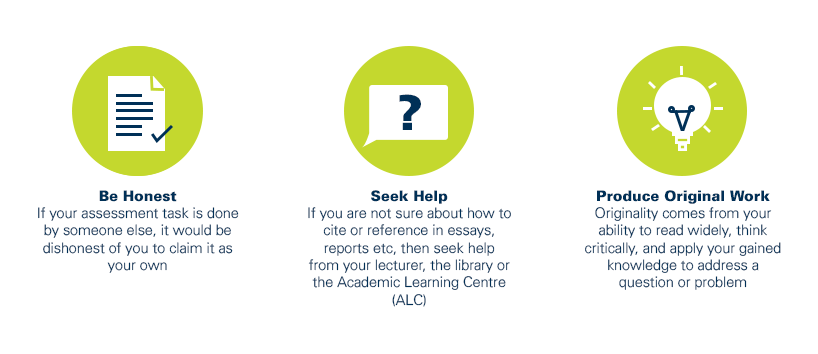
As a CQUniversity student you are expected to act honestly in all aspects of your academic work.
Any assessable work undertaken or submitted for review or assessment must be your own work. Assessable work is any type of work you do to meet the assessment requirements in the unit, including draft work submitted for review and feedback and final work to be assessed.
When you use the ideas, words or data of others in your assessment, you must thoroughly and clearly acknowledge the source of this information by using the correct referencing style for your unit. Using others’ work without proper acknowledgement may be considered a form of intellectual dishonesty.
Participating honestly, respectfully, responsibly, and fairly in your university study ensures the CQUniversity qualification you earn will be valued as a true indication of your individual academic achievement and will continue to receive the respect and recognition it deserves.
As a student, you are responsible for reading and following CQUniversity’s policies, including the Student Academic Integrity Policy and Procedure. This policy sets out CQUniversity’s expectations of you to act with integrity, examples of academic integrity breaches to avoid, the processes used to address alleged breaches of academic integrity, and potential penalties.
What is a breach of academic integrity?
A breach of academic integrity includes but is not limited to plagiarism, self-plagiarism, collusion, cheating, contract cheating, and academic misconduct. The Student Academic Integrity Policy and Procedure defines what these terms mean and gives examples.
Why is academic integrity important?
A breach of academic integrity may result in one or more penalties, including suspension or even expulsion from the University. It can also have negative implications for student visas and future enrolment at CQUniversity or elsewhere. Students who engage in contract cheating also risk being blackmailed by contract cheating services.
Where can I get assistance?
For academic advice and guidance, the Academic Learning Centre (ALC) can support you in becoming confident in completing assessments with integrity and of high standard.
What can you do to act with integrity?