Overview
In Clinical Practice 2 you will continue to build on your clinical competency in preparation for your clinical internship. These competencies include clinical reasoning, clinical assessment, diagnosis and management skills. While on your second external placement, you will be expected to perform as a functional team member under guidance of the clinic supervisors. The external placement will provide you with the opportunity to reflect on chiropractic procedures, processes and documentation, building on the practical experience gained during the first placement in Clinical Practice 1.
Details
Pre-requisites or Co-requisites
Prerequisite: CHIR20002 Clinical Practice 1
Important note: Students enrolled in a subsequent unit who failed their pre-requisite unit, should drop the subsequent unit before the census date or within 10 working days of Fail grade notification. Students who do not drop the unit in this timeframe cannot later drop the unit without academic and financial liability. See details in the Assessment Policy and Procedure (Higher Education Coursework).
Offerings For Term 2 - 2026
Attendance Requirements
All on-campus students are expected to attend scheduled classes - in some units, these classes are identified as a mandatory (pass/fail) component and attendance is compulsory. International students, on a student visa, must maintain a full time study load and meet both attendance and academic progress requirements in each study period (satisfactory attendance for International students is defined as maintaining at least an 80% attendance record).
Recommended Student Time Commitment
Each 12-credit Postgraduate unit at CQUniversity requires an overall time commitment of an average of 25 hours of study per week, making a total of 300 hours for the unit.
Class Timetable
Assessment Overview
Assessment Grading
This is a graded unit: your overall grade will be calculated from the marks or grades for each assessment task, based on the relative weightings shown in the table above. You must obtain an overall mark for the unit of at least 50%, or an overall grade of 'pass' in order to pass the unit. If any 'pass/fail' tasks are shown in the table above they must also be completed successfully ('pass' grade). You must also meet any minimum mark requirements specified for a particular assessment task, as detailed in the 'assessment task' section (note that in some instances, the minimum mark for a task may be greater than 50%). Consult the University's Grades and Results Policy for more details of interim results and final grades.
All University policies are available on the CQUniversity Policy site.
You may wish to view these policies:
- Grades and Results Policy
- Assessment Policy and Procedure (Higher Education Coursework)
- Review of Grade Procedure
- Student Academic Integrity Policy and Procedure
- Academic Progression Policy and Procedure
- Student Refund and Credit Balance Policy and Procedure
- Complaints Policy and Procedure
- Information and Communications Technology Acceptable Use Policy and Procedure
This list is not an exhaustive list of all University policies. The full list of University policies are available on the CQUniversity Policy site.
Feedback, Recommendations and Responses
Every unit is reviewed for enhancement each year. At the most recent review, the following staff and student feedback items were identified and recommendations were made.
Feedback from Teacher Evaluation
Some students requested more open ended discussion on research topics related to clinical chiropractic practice.
It is recommended that the unit coordinator embeds discussion and reflection on research related to clinical chiropractic practice in the tutorials.
- Develop, refine and integrate problem solving skills through clinical case work, decision making and self reflective management at an advanced level
- Demonstrate advanced level clinical skills required to assess patients and deliver appropriate management protocols
- Display professional and ethical behaviour appropriate for a healthcare professional in multicultural Australia, in accordance with the professional code of conduct
- Reflect on the operational and clinical aspects of chiropractic care.
Learning outcome 1 - CCEA standard of competency 3 (3.1, 3.2), 4 (4.1, 4.3), 5 (5.2)
Learning outcome 2 - CCEA standard of competency 1 (1.2), 3 (3.1, 3.2, 3.5), 4 (4.1, 4.3), 5 (5.2)
Learning outcome 3 - CCEA standard of competency 1 (1.2, 1.2, 1.4), 2 (2.1, 2.4), 4 (4.2, 4.3), 5 (5.3, 5.4)
Learning outcome 4 - CCEA standard of competency 2 (2.4, 2.5)
Alignment of Assessment Tasks to Learning Outcomes
| Assessment Tasks | Learning Outcomes | |||
|---|---|---|---|---|
| 1 | 2 | 3 | 4 | |
| 1 - Portfolio - 60% | ||||
| 2 - Professional Practice Placement - 0% | ||||
| 3 - Written Assessment - 40% | ||||
Alignment of Graduate Attributes to Learning Outcomes
| Graduate Attributes | Learning Outcomes | |||
|---|---|---|---|---|
| 1 | 2 | 3 | 4 | |
| 1 - Knowledge | ||||
| 2 - Communication | ||||
| 3 - Cognitive, technical and creative skills | ||||
| 4 - Research | ||||
| 5 - Self-management | ||||
| 6 - Ethical and Professional Responsibility | ||||
| 7 - Leadership | ||||
| 8 - First Nations Knowledges | ||||
| 9 - Aboriginal and Torres Strait Islander Cultures | ||||
Textbooks
There are no required textbooks.
IT Resources
- CQUniversity Student Email
- Internet
- Unit Website (Moodle)
All submissions for this unit must use the referencing styles below:
For further information, see the Assessment Tasks.
d.mcnaughton@cqu.edu.au
Week 1
Begin Date: 13 Jul 2026Module/Topic
- Chiropractic Technique
- Case Work - Shoulder presentations
- Rehabilitation - Application of rehabilitative exercises - shoulder
- Radiographic Positioning Theory: Introduction
Chapter
Overview of Clinical Practice 2, Moodle site navigation, assessments and key dates.
Events and Submissions/Topic
Week 2
Begin Date: 20 Jul 2026Module/Topic
- Chiropractic Technique
- Case Work - TMJ presentations
- Rehabilitation - Application of rehabilitative exercises - TMJ
- Radiographic Positioning Theory: Beam Geometry
Chapter
Revision of weekly content and research paper review
Events and Submissions/Topic
Week 3
Begin Date: 27 Jul 2026Module/Topic
- Chiropractic Technique
- Case Work - Elbow presentations
- Rehabilitation - Application of rehabilitative exercises – Elbow
- Radiographic Positioning Theory: Adjusting Exposure Factors
Chapter
Revision of weekly content and research paper review
Events and Submissions/Topic
Week 4
Begin Date: 03 Aug 2026Module/Topic
- Chiropractic Technique
- Case Work - Wrist & Hand presentations
- Rehabilitation - Application of rehabilitative exercises - Wrist & Hand
- Radiographic Positioning Theory: Technical Factors
Chapter
Revision of weekly content and research paper review
Events and Submissions/Topic
Week 5
Begin Date: 10 Aug 2026Module/Topic
- Chiropractic Technique
- Case Work- Hip presentations
- Rehabilitation - Application of rehabilitative exercises – Hip
- Radiographic Positioning Theory: Principals of Image Critique
Chapter
Revision of weekly content and research paper review
Events and Submissions/Topic
Rehab Presentation Handout (PART A) Due
Week 6
Begin Date: 17 Aug 2026Module/Topic
- Chiropractic Technique
- Case Work - Knee presentations
- Rehabilitation - Application of rehabilitative exercises – Knee
- Radiographic Positioning Theory: Radiography Workflow
Chapter
Revision of weekly content and research paper review
Events and Submissions/Topic
Vacation Week
Begin Date: 24 Aug 2026Module/Topic
Chapter
Events and Submissions/Topic
Week 7
Begin Date: 31 Aug 2026Module/Topic
- Chiropractic Technique
- Case Work - Foot & Ankle presentations
- Rehabilitation - Application of rehabilitative exercises – Foot & Ankle
- Radiography Positioning Theory: Gonad Shielding
Chapter
Revision of weekly content and research paper review
Events and Submissions/Topic
Week 8
Begin Date: 07 Sep 2026Module/Topic
- Rehab Presentations
- Finalisation of video assessment submission
- Technique revision
- Placement Preparation
- Radiography Positioning Theory: Revision of content
Chapter
Revision of weekly content and research paper review
Events and Submissions/Topic
Rehab Presentations and Peer Assessment (Part B and C) Due
Video Assessment Submission and Reflections Due
Week 9
Begin Date: 14 Sep 2026Module/Topic
- Placement Week 1: Clinical Observation & Extremity Assessment
Chapter
Events and Submissions/Topic
Week 10
Begin Date: 21 Sep 2026Module/Topic
- Placement Week 2: Clinical Reasoning & Patient Management
Chapter
Events and Submissions/Topic
Week 11
Begin Date: 28 Sep 2026Module/Topic
- Placement Week 3: Communication & Patient Interaction
Chapter
Events and Submissions/Topic
Week 12
Begin Date: 05 Oct 2026Module/Topic
- Placement Week 4: Ethical Scenarios & Professional Reflection
Chapter
Events and Submissions/Topic
Radiography Positioning Theory Quiz
Professional Placement Log and Reflection Due
Professional Placement Due: Week 12 Friday (9 Oct 2026) 11:59 pm AEST
Exam Week
Begin Date: 12 Oct 2026Module/Topic
Chapter
Events and Submissions/Topic
Vacation/Exam Week
Begin Date: 19 Oct 2026Module/Topic
Chapter
Events and Submissions/Topic
1 Portfolio
Portfolio (60%) is divided into four components.
- Rehabilitation presentation, condition handout and self/peer assessment (20%).
- Video submission of seven (7) extremity examination routines with reflective report (15%).
- Chiropractic Technique OSCE (15%)
- Radiography Positioning Theory Quiz (10%)
1. CP2 Rehabilitation Presentation Instructions
Each group will develop a 20-minute presentation on ONE condition in their assigned presentation week. Presentations must be accompanied by an informational handout that provides detailed information addressing the assigned conditions. Each group must produce a handout for all group conditions assigned to them. This handout will create a shared resource repository for all management programs, which you and your peers can refer to during your time in the student clinic. Further details regarding required content and submission instructions can be found on Moodle.
Key Dates
Part A (HANDOUTS): Friday Week 5 – All group handouts are required to be completed and submitted to the Moodle page. The handout is worth 30% of this portion of the assessment.
Part B (GROUP PRESENTATION): Thursday Week 8 – All presentations will occur during the Technique and Rehab tutorials on Thursday Week 8. The group presentation is worth 65% of this portion of the assessment
Part C (SELF AND PEER ASSESSMENT): Thursday Week 8 – All students must complete the self and peer assessment assigned to the rehab presentation. Information gathered will only be available to the unit convener or teaching staff. Conflicting self and peer assessment reports will be investigated and may impact marks allocated for the group collaboration on the rubric (5%).
2. Video submission of seven (7) extremity examination routines with reflective report
As part of Clinical Practice 2, you will create a multi video submission demonstrating your competency in performing regional examination routines. This assignment assesses both your technical skills and your ability to critically reflect on your performance using Gibbs’ Reflective Cycle. While all 7 videos and reflective reports are required to be submitted, only a single video and reflective report will be graded. This is the Shoulder Routine. All videos and reflective reports are due Friday Week 8.
Video Submission and Reflection
You are required to submit seven (7) videos, each with a maximum length of 10 minutes, demonstrating your ability to perform a thorough clinical examination routine for the regions below. Case vignettes are provided on Moodle to prompt the examination routines. After completing each video, you must submit a written reflection for the shoulder region, structured using Gibbs’ Reflective Cycle. Further details regarding required content and submission instructions can be found on Moodle.
3.Chiropractic Technique OSCE
Single Chiropractic Technique OSCE to determine proficiency in chiropractic technique taught throughout the term. A list of procedures will be made available prior to the OSCE planned during the technique class in Week 7
4. Radiography Positioning Theory Moodle Quiz
Online Moodle quizzes, worth 10%, that assess content related to Radiography Positioning Theory. Questions will be a mix of multiple choice, short answer or matching styles. The quiz will be made available in Week 12.
See Moodle page for specific due dates and times for each assessment task within the Portfolio
The results will be released via Moodle within 2 weeks of completion.
1. CP2 Rehabilitation Handout and Presentation
The rehab presentation (70%) and condition handout (30%) rubric assesses presentations on musculoskeletal conditions across ten areas: history and case presentation, red flags and differential diagnosis, outcome measures, imaging, pathology, testing, management, presentation skills, handout quality, and group collaboration. It values clear explanations, well-researched evidence, accurate demonstrations, and effective teamwork. Scoring ranges from 0–100, with clear grading bands indicating whether the presentation is excellent, good, satisfactory, needs improvement, or unsatisfactory. It encourages detailed knowledge, practical skills, and strong group communication.
The 72-hour grace period does not apply to this assessment.
GenAI Level 2
You may use Al for planning, idea development, and research. Your final submission should show how you have developed and refined these ideas.
2. Video submission of seven (7) extremity examination routines with reflective report
This video submission and reflective reports rubric assesses submissions on video reflections and examination performance across five criteria: timeliness, exam performance, reflective quality, depth of analysis, and action plan. High scores require complete, on-time submissions, thorough exam performance, deep reflection using Gibbs’ Cycle, comprehensive analysis linked to practice, and a realistic, specific action plan. Lower scores reflect gaps in submission, reflection, analysis, and planning. While all 7 videos and reflective reports are required to be submitted in a timely fashion, only a single video and reflective report will be further graded.
GenAI Level 2
You may use Al for planning, idea development, and research. Your final submission should show how you have developed and refined these ideas.
3.Chiropractic Technique OSCE
The assessment consisted of one station worth 15% of the unit grade and evaluated students using a structured rubric across the domains of safety, hygiene, procedural performance, and knowledge of the technique. The OSCE will be completed Thursday Week 7 during your technique tutorial.
The 72-hour grace period does not apply to this assessment.
GenAI Level 1
You must not use Al at any point during the assessment. You must demonstrate your core skills and knowledge.
4. Radiography Positioning Theory Moodle Quiz
Students will be assessed on their ability to select or provide the correct answers to the questions posed to them related to Radiography Positioning Theory.
The 72-hour grace period does not apply to this assessment.
GenAI Level 1
You must not use Al at any point during the assessment. You must demonstrate your core skills and knowledge.
- Develop, refine and integrate problem solving skills through clinical case work, decision making and self reflective management at an advanced level
- Demonstrate advanced level clinical skills required to assess patients and deliver appropriate management protocols
- Display professional and ethical behaviour appropriate for a healthcare professional in multicultural Australia, in accordance with the professional code of conduct
2 Professional Practice Placement
Professional Placement is a Pass/Fail assessment, and each student must complete the required components. Placement will be assessed from the point of finding the placement site to the point of the professionalism survey being completed by the placement practitioner. Professional Placement requirements include:
- 100 hours for CP2: a log of completed placement hours must be kept and signed by the placement site manager or chiropractor and submitted via Moodle by Friday week 12.
- Professionalism survey is sent to all practitioners; a positive response is required to pass the Placement assessment.
- All students must attend weekly placement meetings (total 4) to discuss their experiences. If a meeting is missed without a valid reason – a reflective report sent to the unit coordinator via email for that week will be required to pass the assessment.
- A 400-word reflective report, informed by theoretical reflective models (e.g. Gibbs), of your experiences during placement and how this experience has shaped your development as a health professional. It is important this report incorporates specific examples from your placement experience and a non-satisfactory reflective report, determined by the unit coordinator may be required to re-submit.
Logging observation or outreach time is the responsibility of the 4th yr CP2 student. A clinic supervisor must sign a placement log sheet detailing and recording the hours observed at the end of each shift. It is hoped that these opportunities will help to familiarise 4th year CP2 students with the processes and procedures of the CQUniversity's Clinics. Importantly these opportunities help to provide application to the class teaching material that is being delivered and to build relationships with the 5th yr interns, their patients and the clinical staff.
Week 12 Friday (9 Oct 2026) 11:59 pm AEST
Submission via Moodle
The results will be released via Moodle within 2 weeks of completion.
All elements of the CP2 placement including the log of hours, professionalism surveys, weekly placement meetings, and the 400-word reflective report, will be assessed by the unit coordinator. Satisfactory completion of each element and demonstration of thoughtful, theory-informed reflection are essential to passing this placement assessment.
GenAI Level 2
You may use Al for planning, idea development, and research. Your final submission should show how you have developed and refined these ideas.
- Demonstrate advanced level clinical skills required to assess patients and deliver appropriate management protocols
- Display professional and ethical behaviour appropriate for a healthcare professional in multicultural Australia, in accordance with the professional code of conduct
- Reflect on the operational and clinical aspects of chiropractic care.
3 Written Assessment
End of Term Online Test - Weighting: 40%, to be completed during the university week 13. This end of term test will be made up of multiple-choice questions, and a mix of long and short case scenarios that have a higher level of complexity than the scenarios tested in Chiropractic Practice 1. You will be required to provide answers demonstrating appropriate clinical reasoning, diagnosis and patient management. The test will take place in a computer lab on-campus and will be invigilated by a staff member. An information guide will be provided during the term to provide study and preparation tips.
A written exam outline will be provided on Moodle. This will outline the exact number of cases, questions and marks allocated.
Examination timetable for Week 13 will be provided to students
An overall result for the test will be provided to students within two weeks of completion.
This end of term test will require you to demonstrate your knowledge and clinical reasoning skills as described above. The assessment criteria will require you to select the correct answer for any MCQ questions. For the short or long answer questions, these will be marked by the unit coordinator or appropriate delegate. The requirements will involve accuracy of the answers, grammar, spelling and completeness.
GenAI Level 1
You must not use Al at any point during the assessment. You must demonstrate your core skills and knowledge.
The 72-hour grace period does not apply to this assessment.
- Develop, refine and integrate problem solving skills through clinical case work, decision making and self reflective management at an advanced level
- Reflect on the operational and clinical aspects of chiropractic care.
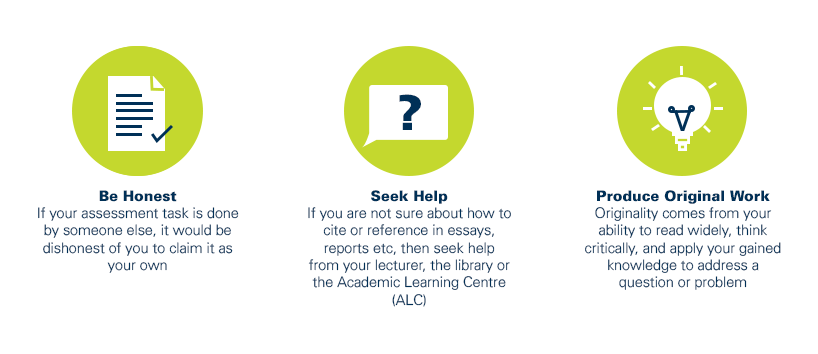
As a CQUniversity student you are expected to act honestly in all aspects of your academic work.
Any assessable work undertaken or submitted for review or assessment must be your own work. Assessable work is any type of work you do to meet the assessment requirements in the unit, including draft work submitted for review and feedback and final work to be assessed.
When you use the ideas, words or data of others in your assessment, you must thoroughly and clearly acknowledge the source of this information by using the correct referencing style for your unit. Using others’ work without proper acknowledgement may be considered a form of intellectual dishonesty.
Participating honestly, respectfully, responsibly, and fairly in your university study ensures the CQUniversity qualification you earn will be valued as a true indication of your individual academic achievement and will continue to receive the respect and recognition it deserves.
As a student, you are responsible for reading and following CQUniversity’s policies, including the Student Academic Integrity Policy and Procedure. This policy sets out CQUniversity’s expectations of you to act with integrity, examples of academic integrity breaches to avoid, the processes used to address alleged breaches of academic integrity, and potential penalties.
What is a breach of academic integrity?
A breach of academic integrity includes but is not limited to plagiarism, self-plagiarism, collusion, cheating, contract cheating, and academic misconduct. The Student Academic Integrity Policy and Procedure defines what these terms mean and gives examples.
Why is academic integrity important?
A breach of academic integrity may result in one or more penalties, including suspension or even expulsion from the University. It can also have negative implications for student visas and future enrolment at CQUniversity or elsewhere. Students who engage in contract cheating also risk being blackmailed by contract cheating services.
Where can I get assistance?
For academic advice and guidance, the Academic Learning Centre (ALC) can support you in becoming confident in completing assessments with integrity and of high standard.
What can you do to act with integrity?