Overview
In this unit you will be introduced to the theory of assessment, treatment and management of extraspinal articulations. This theory will underpin your clinical practice in the field of articular joint manipulation, adjustment and mobilisation.
Details
Pre-requisites or Co-requisites
Prerequisite: CHIR20002 Clinical Practice 1 Corequisite: CHIR20003 Clinical Practice 2
Important note: Students enrolled in a subsequent unit who failed their pre-requisite unit, should drop the subsequent unit before the census date or within 10 working days of Fail grade notification. Students who do not drop the unit in this timeframe cannot later drop the unit without academic and financial liability. See details in the Assessment Policy and Procedure (Higher Education Coursework).
Offerings For Term 2 - 2026
Attendance Requirements
All on-campus students are expected to attend scheduled classes - in some units, these classes are identified as a mandatory (pass/fail) component and attendance is compulsory. International students, on a student visa, must maintain a full time study load and meet both attendance and academic progress requirements in each study period (satisfactory attendance for International students is defined as maintaining at least an 80% attendance record).
Recommended Student Time Commitment
Each 6-credit Postgraduate unit at CQUniversity requires an overall time commitment of an average of 12.5 hours of study per week, making a total of 150 hours for the unit.
Class Timetable
Assessment Overview
Assessment Grading
This is a graded unit: your overall grade will be calculated from the marks or grades for each assessment task, based on the relative weightings shown in the table above. You must obtain an overall mark for the unit of at least 50%, or an overall grade of 'pass' in order to pass the unit. If any 'pass/fail' tasks are shown in the table above they must also be completed successfully ('pass' grade). You must also meet any minimum mark requirements specified for a particular assessment task, as detailed in the 'assessment task' section (note that in some instances, the minimum mark for a task may be greater than 50%). Consult the University's Grades and Results Policy for more details of interim results and final grades.
All University policies are available on the CQUniversity Policy site.
You may wish to view these policies:
- Grades and Results Policy
- Assessment Policy and Procedure (Higher Education Coursework)
- Review of Grade Procedure
- Student Academic Integrity Policy and Procedure
- Academic Progression Policy and Procedure
- Student Refund and Credit Balance Policy and Procedure
- Complaints Policy and Procedure
- Information and Communications Technology Acceptable Use Policy and Procedure
This list is not an exhaustive list of all University policies. The full list of University policies are available on the CQUniversity Policy site.
Feedback, Recommendations and Responses
Every unit is reviewed for enhancement each year. At the most recent review, the following staff and student feedback items were identified and recommendations were made.
Feedback from In person
Students prefer to have a weighting to the two practical assessments in the unit
It is recommended that the unit coordinator assign appropriate weighting to the two practical assessments within this unit.
- Relate the clinical anatomy and potential functional changes relevant to extra-spinal articulations
- Perform an appropriate physical examination of extraspinal joints, and determine appropriate differential diagnoses
- Interpret changes in extra-spinal articulations and identify appropriate therapeutic interventions
- Perform appropriate chiropractic techniques in the management of extraspinal abnormalities.
Links to CCEA Competency Elements:
Domains 6, 7, 8 and 9 as applicable to these regions.
Alignment of Assessment Tasks to Learning Outcomes
| Assessment Tasks | Learning Outcomes | |||
|---|---|---|---|---|
| 1 | 2 | 3 | 4 | |
| 1 - Written Assessment - 20% | ||||
| 2 - Practical Assessment - 15% | ||||
| 3 - Practical Assessment - 15% | ||||
| 4 - In-class Test(s) - 50% | ||||
Alignment of Graduate Attributes to Learning Outcomes
| Graduate Attributes | Learning Outcomes | |||
|---|---|---|---|---|
| 1 | 2 | 3 | 4 | |
| 1 - Knowledge | ||||
| 2 - Communication | ||||
| 3 - Cognitive, technical and creative skills | ||||
| 4 - Research | ||||
| 5 - Self-management | ||||
| 6 - Ethical and Professional Responsibility | ||||
| 7 - Leadership | ||||
| 8 - First Nations Knowledges | ||||
| 9 - Aboriginal and Torres Strait Islander Cultures | ||||
Textbooks
There are no required textbooks.
IT Resources
- CQUniversity Student Email
- Internet
- Unit Website (Moodle)
All submissions for this unit must use the referencing style: Vancouver
For further information, see the Assessment Tasks.
m.fernandez@cqu.edu.au
b.holtsbaum@cqu.edu.au
Week 1
Begin Date: 13 Jul 2026Module/Topic
Introduction lecture
Shoulder lecture
Chapter
Lecture notes and technique videos will be available on Moodle
Events and Submissions/Topic
Week 2
Begin Date: 20 Jul 2026Module/Topic
Manual therapy lecture
TMJ lecture
Chapter
Lecture notes and technique videos will be available on Moodle
Events and Submissions/Topic
Week 3
Begin Date: 27 Jul 2026Module/Topic
Elbow lecture
Chapter
Lecture notes and technique videos will be available on Moodle
Events and Submissions/Topic
Week 4
Begin Date: 03 Aug 2026Module/Topic
Hand lecture
Chapter
Lecture notes and technique videos will be available on Moodle
Events and Submissions/Topic
Week 5
Begin Date: 10 Aug 2026Module/Topic
Hip lecture
Chapter
Lecture notes and technique videos will be available on Moodle
Events and Submissions/Topic
Week 6
Begin Date: 17 Aug 2026Module/Topic
Knee lecture
Chapter
Lecture notes and technique videos will be available on Moodle
Events and Submissions/Topic
Vacation Week
Begin Date: 24 Aug 2026Module/Topic
Vacation week
Chapter
Events and Submissions/Topic
Week 7
Begin Date: 31 Aug 2026Module/Topic
Lower leg lecture
Chapter
Lecture notes and technique videos will be available on Moodle
Events and Submissions/Topic
Week 8
Begin Date: 07 Sep 2026Module/Topic
Clinical Reasoning in Extra‑Spinal Care
Goal setting lecture
Chapter
Lecture notes and technique videos will be available on Moodle
Events and Submissions/Topic
Clinical Reasoning Due: Week 8 Friday (11 Sept 2026) 11:59 pm AEST
Week 9
Begin Date: 14 Sep 2026Module/Topic
Behavioural change lecture
Chapter
Lecture notes will be available on Moodle
Events and Submissions/Topic
Week 10
Begin Date: 21 Sep 2026Module/Topic
Physical activity lecture
Chapter
Lecture notes will be available on Moodle
Events and Submissions/Topic
Week 11
Begin Date: 28 Sep 2026Module/Topic
Spinal Diagnosis lecture
Chapter
Lecture notes will be available on Moodle
Events and Submissions/Topic
Week 12
Begin Date: 05 Oct 2026Module/Topic
Tendinopathy lecture
Chapter
Lecture notes will be available on Moodle
Events and Submissions/Topic
Exam Week
Begin Date: 12 Oct 2026Module/Topic
Exam week
Chapter
Events and Submissions/Topic
In class test (50%)
In class test Due: Exam Week Thursday (15 Oct 2026) 11:00 am AEST
Vacation/Exam Week
Begin Date: 19 Oct 2026Module/Topic
Chapter
Events and Submissions/Topic
1 Practical Assessment
Practical Assessment (15%)
Assessment Type Practical Assessment
Task Description
This practical assessment will include both assessment and treatment components. Specifically, you may be asked to demonstrate motion palpation, and mobilisation or adjustive technique skills pertinent to the shoulder, elbow, wrist, and hand, and (possibly the) hip regions. This will be conducted in Week 5.
There are 3 sections to the practical assessment:
1. Hygiene, professionalism, patient handling, and consent
2. Technique
3. Clinical reasoning and justification
Following each demonstrated technique, students will be required to provide a brief verbal explanation (30–45 seconds) outlining:
- the clinical indication for the technique
- the key patient features supporting its use
- expected therapeutic effect
- one contraindication or scenario where it would not be appropriate
Students must demonstrate overall minimum competency across the assessment to achieve a passing standard.
AI Assessment scale tool descriptors:
1 - No Gen AI The assessment is completed entirely without Al assistance in a controlled environment, ensuring that students rely solely on their existing knowledge, understanding, and skills You must not use Al at any point during the assessment. You must demonstrate your core skills and knowledge.
Further, the 72-hour grace period does not apply.
Week 5 Tuesday (11 Aug 2026) 11:45 am AEST
Week 6 Tuesday (18 Aug 2026)
The assessment criteria for this task are designed to evaluate your ability to demonstrate safe, effective, and clinically appropriate practical skills, integrated with clinical reasoning.
A detailed rubric will be provided on Moodle. The assessment will examine your ability to:
- Demonstrate professionalism and patient safety, including infection control, patient handling, and obtaining informed consent
- Perform technical skills accurately and effectively, including correct patient positioning, practitioner setup, contact points, and controlled execution of mobilisation or adjustment techniques
- Apply clinical reasoning to justify technique selection, including identifying appropriate indications and linking decisions to patient presentation
- Explain the expected therapeutic effect of the selected technique
- Recognise contraindications and clinical risk, including when a technique would not be appropriate
No submission method provided.
- Perform an appropriate physical examination of extraspinal joints, and determine appropriate differential diagnoses
- Perform appropriate chiropractic techniques in the management of extraspinal abnormalities.
2 Practical Assessment
Practical Assessment (15%)
Assessment Type Practical Assessment
Task Description
This practical assessment will include both assessment and treatment components. Specifically, you may be asked to demonstrate motion palpation and mobilisation or adjustive technique skills pertinent to the hip, knee, ankle and foot regions. This will be conducted in Week 8.
There are 3 sections to the practical assessment:
1. Hygiene, professionalism, patient handling, and consent
2. Technique
3. Clinical reasoning and justification
Following each demonstrated technique, students will be required to provide a brief verbal explanation (30–45 seconds) outlining:
- the clinical indication for the technique
- the key patient features supporting its use
- expected therapeutic effect
- one contraindication or scenario where it would not be appropriate
Students must demonstrate overall minimum competency across the assessment to achieve a passing standard.
AI Assessment scale tool descriptors:
1 - No Gen AI The assessment is completed entirely without Al assistance in a controlled environment, ensuring that students rely solely on their existing knowledge, understanding, and skills You must not use Al at any point during the assessment. You must demonstrate your core skills and knowledge.
Further, the 72-hour grace period does not apply.
Assessment Due Date Week 8 Tuesday (08 Sept 2026) 11:45 am AEST
Week 8 Tuesday (8 Sept 2026) 11:45 am AEST
Week 10 Tuesday (22 Sept 2026)
You will receive formative feedback and your final result will be confirmed through Moodle.
The assessment criteria for this task are designed to evaluate your ability to demonstrate safe, effective, and clinically appropriate practical skills, integrated with clinical reasoning.
A detailed rubric will be provided on Moodle. The assessment will examine your ability to:
- Demonstrate professionalism and patient safety, including infection control, patient handling, and obtaining informed consent
- Perform technical skills accurately and effectively, including correct patient positioning, practitioner setup, contact points, and controlled execution of mobilisation or adjustment techniques
- Apply clinical reasoning to justify technique selection, including identifying appropriate indications and linking decisions to patient presentation
- Explain the expected therapeutic effect of the selected technique
- Recognise contraindications and clinical risk, including when a technique would not be appropriate
No submission method provided.
- Perform an appropriate physical examination of extraspinal joints, and determine appropriate differential diagnoses
- Perform appropriate chiropractic techniques in the management of extraspinal abnormalities.
3 Written Assessment
Clinical Reasoning Case (20%)
Task Description
You will be provided with a patient case involving an extraspinal complaint. The case will be provided via Moodle and will include incomplete and potentially conflicting clinical information. You are required to demonstrate clinical reasoning, rather than reproduce guideline-based answers, across a total of 900 words. This may include findings that do not align with a single diagnosis. You are expected to prioritise, justify, and make defensible clinical decisions under uncertainty. Marks are awarded based on the quality of reasoning, justification, and application to the case.
Part A – Clinical Reasoning (300 words)
A1 – Diagnoses & Justification
- Name your top 2 working diagnoses (ranked)
- Justify why #1 over #2 using specific case findings
A2 – Missing Information & Impact
- Identify key missing information (max 3 items)
- Explain how each would influence your diagnosis
Part B – Management Decision-Making (300 words)
B1 – Management Plan & Justification
- Outline management for first 1–2 sessions including:
- manual therapy (if appropriate)
- exercise / physical activity
- patient communication
- Justify prioritisation
B2 – What You Will NOT Do
- Identify what you would not do for management
- Justify why it is not appropriate
Part C – Clinical Judgement & Uncertainty (300 words)
C1 – When would you change your plan?
- Identify 1–2 clinical changes that would make you modify your approach
C2 – Alternative option
- Name one alternative management option
- Critically appraise your primary approach against this alternative, highlighting specific trade-offs that justify your choice.
AI Assessment scale tool descriptors:
To help you use Generative AI tools in a transparent, flexible, and responsible way, you are encouraged to explore the
following practical framework that guides your ethical and effective AI use in your assessment. For this assessment,
descriptor 2 is applied:
Al may be used for pre-task activities such as brainstorming, outlining and initial research. This level focuses on the
effective use of Al for planning, synthesis, and ideation, but assessments should emphasise the ability to develop and
refine these ideas independently.
You may use Al for planning, idea development, and research. Your final submission should show how you have
developed and refined these ideas.
Week 8 Friday (11 Sept 2026) 11:59 pm AEST
Week 12 Friday (9 Oct 2026)
The assessment criteria for this task are designed to evaluate your ability to demonstrate clinical reasoning, decision-making, and application of evidence to patient scenarios.
A detailed rubric will be provided on Moodle. The assessment will examine your ability to:
- Diagnose and prioritise clinical presentations, including justification of diagnostic reasoning
- Identify and interpret missing clinical information and explain its impact on decision-making
- Develop and justify a patient-specific management plan, including appropriate inclusion and exclusion of interventions
- Demonstrate clinical judgement, including recognising when to modify management and considering alternative approaches
- Apply evidence to support clinical reasoning and decision-making
- Relate the clinical anatomy and potential functional changes relevant to extra-spinal articulations
- Interpret changes in extra-spinal articulations and identify appropriate therapeutic interventions
4 In-class Test(s)
The in-class test will test theoretical knowledge presented across all 12 weeks of this term. It will include a mix of question types to allow you to demonstrate your knowledge. The test will be run through Moodle and will take place on campus in a pre-booked computer lab (TBA).
AI Assessment scale tool descriptors:
1 No Gen AI
The assessment is completed entirely without Al assistance in a controlled environment, ensuring that students rely solely on their existing knowledge, understanding, and skills
You must not use Al at any point during the assessment. You must demonstrate your core skills and knowledge.
Further, the 72-hour grace period does not apply.
Exam Week Thursday (15 Oct 2026) 11:00 am AEST
Exam is from 11am to 1pm
Vacation/Exam Week Friday (23 Oct 2026)
Any short answer questions that require moderation will be marked by hand so the results will be released one week later and or when the test has been completed by all students and is closed.
This assessment task will assess all unit learning outcomes, comprising lecture and tutorial material, which relate to the (chiropractic) management of extra-spinal abnormalities. It comprises clinical anatomy relevant to extra-spinal articulations, physical examination of extra-spinal joints, determining appropriate differential diagnoses, identifying appropriate therapeutic interventions and providing prognostic information.
Specifically learning outcomes relate to:
1. Relate the clinical anatomy and potential functional changes relevant to extra-spinal articulations
2. Perform an appropriate physical examination of extraspinal joints, and determine appropriate differential diagnoses
3. Interpret changes in extra-spinal articulations and identify appropriate therapeutic interventions
4. Perform appropriate chiropractic techniques in the management of extraspinal abnormalities.
- Relate the clinical anatomy and potential functional changes relevant to extra-spinal articulations
- Interpret changes in extra-spinal articulations and identify appropriate therapeutic interventions
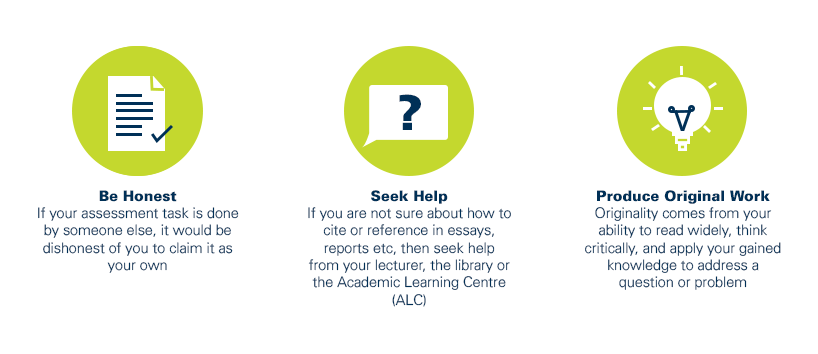
As a CQUniversity student you are expected to act honestly in all aspects of your academic work.
Any assessable work undertaken or submitted for review or assessment must be your own work. Assessable work is any type of work you do to meet the assessment requirements in the unit, including draft work submitted for review and feedback and final work to be assessed.
When you use the ideas, words or data of others in your assessment, you must thoroughly and clearly acknowledge the source of this information by using the correct referencing style for your unit. Using others’ work without proper acknowledgement may be considered a form of intellectual dishonesty.
Participating honestly, respectfully, responsibly, and fairly in your university study ensures the CQUniversity qualification you earn will be valued as a true indication of your individual academic achievement and will continue to receive the respect and recognition it deserves.
As a student, you are responsible for reading and following CQUniversity’s policies, including the Student Academic Integrity Policy and Procedure. This policy sets out CQUniversity’s expectations of you to act with integrity, examples of academic integrity breaches to avoid, the processes used to address alleged breaches of academic integrity, and potential penalties.
What is a breach of academic integrity?
A breach of academic integrity includes but is not limited to plagiarism, self-plagiarism, collusion, cheating, contract cheating, and academic misconduct. The Student Academic Integrity Policy and Procedure defines what these terms mean and gives examples.
Why is academic integrity important?
A breach of academic integrity may result in one or more penalties, including suspension or even expulsion from the University. It can also have negative implications for student visas and future enrolment at CQUniversity or elsewhere. Students who engage in contract cheating also risk being blackmailed by contract cheating services.
Where can I get assistance?
For academic advice and guidance, the Academic Learning Centre (ALC) can support you in becoming confident in completing assessments with integrity and of high standard.
What can you do to act with integrity?