Overview
In this unit, you will examine complex clinical and professional issues encountered in contemporary chiropractic practice, with a focus on professional standards, ethical responsibilities, and regulatory expectations within the broader healthcare environment. You will explore issues related to practice management procedures, patient care, professional conduct and the role of the chiropractor within multidisciplinary healthcare systems. The unit encourages critical consideration of stakeholder perspectives and the application of evidence and best practice when responding to professional and clinical challenges.
Details
Pre-requisites or Co-requisites
Co-requisite: CHIR20011
Important note: Students enrolled in a subsequent unit who failed their pre-requisite unit, should drop the subsequent unit before the census date or within 10 working days of Fail grade notification. Students who do not drop the unit in this timeframe cannot later drop the unit without academic and financial liability. See details in the Assessment Policy and Procedure (Higher Education Coursework).
Offerings For Term 2 - 2026
Attendance Requirements
All on-campus students are expected to attend scheduled classes - in some units, these classes are identified as a mandatory (pass/fail) component and attendance is compulsory. International students, on a student visa, must maintain a full time study load and meet both attendance and academic progress requirements in each study period (satisfactory attendance for International students is defined as maintaining at least an 80% attendance record).
Recommended Student Time Commitment
Each 6-credit Postgraduate unit at CQUniversity requires an overall time commitment of an average of 12.5 hours of study per week, making a total of 150 hours for the unit.
Class Timetable
Assessment Overview
Assessment Grading
This is a graded unit: your overall grade will be calculated from the marks or grades for each assessment task, based on the relative weightings shown in the table above. You must obtain an overall mark for the unit of at least 50%, or an overall grade of 'pass' in order to pass the unit. If any 'pass/fail' tasks are shown in the table above they must also be completed successfully ('pass' grade). You must also meet any minimum mark requirements specified for a particular assessment task, as detailed in the 'assessment task' section (note that in some instances, the minimum mark for a task may be greater than 50%). Consult the University's Grades and Results Policy for more details of interim results and final grades.
All University policies are available on the CQUniversity Policy site.
You may wish to view these policies:
- Grades and Results Policy
- Assessment Policy and Procedure (Higher Education Coursework)
- Review of Grade Procedure
- Student Academic Integrity Policy and Procedure
- Academic Progression Policy and Procedure
- Student Refund and Credit Balance Policy and Procedure
- Complaints Policy and Procedure
- Information and Communications Technology Acceptable Use Policy and Procedure
This list is not an exhaustive list of all University policies. The full list of University policies are available on the CQUniversity Policy site.
Feedback, Recommendations and Responses
Every unit is reviewed for enhancement each year. At the most recent review, the following staff and student feedback items were identified and recommendations were made.
Feedback from SUTE
Students felt the unit was a good introduction to topics important for regulated professionals.
It is recommended that the unit coordinator continue to ensure the unit content remains current and aligned with regulatory requirements and key issues in contemporary healthcare practice.
Feedback from SUTE
Students felt the unit was assessment heavy.
It is recommended that the unit coordinator review the assessment components and determine if the structure requires amendment.
- Evaluate complex clinical and professional issues within contemporary healthcare contexts, with reference to relevant professional standards, ethical principles, and regulatory requirements.
- Critically reflect on the perspectives and responsibilities of relevant stakeholders when responding to clinical or professional issues in a healthcare setting.
- Apply evidence-informed principles and standards to formulate appropriate management responses to identified clinical or professional concerns.
- Justify and defend management responses or professional decisions using ethical frameworks, standards, and contemporary best practice.
Alignment of Assessment Tasks to Learning Outcomes
| Assessment Tasks | Learning Outcomes | |||
|---|---|---|---|---|
| 1 | 2 | 3 | 4 | |
| 1 - Portfolio - 70% | ||||
| 2 - Online Quiz(zes) - 30% | ||||
Alignment of Graduate Attributes to Learning Outcomes
| Graduate Attributes | Learning Outcomes | |||
|---|---|---|---|---|
| 1 | 2 | 3 | 4 | |
| 1 - Knowledge | ||||
| 2 - Communication | ||||
| 3 - Cognitive, technical and creative skills | ||||
| 4 - Research | ||||
| 5 - Self-management | ||||
| 6 - Ethical and Professional Responsibility | ||||
| 7 - Leadership | ||||
| 8 - First Nations Knowledges | ||||
| 9 - Aboriginal and Torres Strait Islander Cultures | ||||
Textbooks
There are no required textbooks.
IT Resources
- CQUniversity Student Email
- Internet
- Unit Website (Moodle)
All submissions for this unit must use the referencing style: American Psychological Association 7th Edition (APA 7th edition)
For further information, see the Assessment Tasks.
k.grace@cqu.edu.au
Week 1 - Introduction
Begin Date: 13 Jul 2026Module/Topic
LECTURE 1 - WELCOME
- This lecture will give you an overview of the unit and go over general expectations including assessment requirements.
Chapter
All required content can be found on Moodle.
Events and Submissions/Topic
Week 2 - Laws, Boards and Associations
Begin Date: 20 Jul 2026Module/Topic
LECTURE 2 - CHIROPRACTIC BOARD OF AUSTRALIA CODE OF CONDUCT
- Introduction to the National Law
- Introduction to AHPRA Shared Code of Conduct (new)
- What's the difference? Board vs Associations
Chapter
All required content can be found on Moodle.
Events and Submissions/Topic
Week 3 - Professionalism & Ethical Principles
Begin Date: 27 Jul 2026Module/Topic
LECTURE 3 - PROFESSIONALISM
- This lecture will define professionalism in healthcare
- Discuss the importance of professionalism as a cornerstone of providing safe, effective and ethical health care practice
- Discuss attributs of professional behaviour
- Core ethical principles & ethical decision-making models
Chapter
All required content can be found on Moodle.
Events and Submissions/Topic
Week 4 - Professional Communication
Begin Date: 03 Aug 2026Module/Topic
LECTURE 4 - PROFFESIONAL COMMUNICATION
This lecture will discuss themes of different and important communication including:
- Effective communication with patients, families and colleagues
- Active listening and empathy
- Non-verbral communication and body language
- Note keeping in practice
- Social Media
Chapter
All required content can be found on Moodle.
Events and Submissions/Topic
Quiz 1
Week 5 - Professional Boundaries
Begin Date: 10 Aug 2026Module/Topic
LECTURE 5 - PROFFESIONAL BOUNDARIES: THE PRACTITIONER-PATIENT RELATIONSHIP
This lecture will
- Provide insight to professional boundaries that allow a practitioner and patient to engage safely in a therapeutic relationship.
- Provide valuable insight into the moral, ethical and legal considerations of this complex situation.
Chapter
All required content can be found on Moodle.
Events and Submissions/Topic
WEEK 6 - Patient Centred Care
Begin Date: 17 Aug 2026Module/Topic
LECTURE 6 - PATIENT CENTRED/ PERSON CENTRED CARE:
This lecture will:
- Introduce principles of 'Patient centred/ Person centred care'
- Discuss concepts that align with Patient-centred care
- Involving patients in decision making
- Respecting patient preferences and values
Chapter
All required content can be found on Moodle.
Events and Submissions/Topic
Vacation Week
Begin Date: 24 Aug 2026Module/Topic
Chapter
Events and Submissions/Topic
Week 7 - Sexism, Sexual Harrasment and Violence in Healthcare
Begin Date: 31 Aug 2026Module/Topic
LECTURE 7 - SEXISM, SEXUAL HARRASMENT AND VIOLENCE IN HEALTHCARE
- This lecture will explore inappropriate actions and conduct of a sexual or violent context as it pertains to the healthcare environment.
Chapter
All required content can be found on Moodle.
Events and Submissions/Topic
Week 8 - Mandatory Notifications
Begin Date: 07 Sep 2026Module/Topic
LECTURE 8 - MANDATORY NOTIFICATIONS
This lecture will:
- Discuss when and why it is mandatory to notify the regulatory body
- Personal circumstances
- Professional misconduct of a peer
Chapter
All required content can be found on Moodle.
Events and Submissions/Topic
Quiz 2
Week 9 - Interprofessional Collaboration
Begin Date: 14 Sep 2026Module/Topic
LECTURE 9 - INTERPROFESSIONAL COLLABORATION
This lecture will:
- Discuss the importance of teamwork in healthcare
- Roles and responsibilities
- Strategies for interprofessional collaboration
Chapter
All required content can be found on Moodle.
Events and Submissions/Topic
Week 10 - Risk Management
Begin Date: 21 Sep 2026Module/Topic
LECTURE 10 - RISK MANAGEMENT
This lecture will:
- Introduce risk management and systems that help to ensure reliable, safe and quality care
- Include CBA responsibilities and NSQHS Clinical Governance Standard
- Discuss the importanc of self-care and resilience
Chapter
All required content can be found on Moodle.
Events and Submissions/Topic
Week 11 - Artificial Intelligence and Digital Health in Clinical Practice
Begin Date: 28 Sep 2026Module/Topic
LECTURE 11 - ARTIFICIAL INTELLIGENCE (AI) AND DIGITAL HEALTH IN CLINICAL PRACTICE
This lecture will introduce/ discuss:
- AI-assisted documentation
- Clinical decision-support systems
- Ethical and legal considerations
- Data privacy and cybersecurity
Chapter
All required content can be found on Moodle.
Events and Submissions/Topic
Portfolio Project
Reflective Case Study Due: Week 11 Monday (28 Sept 2026) 5:00 pm AEST
Week 12 - Continued Professional Development (CPD) and AHPRA Registration Requirements
Begin Date: 05 Oct 2026Module/Topic
LECTURE 12 -
CONTINUAL PROFESSIONAL DEVELOPMENT AND LIFELONG LEARNING
This lecture will:
Explain the importance of continual professional development and lifelong learning requirements as they pertain to you as a professional
Why professional development is important to successful practice
Reflective Practice
AHPRA REGISTRATION REQUIREMENTS
Chapter
All required content can be found on Moodle.
Events and Submissions/Topic
Quiz 3
Exam Week
Begin Date: 12 Oct 2026Module/Topic
Chapter
Events and Submissions/Topic
Vacation/Exam Week
Begin Date: 19 Oct 2026Module/Topic
Chapter
Events and Submissions/Topic
1 Portfolio
This assessment is designed to evaluate your ability to apply professional judgement, critical thinking, and reflective practice to a complex clinical scenario. This assessment requires you to critically analyse a complex clinical case. Drawing on relveant professional standards, contemporary evidence and principles of reflective practice, you will evaluated the issues presented, justify appropriate courses of action and reflect on your own development as a future healthcare practitioner. The emphasis of this assessment is on the quality of your analysis, reasoning, and reflection.
This is a single, essay style asssessment that will be built of multiple components. You will be asked to:
- Address and reflect on multiple sub-topics the case.
- Critically appraise supporting material including AI-generated health advice and social media use in healthcare
- Reflect on challenging aspects of the case
Specific instructions and a grading rubric will be provided on Moodle. This assessment is to be your own individual work and not a result of collaboration with other students. Any identified cases of potential collusion will result in a breach of academic integrity case being raised.
Note: The 72-hour grace period will NOT apply to this assessment.
Gen AI Use - Level 2:
Students may use generative artificial intelligence (AI) tools to support planning, idea development, and the identification of relevant sources and concepts. However, students are expected to undertake the analysis, application, critical evaluation, and reflective components independently. The submitted work must represent the student's own judgement, reasoning, and written expression. Students may be required to explain and defend the content of their submission. Given that the case includes the use of AI in healthcare, students are encouraged to critically evaluate any AI-generated information they encounter rather than accepting it uncritically.
Week 11 Monday (28 Sept 2026) 5:00 pm AEST
Feedback will be provided within the University specified time frames
The criteria for this assessment will include:
An understanding and evaluation of complex clinical and professional issues in a contemporary health care/ chiropractic setting with reference to relevant professional standards, ethical principles and regulatory requirements.
Critical reflection on perspectives and responsibilities when responding to complex clinical and professional issues
The application of evidence-informed principles and standards to formulate appropriate mangement responses to the identified clinical and/ or professional concerns
Justifying or defending managment responses and decisions using ethical frameworks, standards and contemporary best practice solutions
Overall task completion
Language & grammar
General composition, overall written presentation
Referencing & the use of additional external references or resources
- Evaluate complex clinical and professional issues within contemporary healthcare contexts, with reference to relevant professional standards, ethical principles, and regulatory requirements.
- Critically reflect on the perspectives and responsibilities of relevant stakeholders when responding to clinical or professional issues in a healthcare setting.
- Apply evidence-informed principles and standards to formulate appropriate management responses to identified clinical or professional concerns.
- Justify and defend management responses or professional decisions using ethical frameworks, standards, and contemporary best practice.
2 Online Quiz(zes)
Each quiz will be composed of topical short answer questions and reflection on ethical and professional considerations pertaining to patient care, the role of the chiropractor and compliance with the moral, ethical and legal requirements of practice.
Quizzes will open on Monday at 9:00am and close Wednesday at 5:00 pm of weeks 4, 8 and 12. Each quiz will be set for 30 minutes. Your quiz is to be your own individual work and not a result of collaboration with other students. Any identified cases of potential collusion will result in a breach of academic integrity case being raised.
Note: The 72-hour grace period does NOT apply to this assessment.
If appropriate and time allows, you will be able to use resources provided in the unit. The information source MUST be identified in your answers and this MUST be verifiable.
Gen AI level 1: you must not use AI at any point during the assessment.
Weeks 4, 8 and 12
Feedback will be provided within the University specified time frames
The criteria for this assessment will include;
Ability to identify more complex moral, ethical and legal requirements of chiropractic practice
Ability to communicate professionally the moral, ethical and legal obligations of a chiropractor
Overall task completion
Language & grammar
Critical reflection and logic
- Evaluate complex clinical and professional issues within contemporary healthcare contexts, with reference to relevant professional standards, ethical principles, and regulatory requirements.
- Critically reflect on the perspectives and responsibilities of relevant stakeholders when responding to clinical or professional issues in a healthcare setting.
- Apply evidence-informed principles and standards to formulate appropriate management responses to identified clinical or professional concerns.
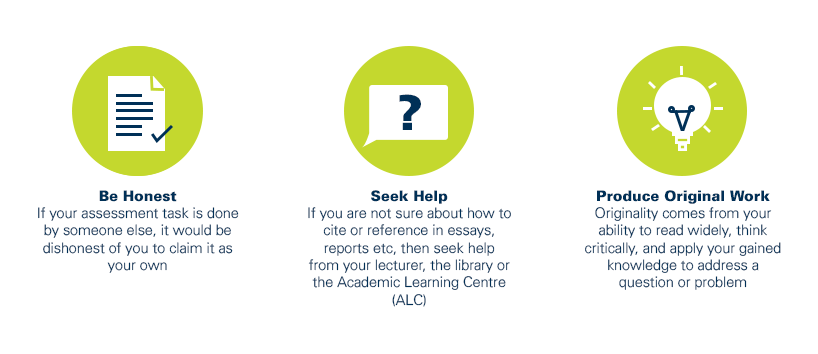
As a CQUniversity student you are expected to act honestly in all aspects of your academic work.
Any assessable work undertaken or submitted for review or assessment must be your own work. Assessable work is any type of work you do to meet the assessment requirements in the unit, including draft work submitted for review and feedback and final work to be assessed.
When you use the ideas, words or data of others in your assessment, you must thoroughly and clearly acknowledge the source of this information by using the correct referencing style for your unit. Using others’ work without proper acknowledgement may be considered a form of intellectual dishonesty.
Participating honestly, respectfully, responsibly, and fairly in your university study ensures the CQUniversity qualification you earn will be valued as a true indication of your individual academic achievement and will continue to receive the respect and recognition it deserves.
As a student, you are responsible for reading and following CQUniversity’s policies, including the Student Academic Integrity Policy and Procedure. This policy sets out CQUniversity’s expectations of you to act with integrity, examples of academic integrity breaches to avoid, the processes used to address alleged breaches of academic integrity, and potential penalties.
What is a breach of academic integrity?
A breach of academic integrity includes but is not limited to plagiarism, self-plagiarism, collusion, cheating, contract cheating, and academic misconduct. The Student Academic Integrity Policy and Procedure defines what these terms mean and gives examples.
Why is academic integrity important?
A breach of academic integrity may result in one or more penalties, including suspension or even expulsion from the University. It can also have negative implications for student visas and future enrolment at CQUniversity or elsewhere. Students who engage in contract cheating also risk being blackmailed by contract cheating services.
Where can I get assistance?
For academic advice and guidance, the Academic Learning Centre (ALC) can support you in becoming confident in completing assessments with integrity and of high standard.
What can you do to act with integrity?