Overview
This unit will introduce key concepts in small business management as well as techniques for being successful in a clinical business environment. It will further enhance your ability to communicate in a professional manner. Areas of specialisation will be introduced allowing you to investigate the different types of chiropractic practices that exist. You will have the opportunity to participate in active and applied learning through a variety of mixed learning modes. This unit is aimed at producing work ready graduates that understand the role of business in clinical practice while providing you with a competitive edge for securing employment in Australia.
Details
Pre-requisites or Co-requisites
There are no requisites for this unit.
Important note: Students enrolled in a subsequent unit who failed their pre-requisite unit, should drop the subsequent unit before the census date or within 10 working days of Fail grade notification. Students who do not drop the unit in this timeframe cannot later drop the unit without academic and financial liability. See details in the Assessment Policy and Procedure (Higher Education Coursework).
Offerings For Term 3 - 2026
Attendance Requirements
All on-campus students are expected to attend scheduled classes - in some units, these classes are identified as a mandatory (pass/fail) component and attendance is compulsory. International students, on a student visa, must maintain a full time study load and meet both attendance and academic progress requirements in each study period (satisfactory attendance for International students is defined as maintaining at least an 80% attendance record).
Recommended Student Time Commitment
Each 6-credit Postgraduate unit at CQUniversity requires an overall time commitment of an average of 12.5 hours of study per week, making a total of 150 hours for the unit.
Class Timetable
Assessment Overview
| Assessment Task | Part Weighting (% of assessment) |
Assessment Security Level | Gen AI Guidance Levels |
|---|---|---|---|
| 1. Presentation and Written Assessment (60% of unit ) | |||
| Presentation and Written Assessment (Presentation and Written Assessment) | 100% of 60% | Medium | AI Integration (Authentic Professional Use) |
| 2. Portfolio (40% of unit ) | |||
| Portfolio (Portfolio) | 100% of 40% | Low | AI Integration (Authentic Professional Use) |
Assessment Grading
This is a graded unit: your overall grade will be calculated from the marks or grades for each assessment task, based on the relative weightings shown in the table above. You must obtain an overall mark for the unit of at least 50%, or an overall grade of 'pass' in order to pass the unit. If any 'pass/fail' tasks are shown in the table above they must also be completed successfully ('pass' grade). You must also meet any minimum mark requirements specified for a particular assessment task, as detailed in the 'assessment task' section (note that in some instances, the minimum mark for a task may be greater than 50%). Consult the University's Grades and Results Policy for more details of interim results and final grades.
All University policies are available on the CQUniversity Policy site.
You may wish to view these policies:
- Grades and Results Policy
- Assessment Policy and Procedure (Higher Education Coursework)
- Review of Grade Procedure
- Student Academic Integrity Policy and Procedure
- Academic Progression Policy and Procedure
- Student Refund and Credit Balance Policy and Procedure
- Complaints Policy and Procedure
- Information and Communications Technology Acceptable Use Policy and Procedure
This list is not an exhaustive list of all University policies. The full list of University policies are available on the CQUniversity Policy site.
Feedback, Recommendations and Responses
Every unit is reviewed for enhancement each year. At the most recent review, the following staff and student feedback items were identified and recommendations were made.
Feedback from Student feedback and teaching reflection
Students indicated that earlier release of assessment rubrics and clearer expectations at the start of the term would further support their learning experience.
It is recommended that the unit coordinator ensures timely release of all assessment material.
Feedback from Student feedback and teaching reflection
Students valued the applied, real‑world teaching and lived business experience
It is recommended that the unit coordinator continues integrating real-world examples and lived business experience into teaching.
Feedback from Student feedback and teaching reflection
Students noted that core lecture content was outdated and not sufficiently aligned with current Australian employment laws.
It is recommended that the unit coordinator updates the core lecture content regularly to ensure it reflects current Australian employment laws and contemporary workplace practices.
- Discuss the key aspects of running an efficient clinical practice
- Investigate and describe different specialisations of clinical practices
- Communicate in a professional manner
- Apply introductory knowledge of budgeting, risk analysis, marketing, practice and staff management in a clinical practice.
- Discuss the key aspects of running an efficient clinical practice. - CCEA unit 2
- Investigate different specialisations of clinical practices. - CCEA 2
- Apply introductory knowledge of budgeting, risk analysis, marketing, practice and staff management in a clinical practice - CCEA unit 2, unit 3, unit 4, unit 5, unit 9 subsection 9.4
- Communicate in a professional manner and build an inter-professional network - CCEA unit 1, unit 2, unit 3, unit 4, unit 5, Unit 6 subsection 6.7, unit 7 subsection 7.2, unit 9 subsection 9.4
Alignment of Assessment Tasks to Learning Outcomes
| Assessment Tasks | Learning Outcomes | |||
|---|---|---|---|---|
| 1 | 2 | 3 | 4 | |
|
1.
Assessment 1
(60% of unit )
Presentation and Written Assessment
|
||||
|
2.
Assessment 2
(40% of unit )
Portfolio
|
||||
Alignment of Graduate Attributes to Learning Outcomes
| Graduate Attributes | Learning Outcomes | |||
|---|---|---|---|---|
| 1 | 2 | 3 | 4 | |
| 1 - Knowledge | ||||
| 2 - Communication | ||||
| 3 - Cognitive, technical and creative skills | ||||
| 4 - Research | ||||
| 5 - Self-management | ||||
| 6 - Ethical and Professional Responsibility | ||||
| 7 - Leadership | ||||
| 8 - First Nations Knowledges | ||||
| 9 - Aboriginal and Torres Strait Islander Cultures | ||||
Textbooks
There are no required textbooks.
IT Resources
- CQUniversity Student Email
- Internet
- Unit Website (Moodle)
All submissions for this unit must use the referencing style: American Psychological Association 7th Edition (APA 7th edition)
For further information, see the Assessment Tasks.
m.fernandez@cqu.edu.au
Introduction
Begin Date: 09 Nov 2026Module/Topic
Introduction
Chapter
Events and Submissions/Topic
Weekly online tutorial (Zoom). Please refer to the published timetable for current scheduling details.
Organisational Behaviour
Begin Date: 16 Nov 2026Module/Topic
Organisational Behaviour
Chapter
https://hbr.org/2009/09/nummi-what-toyota-learned https://www.thisamericanlife.org/561/nummi-2015
Events and Submissions/Topic
Weekly online tutorial (Zoom). Please refer to the published timetable for current scheduling details.
Marketing 1
Begin Date: 23 Nov 2026Module/Topic
Marketing 1
Chapter
Events and Submissions/Topic
Weekly online tutorial (Zoom). Please refer to the published timetable for current scheduling details.
Marketing 2
Begin Date: 30 Nov 2026Module/Topic
Marketing 2
Chapter
Events and Submissions/Topic
Weekly online tutorial (Zoom). Please refer to the published timetable for current scheduling details.
Risk Management and Strategic Planning
Begin Date: 07 Dec 2026Module/Topic
Risk Management and Strategic Planning
Chapter
Events and Submissions/Topic
Weekly online tutorial (Zoom). Please refer to the published timetable for current scheduling details.
Accounting
Begin Date: 14 Dec 2026Module/Topic
Accounting
Chapter
Events and Submissions/Topic
Weekly online tutorial (Zoom). Please refer to the published timetable for current scheduling details.
Mid-Term Break
Begin Date: 21 Dec 2026Module/Topic
Chapter
Events and Submissions/Topic
Staff Management
Begin Date: 04 Jan 2027Module/Topic
Staff Management
Chapter
Events and Submissions/Topic
Weekly online tutorial (Zoom). Please refer to the published timetable for current scheduling details.
Patient Management
Begin Date: 11 Jan 2027Module/Topic
Patient Management
Chapter
Events and Submissions/Topic
Weekly online tutorial (Zoom). Please refer to the published timetable for current scheduling details.
Contracts and Jobs
Begin Date: 18 Jan 2027Module/Topic
Contracts and Jobs
Chapter
Events and Submissions/Topic
Weekly online tutorial (Zoom). Please refer to the published timetable for current scheduling details.
Business Plan Development
Begin Date: 25 Jan 2027Module/Topic
How to write a business plan
Resources for developing business plans - see Moodle
Chapter
Events and Submissions/Topic
Weekly online tutorial (Zoom). Please refer to the published timetable for current scheduling details.
Portfolio Due: Week 10 Friday (29 Jan 2027) 5:00 pm AEST
Business plan completion and submission
Begin Date: 01 Feb 2027Module/Topic
Chapter
Events and Submissions/Topic
Weekly online tutorial (Zoom). Please refer to the published timetable for current scheduling details.
Presentation and Written Assessment Due: Week 11 Friday (5 Feb 2027) 5:00 pm AEST
Review
Begin Date: 08 Feb 2027Module/Topic
Review week
Chapter
Events and Submissions/Topic
Weekly online tutorial (Zoom). Please refer to the published timetable for current scheduling details.
Module/Topic
Chapter
Events and Submissions/Topic
Module/Topic
Review week
Chapter
Events and Submissions/Topic
1. Presentation and Written Assessment ( 60% of unit )
Presentation and Written Assessment
This assessment consists of two individual components:
Part A: Written business plan
Develop a business plan for a future clinical practice, drawing on the concepts and information covered in this unit. You
should identify the type of practice you would like to establish and complete a business plan using a template of your
choice.
Business plan templates are available on the Moodle site, including templates from Business Queensland, the Australian
Government and the Brisbane Chamber of Commerce. You may also use another suitable business plan template
available online.
Your completed business plan must be submitted through Moodle by 5:00 pm AEST on Friday of Week 11, 5 February
2027.
Part B: Pre-recorded video presentation
Prepare an individual five-minute pre-recorded video presentation, summarising the key elements of your completed
business plan and the proposed clinical practice.
The video presentation must be submitted through Moodle in accordance with the submission instructions provided on
the Moodle site.
Assessment Due Date
Week 11 Friday (5 Feb 2027) 5:00 pm AEST
The written business plan and pre-recorded video presentation are due by 5:00 pm AEST on Friday of Week 11.
Return Date to Students
Exam Week Friday (19 Feb 2027)
You will receive formative feedback, and your result will be confirmed through Moodle.
Weighting
60%
Minimum mark or grade
50%
Week 11 Friday (5 Feb 2027) 5:00 pm AEST
Exam Week Friday (19 Feb 2027)
You will receive formative feedback, and your result will be confirmed through Moodle.
To pass this assessment, you must:
- complete and submit a written business plan using an appropriate business plan template; and
- submit a five-minute pre-recorded video presentation highlighting the key elements of your business plan
A minimum mark of 50% must be achieved in both the written business plan (Part A) and the pre-recorded video presentation (Part B) to pass this assessment task.
A detailed marking rubric will be available on the Moodle site.
Referencing Style
American Psychological Association 7th Edition (APA 7th edition)
Submission
Online
Learning Outcomes Assessed
- Discuss the key aspects of running an efficient clinical practice
- Investigate and describe different specialisations of clinical practices
- Communicate in a professional manner
- Apply introductory knowledge of budgeting, risk analysis, marketing, practice and staff management in a clinical
practice.
Graduate Attributes
- Knowledge
- Communication
- Cognitive, technical and creative skills
- Research
- Self-management
- Ethical and Professional Responsibility
- Discuss the key aspects of running an efficient clinical practice
- Investigate and describe different specialisations of clinical practices
- Communicate in a professional manner
- Apply introductory knowledge of budgeting, risk analysis, marketing, practice and staff management in a clinical practice.
2. Portfolio ( 40% of unit )
Portfolio
This assessment requires you to compile a portfolio of responses to the weekly activities presented in the unit lectures
and tutorials.
You must complete one individual response for each nominated weekly activity. You are encouraged to post each
response to the Moodle Discussion Forum during the relevant teaching week to receive formative feedback.
Each post should:
- be your own work;
- respond directly to the nominated weekly topic or activity;
- be written clearly and concisely;
- not normally exceed 200 words; and
- be posted to the Moodle Discussion Forum during the relevant teaching week.
For the final assessment submission, collate all weekly posts into one Word document and submit the completed
portfolio through Moodle by the assessment due date.
Tutorial activities form part of the learning experience in this unit. Active participation in weekly tutorial
discussions will support your completion of the portfolio activities.
Weighting
40%
Week 10 Friday (29 Jan 2027) 5:00 pm AEST
Exam Week Friday (19 Feb 2027)
To pass this assessment, you must complete and submit the required weekly portfolio activities. The portfolio topics
reflect the material covered in the unit lectures and tutorials.
The final submission must include all required weekly responses, collated into a single Word document.
A detailed marking rubric will be available on the Moodle site.
Referencing Style
American Psychological Association 7th Edition (APA 7th edition)
Submission
Online
Learning Outcomes Assessed
- Discuss the key aspects of running an efficient clinical practice
- Investigate and describe different specialisations of clinical practices
- Communicate in a professional manner
- Apply introductory knowledge of budgeting, risk analysis, marketing, practice and staff management in a clinical
practice.
Graduate Attributes
- Knowledge
- Communication
- Cognitive, technical and creative skills
- Self-management
- Ethical and Professional Responsibility
- Leadership
- Discuss the key aspects of running an efficient clinical practice
- Investigate and describe different specialisations of clinical practices
- Communicate in a professional manner
- Apply introductory knowledge of budgeting, risk analysis, marketing, practice and staff management in a clinical practice.
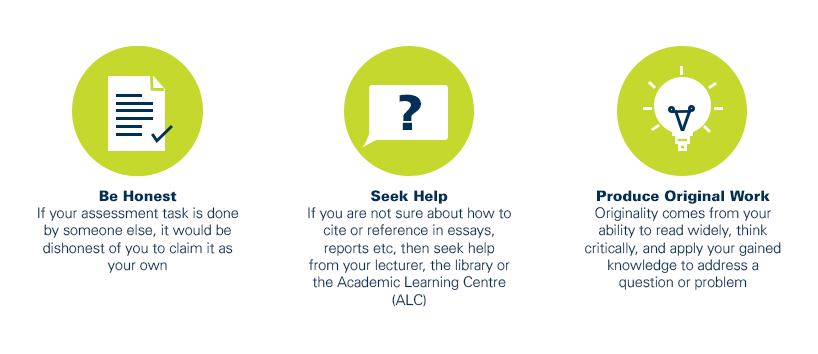
As a CQUniversity student you are expected to act honestly in all aspects of your academic work.
Any assessable work undertaken or submitted for review or assessment must be your own work. Assessable work is any type of work you do to meet the assessment requirements in the unit, including draft work submitted for review and feedback and final work to be assessed.
When you use the ideas, words or data of others in your assessment, you must thoroughly and clearly acknowledge the source of this information by using the correct referencing style for your unit. Using others’ work without proper acknowledgement may be considered a form of intellectual dishonesty.
Participating honestly, respectfully, responsibly, and fairly in your university study ensures the CQUniversity qualification you earn will be valued as a true indication of your individual academic achievement and will continue to receive the respect and recognition it deserves.
As a student, you are responsible for reading and following CQUniversity’s policies, including the Student Academic Integrity Policy and Procedure. This policy sets out CQUniversity’s expectations of you to act with integrity, examples of academic integrity breaches to avoid, the processes used to address alleged breaches of academic integrity, and potential penalties.
What is a breach of academic integrity?
A breach of academic integrity includes but is not limited to plagiarism, self-plagiarism, collusion, cheating, contract cheating, and academic misconduct. The Student Academic Integrity Policy and Procedure defines what these terms mean and gives examples.
Why is academic integrity important?
A breach of academic integrity may result in one or more penalties, including suspension or even expulsion from the University. It can also have negative implications for student visas and future enrolment at CQUniversity or elsewhere. Students who engage in contract cheating also risk being blackmailed by contract cheating services.
Where can I get assistance?
For academic advice and guidance, the Academic Learning Centre (ALC) can support you in becoming confident in completing assessments with integrity and of high standard.
What can you do to act with integrity?