Overview
In this unit you will examine the numerous social complexities that exist in the delivery of healthcare and how those complexities impact practice. You will examine different perspectives on health and their influence on decision making, and then discuss ways to balance personal views with available scientific evidence and rationale. You will also study factors that affect the health outcomes of the individual as they apply to your obligation to deliver evidence-based, patient-centred health care.
Details
Pre-requisites or Co-requisites
There are no requisites for this unit.
Important note: Students enrolled in a subsequent unit who failed their pre-requisite unit, should drop the subsequent unit before the census date or within 10 working days of Fail grade notification. Students who do not drop the unit in this timeframe cannot later drop the unit without academic and financial liability. See details in the Assessment Policy and Procedure (Higher Education Coursework).
Offerings For Term 3 - 2026
Attendance Requirements
All on-campus students are expected to attend scheduled classes - in some units, these classes are identified as a mandatory (pass/fail) component and attendance is compulsory. International students, on a student visa, must maintain a full time study load and meet both attendance and academic progress requirements in each study period (satisfactory attendance for International students is defined as maintaining at least an 80% attendance record).
Recommended Student Time Commitment
Each 6-credit Postgraduate unit at CQUniversity requires an overall time commitment of an average of 12.5 hours of study per week, making a total of 150 hours for the unit.
Class Timetable
Assessment Overview
| Assessment Task | Part Weighting (% of assessment) |
Assessment Security Level | Gen AI Guidance Levels |
|---|---|---|---|
| 1. Literature review (35% of unit ) | |||
| Literature review (Written Assessment) | 100% of 35% | Low | AI Integration (Authentic Professional Use) |
| 2. Health media item (35% of unit · 2 parts ) | |||
| Part 1 – Health media item - presentation (Presentation) | 40% of 35% | Medium | AI Integration (Authentic Professional Use) |
| Part 2 – Health media item - oral defence (Interactive Oral Assessments) | 60% of 35% | Medium | AI Integration (Authentic Professional Use) |
| 3. End of Term Test (30% of unit ) | |||
| End of term test (In-class Test(s)) | 100% of 30% | High | No Gen AI Use |
Assessment Grading
This is a graded unit: your overall grade will be calculated from the marks or grades for each assessment task, based on the relative weightings shown in the table above. You must obtain an overall mark for the unit of at least 50%, or an overall grade of 'pass' in order to pass the unit. If any 'pass/fail' tasks are shown in the table above they must also be completed successfully ('pass' grade). You must also meet any minimum mark requirements specified for a particular assessment task, as detailed in the 'assessment task' section (note that in some instances, the minimum mark for a task may be greater than 50%). Consult the University's Grades and Results Policy for more details of interim results and final grades.
All University policies are available on the CQUniversity Policy site.
You may wish to view these policies:
- Grades and Results Policy
- Assessment Policy and Procedure (Higher Education Coursework)
- Review of Grade Procedure
- Student Academic Integrity Policy and Procedure
- Academic Progression Policy and Procedure
- Student Refund and Credit Balance Policy and Procedure
- Complaints Policy and Procedure
- Information and Communications Technology Acceptable Use Policy and Procedure
This list is not an exhaustive list of all University policies. The full list of University policies are available on the CQUniversity Policy site.
Feedback, Recommendations and Responses
Every unit is reviewed for enhancement each year. At the most recent review, the following staff and student feedback items were identified and recommendations were made.
Feedback from SUTE
Students reported that professional engagement opportunities were important to understanding registration and legislative concepts in chiropractic practice.
It is recommended the Unit Coordinator continue to provide early engagement opportunities, such as through the Chiropractic Board of Australia presentation, to students.
Feedback from SUTE
Some students felt the assessment guidelines and rubric were vague or unclear which introduced confusion between students in regard to assessment requirements.
It is recommended the Unit Coordinator continue to work on greater opportunities for communication, resolving conflicts between student expectations and providing clearer guidelines and rubrics for assessment.
Feedback from Unit Coordinator self reflection
Students would benefit from an update of content into Moodle Workbooks to enhance their learning and clarity on assessment tasks.
It is recommended the Unit coordinator update content to Moodle Workbooks to enhance student learning and clarity on assessment tasks.
- Provide a balanced judgement of patient centred and evidence based care in health care decision making
- Make informed decisions using the best available evidence for patient management
- Recommend appropriate healthcare advice which considers the ethics associated with a limitation of knowledge/evidence, potential conflicts of interest, cultural, social and other differences which may impact an individual’s health outcomes.
LO1 links to CCEA Competency Element 1.2 Public Health Concepts with the Performance Indicators: Understanding of health problems during special life periods including ageing, paediatrics and adolescence; recognition of the role that chiropractors can play in overall public health practice, including public hospitals; understanding the special areas of women’s and men’s health and the cultural aspects of public health; and understanding the concept of increasing the patient’s responsibility for his/her own health care.
LO2 links to (a) CCEA Competency Element 11.1 Develops a personal ability to seek out and apply scientific information with the Performance Indicators: Ability to critically appraise the literature and apply evidence-based problem solving in practice; understand the on-going necessity for continuing education; demonstrate communication skills, an ability to speak in public and give a case presentation with an adequate literature review; and show an understanding of research methods and their significance in modern health care; and (b) to CCEA Competency Element 3.1 Awareness of professional ethos, organisation and history with the Performance Indicators: Is aware of the profession’s special characteristics, aspirations and strengths; is aware of the profession’s organisations locally, nationally and internationally; and of its relations to other professions and organisations, e.g WHO; is aware of the major historical mile posts of the profession, both locally and internationally.
LO3 links to CCEA Competency Element 3.2 Awareness of professionalism with the Performance Indicators: Assesses personal standards of practice; and recognises the need for self-directedness in further and continuing education to extend knowledge and refine skills.
Alignment of Assessment Tasks to Learning Outcomes
| Assessment Tasks | Learning Outcomes | ||
|---|---|---|---|
| 1 | 2 | 3 | |
|
1.
Assessment 1
(35% of unit )
Written Assessment
|
|||
|
2.
Assessment 2
(35% of unit · 2 parts
)
Part 1 -
Presentation
Part 2 -
Interactive Oral Assessments
|
|||
|
3.
Assessment 3
(30% of unit )
In-class Test(s)
|
|||
Alignment of Graduate Attributes to Learning Outcomes
| Graduate Attributes | Learning Outcomes | ||
|---|---|---|---|
| 1 | 2 | 3 | |
| 1 - Knowledge | |||
| 2 - Communication | |||
| 3 - Cognitive, technical and creative skills | |||
| 4 - Research | |||
| 5 - Self-management | |||
| 6 - Ethical and Professional Responsibility | |||
| 7 - Leadership | |||
| 8 - First Nations Knowledges | |||
| 9 - Aboriginal and Torres Strait Islander Cultures | |||
Textbooks
There are no required textbooks.
IT Resources
- CQUniversity Student Email
- Internet
- Unit Website (Moodle)
All submissions for this unit must use the referencing style: Vancouver
For further information, see the Assessment Tasks.
k.deluca@cqu.edu.au
Week 1 - Introduction to social perspectives of health
Begin Date: 09 Nov 2026Module/Topic
Lecture: Introduction to SPOH
Online tutorial: Introduction to SPOH
Chapter
Events and Submissions/Topic
Week 2 - Drivers of evidence based care
Begin Date: 16 Nov 2026Module/Topic
Lecture: Drivers of evidence based healthcare
Online tutorial: Chiropractic Board of Australia presentation (compulsory).
Chapter
Events and Submissions/Topic
Week 3 - Building a safety culture in Chiropractic
Begin Date: 23 Nov 2026Module/Topic
Lecture: Building a safety culture in Chiropractic
Online tutorial: SafetyNET
Chapter
Events and Submissions/Topic
Week 4 - Social media and healthcare
Begin Date: 30 Nov 2026Module/Topic
Lecture: Social media and healthcare
Online tutorial: Social media and healthcare
Chapter
Events and Submissions/Topic
Week 5 - Social determinants of health
Begin Date: 07 Dec 2026Module/Topic
Lecture: Social determinants of health
Online tutorial: Social determinants of health
Chapter
Events and Submissions/Topic
WEEK 6 - Social determinants of health
Begin Date: 14 Dec 2026Module/Topic
Lecture: Social determinants of health
Online tutorial: Social determinants of health
Chapter
Events and Submissions/Topic
Mid-Term Break
Begin Date: 21 Dec 2026Module/Topic
Chapter
Events and Submissions/Topic
Week 7 - Aboriginal and Torres Strait Islander Peoples AND Unique health concerns for Aboriginal and Torres Strait Islander peoples
Begin Date: 04 Jan 2027Module/Topic
Lecture: Aboriginal and Torres Strait Island peoples and Unique health concerns for Aboriginal and Torres Straight Islander peoples
No online tutorial: Clinic entrance recovery
Chapter
Events and Submissions/Topic
Week 8 - Mental health (1)
Begin Date: 11 Jan 2027Module/Topic
Lecture: Mental health 1
Online tutorial: Chiropractic care of Aboriginal and Torres Strait Island peoples
Chapter
Events and Submissions/Topic
Week 9 - Mental health (2)
Begin Date: 18 Jan 2027Module/Topic
Lecture: Mental health 2
Online tutorial: Mental Health with Dr. David McNaughton
Chapter
Events and Submissions/Topic
Week 10 - Health promotion and healthy ageing
Begin Date: 25 Jan 2027Module/Topic
Lecture: Health promotion and healthy ageing
Online tutorial: Health promotion and healthy ageing
Chapter
Events and Submissions/Topic
Health media item - oral defence Due: Week 10 Thursday (28 Jan 2027) 5:00 pm AEST
Week 11 - Rural, regional and remote health
Begin Date: 01 Feb 2027Module/Topic
Lecture: Rural, regional and remote health
Online tutorial: Rural, regional and remote health
Chapter
Events and Submissions/Topic
Week 12 - Disability and rehabilitation
Begin Date: 08 Feb 2027Module/Topic
Lecture: Disability and rehabilitation
Online tutorial: Disability and rehabilitation
Chapter
Events and Submissions/Topic
Week 13 - Exam Week
Begin Date: 15 Feb 2027Module/Topic
Chapter
Events and Submissions/Topic
1. Literature review ( 35% of unit )
Written Assessment
In this assessment, you will select a topic related to the social perspectives of health unit including, but not limited to, cultural perspectives, patient safety, health promotion, healthy ageing, rural and regional health inequities, and/or social determinants of health and undertake a literature review of that topic.
In this assessment, you will then develop a structured research question, undertake a search of a relevant electronic database, systematically screen the search yield and choose one paper from the final included studies that answers the research question. You will then critique and synthesise your chosen research paper and present this as a written literature review.
There are two items for submission. You should submit a PDF file of the written assessment (literature review). This item should be ~750 words +/- 10%, formatted in arial font with 1.5 spacing and referenced (not part of the word count). Your search strategy (including MeSH or Emtree headings and BOOLEAN operators as a search string) and screening results (including PRISMA flowchart) can be included as appendices within the document. The recommended in-text and reference citations formatting style is Vancouver. Students should also submit a PDF file of the annotated research paper demonstrating your critical evaluation, direct annotation and academic autonomy.
----------------------
To help you use Generative AI tools in a transparent, flexible, and responsible way, you are encouraged to explore the following practical framework that guides your ethical and effective AI use in your assessment. All AI Assessment scale tool descriptors have been provided on the CHIR13012 Unit Documents & Materials.
For this assessment, AI Assessment descriptor 2 is applied.
Descriptor 2: AI PLANNING - Al may be used for pre-task activities such as brainstorming, outlining and initial research. This level focuses on the effective use of Al for planning, synthesis, and ideation, but assessments should emphasise the ability to develop and refine these ideas independently. You may use Al for planning, idea development, and research. Your final submission should show how you have developed and refined these ideas.
Week 6 Thursday (17 Dec 2026) 5:00 pm AEST
Students should submit 2 PDF files, uploaded to Moodle prior to the due date (Thursday 17th October, 2026)
Week 8 Thursday (14 Jan 2027)
The assessment will be returned with feedback relevant to the assessment guidelines and marking rubric provided.
In this assessment students need to develop a structured research question, undertake a search of a relevant electronic database, systematically screen the search yield and choose one paper from the final included studies that answers the research question. Students will then critique and synthesise their chosen research paper and present this as a written literature review. A detailed assessment guideline and marking rubric can be found on Moodle.
Instructions for assessment:
1. Develop a structured research question and search the literature,
2. Report your search strategy (including MeSH or Emtree headings and BOOLEAN operators as a search string) and results (including PRISMA flowchart)
3. Choose one research paper from your final number of included studies,
4. Synthesise the results of the research paper and discuss clinical implications for chiropractic practice as a literature review.
5. Submit a PDF of the annotated research paper.
- Make informed decisions using the best available evidence for patient management
- Recommend appropriate healthcare advice which considers the ethics associated with a limitation of knowledge/evidence, potential conflicts of interest, cultural, social and other differences which may impact an individual’s health outcomes.
2. Health media item ( 35% of unit · 2 parts )
Part 1 - Presentation
This assessment will see you develop a health media item related to social perspectives of health including, but not limited to, cultural perspectives, patient safety, health promotion, healthy ageing, rural and regional health inequities, the burden of diseases, and/or social determinants of health. This could be used as a patient or community educational tool. In keeping with this, it is important that the piece is thoughtfully delivered with a target audience in mind. This means that you will consider the wider context and realities faced by the group that you will be focusing on. Your health media item should be on a topic different to your literature review from Assessment 1.
In PART 1 - you should submit a PDF of your health media item which should be based on high-quality evidence, and must follow the AHPRA and Chiropractic Board of Australia, social media guidelines for advertising a regulated health service.
Week 10 Thursday (28 Jan 2027) 5:00 pm AEST
Week 12 Thursday (11 Feb 2027)
The assessment will be returned with feedback relevant to the assessment guidelines and marking rubric provided.
You will submit a health media item related to social perspectives of health including, but not limited to, cultural perspectives, patient safety, health promotion, healthy ageing, rural and regional health inequities, the burden of diseases, and/or social determinants of health.
Criteria for assessment include: Title, topic background, target audience, content source and quality, clinical and/or patient implications, flow, length and organisation, appearance and citation.
- Provide a balanced judgement of patient centred and evidence based care in health care decision making
- Recommend appropriate healthcare advice which considers the ethics associated with a limitation of knowledge/evidence, potential conflicts of interest, cultural, social and other differences which may impact an individual’s health outcomes.
Part 2 - Interactive Oral Assessments
This assessment will see you develop a health media item related to social perspectives of health including, but not limited to, cultural perspectives, patient safety, health promotion, healthy ageing, rural and regional health inequities, the burden of diseases, and/or social determinants of health.
In PART 2 - you should submit a recorded, oral defence of your health media item. This should communicate research to a specific audience. The video should be ~3 minutes in duration and demonstrate you can translate scientific findings or clinical data into clear, practical, and immediately usable information for a patient, the chiropractic profession or a community.
You should cite the high-quality source(s) used for the content for your health media item, critique methods, draw conclusions and deliver implications for patients and chiropractic practice. You should explain how the evidence informed the key messages communicated in your health media item. Importantly, you should critically discuss benefits, risks and responsibilities of social media use in healthcare, reflecting on how these considerations influenced your own content development.
----------------------
For this assessment, AI Assessment descriptor 2 is applied.
Descriptor 2: AI PLANNING - Al may be used for pre-task activities such as brainstorming, outlining and initial research. This level focuses on the effective use of Al for planning, synthesis, and ideation, but assessments should emphasise the ability to develop and refine these ideas independently. You may use Al for planning, idea development, and research. Your final submission should show how you have developed and refined these ideas.
Week 10 Thursday (28 Jan 2027) 5:00 pm AEST
Week 12 Thursday (11 Feb 2027)
The assessment will be returned with feedback relevant to the assessment guidelines and marking rubric provided.
You will submit a recorded oral defence (video file) of your health media item.
Criteria for assessment include: Quality appraisal of your source and evidence, knowledge translation, and a critical discussion of social media in healthcare. Communication style, logical flow, length, organisation and appearance will also be assessed. A detailed assessment guideline and marking rubric can be found on Moodle.
- Provide a balanced judgement of patient centred and evidence based care in health care decision making
- Recommend appropriate healthcare advice which considers the ethics associated with a limitation of knowledge/evidence, potential conflicts of interest, cultural, social and other differences which may impact an individual’s health outcomes.
3. End of Term Test ( 30% of unit )
In-class Test(s)
This end of term test will be taken in person on Brisbane Campus. The test will be held on Monday 15th February 2026, from 11:00am - 1:00pm. Rooms: BNE 01/5.09 and 01/5.11. The end of term test will be open for two hours. The test will involve a mix of question types including multiple choice, short answer, essay and matching styles. The test will assess all theoretical content taught across weeks 1-12. This is NOT an open book quiz nor a group assessment and answers must be an individuals own work.
The 72-hour grace period does NOT apply to this assessment. Students should arrive 15 minutes before the start of the end of term test. Reading time is allocated within the 120 minutes duration of the end of term test. Students should bring their student ID with them to confirm it is them taking the end of term test. Once the end of term test has begun nobody can leave the room for the first 30 minutes. After that, no late students will be allowed to join the end of term test as per policy. Students must finalise and submit the end of term test and show the invigilator the submission screen prior to leaving the CQUniversity computer lab.
The end of term test is worth 30% of your total grade and has a 50% minimum mark to pass this assessment.
-------
To help students use Generative AI tools in a transparent, flexible, and responsible way, they are encouraged to explore the following practical framework that guides ethical and effective AI use in assessments. All AI Assessment scale tool descriptors have been provided on the CHIR13012 Unit Documents & Materials.
For this assessment, AI Assessment descriptor 1 is applied.
Descriptor 1: No AI - The assessment is completed entirely without Al assistance in a controlled environment, ensuring that students rely solely on their existing knowledge, understanding, and skills. Students must not use Al at any point during the assessment. Students must demonstrate core skills and knowledge.
Exam Week Monday (15 Feb 2027) 11:00 am AEST
Exam Week Friday (19 Feb 2027)
The assessment criteria will involve selecting or providing the most accurate and correct answers to the questions posed in this end of term test. The end of term test has a 50% minimum mark to pass this assessment.
- Provide a balanced judgement of patient centred and evidence based care in health care decision making
- Make informed decisions using the best available evidence for patient management
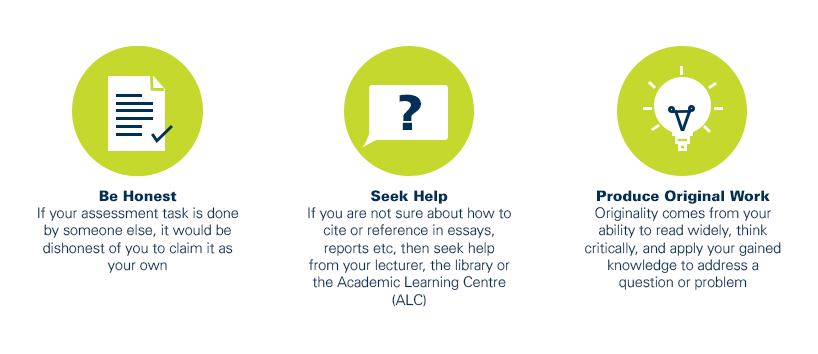
As a CQUniversity student you are expected to act honestly in all aspects of your academic work.
Any assessable work undertaken or submitted for review or assessment must be your own work. Assessable work is any type of work you do to meet the assessment requirements in the unit, including draft work submitted for review and feedback and final work to be assessed.
When you use the ideas, words or data of others in your assessment, you must thoroughly and clearly acknowledge the source of this information by using the correct referencing style for your unit. Using others’ work without proper acknowledgement may be considered a form of intellectual dishonesty.
Participating honestly, respectfully, responsibly, and fairly in your university study ensures the CQUniversity qualification you earn will be valued as a true indication of your individual academic achievement and will continue to receive the respect and recognition it deserves.
As a student, you are responsible for reading and following CQUniversity’s policies, including the Student Academic Integrity Policy and Procedure. This policy sets out CQUniversity’s expectations of you to act with integrity, examples of academic integrity breaches to avoid, the processes used to address alleged breaches of academic integrity, and potential penalties.
What is a breach of academic integrity?
A breach of academic integrity includes but is not limited to plagiarism, self-plagiarism, collusion, cheating, contract cheating, and academic misconduct. The Student Academic Integrity Policy and Procedure defines what these terms mean and gives examples.
Why is academic integrity important?
A breach of academic integrity may result in one or more penalties, including suspension or even expulsion from the University. It can also have negative implications for student visas and future enrolment at CQUniversity or elsewhere. Students who engage in contract cheating also risk being blackmailed by contract cheating services.
Where can I get assistance?
For academic advice and guidance, the Academic Learning Centre (ALC) can support you in becoming confident in completing assessments with integrity and of high standard.
What can you do to act with integrity?