Overview
Enterprise Systems (ES) have become increasingly popular since the early 1990s. One goal of these systems is to provide an encapsulation of core business processes and information. Many organisations have acquired ES technology, however there are considerable risks associated with ES implementation, maintenance and on-going use. In this unit, you will be equipped with the information required to inform ES adoption, selection and implementation decisions and the ability to communicate this knowledge to your peers and employers.
Details
Pre-requisites or Co-requisites
48 credit points
Important note: Students enrolled in a subsequent unit who failed their pre-requisite unit, should drop the subsequent unit before the census date or within 10 working days of Fail grade notification. Students who do not drop the unit in this timeframe cannot later drop the unit without academic and financial liability. See details in the Assessment Policy and Procedure (Higher Education Coursework).
Offerings For Term 3 - 2026
Attendance Requirements
All on-campus students are expected to attend scheduled classes - in some units, these classes are identified as a mandatory (pass/fail) component and attendance is compulsory. International students, on a student visa, must maintain a full time study load and meet both attendance and academic progress requirements in each study period (satisfactory attendance for International students is defined as maintaining at least an 80% attendance record).
Recommended Student Time Commitment
Each 6-credit Undergraduate unit at CQUniversity requires an overall time commitment of an average of 12.5 hours of study per week, making a total of 150 hours for the unit.
Class Timetable
Assessment Overview
| Assessment Task | Part Weighting (% of assessment) |
Assessment Security Level | Gen AI Guidance Levels |
|---|---|---|---|
| 1. Presentation (20% of unit ) | |||
| Presentation (Group) (Written Assessment) | 100% of 20% | Low | AI-Assisted (Guided Collaboration) |
| 2. Case Study (40% of unit ) | |||
| Case Study (Individual) (Written Assessment) | 100% of 40% | Low | AI-Assisted (Guided Collaboration) |
| 3. Practical and Written Assessment (40% of unit ) | |||
| Practical and Written Assessment (Group) (Practical and Written Assessment) | 100% of 40% | Low | AI-Assisted (Guided Collaboration) |
Assessment Grading
This is a graded unit: your overall grade will be calculated from the marks or grades for each assessment task, based on the relative weightings shown in the table above. You must obtain an overall mark for the unit of at least 50%, or an overall grade of 'pass' in order to pass the unit. If any 'pass/fail' tasks are shown in the table above they must also be completed successfully ('pass' grade). You must also meet any minimum mark requirements specified for a particular assessment task, as detailed in the 'assessment task' section (note that in some instances, the minimum mark for a task may be greater than 50%). Consult the University's Grades and Results Policy for more details of interim results and final grades.
All University policies are available on the CQUniversity Policy site.
You may wish to view these policies:
- Grades and Results Policy
- Assessment Policy and Procedure (Higher Education Coursework)
- Review of Grade Procedure
- Student Academic Integrity Policy and Procedure
- Academic Progression Policy and Procedure
- Student Refund and Credit Balance Policy and Procedure
- Complaints Policy and Procedure
- Information and Communications Technology Acceptable Use Policy and Procedure
This list is not an exhaustive list of all University policies. The full list of University policies are available on the CQUniversity Policy site.
Feedback, Recommendations and Responses
Every unit is reviewed for enhancement each year. At the most recent review, the following staff and student feedback items were identified and recommendations were made.
Feedback from Unit Coordinator self-reflection
A recently published textbook is highly recommended.
A newly published textbook for this unit should be included as either a prescribed or supplementary textbook.
Feedback from Unit Coordinator self-reflection
The current ERP software, Odoo, used by this unit is recommended to be replaced with a newer ERP system.
Assess and consider replacing Odoo with a more modern ERP system.
- Evaluate the role of Enterprise Systems in organisations and their adoption and use characteristics
- Compare the common Enterprise System modules and their features
- Analyse the individual activities and the roles of key stakeholders in an organisation's Enterprise System life-cycle
- Develop an argument for the support or rejection of an Enterprise System adoption decision in an organisation
- Examine the role of business process remodelling during Enterprise System adoption and implementation
- Assess risk factors, relevant critical success factors and best practice in an Enterprise System adoption and implementation project.
Australian Computer Society (ACS) recognises the Skills Framework for the Information Age (SFIA). SFIA is in use in over 100 countries and provides a widely used and consistent definition of ICT skills. SFIA is increasingly being used when developing job descriptions and role profiles.
ACS members can use the tool MySFIA to build a skills profile at https://www.acs.org.au/professionalrecognition/mysfia-b2c.html
This unit contributes to the following workplace skills as defined by SFIA. The SFIA 9 codes are included:
- Data Analytics (INAN).
- Formal Research (RSCH).
- Emerging Technology Monitoring (EMRG).
- Business Modelling (BSMO).
- Database/Repository Design (DBDS).
- Change Control (CHMG).
- Problem Management (PBMG).
Alignment of Assessment Tasks to Learning Outcomes
| Assessment Tasks | Learning Outcomes | |||||
|---|---|---|---|---|---|---|
| 1 | 2 | 3 | 4 | 5 | 6 | |
|
1.
Assessment 1
(20% of unit )
Written Assessment
|
||||||
|
2.
Assessment 2
(40% of unit )
Written Assessment
|
||||||
|
3.
Assessment 3
(40% of unit )
Practical and Written Assessment
|
||||||
Alignment of Graduate Attributes to Learning Outcomes
| Graduate Attributes | Learning Outcomes | |||||
|---|---|---|---|---|---|---|
| 1 | 2 | 3 | 4 | 5 | 6 | |
| 1 - Communication | ||||||
| 2 - Problem Solving | ||||||
| 3 - Critical Thinking | ||||||
| 4 - Information Literacy | ||||||
| 5 - Team Work | ||||||
| 6 - Information Technology Competence | ||||||
| 7 - Cross Cultural Competence | ||||||
| 8 - Ethical practice | ||||||
| 9 - Social Innovation | ||||||
| 10 - First Nations Knowledges | ||||||
| 11 - Aboriginal and Torres Strait Islander Cultures | ||||||
Textbooks
ENTERPRISE SYSTEMS FOR MANAGEMENT
- Edition: 2 (2012)
- Authors: Motiwalla, LF & Thompson, J
- Pearson
- Upper Saddle River Upper Saddle River , New Jersey , USA
- ISBN: 9780132145763
IT Resources
- CQUniversity Student Email
- Internet
- Unit Website (Moodle)
All submissions for this unit must use the referencing style: Harvard (author-date)
For further information, see the Assessment Tasks.
e.gide1@cqu.edu.au
Week 1
Begin Date: 09 Nov 2026Module/Topic
- Introduction to Enterprise Systems
Chapter
The lecture slides are custom-made and available on the Moodle unit website. The slides provide comprehensive content and include references where necessary. No specific textbook is required for this unit.
Events and Submissions/Topic
Introduce yourself and get to know your classmates either in class or through the channels suggested by the Unit Coordinator. This will allow you to form a group for Assessments 1 and 3 by deadline.
Week 2
Begin Date: 16 Nov 2026Module/Topic
- Systems Integration
Chapter
The lecture slides are custom-made and available on the Moodle unit website. The slides provide comprehensive content and include references where necessary. No specific textbook is required for this unit.
Events and Submissions/Topic
Remember to form groups for Assessments 1 and 3.
Week 3
Begin Date: 23 Nov 2026Module/Topic
- Organisational Change and Business Process Re-engineering (BPR)
Chapter
The lecture slides are custom-made and available on the Moodle unit website. The slides provide comprehensive content and include references where necessary. No specific textbook is required for this unit.
Events and Submissions/Topic
Finalise to form groups for Assessments 1 and 3.
Week 4
Begin Date: 30 Nov 2026Module/Topic
- Enterprise Systems Architecture
Chapter
The lecture slides are custom-made and available on the Moodle unit website. The slides provide comprehensive content and include references where necessary. No specific textbook is required for this unit.
Events and Submissions/Topic
Week 5
Begin Date: 07 Dec 2026Module/Topic
- Development Life Cycle
Chapter
The lecture slides are custom-made and available on the Moodle unit website. The slides provide comprehensive content and include references where necessary. No specific textbook is required for this unit.
Events and Submissions/Topic
Week 6
Begin Date: 14 Dec 2026Module/Topic
- Implementation Strategies
Chapter
The lecture slides are custom-made and available on the Moodle unit website. The slides provide comprehensive content and include references where necessary. No specific textbook is required for this unit.
Events and Submissions/Topic
Mid-Term Break
Begin Date: 21 Dec 2026Module/Topic
Chapter
Events and Submissions/Topic
Week 7
Begin Date: 04 Jan 2027Module/Topic
- Software and Vendor Selection
Chapter
The lecture slides are custom-made and available on the Moodle unit website. The slides provide comprehensive content and include references where necessary. No specific textbook is required for this unit.
Events and Submissions/Topic
Week 8
Begin Date: 11 Jan 2027Module/Topic
- Operations and Post-Implementation
Chapter
The lecture slides are custom-made and available on the Moodle unit website. The slides provide comprehensive content and include references where necessary. No specific textbook is required for this unit.
Events and Submissions/Topic
Week 9
Begin Date: 18 Jan 2027Module/Topic
- Program and Project Management
Chapter
The lecture slides are custom-made and available on the Moodle unit website. The slides provide comprehensive content and include references where necessary. No specific textbook is required for this unit.
Events and Submissions/Topic
Week 10
Begin Date: 25 Jan 2027Module/Topic
- Global, Ethical and Security Issues
Chapter
The lecture slides are custom-made and available on the Moodle unit website. The slides provide comprehensive content and include references where necessary. No specific textbook is required for this unit.
Events and Submissions/Topic
Week 11
Begin Date: 01 Feb 2027Module/Topic
- ERP in Supply Chain Management
Chapter
The lecture slides are custom-made and available on the Moodle unit website. The slides provide comprehensive content and include references where necessary. No specific textbook is required for this unit.
Events and Submissions/Topic
Week 12
Begin Date: 08 Feb 2027Module/Topic
- ERP in Customer Relationship Management
Chapter
The lecture slides are custom-made and available on the Moodle unit website. The slides provide comprehensive content and include references where necessary. No specific textbook is required for this unit.
Events and Submissions/Topic
Exam Week
Begin Date: 15 Feb 2027Module/Topic
Chapter
Events and Submissions/Topic
Module/Topic
Chapter
Events and Submissions/Topic
Dear Valued Student Friends,
A warm Welcome to COIS12073 – Enterprise Systems unit. As your unit coordinator, I am here to support you throughout your learning journey. Whenever you have any questions or need assistance, please feel free to communicate with me. Please note that additional textbook information, and learning and teaching resources for this unit are available through the CQUni Moodle unit and/or Library website. Let us make this a successful and enriching experience together!
I wish us all a very enjoyable and productive learning and teaching term.
Unit Coordinator: Professor Ergun Gide
Email: e.gide1@cqu.edu.au
Office location: Level 2, Room 2.09, 400 Kent Street, Sydney Campus, Sydney, NSW 2000
1. Presentation ( 20% of unit )
Written Assessment
This is a group assessment that applies to both on-campus and online students. You must form groups of 3 to 4 students, with any larger groups at the discretion of the Unit Coordinator. For this assessment, you must work in a group to develop and deliver a presentation that delves into the learning topics covered in weeks one to two.
You will have to form a group with fellow students and choose a topic for presentation by the end of Week 3. You will also have to prepare PowerPoint slides for your presentation and submit the presentation file to Moodle by Friday, Week 5.
The presentations will be conducted during the tutorials in Week 5. Your presentation should not take more than 15 minutes. There will be a brief Q&A session after each presentation (5 mins). Students are highly encouraged to ask questions after each presentation. Presentation slides (max 15 content slides plus a reference slide) must use Harvard style citations (in-text referencing).
Online/Distance students attending online will require a webcam, microphone and speaker or headset.
IMPORTANT: Each member of the group must take part in the presentation. To obtain presentation mark, you must attend and present your part, otherwise zero mark will be given for this assessment.
The detailed assessment specification will be made available on the Moodle unit website.
Assessment Security Level: Low
Gen AI Guidance Level: AI-Assisted (Guided Collaboration)
Generative AI may be used to plan your work, check your understanding of concepts and obtain feedback on drafts. The analysis, the evidence selected from the case pack and the final wording must be your own. Your final submission should show how you have developed and refined these ideas.
You do not need to cite the AI-generated content, as it has been substantially changed in the final submission. However, you need to briefly describe how AI tools were used during the planning, research and initial idea-generation stage of the assessment.
Week 5 Friday (11 Dec 2026) 11:45 pm AEST
All submissions are due by the deadline (A default 3 day extension is allowed for each of the assessments in this unit)
Week 7 Friday (8 Jan 2027)
Within 2 weeks of the due date or within 2 weeks of submission (whichever is the later)
Your presentation will be assessed on your ability to demonstrate knowledge and research findings and your understanding of the topics, as depicted through the content of the submitted slides.
You will also be evaluated on the structure, appearance, and design of your presentation materials, your communication skills, Q&A, and references to the resources used.
Please refer to the Moodle unit website for specific requirements and marking criteria for this assessment. You must learn to study, conduct research, and produce your own work. If your work is found to be copied from another source, plagiarism penalties will be applied as per the University's policy.
- Evaluate the role of Enterprise Systems in organisations and their adoption and use characteristics
- Compare the common Enterprise System modules and their features
- Develop an argument for the support or rejection of an Enterprise System adoption decision in an organisation
2. Case Study ( 40% of unit )
Written Assessment
For this assessment, you will work individually. Part A (30 Marks) and Part B (10 Marks) are two parts of this assessment task. It is mandatory to attempt both parts to complete this assessment.
Part A: Written Report (30 marks)
For this part, you must study, analyse, research, and prepare a report addressing specific tasks in response to a case study.
The case study details, tasks, and requirements will be available on the Moodle unit website.
Part B:
Oral Assessment (10 Marks)
There will be an oral assessment on the written report, during which you will need to answer questions about your written report verbally. The oral assessment aims to clarify your understanding of the written report.
For on-campus students, the viva will be conducted during the tutorial in Weeks 8-9. The Unit Coordinator will contact Online students to schedule an oral assessment session. When the oral assessment is conducted via Zoom, it is mandatory to have your webcam on during the conversation.
Assessment Security Level: Low
Gen AI Guidance Level: AI-Assisted (Guided Collaboration)
Generative AI may be used to plan your work, check your understanding of concepts and obtain feedback on drafts. The analysis, the evidence selected from the case pack and the final wording must be your own. Your final submission should show how you have developed and refined these ideas.
You do not need to cite the AI-generated content, as it has been substantially changed in the final submission. However, you need to briefly describe how AI tools were used during the planning, research and initial idea-generation stage of the assessment.
Week 8 Friday (15 Jan 2027) 11:45 pm AEST
The individual written report must be submitted to Moodle by the above due date and time. (A default 3 day extension is allowed for each of the assessments in this unit)
Week 10 Friday (29 Jan 2027)
Within 2 weeks of the due date or within 2 weeks of submission (whichever is the later)
The detailed description of 'Assessment Two Case Study,' outlining the assessment criteria, will be accessible on the Moodle Unit website. It is crucial to approach this task diligently, conducting thorough
research and producing original work.
If your work is found to be copied from another source, plagiarism penalties will be applied as per the University's policy.
- Evaluate the role of Enterprise Systems in organisations and their adoption and use characteristics
- Compare the common Enterprise System modules and their features
- Analyse the individual activities and the roles of key stakeholders in an organisation's Enterprise System life-cycle
- Develop an argument for the support or rejection of an Enterprise System adoption decision in an organisation
- Examine the role of business process remodelling during Enterprise System adoption and implementation
- Assess risk factors, relevant critical success factors and best practice in an Enterprise System adoption and implementation project.
3. Practical and Written Assessment ( 40% of unit )
Practical and Written Assessment
This is a group assessment. The goal of this assessment is to apply relevant theories to problem-solving. You will work in the same group as Assessment 1. Part A (30 Marks) and Part B (10 Marks) are two parts of this assessment task. It is mandatory to attempt both parts to complete this assessment.
Part A: Written Report (30 marks):
For this part, your team will work collaboratively to analyse a real-world industry challenge where enterprise systems (e.g., ERP, CRM, SCM) can be applied to solve operational inefficiencies, data silos, or decision making gaps. Your team will investigate a company, industry sector, or case study scenario, research the challenges faced, evaluate possible enterprise system solutions, and propose a well-supported digital transformation strategy. This will involve investigating the current marketplace for potential ERP systems and vendors.
Part B: Oral Assessment (10 Marks):
There will be an oral assessment on the written report, during which you will need to answer questions about your written report verbally. The oral assessment aims to clarify your understanding of the written report.
For on-campus students, the viva will be conducted during the tutorial in Week 12. The Unit Coordinator will contact Online students to schedule an oral assessment session. When the oral assessment is conducted via Zoom, it is mandatory to have your webcam on during the conversation. Although this is a group assessment, the marks might vary based on the individual contribution.
Assessment Security Level: Low
Gen AI Guidance Level: AI-Assisted (Guided Collaboration)
Generative AI may be used to plan your work, check your understanding of concepts and obtain feedback on drafts. The analysis, the evidence selected from the case pack and the final wording must be your own. Your final submission should show how you have developed and refined these ideas.
You do not need to cite the AI-generated content, as it has been substantially changed in the final submission. However, you need to briefly describe how AI tools were used during the planning, research and initial idea-generation stage of the assessment.
Week 12 Friday (12 Feb 2027) 11:45 pm AEST
The written report must be submitted to Moodle by the above due date and time. (A default 3 day extension is allowed for each of the assessments in this unit)
The marked assignment will be returned on the day of Certification of Grades
The detailed description of 'Assessment-3 - Solve Problem', outlining the assessment criteria, will be available on the Moodle Unit website. This information will outline how the assessment will be carried out.
It is vital to study, research, and produce your own work. If your work is found to be copied from another source, plagiarism penalties will be applied as per the University's policy.
- Analyse the individual activities and the roles of key stakeholders in an organisation's Enterprise System life-cycle
- Examine the role of business process remodelling during Enterprise System adoption and implementation
- Assess risk factors, relevant critical success factors and best practice in an Enterprise System adoption and implementation project.
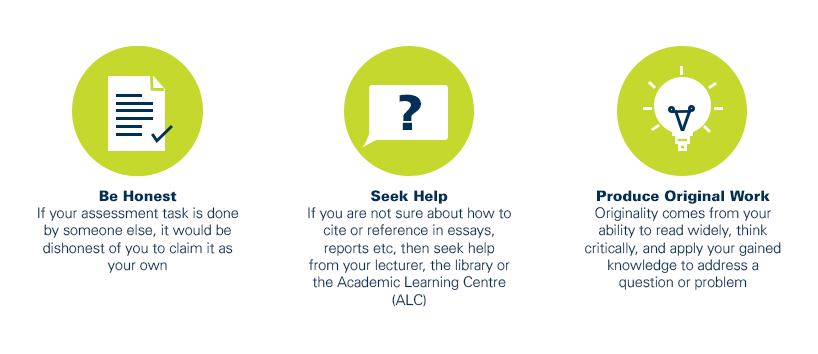
As a CQUniversity student you are expected to act honestly in all aspects of your academic work.
Any assessable work undertaken or submitted for review or assessment must be your own work. Assessable work is any type of work you do to meet the assessment requirements in the unit, including draft work submitted for review and feedback and final work to be assessed.
When you use the ideas, words or data of others in your assessment, you must thoroughly and clearly acknowledge the source of this information by using the correct referencing style for your unit. Using others’ work without proper acknowledgement may be considered a form of intellectual dishonesty.
Participating honestly, respectfully, responsibly, and fairly in your university study ensures the CQUniversity qualification you earn will be valued as a true indication of your individual academic achievement and will continue to receive the respect and recognition it deserves.
As a student, you are responsible for reading and following CQUniversity’s policies, including the Student Academic Integrity Policy and Procedure. This policy sets out CQUniversity’s expectations of you to act with integrity, examples of academic integrity breaches to avoid, the processes used to address alleged breaches of academic integrity, and potential penalties.
What is a breach of academic integrity?
A breach of academic integrity includes but is not limited to plagiarism, self-plagiarism, collusion, cheating, contract cheating, and academic misconduct. The Student Academic Integrity Policy and Procedure defines what these terms mean and gives examples.
Why is academic integrity important?
A breach of academic integrity may result in one or more penalties, including suspension or even expulsion from the University. It can also have negative implications for student visas and future enrolment at CQUniversity or elsewhere. Students who engage in contract cheating also risk being blackmailed by contract cheating services.
Where can I get assistance?
For academic advice and guidance, the Academic Learning Centre (ALC) can support you in becoming confident in completing assessments with integrity and of high standard.
What can you do to act with integrity?