Overview
Technology is at the forefront of social transformation in the 21st century, reshaping how individuals, organisations, and governments interact. In this unit, you will explore the dynamic relationship between digital technologies and society, with a focus on ethics, governance, and accountability. As an emerging ICT professional, you will critically examine how digital systems can both support societal needs and introduce complex ethical, legal, and governance challenges. Topics include artificial intelligence, cybersecurity, privacy, intellectual property, censorship, workforce disruption, and information overload. You will apply ethical theories and professional codes of conduct to analyse real-world dilemmas and develop persuasive arguments in personal, organisational, and policy contexts. By the end of the unit, you will be equipped to engage with digital governance issues and contribute responsibly to the design and oversight of technology in society.
Details
Pre-requisites or Co-requisites
Co-requisite: COIT11239 Professional Communications Skills for ICT or ENEG11005 Fundamentals of Professional Engineering.
Important note: Students enrolled in a subsequent unit who failed their pre-requisite unit, should drop the subsequent unit before the census date or within 10 working days of Fail grade notification. Students who do not drop the unit in this timeframe cannot later drop the unit without academic and financial liability. See details in the Assessment Policy and Procedure (Higher Education Coursework).
Offerings For Term 2 - 2026
Attendance Requirements
All on-campus students are expected to attend scheduled classes - in some units, these classes are identified as a mandatory (pass/fail) component and attendance is compulsory. International students, on a student visa, must maintain a full time study load and meet both attendance and academic progress requirements in each study period (satisfactory attendance for International students is defined as maintaining at least an 80% attendance record).
Recommended Student Time Commitment
Each 6-credit Undergraduate unit at CQUniversity requires an overall time commitment of an average of 12.5 hours of study per week, making a total of 150 hours for the unit.
Class Timetable
Assessment Overview
Assessment Grading
This is a graded unit: your overall grade will be calculated from the marks or grades for each assessment task, based on the relative weightings shown in the table above. You must obtain an overall mark for the unit of at least 50%, or an overall grade of 'pass' in order to pass the unit. If any 'pass/fail' tasks are shown in the table above they must also be completed successfully ('pass' grade). You must also meet any minimum mark requirements specified for a particular assessment task, as detailed in the 'assessment task' section (note that in some instances, the minimum mark for a task may be greater than 50%). Consult the University's Grades and Results Policy for more details of interim results and final grades.
All University policies are available on the CQUniversity Policy site.
You may wish to view these policies:
- Grades and Results Policy
- Assessment Policy and Procedure (Higher Education Coursework)
- Review of Grade Procedure
- Student Academic Integrity Policy and Procedure
- Academic Progression Policy and Procedure
- Student Refund and Credit Balance Policy and Procedure
- Complaints Policy and Procedure
- Information and Communications Technology Acceptable Use Policy and Procedure
This list is not an exhaustive list of all University policies. The full list of University policies are available on the CQUniversity Policy site.
Feedback, Recommendations and Responses
Every unit is reviewed for enhancement each year. At the most recent review, the following staff and student feedback items were identified and recommendations were made.
Feedback from Student feedback
Assessments require more explicit instructions and expectations.
Enhance specifications to ensure greater clarity, consistency, and structured guidance for students.
Feedback from Unit-Coordinator self-reflection
The co-requisite unit COMM11003 is no longer on offer.
Remove COMM11003 from the list of co-requisites
- Describe the roles of contemporary digital technologies on the social contexts of the information age
- Explain how your professional and ethical responsibilities as an ICT professional affect society
- Discuss the ethical, social, governance and security issues related to AI, data-driven technologies, and other contemporary digital domains
- Evaluate ethical, social, and cyber security issues in the design, deployment, and use of AI and data-driven technologies, using ethical theories, government policy and professional codes of conduct.
The Australian Computer Society (ACS), the professional association for Australia's ICT sector, recognises the Skills Framework for the Information Age (SFIA). SFIA is adopted by organisations, governments, and individuals in many countries and provides a widely used and consistent definition of ICT skills. SFIA is increasingly being used when developing job descriptions and role profiles. ACS members can use the tool MySFIA to build a skills profile.
This unit contributes to the following workplace skills as defined by SFIA 9 (the SFIA code is included):
- Artificial intelligence (AI) and data ethics (AIDE)
- Data management (DATM)
- Governance (GOVN)
- Information and data compliance (PEDP)
- Information security (SCTY)
- Organisational change management (CIPM)
- Problem management (PBMG)
Alignment of Assessment Tasks to Learning Outcomes
| Assessment Tasks | Learning Outcomes | |||
|---|---|---|---|---|
| 1 | 2 | 3 | 4 | |
| 1 - Practical Assessment - 20% | ||||
| 2 - Written Assessment - 30% | ||||
| 3 - Practical Assessment - 50% | ||||
Alignment of Graduate Attributes to Learning Outcomes
| Graduate Attributes | Learning Outcomes | |||
|---|---|---|---|---|
| 1 | 2 | 3 | 4 | |
| 1 - Communication | ||||
| 2 - Problem Solving | ||||
| 3 - Critical Thinking | ||||
| 4 - Information Literacy | ||||
| 5 - Team Work | ||||
| 6 - Information Technology Competence | ||||
| 7 - Cross Cultural Competence | ||||
| 8 - Ethical practice | ||||
| 9 - Social Innovation | ||||
| 10 - First Nations Knowledges | ||||
| 11 - Aboriginal and Torres Strait Islander Cultures | ||||
Textbooks
Ethics for the Information Age
- Edition: 8th edn (2020)
- Authors: Quinn, MJ
- Pearson
- Upper Saddle River Upper Saddle River , NJ , USA
- ISBN: 9780135218006
- Binding: eBook
IT Resources
- CQUniversity Student Email
- Internet
- Unit Website (Moodle)
- Zoom
All submissions for this unit must use the referencing style: Harvard (author-date)
For further information, see the Assessment Tasks.
g.galea@cqu.edu.au
Week 1
Begin Date: 13 Jul 2026Module/Topic
The Information Age
- Milestones in computing
- Milestones in networking
- Social issues
Chapter
Quinn: chapter 1
Events and Submissions/Topic
Week 2
Begin Date: 20 Jul 2026Module/Topic
Artificial Intelligence (AI)
- AI history
- AI technologies
Chapter
Online resources
Events and Submissions/Topic
Assessment 2 workshop participation for e-portfolio 1
E-portfolio 1 Due
Week 3
Begin Date: 27 Jul 2026Module/Topic
Data Communications
- Overview of the Internet and communications
- Hacking and Malware
Chapter
Quinn: chapter 7
Events and Submissions/Topic
Email lecturer with your chosen topic for Assessment 1
Week 4
Begin Date: 03 Aug 2026Module/Topic
Ethics and Ethical Theories
- Morality and ethics
- Ethical theories
Chapter
Quinn: chapter 2
Events and Submissions/Topic
Assessment 2 workshop participation for e-portfolio 2
E-portfolio 2 Due
Week 5
Begin Date: 10 Aug 2026Module/Topic
Professional Ethics & Social Innovation
- ICT as a profession
- Professional code of ethics
- Social innovation
Chapter
Quinn: chapter 9
Events and Submissions/Topic
Week 6
Begin Date: 17 Aug 2026Module/Topic
Computer & Network Security
- Background on security
- Types of security breaches
- Case study
- Ethical and social considerations
Chapter
Quinn: chapter 7
Events and Submissions/Topic
Break Week
Begin Date: 24 Aug 2026Module/Topic
Enjoy the break!
Chapter
Events and Submissions/Topic
Week 7
Begin Date: 31 Aug 2026Module/Topic
Intellectual property (IP)
- Australian IP rights
- IP protection
Chapter
Quinn: chapter 4
Events and Submissions/Topic
Assessment 2 workshop participation for e-portfolio 3
E-portfolio 3 Due
Week 8
Begin Date: 07 Sep 2026Module/Topic
Privacy
- Perspectives on privacy
- Information disclosure
- Internet privacy
Chapter
Quinn: chapter 5
Events and Submissions/Topic
Week 9
Begin Date: 14 Sep 2026Module/Topic
Censorship and the Government
- Censorship of the Internet
- Other censorship
- Ethical perspectives on censorship
Chapter
Quinn: chapter 3 and 6
Events and Submissions/Topic
Assessment 2 workshop participation for e-portfolio 4
E-portfolio 4 Due
Week 10
Begin Date: 21 Sep 2026Module/Topic
Legal Issues
- Law enforcement in Australia
- Online voting
- AI
Chapter
Online resources
Events and Submissions/Topic
Week 11
Begin Date: 28 Sep 2026Module/Topic
The Workforce
- Workplace changes
- Digitial divide
- Automation and AI
Chapter
Quinn: chapter 10
Events and Submissions/Topic
Week 12
Begin Date: 05 Oct 2026Module/Topic
Information Overload
- Quantity of information
- Quality of information
Chapter
Quinn: chapter 3
Events and Submissions/Topic
Assessment 3 Part A scenario is released
Exam Week
Begin Date: 12 Oct 2026Module/Topic
Chapter
Events and Submissions/Topic
Unit Coordinator: Dr Gitte Galea
Office: Cairns Campus
Email: g.galea@cqu.edu.au
1 Practical Assessment
For this assessment, you are required to produce a video in which you clearly take an ethical stance on a contemporary social issue related to ICT. You must select your topic from the list provided on the Unit Moodle site. In your video, begin by stating your hypothesis or main argument. Then, provide any necessary background information to explain the context of the issue. You should present well-reasoned arguments supporting your position, as well as acknowledge and respond to opposing viewpoints. All arguments and objections must be supported with appropriate references. Finally, recommend specific actions or responses based on your ethical standpoint. Once your video is complete, upload it to Moodle along with a brief set of notes that include your references. Please refer to the Moodle site for detailed instructions on the required content, format, and the list of available topics.
This assessment is subject to the standard 72-hour grace period.
AI ASSESSMENT SCALE - AI PLANNING
You may utilise AI for planning, idea development, and research. Your final submission should demonstrate how you have developed and refined these ideas.
Week 6 Friday (21 Aug 2026) 11:45 pm AEST
Submit your assessment on Moodle in the required format. See the unit site for details.
Approximately two weeks after submission
Your video must include:
- A clear explanation of the topic and background
- Arguments that explain both positive and negative effects on society
- References (such as articles or websites) to support your ideas
- A summary of your position and recommendations for action
The video should be professional and engaging.
Refer to Moodle for detailed marking criteria.
- Describe the roles of contemporary digital technologies on the social contexts of the information age
- Evaluate ethical, social, and cyber security issues in the design, deployment, and use of AI and data-driven technologies, using ethical theories, government policy and professional codes of conduct.
2 Written Assessment
For this assessment, you will complete four e‑portfolios during the term, submitted in Weeks 2, 4, 7, and 9.
- Each e‑portfolio focuses on a different unit topic
- Each is worth 7.5 marks and is dependent on workshop attendance
- Together, they make up 30% of your final grade for the unit.
An e-portfolio in this unit is a digital collection of artefacts, samples, and reflections that showcases a student’s learning. It serves as a space for students to demonstrate their understanding, track their progress, and reflect on their learning journey. The e-portfolio supports deeper engagement with course content and provides teaching staff with insight into each student’s development over time.
You are required to actively participate and engage in all workshops in the term. Participation in workshops and engagement must be evident in your e-portfolio.
Each workshop and e-portfolio is marked independently. You must attend and meaningfully engage in the workshop. This assessment focuses on quality of demonstrated learning, engagement in the workshop, and reflection. A student who is absent from the workshop without approved documentation receives 0 marks for that e-portfolio.
This assessment is subject to the standard 72-hour grace period.
AI ASSESSMENT SCALE - AI PLANNING
You may use AI for planning, idea development, and research. Your final submission should demonstrate how you have developed and refined these ideas.
Submit your assessment on Moodle in the required format. See the unit site for details.
Returned via the unit website approximately two weeks after submission.
As you develop your e-portfolio, make sure to:
- Link your discussion to theories and concepts covered in this unit
- Incorporate evidence from your own research (e.g., academic sources, case studies, YouTube videos, interesting readings, clips from the workshops, relevant websites, and your own work that you produce in the tutorials (photos or screenshots)
- Reflect on your personal experiences, values, and beliefs about socio-technical issues.
- Explain how your professional and ethical responsibilities as an ICT professional affect society
- Discuss the ethical, social, governance and security issues related to AI, data-driven technologies, and other contemporary digital domains
3 Practical Assessment
This final assessment has two parts.
Part A: You will receive a short-written scenario. You must analyse the scenario using two ethical theories from the unit and the ACS Professional Code of Conduct. Then, compare the two approaches. Record your response as a video and upload it to Moodle. You must use references to support your ideas.
The scenario for the video will be released in Week 12, and due one week later.
Part B: Throughout the term, you will create an e‑portfolio that demonstrates your understanding of the ethical considerations and societal impacts of a specific socio-technical issue.
Use the feedback from Assessment 2 to inform your final e‑portfolio submission in this unit. Focus on strengthening your analysis, clarity, evidence, reflective writing and critical thinking.
More details will be available on the unit Moodle site.
This assessment is subject to the standard 72-hour grace period.
AI ASSESSMENT SCALE - AI PLANNING
You may use AI for planning, idea development, and research. Your final submission should show how you have developed and refined these ideas.
Exam Week Wednesday (14 Oct 2026) 11:45 pm AEST
Submit your assessment on Moodle in the required format. See the unit site for details.
Results will be released in accordance with the University’s grades and results timeline/Assessment Policy and Procedure.
Your final assessment includes a video and an e-portfolio.
In the video, you must:
- Clearly explain the situation and your decision
- Present your analysis and your decision
- Use references (such as articles or websites) to support your ideas
- Choose two of the five ethical theories and clearly state assumptions
- Present your video in a professional and engaging way
In the e-portfolio, you must:
- Link your discussion to theories and concepts covered in this unit
- Incorporate evidence from your own research (e.g., academic sources, reports, case studies, YouTube videos, interesting readings, clips from the workshops, relevant websites, and your own work that you produce in the tutorials (photos or screenshots)
- Reflect on your personal experiences, values, and beliefs about socio-technical issues
More details will be available on the unit Moodle site.
- Describe the roles of contemporary digital technologies on the social contexts of the information age
- Explain how your professional and ethical responsibilities as an ICT professional affect society
- Discuss the ethical, social, governance and security issues related to AI, data-driven technologies, and other contemporary digital domains
- Evaluate ethical, social, and cyber security issues in the design, deployment, and use of AI and data-driven technologies, using ethical theories, government policy and professional codes of conduct.
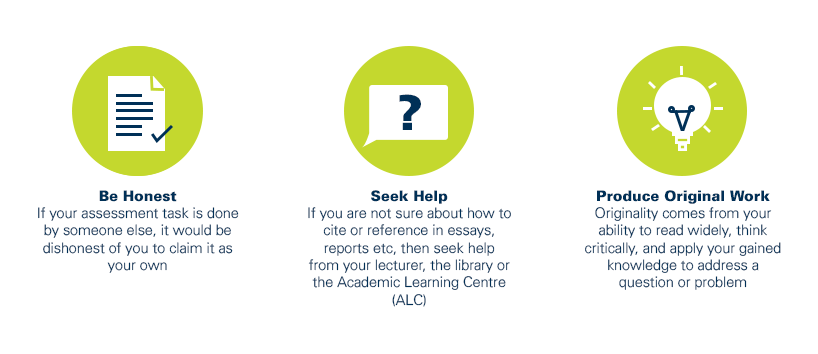
As a CQUniversity student you are expected to act honestly in all aspects of your academic work.
Any assessable work undertaken or submitted for review or assessment must be your own work. Assessable work is any type of work you do to meet the assessment requirements in the unit, including draft work submitted for review and feedback and final work to be assessed.
When you use the ideas, words or data of others in your assessment, you must thoroughly and clearly acknowledge the source of this information by using the correct referencing style for your unit. Using others’ work without proper acknowledgement may be considered a form of intellectual dishonesty.
Participating honestly, respectfully, responsibly, and fairly in your university study ensures the CQUniversity qualification you earn will be valued as a true indication of your individual academic achievement and will continue to receive the respect and recognition it deserves.
As a student, you are responsible for reading and following CQUniversity’s policies, including the Student Academic Integrity Policy and Procedure. This policy sets out CQUniversity’s expectations of you to act with integrity, examples of academic integrity breaches to avoid, the processes used to address alleged breaches of academic integrity, and potential penalties.
What is a breach of academic integrity?
A breach of academic integrity includes but is not limited to plagiarism, self-plagiarism, collusion, cheating, contract cheating, and academic misconduct. The Student Academic Integrity Policy and Procedure defines what these terms mean and gives examples.
Why is academic integrity important?
A breach of academic integrity may result in one or more penalties, including suspension or even expulsion from the University. It can also have negative implications for student visas and future enrolment at CQUniversity or elsewhere. Students who engage in contract cheating also risk being blackmailed by contract cheating services.
Where can I get assistance?
For academic advice and guidance, the Academic Learning Centre (ALC) can support you in becoming confident in completing assessments with integrity and of high standard.
What can you do to act with integrity?