Overview
This unit introduces you to professional communication concepts that are relevant to a career in information and communication technologies (ICT). Topics include negotiation, teamwork, conflict management, academic referencing, library skills, and oral and written communication. The unit introduces awareness of cultural diversity and its management in a multicultural workforce.
Details
Pre-requisites or Co-requisites
COMM11003 Communication in Professional Contexts is an anti-requisite for COIT11239.
Important note: Students enrolled in a subsequent unit who failed their pre-requisite unit, should drop the subsequent unit before the census date or within 10 working days of Fail grade notification. Students who do not drop the unit in this timeframe cannot later drop the unit without academic and financial liability. See details in the Assessment Policy and Procedure (Higher Education Coursework).
Offerings For Term 3 - 2020
Attendance Requirements
All on-campus students are expected to attend scheduled classes - in some units, these classes are identified as a mandatory (pass/fail) component and attendance is compulsory. International students, on a student visa, must maintain a full time study load and meet both attendance and academic progress requirements in each study period (satisfactory attendance for International students is defined as maintaining at least an 80% attendance record).
Recommended Student Time Commitment
Each 6-credit Undergraduate unit at CQUniversity requires an overall time commitment of an average of 12.5 hours of study per week, making a total of 150 hours for the unit.
Class Timetable
Assessment Overview
Assessment Grading
This is a graded unit: your overall grade will be calculated from the marks or grades for each assessment task, based on the relative weightings shown in the table above. You must obtain an overall mark for the unit of at least 50%, or an overall grade of 'pass' in order to pass the unit. If any 'pass/fail' tasks are shown in the table above they must also be completed successfully ('pass' grade). You must also meet any minimum mark requirements specified for a particular assessment task, as detailed in the 'assessment task' section (note that in some instances, the minimum mark for a task may be greater than 50%). Consult the University's Grades and Results Policy for more details of interim results and final grades.
All University policies are available on the CQUniversity Policy site.
You may wish to view these policies:
- Grades and Results Policy
- Assessment Policy and Procedure (Higher Education Coursework)
- Review of Grade Procedure
- Student Academic Integrity Policy and Procedure
- Monitoring Academic Progress (MAP) Policy and Procedure - Domestic Students
- Monitoring Academic Progress (MAP) Policy and Procedure - International Students
- Student Refund and Credit Balance Policy and Procedure
- Student Feedback - Compliments and Complaints Policy and Procedure
- Information and Communications Technology Acceptable Use Policy and Procedure
This list is not an exhaustive list of all University policies. The full list of University policies are available on the CQUniversity Policy site.
Feedback, Recommendations and Responses
Every unit is reviewed for enhancement each year. At the most recent review, the following staff and student feedback items were identified and recommendations were made.
Feedback from Student Evaluations
Improve slides and videos.
Improve the quality of materials by substituting content from the generic professional communications unit.
Feedback from Student Evaluations
Students appreciated the caring teachers, learning gestures for presentations and conflict resolution strategies. International students appreciated learning the communication customs used by Australians.
Maintain the quality of teaching.
- Explain communication concepts and strategies
- Show confidence and skills in oral communications and presentations
- Work effectively as part of a team
- Communicate effectively in a professional context
- Define and demonstrate conflict management and resolution strategies.
- Core skill, Business Skills: Communication skills and teamwork
- Relationship management (RLMT)
- Information Management (IRMG)
- Research (RSCH)
- Innovation (INOV)
Alignment of Assessment Tasks to Learning Outcomes
| Assessment Tasks | Learning Outcomes | ||||
|---|---|---|---|---|---|
| 1 | 2 | 3 | 4 | 5 | |
| 1 - Written Assessment - 20% | |||||
| 2 - Group Work - 30% | |||||
| 3 - Presentation - 50% | |||||
Alignment of Graduate Attributes to Learning Outcomes
| Graduate Attributes | Learning Outcomes | ||||
|---|---|---|---|---|---|
| 1 | 2 | 3 | 4 | 5 | |
| 1 - Communication | |||||
| 2 - Problem Solving | |||||
| 3 - Critical Thinking | |||||
| 4 - Information Literacy | |||||
| 5 - Team Work | |||||
| 6 - Information Technology Competence | |||||
| 7 - Cross Cultural Competence | |||||
| 8 - Ethical practice | |||||
| 9 - Social Innovation | |||||
| 10 - First Nations Knowledges | |||||
| 11 - Aboriginal and Torres Strait Islander Cultures | |||||
Alignment of Assessment Tasks to Graduate Attributes
| Assessment Tasks | Graduate Attributes | ||||||||||
|---|---|---|---|---|---|---|---|---|---|---|---|
| 1 | 2 | 3 | 4 | 5 | 6 | 7 | 8 | 9 | 10 | 11 | |
| 1 - Written Assessment - 20% | |||||||||||
| 2 - Group Work - 30% | |||||||||||
| 3 - Presentation - 50% | |||||||||||
Textbooks
There are no required textbooks.
IT Resources
- CQUniversity Student Email
- Internet
- Unit Website (Moodle)
All submissions for this unit must use the referencing style: Harvard (author-date)
For further information, see the Assessment Tasks.
p.poon@cqu.edu.au
Week 1
Begin Date: 09 Nov 2020Module/Topic
Chapter
Events and Submissions/Topic
Week 2
Begin Date: 16 Nov 2020Module/Topic
Interpersonal Communication
Chapter
Events and Submissions/Topic
Week 3
Begin Date: 23 Nov 2020Module/Topic
Writing Style
Chapter
Events and Submissions/Topic
Week 4
Begin Date: 30 Nov 2020Module/Topic
Argument
Chapter
Events and Submissions/Topic
Assignment 1 (Facts and Opinion)
Vacation Week
Begin Date: 07 Dec 2020Module/Topic
Chapter
Events and Submissions/Topic
Week 5
Begin Date: 14 Dec 2020Module/Topic
Teamwork in ICT
Chapter
Events and Submissions/Topic
Week 6
Begin Date: 21 Dec 2020Module/Topic
Research Skills
Chapter
Events and Submissions/Topic
Assignment 1 (Conflict Role Play)
Vacation Week
Begin Date: 28 Dec 2020Module/Topic
Chapter
Events and Submissions/Topic
Week 7
Begin Date: 04 Jan 2021Module/Topic
Entrepreneurship and Social Innovation
Chapter
Events and Submissions/Topic
Assignment 2 (5-min Practice Talk)
Week 8
Begin Date: 11 Jan 2021Module/Topic
Mod Writing Workshop
Chapter
Events and Submissions/Topic
Assignment 1 (Mod Writing)
Week 9
Begin Date: 18 Jan 2021Module/Topic
ICT Communication in Action
Chapter
Events and Submissions/Topic
Week 10
Begin Date: 25 Jan 2021Module/Topic
Individual Presentation Workshop
Chapter
Events and Submissions/Topic
Assignment 2 (Individual Presentation)
Week 11
Begin Date: 01 Feb 2021Module/Topic
Writing Assignment Workshop
Chapter
Events and Submissions/Topic
Assignment 3 (Written Assessment)
Week 12
Begin Date: 08 Feb 2021Module/Topic
Chapter
Events and Submissions/Topic
Exam Week
Begin Date: 15 Feb 2021Module/Topic
Chapter
Events and Submissions/Topic
Associate Professor Pak Poon (Unit Coordinator)
Office: Room 6.15, School of Engineering and Technology, 120 Spencer Street, Melbourne VIC 3000 (Melbourne Campus)
Email: p.poon@cqu.edu.au
Phone: (03) 9616 0693
1 Group Work
Assessment 1 involves the following three tasks:
- Task 1: Facts and Opinions (5%)
- Task 2: Conflict Role Play (5%)
- Task 3: Mob Writing (20%)
Task 1 (Due: Week 4) / Task 2 (Due: Week 6) / Task 3 (Due: Week 8)
Within 2 weeks after submission due date
Assessment will be based on the marking worksheet relevant to each task. In general, marking will cover the contents and the format/style of the submission. More information on assessments is given below:
Task 1: Assessment will be based on the students' listening strategies that affect their own performance, and the identified improvements to be made in their listening and speaking.
Task 2: Assessment will be based on the students' insights into how different group decision processes influence participant's behaviour, and personal reflections of groupthink and learning style.
Task 3: Assessment will be based on insightful summary; insightful answers to the questions; and mechanics, grammar and proofing.
- Show confidence and skills in oral communications and presentations
- Work effectively as part of a team
- Define and demonstrate conflict management and resolution strategies.
- Communication
- Team Work
- Information Technology Competence
2 Presentation
Assessment 2 involves the following 2 tasks:
- 5-min practice talk (20%):
- Individual presentation (30%):
For both tasks, assessment will based on various factors such as audience engagement, appropriate use of time, gestures, vocalised non-verbals, speaking rate, and contents/format of slide show.
Task 1 (Due: Week 7) / Task 2 (Due: Week 10)
Within 2 weeks after submission due date
Assessment will be based on the marking worksheet relevant to each task. In general, marking will cover the contents and the flow of the talk/presentation. Examples of assessment areas includes the following three areas:
- Contents: Summary, answers to individual questions, conclusion and recommendations
- Format/style: Report organisation, mechanics, grammar and proofing
- Referencing
- Explain communication concepts and strategies
- Show confidence and skills in oral communications and presentations
- Work effectively as part of a team
- Communicate effectively in a professional context
- Define and demonstrate conflict management and resolution strategies.
- Communication
- Problem Solving
- Critical Thinking
- Information Literacy
- Information Technology Competence
- Cross Cultural Competence
- Ethical practice
- Social Innovation
3 Written Assessment
Assessment 3 is a written assignment involving an article analysis.
Assessment 3 will be due in Week 11
Within 2 weeks after submission due date
Assessment will be based on the relevant marking worksheet provided. In general, marking will cover the contents and the format/style of the submission.
- Explain communication concepts and strategies
- Communicate effectively in a professional context
- Communication
- Critical Thinking
- Information Literacy
- Information Technology Competence
- Social Innovation
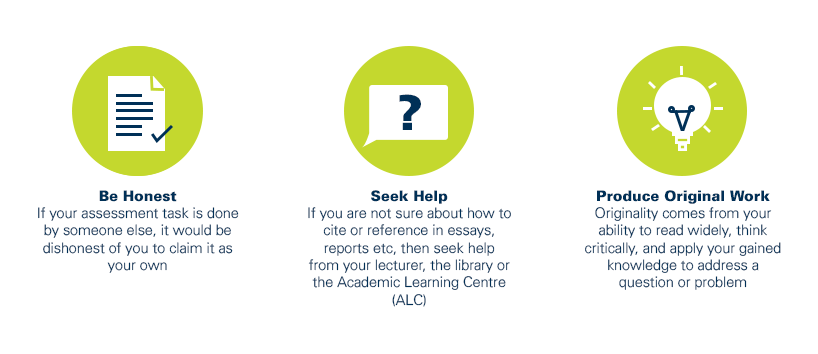
As a CQUniversity student you are expected to act honestly in all aspects of your academic work.
Any assessable work undertaken or submitted for review or assessment must be your own work. Assessable work is any type of work you do to meet the assessment requirements in the unit, including draft work submitted for review and feedback and final work to be assessed.
When you use the ideas, words or data of others in your assessment, you must thoroughly and clearly acknowledge the source of this information by using the correct referencing style for your unit. Using others’ work without proper acknowledgement may be considered a form of intellectual dishonesty.
Participating honestly, respectfully, responsibly, and fairly in your university study ensures the CQUniversity qualification you earn will be valued as a true indication of your individual academic achievement and will continue to receive the respect and recognition it deserves.
As a student, you are responsible for reading and following CQUniversity’s policies, including the Student Academic Integrity Policy and Procedure. This policy sets out CQUniversity’s expectations of you to act with integrity, examples of academic integrity breaches to avoid, the processes used to address alleged breaches of academic integrity, and potential penalties.
What is a breach of academic integrity?
A breach of academic integrity includes but is not limited to plagiarism, self-plagiarism, collusion, cheating, contract cheating, and academic misconduct. The Student Academic Integrity Policy and Procedure defines what these terms mean and gives examples.
Why is academic integrity important?
A breach of academic integrity may result in one or more penalties, including suspension or even expulsion from the University. It can also have negative implications for student visas and future enrolment at CQUniversity or elsewhere. Students who engage in contract cheating also risk being blackmailed by contract cheating services.
Where can I get assistance?
For academic advice and guidance, the Academic Learning Centre (ALC) can support you in becoming confident in completing assessments with integrity and of high standard.
What can you do to act with integrity?