Overview
This unit is to allow for, either the presentation of a course of lectures at a third year degree level in a specialist area of computing, or a supervised reading course in a specialist area of computing again at a third year level. A supervised reading course would enable students to study a special area of computing not already available. Availability of this unit is subject to Faculty approval. All students interested in enrolling in the unit should contact the unit coordinator before enrolling.
Details
Pre-requisites or Co-requisites
There are no requisites for this unit.
Important note: Students enrolled in a subsequent unit who failed their pre-requisite unit, should drop the subsequent unit before the census date or within 10 working days of Fail grade notification. Students who do not drop the unit in this timeframe cannot later drop the unit without academic and financial liability. See details in the Assessment Policy and Procedure (Higher Education Coursework).
Offerings For Term 2 - 2019
Attendance Requirements
All on-campus students are expected to attend scheduled classes - in some units, these classes are identified as a mandatory (pass/fail) component and attendance is compulsory. International students, on a student visa, must maintain a full time study load and meet both attendance and academic progress requirements in each study period (satisfactory attendance for International students is defined as maintaining at least an 80% attendance record).
Recommended Student Time Commitment
Each 6-credit Undergraduate unit at CQUniversity requires an overall time commitment of an average of 12.5 hours of study per week, making a total of 150 hours for the unit.
Class Timetable
Assessment Overview
Assessment Grading
This is a graded unit: your overall grade will be calculated from the marks or grades for each assessment task, based on the relative weightings shown in the table above. You must obtain an overall mark for the unit of at least 50%, or an overall grade of 'pass' in order to pass the unit. If any 'pass/fail' tasks are shown in the table above they must also be completed successfully ('pass' grade). You must also meet any minimum mark requirements specified for a particular assessment task, as detailed in the 'assessment task' section (note that in some instances, the minimum mark for a task may be greater than 50%). Consult the University's Grades and Results Policy for more details of interim results and final grades.
All University policies are available on the CQUniversity Policy site.
You may wish to view these policies:
- Grades and Results Policy
- Assessment Policy and Procedure (Higher Education Coursework)
- Review of Grade Procedure
- Student Academic Integrity Policy and Procedure
- Monitoring Academic Progress (MAP) Policy and Procedure - Domestic Students
- Monitoring Academic Progress (MAP) Policy and Procedure - International Students
- Student Refund and Credit Balance Policy and Procedure
- Student Feedback - Compliments and Complaints Policy and Procedure
- Information and Communications Technology Acceptable Use Policy and Procedure
This list is not an exhaustive list of all University policies. The full list of University policies are available on the CQUniversity Policy site.
Feedback, Recommendations and Responses
Every unit is reviewed for enhancement each year. At the most recent review, the following staff and student feedback items were identified and recommendations were made.
Feedback from Students and staff
Continue to offer special topic units.
Special topic units provide an opportunity for our best students to extend and challenge themselves. It is recommended that these units/unit codes be retained for ad hoc use and that more academic staff are encouraged to offer special topics.
- gain a theoretical and practical understanding of a specialist area of computing
- organise and successfully complete their own computing tasks
- prepare a technical report and communicate their technical skills in appropriate and efficient manner.
Textbooks
There are no required textbooks.
Additional Textbook Information
IT Resources
- CQUniversity Student Email
- Internet
- Unit Website (Moodle)
- Unity Personal Edition (free from https://store.unity.com)
All submissions for this unit must use the referencing style: Harvard (author-date)
For further information, see the Assessment Tasks.
j.shield@cqu.edu.au
Week 1 Introduction to Mobile Game Design
Begin Date: 15 Jul 2019Module/Topic
Chapter
Events and Submissions/Topic
Week 2 Introduction to Mobile Game Development
Begin Date: 22 Jul 2019Module/Topic
Chapter
Events and Submissions/Topic
Week 3 Procedural Literacy (part 1)
Begin Date: 29 Jul 2019Module/Topic
Chapter
Events and Submissions/Topic
Week 4 Procedural Literacy (part 2)
Begin Date: 05 Aug 2019Module/Topic
Chapter
Events and Submissions/Topic
Week 5 Art Assets & Aesthetics
Begin Date: 12 Aug 2019Module/Topic
Chapter
Events and Submissions/Topic
Vacation Week
Begin Date: 19 Aug 2019Module/Topic
Chapter
Events and Submissions/Topic
Week 6 Mobile Game Interfaces
Begin Date: 26 Aug 2019Module/Topic
Chapter
Events and Submissions/Topic
Week 7 Learning from the Masters: Part One (Week 1)
Begin Date: 02 Sep 2019Module/Topic
Chapter
Events and Submissions/Topic
Week 8 Learning from the Masters: Part One (week 2)
Begin Date: 09 Sep 2019Module/Topic
Chapter
Events and Submissions/Topic
Week 9 Learning from the Masters: Part Two (week 1)
Begin Date: 16 Sep 2019Module/Topic
Chapter
Events and Submissions/Topic
Week 10 Learning from the Masters: Part Two (week 2)
Begin Date: 23 Sep 2019Module/Topic
Chapter
Events and Submissions/Topic
Week 11 Multiplayer Experiences
Begin Date: 30 Sep 2019Module/Topic
Chapter
Events and Submissions/Topic
Week 12 Publishing and Promotion
Begin Date: 07 Oct 2019Module/Topic
Chapter
Events and Submissions/Topic
Unit Coordinator: Jamie Shield, Cairns,
j.shield@cqu.edu.au,
Office: 07 4037 4750
1 Written Assessment
Plan Due in Week 3 Weight: 15%
Using your knowledge of project management obtained, for example, from your study of COIT12208, you are to develop an adaptive project management plan for developing a 3D Unity game or application. The plan should have the agreement of your lecturer.
Design Due in Week 5 Weight: 35%
You are to apply your knowledge of HCI obtained, for example, from your study of COIS12036, in addition to the Unity development skills you have learnt in this unit to submit a design and interface prototype for a 3D Unity game or application. You are to develop a user analysis (supported with evidence from the research community or industry. You are to perform a task analysis supported with evidence from the research community or industry. The design should be documented using some combination of a paper, Lo-Fi or Unity prototype. You are recruit three users to test your prototype. Report the results of user testing on your prototype. Accompanying the design should be a Unity project that implements 25% of the story points of your game or application. You are required to demonstrate your prototype and project management activities each week in class starting in Week 2.
Implementation Due in Week 12 Weight: 50%
You are required to submit a prototype of a 3D Unity game or application that implements roughly 75% of the earned value or story points of your game or application. You are recruit three users to test your prototype. Report the results of user testing on your prototype. You are required to demonstrate your prototype and project management activities each week in class.
Groupwork
All assessments can be performed in groups under the following conditions:
- Each person is required to present for at least 5 minutes each week.
- Tools should be used to enable the marker to identify who write which parts of the code.
- Coding and presentations will marked individually. Other documents such as Lo-Fi prototypes, project management documents, user and task analysis, and test reports will be marked as a group.
Refer to the unit schedule (or website) for due dates.
Feedback for assignments one and two will be returned within 2 weeks of submission. Feedback for the final assessment will be returned on Certification day.
Plan Due in Week 3 Weight: 15%
The plan will be assessed on aspects such as the agreement of your lecturer and the quality and feasibility of the scope, the estimation of effort, the schedule, the communications plan and the risk plan.
Design Due in Week 5 Weight: 35%
The design will be assessed on aspects such as adherence to game and interface design principles, and the quality of and evidence supporting your user and task analysis. Your user testing will be assessed on aspects such as the quality of the evidence, the recommendations arising and the project management responses. The Unity prototype will be assessed on aspects such as the quality of the design and code and progress. Your project management activities will be assessed based on management of each of the project management knowledge areas. Your presentation skills will be assessed based on aspects such as stage presence.
Implementation Due in Week 12 Weight: 50%
Your user testing will be assessed on aspects such as the quality of the evidence, the recommendations arising and your project management responses. The Unity project will be assessed on aspects such as the quality of the design and code and progress. Your project management activities will be assessed based on management of each of the project management knowledge areas. Your presentation skills will be assessed based on aspects such as stage presence.
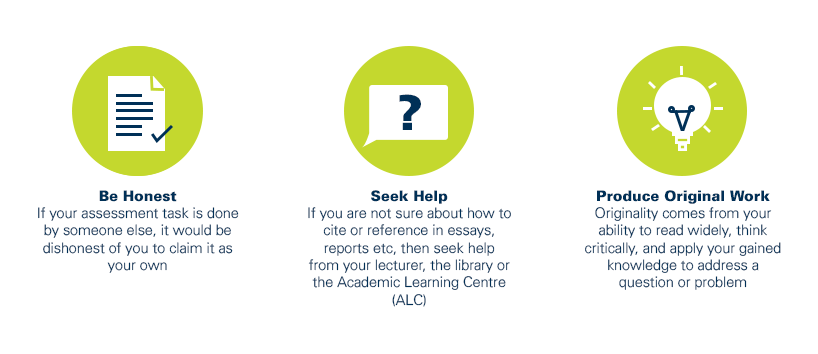
As a CQUniversity student you are expected to act honestly in all aspects of your academic work.
Any assessable work undertaken or submitted for review or assessment must be your own work. Assessable work is any type of work you do to meet the assessment requirements in the unit, including draft work submitted for review and feedback and final work to be assessed.
When you use the ideas, words or data of others in your assessment, you must thoroughly and clearly acknowledge the source of this information by using the correct referencing style for your unit. Using others’ work without proper acknowledgement may be considered a form of intellectual dishonesty.
Participating honestly, respectfully, responsibly, and fairly in your university study ensures the CQUniversity qualification you earn will be valued as a true indication of your individual academic achievement and will continue to receive the respect and recognition it deserves.
As a student, you are responsible for reading and following CQUniversity’s policies, including the Student Academic Integrity Policy and Procedure. This policy sets out CQUniversity’s expectations of you to act with integrity, examples of academic integrity breaches to avoid, the processes used to address alleged breaches of academic integrity, and potential penalties.
What is a breach of academic integrity?
A breach of academic integrity includes but is not limited to plagiarism, self-plagiarism, collusion, cheating, contract cheating, and academic misconduct. The Student Academic Integrity Policy and Procedure defines what these terms mean and gives examples.
Why is academic integrity important?
A breach of academic integrity may result in one or more penalties, including suspension or even expulsion from the University. It can also have negative implications for student visas and future enrolment at CQUniversity or elsewhere. Students who engage in contract cheating also risk being blackmailed by contract cheating services.
Where can I get assistance?
For academic advice and guidance, the Academic Learning Centre (ALC) can support you in becoming confident in completing assessments with integrity and of high standard.
What can you do to act with integrity?