Overview
This unit introduces you to the practical issues involved in the design and implementation of robust enterprise software applications enabling business-to-business and business-to-customer operations. You will learn data persistence and management of persistent objects extending your knowledge of object-oriented programming. You will learn to use well-known design patterns to build portable, highly available and maintainable software applications that require integrated use of several open-source tools. You will work in a small team to design and develop a 3-tier enterprise system with a data persistence tier, business logic layer, and a web-based presentation tier. Issues and consequences of complex computing will be discussed in the context of enterprise computing architecture and technology.
Details
Pre-requisites or Co-requisites
Prerequisite: (COIT11237 - Database Design & Implementation and COIT12200 - Software Design & Development) OR (COIT12167 - Database Use and Design and COIT12200 - Software Design & Development)
Important note: Students enrolled in a subsequent unit who failed their pre-requisite unit, should drop the subsequent unit before the census date or within 10 working days of Fail grade notification. Students who do not drop the unit in this timeframe cannot later drop the unit without academic and financial liability. See details in the Assessment Policy and Procedure (Higher Education Coursework).
Offerings For Term 2 - 2026
Attendance Requirements
All on-campus students are expected to attend scheduled classes - in some units, these classes are identified as a mandatory (pass/fail) component and attendance is compulsory. International students, on a student visa, must maintain a full time study load and meet both attendance and academic progress requirements in each study period (satisfactory attendance for International students is defined as maintaining at least an 80% attendance record).
Recommended Student Time Commitment
Each 6-credit Undergraduate unit at CQUniversity requires an overall time commitment of an average of 12.5 hours of study per week, making a total of 150 hours for the unit.
Class Timetable
Assessment Overview
Assessment Grading
This is a graded unit: your overall grade will be calculated from the marks or grades for each assessment task, based on the relative weightings shown in the table above. You must obtain an overall mark for the unit of at least 50%, or an overall grade of 'pass' in order to pass the unit. If any 'pass/fail' tasks are shown in the table above they must also be completed successfully ('pass' grade). You must also meet any minimum mark requirements specified for a particular assessment task, as detailed in the 'assessment task' section (note that in some instances, the minimum mark for a task may be greater than 50%). Consult the University's Grades and Results Policy for more details of interim results and final grades.
All University policies are available on the CQUniversity Policy site.
You may wish to view these policies:
- Grades and Results Policy
- Assessment Policy and Procedure (Higher Education Coursework)
- Review of Grade Procedure
- Student Academic Integrity Policy and Procedure
- Academic Progression Policy and Procedure
- Student Refund and Credit Balance Policy and Procedure
- Complaints Policy and Procedure
- Information and Communications Technology Acceptable Use Policy and Procedure
This list is not an exhaustive list of all University policies. The full list of University policies are available on the CQUniversity Policy site.
Feedback, Recommendations and Responses
Every unit is reviewed for enhancement each year. At the most recent review, the following staff and student feedback items were identified and recommendations were made.
Feedback from Student Evaluations
Assessment instructions need to be clearer
Improve the clarity of assessment instructions and provide additional exemplars to guide student expectations.
- Investigate and compare major enterprise software architectures and analyse the effectiveness of enterprise software systems for business operations involving diverse groups of stakeholders with varying needs
- Use contemporary enterprise software development tools and techniques to design and develop appropriate solutions for business operations
- Implement and build multi-tiered enterprise software systems in a distributed service-oriented architecture
- Work collaboratively in a team contributing to productive complex software development.
- Programming/Software Development (PROG)
- Data modelling and design (DTAN)
- Database design (DBDS)
- Software design (SWDN)
- Systems design (DESN)
- Testing (TEST)
- Systems integration and build (SINT)
- Release and deployment (RELM)
- Application support (ASUP)
Alignment of Assessment Tasks to Learning Outcomes
| Assessment Tasks | Learning Outcomes | |||
|---|---|---|---|---|
| 1 | 2 | 3 | 4 | |
| 1 - Reflective Practice Assignment - 20% | ||||
| 2 - Practical and Written Assessment - 30% | ||||
| 3 - Practical and Written Assessment - 50% | ||||
Alignment of Graduate Attributes to Learning Outcomes
| Graduate Attributes | Learning Outcomes | |||
|---|---|---|---|---|
| 1 | 2 | 3 | 4 | |
| 1 - Communication | ||||
| 2 - Problem Solving | ||||
| 3 - Critical Thinking | ||||
| 4 - Information Literacy | ||||
| 5 - Team Work | ||||
| 6 - Information Technology Competence | ||||
| 7 - Cross Cultural Competence | ||||
| 8 - Ethical practice | ||||
| 9 - Social Innovation | ||||
| 10 - First Nations Knowledges | ||||
| 11 - Aboriginal and Torres Strait Islander Cultures | ||||
Textbooks
There are no required textbooks.
IT Resources
- CQUniversity Student Email
- Internet
- Unit Website (Moodle)
- Zoom (both microphone and webcam capability)
- SpringBoot IDE, e.g. Visual Studio Code or Apache NetBeans
- OpenJDK 21
All submissions for this unit must use the referencing style: Harvard (author-date)
For further information, see the Assessment Tasks.
j.shield@cqu.edu.au
Week 1
Begin Date: 13 Jul 2026Module/Topic
1 Introduction
Chapter
Refer to the unit website for readings.
(Fernando 2022, Chp 1)
Events and Submissions/Topic
Week 2
Begin Date: 20 Jul 2026Module/Topic
2 Fundamentals
Chapter
(Carducci 2025, Chp 12)
Events and Submissions/Topic
Week 3
Begin Date: 27 Jul 2026Module/Topic
3 SpringBoot
Chapter
(Deinum 2024, Chp 1)
Events and Submissions/Topic
A1 W3 Optional practice sprint 0% due in class
Week 4
Begin Date: 03 Aug 2026Module/Topic
4 Persistence (ORM)
Chapter
(Spilcă 2021, Chp 14)
Events and Submissions/Topic
A1 W4 Sprint 1 review 20% due in class
Week 5
Begin Date: 10 Aug 2026Module/Topic
5 Interoperability (REST)
Chapter
(Reddy & Upadhyayula 2023, Chp 10)
Events and Submissions/Topic
A2 W5 Apps 7.5% due
Week 6
Begin Date: 17 Aug 2026Module/Topic
6 REST Clients
Chapter
Events and Submissions/Topic
A2 W6 Apps 7.5% due
Vacation Week
Begin Date: 24 Aug 2026Module/Topic
No classes
Chapter
Events and Submissions/Topic
Week 7
Begin Date: 31 Aug 2026Module/Topic
7 Presentation (MVC)
Chapter
(Reddy & Upadhyayula 2023, Chp 4)
Events and Submissions/Topic
A2 W7 Apps 7.5% due
Week 8
Begin Date: 07 Sep 2026Module/Topic
8 Security
Chapter
(Reddy & Upadhyayula 2023, Chp 12)
Events and Submissions/Topic
A2 W8 Apps 7.5% due
Week 9
Begin Date: 14 Sep 2026Module/Topic
9 Microservices
Chapter
(Macero García & Telang 2023, Chp 6)
Events and Submissions/Topic
A3 W9 Sprint 1 review 16.6% due in class
Week 10
Begin Date: 21 Sep 2026Module/Topic
10 Project
Chapter
Events and Submissions/Topic
A3 W10 Sprint 2 review 16.6% due in class
Week 11
Begin Date: 28 Sep 2026Module/Topic
11 Project
Chapter
Events and Submissions/Topic
A3 W11 Sprint 3 review 16.6% due in class
Unit Coordinator: Jamie Shield, Cairns,
j.shield@cqu.edu.au,
Office: 07 4037 4750
1 Reflective Practice Assignment
In this assessment, you will design, implement and test an allocated component of a clone of an enterprise system such as Uber, Netflix or Spotify. You will attend an interview (sprint review), where you demonstrate your component, explain your design and testing at both high (diagram) and low (code) levels and critically reflect on aspects such as the quality of your project. Your component might be reused for your group assessment (Assignment 3).
Repository: Create a private Git code repository and invite your tutor and the unit coordinator.
Additional Interviews: Your tutor will record your Week 4 interview for moderation. You may be asked to attend additional interviews if, for example, the recording does not provide sufficient evidence.
AI, Collaboration and Referencing: You are expected to use AI to assist with specific tasks such as drafting diagrams, text, code, refining and evaluating your work. You must critically evaluate and modify any AI-generated content you use. You must reference your uses of AI. All reused code must be referenced. Sharing of artefacts between students is not permitted.
You must submit all project artefacts at least two days prior to your Week 4 tutorial. You must attend an interview during your Week 4 tutorial. This assessment is exempt from the 72-hour submission grace period and must be completed by the stated submission date/time.
Feedback will be returned by the end of Week 6.
The interview is used to assess the quality of your project, your ability to communicate how your project works and your critical reflections. You will be assessed on aspects such as demonstration, testing, design, diagramming, code, use of tools, critical reflection on design and ability to explain (architecture, design, tests and NFRs at diagram and code level). These criteria will be assessed during a live sprint review interview during your tutorial.
- Investigate and compare major enterprise software architectures and analyse the effectiveness of enterprise software systems for business operations involving diverse groups of stakeholders with varying needs
- Use contemporary enterprise software development tools and techniques to design and develop appropriate solutions for business operations
2 Practical and Written Assessment
There are four sets of weekly apps designed to prepare you for the project. Each week you will implement small enterprise apps to demonstrate features of libraries such as persistence, REST, MVC and security.
FULL AI
You may use Al extensively throughout your work either as you wish, or as specifically directed in your assessment. Focus on directing Al to achieve your goals while demonstrating your critical thinking.
Due weeks 5, 6, 7 and 8. This assessment is exempt from the 72-hour submission grace period and must be completed by the stated submission date/time.
For most exercises, feedback will be returned immediately. Otherwise, feedback will be returned by Week 10.
The assessment consists of enterprise exercises that you will implement apps for. Each exercise will be marked according to the correctness of the answer, for example, the quality of the database artefacts produced for a persistence exercise. There are four sets of weekly exercises; each worth 7.5%.
- Use contemporary enterprise software development tools and techniques to design and develop appropriate solutions for business operations
- Implement and build multi-tiered enterprise software systems in a distributed service-oriented architecture
3 Practical and Written Assessment
In this assessment, you will design, implement and test an allocated component of a clone of an enterprise system such as Uber, Netflix or Spotify. You will work as part of a team to analyse requirements, design, implement, build, test, and document a system using an enterprise framework and quality processes. You will be responsible for at least one component of the system, including the quality of your component’s design, code and testing. You will attend interviews (sprint reviews), where you demonstrate your component, explain your design and testing at both high (diagram) and low (code) levels and critically reflect on aspects such as the quality of your project.
During Weeks 9 and 10, your client will identify additional functional and non-functional requirements that you will need to implement.
Groupwork: You must work in groups of 3 to 5 people. Your group may need to include people from other campuses.
Repository: Create a private code repository and invite your tutor and the unit coordinator. One code repository is to be used by all group members. Each member of the group is expected to make regular contributions Git. If you use tools other than Git, for example, Google Docs, you must submit copies of your artefacts to Git each week.
Additional Interviews for Moderation: Your tutor will record your interviews for moderation. You may be asked to attend additional interviews if, for example, a recording does not provide sufficient evidence.
AI, Collaboration and Referencing: You are expected to use AI to assist with specific tasks such as drafting diagrams, text, code, refining and evaluating your work. You must critically evaluate and modify any AI-generated content you use. Sharing of artefacts between groups is not permitted. You must reference your uses of AI.
You must submit all project artefacts at least one day prior to each of your Week 9-11 tutorials. You must attend interviews during your Week 9-11 tutorials. This assessment is exempt from the 72-hour submission grace period and must be completed by the stated submission date/time. Informal feedback will be provided immediately.
The marks and feedback will be returned on the day of certification of grades.
The interviews are used to assess the quality of your project, your ability to communicate how your project works and your critical reflections. You will be assessed on aspects such as demonstration, testing, design, diagramming, code, use of tools, critical reflection on design and ability to explain (architecture, design, tests and NFRs at diagram and code level). These criteria will be assessed during live sprint review interviews during your tutorials.
- Use contemporary enterprise software development tools and techniques to design and develop appropriate solutions for business operations
- Implement and build multi-tiered enterprise software systems in a distributed service-oriented architecture
- Work collaboratively in a team contributing to productive complex software development.
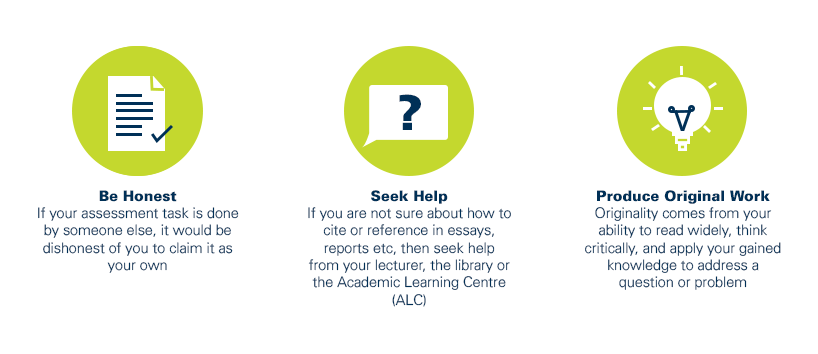
As a CQUniversity student you are expected to act honestly in all aspects of your academic work.
Any assessable work undertaken or submitted for review or assessment must be your own work. Assessable work is any type of work you do to meet the assessment requirements in the unit, including draft work submitted for review and feedback and final work to be assessed.
When you use the ideas, words or data of others in your assessment, you must thoroughly and clearly acknowledge the source of this information by using the correct referencing style for your unit. Using others’ work without proper acknowledgement may be considered a form of intellectual dishonesty.
Participating honestly, respectfully, responsibly, and fairly in your university study ensures the CQUniversity qualification you earn will be valued as a true indication of your individual academic achievement and will continue to receive the respect and recognition it deserves.
As a student, you are responsible for reading and following CQUniversity’s policies, including the Student Academic Integrity Policy and Procedure. This policy sets out CQUniversity’s expectations of you to act with integrity, examples of academic integrity breaches to avoid, the processes used to address alleged breaches of academic integrity, and potential penalties.
What is a breach of academic integrity?
A breach of academic integrity includes but is not limited to plagiarism, self-plagiarism, collusion, cheating, contract cheating, and academic misconduct. The Student Academic Integrity Policy and Procedure defines what these terms mean and gives examples.
Why is academic integrity important?
A breach of academic integrity may result in one or more penalties, including suspension or even expulsion from the University. It can also have negative implications for student visas and future enrolment at CQUniversity or elsewhere. Students who engage in contract cheating also risk being blackmailed by contract cheating services.
Where can I get assistance?
For academic advice and guidance, the Academic Learning Centre (ALC) can support you in becoming confident in completing assessments with integrity and of high standard.
What can you do to act with integrity?