Overview
You will learn the principles of distributed systems, including architecture, design, and algorithms, and how to use them in the development of distributed applications. You will explore the significant distributed system characteristics of scalability, heterogeneity, security, and failure handling in addition to the fundamentals of networking, inter-process communication, remote invocation, and operating system support. You will examine different approaches to supporting distributed applications including client/server models, web services, cloud computing, and edge computing solutions. You will learn about distributed file systems, naming, and data-related aspects of distributed transactions, and data replication. You will analyse algorithms associated with coordination and agreement. You will also critique the social impacts arising from the widespread adoption of distributed systems, including remote work, virtual communities, and privacy and security concerns. You will reinforce the core theoretical concepts by analysing a case study focused on a complex, component-based distributed system designed with robust security features.
Details
Pre-requisites or Co-requisites
Prerequisite unit: COIT20256 Object Oriented Development Anti-Requisite unit: COIT23005 Distributed Systems
Important note: Students enrolled in a subsequent unit who failed their pre-requisite unit, should drop the subsequent unit before the census date or within 10 working days of Fail grade notification. Students who do not drop the unit in this timeframe cannot later drop the unit without academic and financial liability. See details in the Assessment Policy and Procedure (Higher Education Coursework).
Offerings For Term 2 - 2026
Attendance Requirements
All on-campus students are expected to attend scheduled classes - in some units, these classes are identified as a mandatory (pass/fail) component and attendance is compulsory. International students, on a student visa, must maintain a full time study load and meet both attendance and academic progress requirements in each study period (satisfactory attendance for International students is defined as maintaining at least an 80% attendance record).
Recommended Student Time Commitment
Each 6-credit Postgraduate unit at CQUniversity requires an overall time commitment of an average of 12.5 hours of study per week, making a total of 150 hours for the unit.
Class Timetable
Assessment Overview
Assessment Grading
This is a graded unit: your overall grade will be calculated from the marks or grades for each assessment task, based on the relative weightings shown in the table above. You must obtain an overall mark for the unit of at least 50%, or an overall grade of 'pass' in order to pass the unit. If any 'pass/fail' tasks are shown in the table above they must also be completed successfully ('pass' grade). You must also meet any minimum mark requirements specified for a particular assessment task, as detailed in the 'assessment task' section (note that in some instances, the minimum mark for a task may be greater than 50%). Consult the University's Grades and Results Policy for more details of interim results and final grades.
All University policies are available on the CQUniversity Policy site.
You may wish to view these policies:
- Grades and Results Policy
- Assessment Policy and Procedure (Higher Education Coursework)
- Review of Grade Procedure
- Student Academic Integrity Policy and Procedure
- Academic Progression Policy and Procedure
- Student Refund and Credit Balance Policy and Procedure
- Complaints Policy and Procedure
- Information and Communications Technology Acceptable Use Policy and Procedure
This list is not an exhaustive list of all University policies. The full list of University policies are available on the CQUniversity Policy site.
Feedback, Recommendations and Responses
Every unit is reviewed for enhancement each year. At the most recent review, the following staff and student feedback items were identified and recommendations were made.
Feedback from Unit Coordinator self reflection
There is a need to gather feedback from students and the teaching team on the newly added content regarding 1) security topics (mutual authentication and symmetrical/asymmetrical cryptography) and 2) the complex distributed system case study, to assess their reception and integration into the course and inform necessary refinements for improved learning outcomes.
Collect feedback from the teaching team and check students' performance on the newly added content on the two topics. If necessary, make proper adjustments/updates to the content.
Feedback from Unit Coordinator self reflection
The rise of IoT, demand for low-latency applications, and growth of 5G underscore the importance of incorporating edge computing into the curriculum to equip students with knowledge of efficient and scalable computing solutions.
Introduce the modern distributed computing model of Edge Computing, along with key industry standards. Assess Edge Computing through a simplified case study, such as Smart Farming.
- Develop distributed applications using networking, inter-process communication, and remote invocation
- Design and develop distributed applications using one of the approaches to client/server models, web services, cloud computing, and edge computing solutions
- Solve problems in the distributed systems domain by applying the principles of distributed systems to authentic problems
- Critique the social impacts arising from the widespread adoption of distributed systems, including remote work, virtual communities, and privacy and security concerns
- Work collaboratively and communicate effectively as part of a productive team.
The Australian Computer Society (ACS) recognises the Skills Framework for the Information Age (SFIA). SFIA is adopted by organisations, governments and individuals in many countries and provides a widely used and consistent definition of ICT skills. SFIA is increasingly being used when developing job descriptions and role profiles. ACS members can use the tool MySFIA to build a skills profile at https://www.acs.org.au/professionalrecognition/mysfia-b2c.html
This unit contributes to the following workplace skills as defined by SFIA 9 (the SFIA code is included):
- Systems design (DESN)
- Systems integration and build (SINT)
- Programming/software development (PROG)
- Database design (DBDS)
- Functional testing (TEST)
- Non-functional testing (NFTS)
- Security operations (SCAD)
- Deployment (DEPL)
- Software configuration (PORT)
Alignment of Assessment Tasks to Learning Outcomes
| Assessment Tasks | Learning Outcomes | ||||
|---|---|---|---|---|---|
| 1 | 2 | 3 | 4 | 5 | |
| 1 - Practical Assessment - 30% | |||||
| 2 - Practical Assessment - 40% | |||||
| 3 - Written Assessment - 30% | |||||
Alignment of Graduate Attributes to Learning Outcomes
| Graduate Attributes | Learning Outcomes | ||||
|---|---|---|---|---|---|
| 1 | 2 | 3 | 4 | 5 | |
| 1 - Knowledge | |||||
| 2 - Communication | |||||
| 3 - Cognitive, technical and creative skills | |||||
| 4 - Research | |||||
| 5 - Self-management | |||||
| 6 - Ethical and Professional Responsibility | |||||
| 7 - Leadership | |||||
| 8 - First Nations Knowledges | |||||
| 9 - Aboriginal and Torres Strait Islander Cultures | |||||
Textbooks
Distributed Systems Concepts and Design
- Edition: 5 (2012) (2012)
- Authors: George Coulouris,Jean Dollimore, Tim Kindberg and Gordon Blair
- Pearson Education
- Gordon Blair Gordon Blair , UK
- ISBN: 13: 9780137521081
- Binding: Paperback
IT Resources
- CQUniversity Student Email
- Internet
- Unit Website (Moodle)
- NetBeans IDE 20
- JDK 21 (or OpenJDK 21)
All submissions for this unit must use the referencing style: Harvard (author-date)
For further information, see the Assessment Tasks.
w.li@cqu.edu.au
Week 1
Begin Date: 13 Jul 2026Module/Topic
An Introduction to Distributed Systems
Chapter
Chapter 1 and Chapter 2
Events and Submissions/Topic
Week 2
Begin Date: 20 Jul 2026Module/Topic
Inter-process Communication
Chapter
Chapter 4
Events and Submissions/Topic
Week 3
Begin Date: 27 Jul 2026Module/Topic
Distributed Objects, Remote Invocation, and Edge Computing
Chapter
Chapter 5
CQU materials
Events and Submissions/Topic
Week 4
Begin Date: 03 Aug 2026Module/Topic
Process and Thread Management - Operating System Support
Chapter
Chapter 7
Events and Submissions/Topic
Week 5
Begin Date: 10 Aug 2026Module/Topic
Security in Distributed Systems
Chapter
Chapter 11
Events and Submissions/Topic
Week 6
Begin Date: 17 Aug 2026Module/Topic
Replication and Fault Tolerance
Chapter
Chapter 18
Events and Submissions/Topic
Vacation Week
Begin Date: 24 Aug 2026Module/Topic
Chapter
Events and Submissions/Topic
Week 7
Begin Date: 31 Aug 2026Module/Topic
Name Services
Chapter
Chapter 13
Events and Submissions/Topic
Week 8
Begin Date: 07 Sep 2026Module/Topic
Coordination and Agreement
Chapter
Chapter 15
Events and Submissions/Topic
Week 9
Begin Date: 14 Sep 2026Module/Topic
Transactions, Distributed Transactions, and Concurrent Control
Chapter
Chapter 16 and 17
Events and Submissions/Topic
Week 10
Begin Date: 21 Sep 2026Module/Topic
Distributed File Systems
Chapter
Chapter 12
Events and Submissions/Topic
Week 11
Begin Date: 28 Sep 2026Module/Topic
Web Services and Mobile/Ubiquitous Computing
Chapter
Chapter 9 and Chapter 19
Events and Submissions/Topic
Week 12
Begin Date: 05 Oct 2026Module/Topic
A Complex Distributed System Case Study
Chapter
Unit Moodle online materials
Events and Submissions/Topic
Exam Week
Begin Date: 12 Oct 2026Module/Topic
Chapter
Events and Submissions/Topic
Vacation/Exam Week
Begin Date: 19 Oct 2026Module/Topic
Chapter
Events and Submissions/Topic
This is an advanced unit in MIT Course, covering the theory and practice of distributed computing. Your commitment is very important for success in this unit. Please attend each lecture and tutorial to build your knowledge and skills for development of distributed systems.
The unit coordinator contact information for this term:
DR Wei Li
School of Engineering & Technology
Central Queensland University
Rockhampton QLD 4702, Australia
Phone: + 61 7 4930 9686
Email: w.li@cqu.edu.au
1 Practical Assessment
Your task for this assignment is to develop a Simplified Edge Computing Framework for Device Layer. The framework is a typical concurrent processing model. The purpose of this assignment is to assess your competence on Java multi-threading and concurrency programming, and GUI design with multiple concurrent components. The implementation of this framework will be integrated with Assignment 2 to achieve a secured client/server interaction utilising distributed computing power.
The assignment specification and marking criteria can be accessed from the unit Moodle site.
Please note: re-attempts of this assignment are not allowed.
AI ASSESSMENT SCALE - AI PLANNING
You may use Al for planning, idea development, and research. Your final submission should show how you have developed and refined these ideas.
Week 5 Friday (14 Aug 2026) 11:59 pm AEST
Assignment 1 Due
Vacation Week Friday (28 Aug 2026)
Assignment 1 Results Release
The assignment will be assessed by the software implementation and user instruction document.
- Analysis and design of a software application for the given problem
- Implementation of the application using multi-threading and concurrency programming
- Incorporation of multiple concurrent components on GUI
- Use of good programming techniques/practices
- Rigorous testing of software application.
The detailed assessment description and marking criteria can be found under the Assessment block of the unit website.
- Develop distributed applications using networking, inter-process communication, and remote invocation
- Design and develop distributed applications using one of the approaches to client/server models, web services, cloud computing, and edge computing solutions
2 Practical Assessment
You will be tasked with a team-based software development project. You will be part of a small team to design, implement, test and document a Secured Edge Computing Framework for Edge Layer and effective communication between the device layer and the edge layer. The purpose of this assignment is to assess your competence in TCP streaming, object serialization, client/server model, and symmetrical and asymmetrical cryptography and the applications in mutual authentication and secured communication of distributed systems. Your ability to work collaboratively in a small team will also be assessed by this assignment.
The assignment specification and marking criteria can be accessed from the unit Moodle site.
Please note: re-attempts of this assignment are not allowed.
AI ASSESSMENT SCALE - AI PLANNING
You may use Al for planning, idea development, and research. Your final submission should show how you have developed and refined these ideas.
Week 10 Friday (25 Sept 2026) 11:59 pm AEST
Assignment 2 Due
Week 12 Friday (9 Oct 2026)
Assignment 2 Results Release
The assignment will be assessed by the software implementation and user instruction document.
- Analysis and design of a software application using client/server model, object serialization, and TCP streaming for the given problem
- Design of a secured distributed application using mutual authentication and symmetrical and asymmetrical cryptography
- Implementation of secured TCP communication between distributed components.
- Critique the issues involved in developing secured, reliable, and scalable distributed systems
- Work independently and collaboratively in small teams
The detailed assessment description and marking criteria can be found under the Assessment block of the unit website.
- Design and develop distributed applications using one of the approaches to client/server models, web services, cloud computing, and edge computing solutions
- Solve problems in the distributed systems domain by applying the principles of distributed systems to authentic problems
- Work collaboratively and communicate effectively as part of a productive team.
3 Written Assessment
Your task for this assignment is to research and address some key issues in the area of distributed systems or distributed computing. The purpose of this assignment is to assess your understanding of the key issues or competence to apply the key principles to distributed computing. Writing of a formal academic report is also assessed.
The assignment specification and marking criteria can be accessed from the unit Moodle site.
Please note: re-attempts of this assignment are not allowed.
AI ASSESSMENT SCALE - AI PLANNING
You may use Al for planning, idea development, and research. Your final submission should show how you have developed and refined these ideas.
Week 12 Friday (9 Oct 2026) 11:59 pm AEST
Assignment 3 Due
The marked assignment will be returned on the day of Certification of Grades
The assignment will be assessed by understanding of the given key issues and application of the key principles.
- Clear demonstration of your understanding of the topics given in the specification
- Critical review of relevant information and logical construction of arguments
- Relevant discussion of the impact of specific aspects of distributed systems
- Appropriate formatting, clarity of expressions, and relevant and correct use of references.
The detailed assessment description and marking criteria can be found under the Assessment block of the unit website.
- Solve problems in the distributed systems domain by applying the principles of distributed systems to authentic problems
- Critique the social impacts arising from the widespread adoption of distributed systems, including remote work, virtual communities, and privacy and security concerns
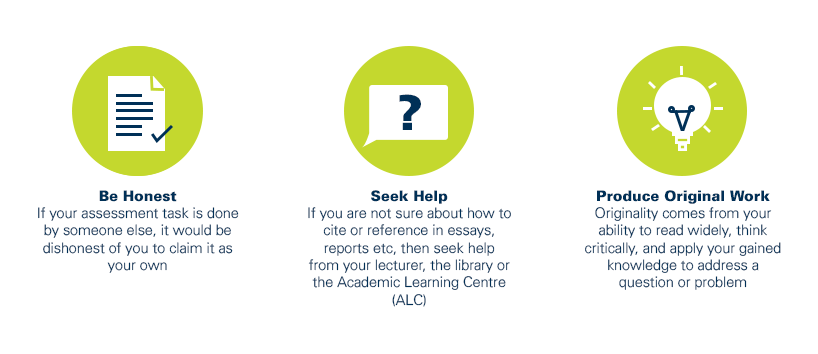
As a CQUniversity student you are expected to act honestly in all aspects of your academic work.
Any assessable work undertaken or submitted for review or assessment must be your own work. Assessable work is any type of work you do to meet the assessment requirements in the unit, including draft work submitted for review and feedback and final work to be assessed.
When you use the ideas, words or data of others in your assessment, you must thoroughly and clearly acknowledge the source of this information by using the correct referencing style for your unit. Using others’ work without proper acknowledgement may be considered a form of intellectual dishonesty.
Participating honestly, respectfully, responsibly, and fairly in your university study ensures the CQUniversity qualification you earn will be valued as a true indication of your individual academic achievement and will continue to receive the respect and recognition it deserves.
As a student, you are responsible for reading and following CQUniversity’s policies, including the Student Academic Integrity Policy and Procedure. This policy sets out CQUniversity’s expectations of you to act with integrity, examples of academic integrity breaches to avoid, the processes used to address alleged breaches of academic integrity, and potential penalties.
What is a breach of academic integrity?
A breach of academic integrity includes but is not limited to plagiarism, self-plagiarism, collusion, cheating, contract cheating, and academic misconduct. The Student Academic Integrity Policy and Procedure defines what these terms mean and gives examples.
Why is academic integrity important?
A breach of academic integrity may result in one or more penalties, including suspension or even expulsion from the University. It can also have negative implications for student visas and future enrolment at CQUniversity or elsewhere. Students who engage in contract cheating also risk being blackmailed by contract cheating services.
Where can I get assistance?
For academic advice and guidance, the Academic Learning Centre (ALC) can support you in becoming confident in completing assessments with integrity and of high standard.
What can you do to act with integrity?