Overview
This unit introduces you to the components, architectures and industrial standards involved in the design and implementation of enterprise software applications. The focus will be on applications employing 3 tiers including a presentation tier, an application tier and a data persistence tier. You will work in a small team for the design and development of a 3-tier enterprise application project. In terms of technology, both traditional desktop applications and web-based applications will be covered and different technology platforms will be compared and contrasted. Emerging technologies and current research issues will be discussed.
Details
Pre-requisites or Co-requisites
Pre-requisites: COIT20256 Data Structures and Algorithms, COIT20247 Database Design and Development Co-requisites: COIT20257 Distributed Systems: Principles and Development, COIT20258 Software Engineering
Important note: Students enrolled in a subsequent unit who failed their pre-requisite unit, should drop the subsequent unit before the census date or within 10 working days of Fail grade notification. Students who do not drop the unit in this timeframe cannot later drop the unit without academic and financial liability. See details in the Assessment Policy and Procedure (Higher Education Coursework).
Offerings For Term 1 - 2026
Attendance Requirements
All on-campus students are expected to attend scheduled classes - in some units, these classes are identified as a mandatory (pass/fail) component and attendance is compulsory. International students, on a student visa, must maintain a full time study load and meet both attendance and academic progress requirements in each study period (satisfactory attendance for International students is defined as maintaining at least an 80% attendance record).
Recommended Student Time Commitment
Each 6-credit Postgraduate unit at CQUniversity requires an overall time commitment of an average of 12.5 hours of study per week, making a total of 150 hours for the unit.
Class Timetable
Assessment Overview
Assessment Grading
This is a graded unit: your overall grade will be calculated from the marks or grades for each assessment task, based on the relative weightings shown in the table above. You must obtain an overall mark for the unit of at least 50%, or an overall grade of 'pass' in order to pass the unit. If any 'pass/fail' tasks are shown in the table above they must also be completed successfully ('pass' grade). You must also meet any minimum mark requirements specified for a particular assessment task, as detailed in the 'assessment task' section (note that in some instances, the minimum mark for a task may be greater than 50%). Consult the University's Grades and Results Policy for more details of interim results and final grades.
All University policies are available on the CQUniversity Policy site.
You may wish to view these policies:
- Grades and Results Policy
- Assessment Policy and Procedure (Higher Education Coursework)
- Review of Grade Procedure
- Student Academic Integrity Policy and Procedure
- Academic Progression Policy and Procedure
- Student Refund and Credit Balance Policy and Procedure
- Complaints Policy and Procedure
- Information and Communications Technology Acceptable Use Policy and Procedure
This list is not an exhaustive list of all University policies. The full list of University policies are available on the CQUniversity Policy site.
Feedback, Recommendations and Responses
Every unit is reviewed for enhancement each year. At the most recent review, the following staff and student feedback items were identified and recommendations were made.
Feedback from Unit Coordinator self reflection
The latest Jakarta EE has deprecated Jakarta Faces Managed Beans and replaced them with CDI (Contexts and Dependency Injection) beans.
Replace Jakarta Faces Managed Beans with CDI Beans and update relevant contents for Weeks 8 to 10.
Feedback from Unit Coordinator self reflection and students feedback
Additional Zoom sessions to support students facing programming challenges.
Provide some drop-in sessions for Jakarta EE programming and components integration.
- Compare and contrast the major enterprise software architectures
- Analyse and evaluate the design options available for a given scenario depicting a complex enterprise problem
- Design and implement complex 3-tier applications
- Work collaboratively and communicate effectively as part of a productive team
- Assess the potential impact of emerging enterprise computing technologies to various stakeholders
- Critically evaluate key research areas in enterprise computing.
- Systems Design (DESN)
- Software Design (SWDN)
- Programming/Software Development (PROG)
- Data modelling and design (DTAN)
- Database design (DBDS)
- User experience design (HCEV)
- Testing (TEST)
- Release and deployment (RELM)
- Application support (ASUP).
Alignment of Assessment Tasks to Learning Outcomes
| Assessment Tasks | Learning Outcomes | |||||
|---|---|---|---|---|---|---|
| 1 | 2 | 3 | 4 | 5 | 6 | |
| 1 - Written Assessment - 20% | ||||||
| 2 - Practical and Written Assessment - 50% | ||||||
| 3 - Written Assessment - 30% | ||||||
Alignment of Graduate Attributes to Learning Outcomes
| Graduate Attributes | Learning Outcomes | |||||
|---|---|---|---|---|---|---|
| 1 | 2 | 3 | 4 | 5 | 6 | |
| 1 - Knowledge | ||||||
| 2 - Communication | ||||||
| 3 - Cognitive, technical and creative skills | ||||||
| 4 - Research | ||||||
| 5 - Self-management | ||||||
| 6 - Ethical and Professional Responsibility | ||||||
| 7 - Leadership | ||||||
| 8 - First Nations Knowledges | ||||||
| 9 - Aboriginal and Torres Strait Islander Cultures | ||||||
Alignment of Assessment Tasks to Graduate Attributes
| Assessment Tasks | Graduate Attributes | ||||||||
|---|---|---|---|---|---|---|---|---|---|
| 1 | 2 | 3 | 4 | 5 | 6 | 7 | 8 | 9 | |
| 1 - Written Assessment - 20% | |||||||||
| 2 - Practical and Written Assessment - 50% | |||||||||
| 3 - Written Assessment - 30% | |||||||||
Textbooks
Beginning Java EE 7
- (2013)
- Authors: Antonio Goncalves
- Apress
- New York New York , NY , USA
- ISBN: 978-1-4302-4626-8
IT Resources
- CQUniversity Student Email
- Internet
- Unit Website (Moodle)
- MySQL Server, MySQL Workbench, and MySQL Connector/J 8.0.29 or a higher version
- GlassFish Application Server 7.0.9
- JDK 21
- NetBeans IDE 20 or a higher version
All submissions for this unit must use the referencing style: Harvard (author-date)
For further information, see the Assessment Tasks.
m.jha@cqu.edu.au
Week 1
Begin Date: 09 Mar 2026Module/Topic
Enterprise Computing & Jakarta EE
Chapter
Chapters 1 & 4
Events and Submissions/Topic
Week 2
Begin Date: 16 Mar 2026Module/Topic
Object-Relational Mapping
Chapter
Chapter 5
Events and Submissions/Topic
Week 3
Begin Date: 23 Mar 2026Module/Topic
Managing Persistent Objects
Chapter
Chapters 5 & 6
Events and Submissions/Topic
Week 4
Begin Date: 30 Mar 2026Module/Topic
Callbacks & Listeners
Chapter
Chapter 6
Events and Submissions/Topic
Week 5
Begin Date: 06 Apr 2026Module/Topic
Enterprise Beans
Chapter
Chapter 7
Events and Submissions/Topic
Week 6
Begin Date: 13 Apr 2026Module/Topic
Session Beans
Chapter
Chapters 7 & 8
Events and Submissions/Topic
Vacation Week
Begin Date: 20 Apr 2026Module/Topic
Vacation
Chapter
Events and Submissions/Topic
Week 7
Begin Date: 27 Apr 2026Module/Topic
Callbacks, Timer Service & Authorization
Chapter
Chapter 8
Events and Submissions/Topic
Week 8
Begin Date: 04 May 2026Module/Topic
Jakarta Faces
Chapter
Chapter 10
Events and Submissions/Topic
Week 9
Begin Date: 11 May 2026Module/Topic
Pages & Components
Chapter
Chapter 10
Events and Submissions/Topic
Week 10
Begin Date: 18 May 2026Module/Topic
Processing, Navigation & Web Security
Chapter
Chapter 11
Events and Submissions/Topic
Week 11
Begin Date: 25 May 2026Module/Topic
Restful Web Service
Chapter
Chapter 15
Events and Submissions/Topic
Week 12
Begin Date: 01 Jun 2026Module/Topic
Microservices
Chapter
Unit developed materials
Events and Submissions/Topic
Exam Week
Begin Date: 08 Jun 2026Module/Topic
Chapter
Events and Submissions/Topic
Vacation/Exam Week
Begin Date: 15 Jun 2026Module/Topic
Chapter
Events and Submissions/Topic
Unit Coordinator: Associate Professor Dr Meena Jha
Room 2.09, Level 2; 400 Kent Street; Sydney NSW 2000
P +61 2 9324 5776 | X 55776 |
Email: m.jha@cqu.edu.au
1 Written Assessment
You are required to complete this individual assessment consisting of a written report (12 marks) and mandatory oral defense (8 marks). Your task for this assignment is to write a research report to critically review major enterprise computing architecture: Jakarta EE, Spring Framework, and .NET. The purpose of this assignment is to assess your competence on the basis of critiquing ability, clarification of technical issues, & formal academic report writing.
Part 1: Written Report: You must submit a 1500-word MS Word report via Moodle addressing enterprise application frameworks. Your report must follow the following structure:
Section 1: Introduction: You present a concise overview of enterprise application development and available technologies. You describe your report layout and preview subsequent sections.
Section 2: Layered and Component-Based Model: You research and compare Jakarta EE, Spring Framework, and .NET as layered/component-based models. You demonstrate understanding of the three fundamental layers: Persistence layer; Business logic layer; and Presentation layer
You provide a comparative table of key components each framework offers for building scalable applications.
Section 3: Differences Across Frameworks: You analyse differences between Jakarta EE, Spring, and .NET in: Programming languages; Cross-platform capabilities; Platform specialization; and Strengths and use cases.
Section 4: Framework Selection Guide: You provide decision criteria for: Java vs .NET: Flexibility vs standardization, project scale/complexity and Jakarta EE vs Spring: Philosophy/approach, community support.
Conclusion: You summarize framework strengths and provide recommendations.
Part 2: Oral Defense – Mandatory
You must attend a 10–12-minute live defense (scheduled Week [5 and 6]) where you:
Present 6-minute summary of your report's key findings
Answer 4 minutes of Q&A. Defense questions will probe: Technical depth beyond your written submission; Real-world application scenarios; Framework trade-offs with specific constraints; Live diagramming (e.g., "Draw Spring's dependency injection flow")
Please note: Re-attempts of this assignment are not allowed. This assessment is exempt from the 72-hour submission grace period and must be completed by the stated submission date/time. All assessments should be submitted via Moodle.
The assignment must be submitted as a single Microsoft Word document. You must submit your assignment via the unit Moodle site. Any hardcopy or email submission will not be accepted. After the marked assignments are returned, any late submissions will incur late penalties according to CQU's policy. No presentation deck is required for oral defense.
AI Assessment Scale - AI Collaboration: You may use AI to assist with specific tasks such as drafting text, refining and evaluating your work. You must critically evaluate and modify any AI-generated content you use.
Week 4 Wednesday (1 Apr 2026) 11:45 pm AEST
All assessments should be submitted via Moodle. Late submissions are subject to CQU's late-submission penalty policies.
Week 6 Wednesday (15 Apr 2026)
Two weeks after the submission
Assessment Criteria
Report Structure & Research 12 marks
Section 1: Introduction (2 marks)
Section 2: Layered and Component-Based Model (4 marks)
Section 3: Differences Across Frameworks (3 marks)
Section 4: Framework Selection Guide (3 marks)
Mandatory
Oral Defense (8 marks):
Technical Mastery (3 marks)
Framework knowledge, scenario analysis (3 marks)
Authenticity & Delivery (2 marks)
- Compare and contrast the major enterprise software architectures
- Assess the potential impact of emerging enterprise computing technologies to various stakeholders
- Critically evaluate key research areas in enterprise computing.
- Knowledge
- Communication
- Research
2 Practical and Written Assessment
You will be tasked with a team-based software development project. You will be part of a small team (3-4 members) to design, implement, test, & document a secured three-tier enterprise application system. The purpose of this assignment is to assess your competence in enterprise computing paradigms, including Jakarta Faces (JSF), Enterprise Jakarta Beans (EJB), Jakarta Persistence API (JPA), and Jakarta Web Security programming, & the interoperations between layers of an enterprise application. Your ability to work collaboratively in a small team will also be assessed by this assignment. This assessment evaluates: Technical competence in enterprise computing paradigms and layer interoperations; Individual contributions; and Authentic learning beyond AI-generated code.
Your team must produce:
Fully functional three-tier enterprise application (JSF presentation → EJB business logic → JPA persistence)
Comprehensive security implementation (authentication, authorization, data protection)
Technical documentation, test results, deployment guide
Live demonstration of all layers working together.
Individual Accountability Components – Mandatory.
1. GitHub Contribution Tracking (Individual)
Each team member maintains their own branch
Minimum 30 commits per person with meaningful code changes (not merges/docs)
Code authorship tracked via git blame – AI-generated code patterns flagged
Weekly code reviews for technical understanding
2. Layer Ownership & Solo Defense
Each team member is assigned one specific layer (JSF, EJB, or JPA) and must:
Individually explain their layer's implementation to the class tutor (10 minutes)
Live code a small feature in their layer without notes/AI assistance
Answer technical questions about their layer's integration with other layers
Cannot rely on teammates during their solo defense
3. Weekly Progress Check-ins
Individual 5-minute standups with tutor each week
Demonstrate your commits from that week and explain technical decisions
No group presentations – solo accountability
4. Individual Self-Reflection Report (Individual)
Submit separately via Moodle (800 words):
You must reflect on:
Specific technical contributions to your assigned layer (JSF/EJB/JPA/Security)
Challenges overcome and technical solutions implemented
Layer integration issues and your role in resolving them
What you learned about enterprise architecture that you could not have learned from AI
Evidence of your GitHub commits with screenshots and commit explanations
Reflection Prompt: "Describe a specific technical problem you solved in your layer that required understanding both your layer and at least one other layer. Explain why AI could not have solved this problem without your architectural understanding."
5. Team Final Presentation
Live demo of complete integrated application
Each member presents their layer (3 minutes each)
Q&A where individuals answer questions about their specific contributions
Submission Requirements
Team: Full source code (GitHub repo), documentation, deployment package
Individual: Self-reflection report (Word), layer defense recording, GitHub contribution summary
Please note: Re-attempts of this assignment are not allowed. This assessment is exempt from the 72-hour submission grace period and must be completed by the stated submission date/time. All assessments should be submitted via Moodle. This assessment has two parts.
Part A: Team Deliverables: All team members must submit identical copies. Your submission must contain all of the required documents as a single ZIP file. This part contains required Software & Documents. All code must be demonstrated live to your tutor during scheduled tutorial class time. Failure to complete this live demonstration will render your entire submission ineligible for marking.
Part B: Individual Deliverables: Each team member submits individually self-reflection report.
AI Assessment Scale - AI Collaboration: You may use AI to assist with specific tasks such as drafting text, refining and evaluating your work. You must critically evaluate and modify any AI-generated content you use.
Week 10 Wednesday (20 May 2026) 11:45 pm AEST
Late submissions are subject to the university's late submission penalty policies.
Week 12 Wednesday (3 June 2026)
Assessment Criteria
Team components = 35 marks (70%). Individual components = 15 marks (30%).
Individual Components (30% of total marks = 15 marks)
- GitHub Contribution Tracking 3 marks
- Layer Ownership & Solo Defense 4 marks
- Self-Reflection Report 8 marks
Team Components (70% of total marks = 35 marks)
- Technical Implementation 14 marks
- Integration & Testing 8 marks
- Documentation & Deployment 7 marks
- Weekly Progress Check-ins 3 marks
- Final Team Presentation in class to the tutor 3 marks
Total: 50 marks
- Analyse and evaluate the design options available for a given scenario depicting a complex enterprise problem
- Design and implement complex 3-tier applications
- Work collaboratively and communicate effectively as part of a productive team
- Knowledge
- Communication
- Cognitive, technical and creative skills
- Self-management
- Ethical and Professional Responsibility
- Leadership
3 Written Assessment
This assignment is an individual work. Your task for this assignment is to address some key issues in the area of enterprise computing architecture. The purpose of this assignment is to assess your understanding to the key issues and competence to apply the key principles to enterprise computing in Data Persistence; Authentication and Authorization; RESTful Web Services; and Microservices. You are required to answer questions demonstrating your understanding of enterprise computing concepts covered in this unit. This written assessment verifies theoretical knowledge and prevents AI misuse through mandatory oral defense.
Submission Requirements: You must submit a single Microsoft Word document (1800-2000 words) via the unit website (Moodle). All code must be demonstrated live to your tutor during scheduled tutorial time. Failure to complete this live demonstration renders your submission ineligible for marking.
AI Integrity Measures – Mandatory Oral Defense
Live verification will occur during your scheduled tutorial in week 12. You must complete the required tasks in the tutorial.
Please note: Re-attempts of this assignment are not allowed. This assessment is exempt from the 72-hour submission grace period and must be completed by the stated submission date/time. All assessments must be submitted via Moodle.
AI Assessment Scale - AI Collaboration: You may use AI to assist with specific tasks such as drafting text, refining and evaluating your work. You must critically evaluate and modify any AI-generated content you use.
Week 12 Wednesday (3 June 2026) 11:45 pm AEST
The marked assignment will be returned on the day of Certification of Grades
All code must be demonstrated live during the tutorial time.
Question 1: Data Persistence (5 marks)
Question 2: EJB and Backing Beans (7 marks)
Question 3: Authentication and Authorization (4 marks)
Question 4: RESTful Web Services (5 marks)
Question 5: Microservices (4 marks)
Live verification during tutorial conducted (5 marks), if this is not done, the assessment is ineligible for marking.
- Compare and contrast the major enterprise software architectures
- Analyse and evaluate the design options available for a given scenario depicting a complex enterprise problem
- Assess the potential impact of emerging enterprise computing technologies to various stakeholders
- Critically evaluate key research areas in enterprise computing.
- Knowledge
- Communication
- Research
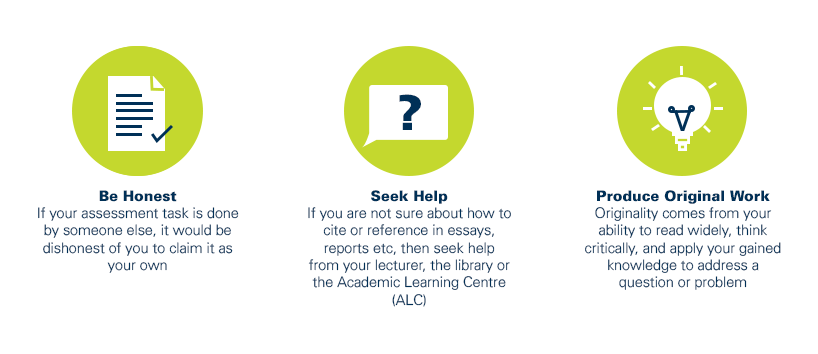
As a CQUniversity student you are expected to act honestly in all aspects of your academic work.
Any assessable work undertaken or submitted for review or assessment must be your own work. Assessable work is any type of work you do to meet the assessment requirements in the unit, including draft work submitted for review and feedback and final work to be assessed.
When you use the ideas, words or data of others in your assessment, you must thoroughly and clearly acknowledge the source of this information by using the correct referencing style for your unit. Using others’ work without proper acknowledgement may be considered a form of intellectual dishonesty.
Participating honestly, respectfully, responsibly, and fairly in your university study ensures the CQUniversity qualification you earn will be valued as a true indication of your individual academic achievement and will continue to receive the respect and recognition it deserves.
As a student, you are responsible for reading and following CQUniversity’s policies, including the Student Academic Integrity Policy and Procedure. This policy sets out CQUniversity’s expectations of you to act with integrity, examples of academic integrity breaches to avoid, the processes used to address alleged breaches of academic integrity, and potential penalties.
What is a breach of academic integrity?
A breach of academic integrity includes but is not limited to plagiarism, self-plagiarism, collusion, cheating, contract cheating, and academic misconduct. The Student Academic Integrity Policy and Procedure defines what these terms mean and gives examples.
Why is academic integrity important?
A breach of academic integrity may result in one or more penalties, including suspension or even expulsion from the University. It can also have negative implications for student visas and future enrolment at CQUniversity or elsewhere. Students who engage in contract cheating also risk being blackmailed by contract cheating services.
Where can I get assistance?
For academic advice and guidance, the Academic Learning Centre (ALC) can support you in becoming confident in completing assessments with integrity and of high standard.
What can you do to act with integrity?