Overview
In this integrative capstone project, you will develop a significant and authentic mobile application. Specifically, you will employ the technical and professional skills that you have developed in your course of study to contribute to the development of an authentic web, hybrid, or native app. You will apply a relevant software engineering methodology, taking into account best practices in testing, quality assurance, and cybersecurity. You are required to use and document typical project management processes to ensure that the project is delivered on time and within budget.
Details
Pre-requisites or Co-requisites
Pre-Requisites: COIT20268 Responsive Web Design, COIT20269 Mobile Web Apps, COIT20270 App Development for Mobile Platforms, PPMP20007 Project Management Concepts, COIT20246 Networking and Cyber Security.
Important note: Students enrolled in a subsequent unit who failed their pre-requisite unit, should drop the subsequent unit before the census date or within 10 working days of Fail grade notification. Students who do not drop the unit in this timeframe cannot later drop the unit without academic and financial liability. See details in the Assessment Policy and Procedure (Higher Education Coursework).
Offerings For Term 1 - 2026
Attendance Requirements
All on-campus students are expected to attend scheduled classes - in some units, these classes are identified as a mandatory (pass/fail) component and attendance is compulsory. International students, on a student visa, must maintain a full time study load and meet both attendance and academic progress requirements in each study period (satisfactory attendance for International students is defined as maintaining at least an 80% attendance record).
Recommended Student Time Commitment
Each 12-credit Postgraduate unit at CQUniversity requires an overall time commitment of an average of 25 hours of study per week, making a total of 300 hours for the unit.
Class Timetable
Assessment Overview
Assessment Grading
This is a graded unit: your overall grade will be calculated from the marks or grades for each assessment task, based on the relative weightings shown in the table above. You must obtain an overall mark for the unit of at least 50%, or an overall grade of 'pass' in order to pass the unit. If any 'pass/fail' tasks are shown in the table above they must also be completed successfully ('pass' grade). You must also meet any minimum mark requirements specified for a particular assessment task, as detailed in the 'assessment task' section (note that in some instances, the minimum mark for a task may be greater than 50%). Consult the University's Grades and Results Policy for more details of interim results and final grades.
All University policies are available on the CQUniversity Policy site.
You may wish to view these policies:
- Grades and Results Policy
- Assessment Policy and Procedure (Higher Education Coursework)
- Review of Grade Procedure
- Student Academic Integrity Policy and Procedure
- Academic Progression Policy and Procedure
- Student Refund and Credit Balance Policy and Procedure
- Complaints Policy and Procedure
- Information and Communications Technology Acceptable Use Policy and Procedure
This list is not an exhaustive list of all University policies. The full list of University policies are available on the CQUniversity Policy site.
Feedback, Recommendations and Responses
Every unit is reviewed for enhancement each year. At the most recent review, the following staff and student feedback items were identified and recommendations were made.
Feedback from Unit Coordinator reflection
Forming larger groups to work on larger-scale projects, where each student contributes based on their individual skills, significantly enhances job readiness post-graduation. This hybrid approach, combining elements of capstone projects and internships, offers students a comprehensive experience. By using this method, students can develop a broader range of professional skills, often exceeding those gained through traditional capstone projects or internships, as demonstrated during this term's implementation.
Continue implementing the hybrid approach of larger group projects, combining elements of capstone projects and internships, to enhance students’ job readiness and provide a comprehensive, industry-relevant learning experience.
- Elicit and analyse stakeholder and system requirements, and develop a traceable project plan covering scope, schedule, resources, risks, and quality.
- Apply appropriate project management methods to execute, monitor, and control the project, including progress tracking, change/risk management, and stakeholder reporting.
- Design, implement, and evaluate an ICT solution of appropriate complexity, demonstrating alignment to requirements and verifying quality through systematic testing.
- Demonstrate professional capability through effective teamwork and communication, technical readiness (tools, practices, self-directed learning), and ethical/legal responsibility (e.g., privacy, security, IP, accessibility).
The Australian Computer Society (ACS), the professional association for Australia's ICT sector, recognises the Skills Framework for the Information Age (SFIA). SFIA is adopted by organisations, governments, and individuals in many countries and provides a widely used and consistent definition of ICT skills. SFIA is increasingly being used when developing job descriptions and role profiles. ACS members can use the tool MySFIA to build a skills profile.
This unit contributes to the following workplace skills as defined by SFIA 9 (the SFIA code is included):
- Artificial intelligence (AI) and data ethics (AIDE)
- Requirements definition and management (REQM)
- Programming/software development (PROG)
- Software design (SWDN)
- Database design (DBDS)
- Data modelling and design (DTAN)
- Systems integration and build (SINT)
- Configuration management (CFMG)
- Testing (TEST)
- Research (RSCH)
- User experience evaluation (USEV)
- Application support (ASUP)
- System installation and removal (HSIN)
- Information security (SCTY)
Alignment of Assessment Tasks to Learning Outcomes
| Assessment Tasks | Learning Outcomes | |||
|---|---|---|---|---|
| 1 | 2 | 3 | 4 | |
| 1 - Written Assessment - 20% | ||||
| 2 - Written Assessment - 25% | ||||
| 3 - Project (applied) - 40% | ||||
| 4 - Presentation - 15% | ||||
Alignment of Graduate Attributes to Learning Outcomes
| Graduate Attributes | Learning Outcomes | |||
|---|---|---|---|---|
| 1 | 2 | 3 | 4 | |
| 1 - Knowledge | ||||
| 2 - Communication | ||||
| 3 - Cognitive, technical and creative skills | ||||
| 4 - Research | ||||
| 5 - Self-management | ||||
| 6 - Ethical and Professional Responsibility | ||||
| 7 - Leadership | ||||
| 8 - First Nations Knowledges | ||||
| 9 - Aboriginal and Torres Strait Islander Cultures | ||||
Textbooks
There are no required textbooks.
IT Resources
- CQUniversity Student Email
- Internet
- Unit Website (Moodle)
- Zoom (both microphone and webcam capability)
All submissions for this unit must use the referencing style: Harvard (author-date)
For further information, see the Assessment Tasks.
a.bokani@cqu.edu.au
Week 1
Begin Date: 09 Mar 2026Module/Topic
Weekly meeting with Unit Coordinator (UC)
Chapter
Events and Submissions/Topic
We will meet the entire class, select a topic, create a team, and formulate project specifications. We will then agree upon a specific meeting time and discuss the assessments and reporting requirements for each week.
Week 2
Begin Date: 16 Mar 2026Module/Topic
Weekly meeting with the project mentor.
Chapter
Events and Submissions/Topic
Introduce yourself to the project mentor and lay out a plan for the term.
Week 3
Begin Date: 23 Mar 2026Module/Topic
Weekly meeting with the project mentor.
Chapter
Events and Submissions/Topic
Week 4
Begin Date: 30 Mar 2026Module/Topic
Weekly meeting with the project mentor.
Chapter
Events and Submissions/Topic
Week 5
Begin Date: 06 Apr 2026Module/Topic
Weekly meeting with the project mentor.
Chapter
Events and Submissions/Topic
Discussion on progress report during weekly consultation with the mentor.
Week 6
Begin Date: 13 Apr 2026Module/Topic
Weekly meeting with the project mentor.
Chapter
Events and Submissions/Topic
Vacation Week
Begin Date: 20 Apr 2026Module/Topic
Term-break
Chapter
Events and Submissions/Topic
Week 7
Begin Date: 27 Apr 2026Module/Topic
Weekly meeting with the project mentor.
Chapter
Events and Submissions/Topic
Week 8
Begin Date: 04 May 2026Module/Topic
Weekly meeting with the project mentor.
Chapter
Events and Submissions/Topic
Discussion on progress report during weekly consultation with the mentor.
Week 9
Begin Date: 11 May 2026Module/Topic
Weekly meeting with the project mentor.
Chapter
Events and Submissions/Topic
Project progress Due: Week 9 Monday (11 May 2026) 11:45 pm AEST
Week 10
Begin Date: 18 May 2026Module/Topic
Weekly meeting with the project mentor.
Chapter
Events and Submissions/Topic
Week 11
Begin Date: 25 May 2026Module/Topic
Weekly meeting with the project mentor.
Chapter
Events and Submissions/Topic
Discussion on progress report during weekly consultation with the mentor.
Week 12
Begin Date: 01 Jun 2026Module/Topic
Weekly meeting with the project mentor.
Chapter
Events and Submissions/Topic
We will appreciate your completion of the Unit Evaluation survey with your feedback. Thanks.
Exam Week
Begin Date: 08 Jun 2026Module/Topic
Chapter
Events and Submissions/Topic
Project Presentation Due: Exam Week Tuesday (9 June 2026) 11:45 pm AEST
Vacation/Exam Week
Begin Date: 15 Jun 2026Module/Topic
Chapter
Events and Submissions/Topic
Unit Coordinator:
Dr. Ayub Bokani
Email: a.bokani@cqu.edu.au
1 Written Assessment
Task Description This assessment 1 is split into two (2) deliverables:
- Part A: Group Project Proposal (12%)
- Part B: Individual Reflection and Learning Plan (8%)
This is the first milestone of your capstone project and focuses on defining, justifying, and planning your proposed project. You are required to form a group of three to four members (subject to class size) and identify an industry-based or casebased project. Projects must be approved by the project facilitator (Unit Coordinator or campus lecturer). You are strongly encouraged to source a real-world project. The proposed project must demonstrate sufficient complexity to showcase your business analysis knowledge and skills while remaining feasible to complete within the term.
Part A: Group Project Proposal (12%):
As a group, you must submit a Project Proposal that includes:
- Project background and justification.
- Problem statement and objectives.
- Innovative aspects of the proposed solution.
- Project scope, assumptions, and constraints.
- High-level requirements overview.
- Work decomposition (e.g., WBS, backlog structure).
- Delivery roadmap (e.g., Gantt chart).
- Risk identification and mitigation plan.
- Quality considerations.
- Team structure, roles, and responsibilities matrix.
- Identification of task leads for each major deliverable.
- Required tools and resources.
The proposal should clearly demonstrate conceptual thinking, analytical capability, and alignment between business needs and the proposed solution.
Part B: Individual Learning Plan(8%):
Each student must submit an Individual Learning Plan that includes:
- Identification of personal learning goals relevant to the project.
- Knowledge and skills gaps are to be developed during the term.
- Planned strategies for acquiring required skills.
- Description of meaningful contributions to the team.
- Reflection on professional responsibility and ethical considerations.
This component assesses your readiness for self-directed learning, professional growth, and accountability within a team environment.
AI Assessment Scale - AI Collaboration
You may use AI to assist with specific tasks such as drafting text, refining and evaluating your work. You must critically evaluate and modify any AI-generated content you use.
Individual and Group Contributions:
The proposal is primarily group work (12%), but individual reflections (8%) will be marked separately.
All group submissions must include a clear declaration of individual contributions. If contributions vary significantly, individual marks may differ. Failure to declare contributions may result in a deduction as specified in the marking guide.
IMPORTANT NOTE
This assessment is exempt from the 72-hour submission grace period and must be submitted by the stated due date and time. Please refer to Moodle for detailed marking criteria and submission instructions.
Week 4 Monday (30 Mar 2026) 11:45 pm AEST
Week 6 Monday (13 Apr 2026)
Assessment Criteria-Project Proposal and Learning Plan
Part A: Group Project Proposal (12%)
The Project Proposal and Plan will be assessed based on the following criteria:
1. Project Justification and Problem Definition
- Clarity of problem statement.
- Strength of project rationale and business need.
- Alignment between objectives and the identified organisational issue.
- Demonstration of innovative thinking.
2. Scope, Requirements and Feasibility
- Clear definition of project scope, assumptions, and constraints.
- High-level identification of stakeholder needs.
- Evidence that the project is feasible within the term.
- Appropriate level of complexity.
3. Project Planning and Structure
- Quality and logical structure of work decomposition (WBS).
- Deliverable roadmap(e.g., Gantt chart).
- Clear allocation of roles and responsibilities.
- Identification of task leads.
4. Risk and Quality Considerations
- Identification of key project risks.
- Appropriateness of mitigation strategies.
- Consideration of quality management principles.
5. Team Organisation and Resource Planning
- Clear team structure and role clarity.
- Identification of required tools, technologies, and resources.
6. Professional Presentation and Communication
- Logical organisation and structure.
- Academic writing quality.
- Correct use of Harvard referencing (where applicable).
- Professional formatting and clarity
Part B: Individual Learning Plan(8%)
The Individual Learning Plan will be assessed based on:
1. Identification of Learning Goals
- Clear identification of relevant technical and professional skills.
- Alignment between learning goals and project requirements.
2. Self-Assessment and Knowledge Gap
- Analysis Insightful reflection on current competencies.
- Identification of realistic skill gaps.
3. Strategy for Skill Development
- Practical and achievable strategies for skill improvement.
- Evidence of self-directed learning planning.
4. Planned Contribution and Professional Responsibility
- Clear explanation of intended project contributions.
- Demonstration of accountability and teamwork readiness.
- Awareness of ethical and professional considerations.
- Elicit and analyse stakeholder and system requirements, and develop a traceable project plan covering scope, schedule, resources, risks, and quality.
- Demonstrate professional capability through effective teamwork and communication, technical readiness (tools, practices, self-directed learning), and ethical/legal responsibility (e.g., privacy, security, IP, accessibility).
2 Written Assessment
This assessment 2 (25%) is split into two (2) deliverables:
- Progress Report 1 (12.5%)
- Progress Report 2 (12.5%)
Assessment 2 requires you to submit an individual Progress Report that demonstrates your contributions and development throughout the project. The purpose of this task is to monitor your engagement, technical progress, and professional participation before submission of the final report.
In this report, you must provide clear and verifiable evidence of the work you have completed in alignment with the responsibilities assigned to you in the approved Project Proposal. Evidence may include GitHub commit history, Jira or Trello task logs, modelling artefacts, updated requirements documentation, design specifications, prototype components, meeting action items, or other approved project management tools. The evidence must clearly identify your individual contribution and demonstrate measurable progress.
You must also demonstrate substantial advancement in requirements development, analysis, and design activities relevant to your role in the project. The submission should show refinement and evolution of artefacts rather than repetition of earlier drafts.
In addition, you are required to provide a reflective self-assessment outlining tasks completed, challenges encountered, problem-solving strategies used, time management, contribution to team collaboration, and areas for improvement. The reflection should demonstrate accountability and professional growth.
Attendance and meaningful participation in scheduled mentor meetings are expected throughout the term. Evidence of engagement, including meeting discussions and assigned action items, may be considered when evaluating your progress.
AI Assessment Scale - AI Collaboration
You may use AI to assist with specific tasks such as drafting text, refining and evaluating your work. You must critically evaluate and modify any AI-generated content you use.
IMPORTANT NOTE
This assessment is exempt from the 72-hour submission grace period and must be submitted by the stated due date and time. Please refer to Moodle for detailed marking criteria and submission instructions.
Progress Report 1 (Week 6) | Progress Report 2 (Week 9)
The feedback will be returned within 2 weeks of the submission due date.
Assessment Criteria- Project Progress
1. Evidence of Individual Contribution
- Clear alignment between completed tasks and those allocated in the Project Proposal.
- Strong, verifiable evidence provided (e.g., GitHub commits, Jira logs, modelling artefacts, documentation updates).
- Demonstration of measurable and meaningful progress.
- Clear distinction of individual work.
2. Progress in Achieving Project Goals
- Demonstrated advancement in requirements development.
- Refinement of documentation and models.
- Logical progression toward final deliverables.
- Technical accuracy and depth.
3. Reflection and Professional Accountability
- Critical self-assessment.
- Identification of challenges and problem-solving approaches.
- Evidence of learning and improvement.
- Clear action plan for the remaining project work.
4. Minimum Engagement and Professional Conduct
- Attendance and weekly progress updates are required via the online system or in a meeting.
- Demonstrated understanding of assigned responsibilities.
- Professional communication and structured presentation of the report.
- Apply appropriate project management methods to execute, monitor, and control the project, including progress tracking, change/risk management, and stakeholder reporting.
- Design, implement, and evaluate an ICT solution of appropriate complexity, demonstrating alignment to requirements and verifying quality through systematic testing.
- Demonstrate professional capability through effective teamwork and communication, technical readiness (tools, practices, self-directed learning), and ethical/legal responsibility (e.g., privacy, security, IP, accessibility).
3 Project (applied)
Assessment 3 is one deliverable:
- Project Final Report (40%)
To pass this assessment, you must achieve a minimum of 50% of the total 40% weighting and meet any specified minimum mark requirements for the individual components.
The Project Final Report is the culminating deliverable of the capstone project. It must comprehensively document the technical artefacts, analytical processes, and project management activities undertaken throughout the entire project lifecycle. This report should demonstrate the integration of business analysis knowledge, project management principles, technical design capability, and professional practice developed during your course of study.
Task Description:
As a group, you are required to submit a comprehensive and professionally structured Final Report that documents:
- The complete scope and outcomes of the project.
- The development and refinement of project artefacts.
- The evolution of requirements and design decisions.
- The implementation and/or prototype development (where applicable).
- The evaluation of proposed solutions.
- Ethical and professional considerations encountered or anticipated.
The structure and specific technical artefacts included in the report may vary depending on the chosen topic and the problem being addressed. However, the report must clearly demonstrate systematic progression from problem identification to solution evaluation.
AI Assessment Scale - AI Collaboration
You may use AI to assist with specific tasks such as drafting text, refining and evaluating your work. You must critically evaluate and modify any AI-generated content you use.
IMPORTANT NOTE
This assessment is exempt from the 72-hour submission grace period and must be submitted by the stated due date and time. Please refer to Moodle for detailed marking criteria and submission instructions.
Exam Week Tuesday (9 June 2026) 11:45 pm AEST
The feedback will be returned on the day of certification of grades.
Assessment Criteria-Project Final Report
1. Project Overview and Problem Definition
- Clear articulation of project background, objectives, and scope.
- Logical alignment between the identified problem and the proposed solution.
- Comprehensive stakeholder overview.
- Demonstration of conceptual clarity and contextual understanding.
High marks require a well-framed, coherent, and strategically aligned project foundation.
2. Quality of Technical Artefacts
- Completeness and relevance of artefacts.
- Logical progression from requirements to design and solution.
- Depth and technical accuracy of documentation.
- Clear traceability between requirements, models, and the proposed solution.
- Appropriateness of modelling techniques and analytical tools.
- Integration of security, risk, and change management considerations.
High marks require technically rigorous, well-structured, and professionally presented artefacts demonstrating advanced analytical capability.
3. Analysis, Evaluation and Recommendations
- Critical evaluation of candidate solutions.
- Justification of design decisions.
- Consideration of feasibility and limitations.
- Evidence-based recommendations.
- Alignment between analysis findings and proposed improvements.
High marks require strong critical thinking, evidence-based reasoning, and practical relevance.
4. Ethical and Professional Considerations
- Identification of ethical issues encountered or anticipated.
- Consideration of privacy, security, and professional standards.
- Awareness of legal and intellectual property implications.
- Reflection on societal and organisational impacts.
- Demonstration of professional responsibility.
High marks require critical engagement rather than superficial description.
5. Project Management Integration
- Evidence of structured planning and execution.
- Risk and change management summary.
- Quality assurance considerations.
- Clear documentation of team structure and coordination.
High marks require a clear demonstration of systematic project management practice.
6. Professional Presentation and Academic Quality
- Logical structure and clarity.
- Professional formatting and organisation.
- Technical writing quality.
- Proper Harvard referencing.
- Elicit and analyse stakeholder and system requirements, and develop a traceable project plan covering scope, schedule, resources, risks, and quality.
- Design, implement, and evaluate an ICT solution of appropriate complexity, demonstrating alignment to requirements and verifying quality through systematic testing.
- Demonstrate professional capability through effective teamwork and communication, technical readiness (tools, practices, self-directed learning), and ethical/legal responsibility (e.g., privacy, security, IP, accessibility).
4 Presentation
Assessment 4 is split into two (2) deliverables:
- Final Presentation (10%)
- Individual Reflection (5%)
Expectations of Final Presentation
Online/distance students are required to present their slides live via Zoom, while on-campus students must deliver a poster presentation. You must demonstrate a live system or prototype during your presentation. Further details will be provided on the Moodle site.
Expectations of Individual Reflection
You are expected to provide an individual reflection on your experience, demonstrating insight into your performance, learning outcomes, strengths, challenges, and areas for future improvement.
AI Assessment Scale - AI Collaboration
You may use AI to assist with specific tasks such as drafting text, refining and evaluating your work. You must critically evaluate and modify any AI-generated content you use. You may receive a Zero (0) in this assessment if you fail to appear on the planned demonstration/presentation day.
IMPORTANT NOTE
This assessment is exempt from the 72‑hour submission grace period.
Exam Week Tuesday (9 June 2026) 11:45 pm AEST
The feedback will be returned on the day of certification of grades.
Assessment Criteria-Final Presentation
1. Content Quality and Relevance
- Clear explanation of the project problem, objectives, and solution.
- Sufficient technical depth.
- Appropriate and meaningful contributions.
- Reflection on key lessons learned.
- Relevance to the discipline/major.
2. Demonstration of Prototype/System
- Effective demonstration of system, model, or solution.
- Appropriate technologies selected and shown.
- Clear evidence of applied knowledge and technical skills.
3. Organisation and Flow
- Logical structure and smooth transitions between presenters.
- Effective use of visual aids.
- Professional preparation.
- Staying within the allocated time limit.
Individual Reflection:
- You are required to write a reflection on your learning experiences throughout the project life cycle, highlighting the knowledge, skills, challenges, and professional growth you developed.
- Apply appropriate project management methods to execute, monitor, and control the project, including progress tracking, change/risk management, and stakeholder reporting.
- Demonstrate professional capability through effective teamwork and communication, technical readiness (tools, practices, self-directed learning), and ethical/legal responsibility (e.g., privacy, security, IP, accessibility).
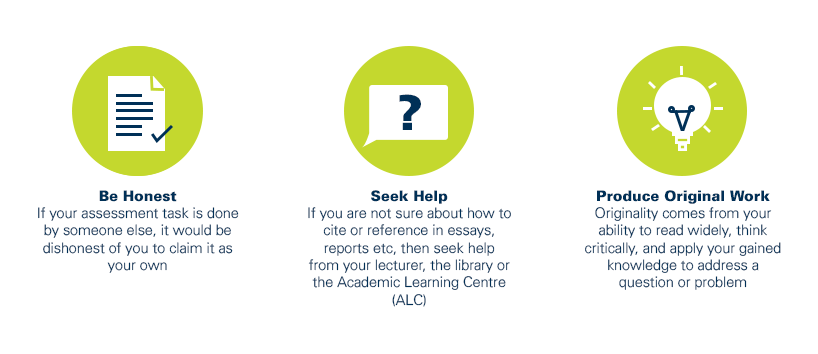
As a CQUniversity student you are expected to act honestly in all aspects of your academic work.
Any assessable work undertaken or submitted for review or assessment must be your own work. Assessable work is any type of work you do to meet the assessment requirements in the unit, including draft work submitted for review and feedback and final work to be assessed.
When you use the ideas, words or data of others in your assessment, you must thoroughly and clearly acknowledge the source of this information by using the correct referencing style for your unit. Using others’ work without proper acknowledgement may be considered a form of intellectual dishonesty.
Participating honestly, respectfully, responsibly, and fairly in your university study ensures the CQUniversity qualification you earn will be valued as a true indication of your individual academic achievement and will continue to receive the respect and recognition it deserves.
As a student, you are responsible for reading and following CQUniversity’s policies, including the Student Academic Integrity Policy and Procedure. This policy sets out CQUniversity’s expectations of you to act with integrity, examples of academic integrity breaches to avoid, the processes used to address alleged breaches of academic integrity, and potential penalties.
What is a breach of academic integrity?
A breach of academic integrity includes but is not limited to plagiarism, self-plagiarism, collusion, cheating, contract cheating, and academic misconduct. The Student Academic Integrity Policy and Procedure defines what these terms mean and gives examples.
Why is academic integrity important?
A breach of academic integrity may result in one or more penalties, including suspension or even expulsion from the University. It can also have negative implications for student visas and future enrolment at CQUniversity or elsewhere. Students who engage in contract cheating also risk being blackmailed by contract cheating services.
Where can I get assistance?
For academic advice and guidance, the Academic Learning Centre (ALC) can support you in becoming confident in completing assessments with integrity and of high standard.
What can you do to act with integrity?