Overview
Artificial Intelligence (AI) is transforming the way we interact with technology, enabling machines to think, learn, and adapt in ways that mimic human intelligence. From intelligent chatbots to autonomous robotics, AI is becoming an essential part of our everyday lives and has the potential to transform entire industries. This unit introduces the core concepts of AI, starting with foundational principles and real-world applications. You will explore key machine learning approaches, including both supervised and unsupervised learning, and examine advanced topics such as reinforcement learning, classical and heuristic search strategies, and deep learning, with a focus on convolutional and recurrent neural networks for tasks like image classification and natural language processing. Additionally, you will examine ethical AI practices, addressing the societal impact of AI and the importance of ensuring fairness, transparency, and accountability in AI systems. The unit also covers cutting-edge trends like cloud-based AI and AI at the edge, which are shaping the future of AI deployment. Through programming and problem-based assessments, you will gain both theoretical knowledge and practical skills in modern AI technologies.
Details
Pre-requisites or Co-requisites
Pre-requisite: COIT20245 Introduction to Programming
Important note: Students enrolled in a subsequent unit who failed their pre-requisite unit, should drop the subsequent unit before the census date or within 10 working days of Fail grade notification. Students who do not drop the unit in this timeframe cannot later drop the unit without academic and financial liability. See details in the Assessment Policy and Procedure (Higher Education Coursework).
Offerings For Term 1 - 2026
Attendance Requirements
All on-campus students are expected to attend scheduled classes - in some units, these classes are identified as a mandatory (pass/fail) component and attendance is compulsory. International students, on a student visa, must maintain a full time study load and meet both attendance and academic progress requirements in each study period (satisfactory attendance for International students is defined as maintaining at least an 80% attendance record).
Recommended Student Time Commitment
Each 6-credit Postgraduate unit at CQUniversity requires an overall time commitment of an average of 12.5 hours of study per week, making a total of 150 hours for the unit.
Class Timetable
Assessment Overview
Assessment Grading
This is a graded unit: your overall grade will be calculated from the marks or grades for each assessment task, based on the relative weightings shown in the table above. You must obtain an overall mark for the unit of at least 50%, or an overall grade of 'pass' in order to pass the unit. If any 'pass/fail' tasks are shown in the table above they must also be completed successfully ('pass' grade). You must also meet any minimum mark requirements specified for a particular assessment task, as detailed in the 'assessment task' section (note that in some instances, the minimum mark for a task may be greater than 50%). Consult the University's Grades and Results Policy for more details of interim results and final grades.
All University policies are available on the CQUniversity Policy site.
You may wish to view these policies:
- Grades and Results Policy
- Assessment Policy and Procedure (Higher Education Coursework)
- Review of Grade Procedure
- Student Academic Integrity Policy and Procedure
- Academic Progression Policy and Procedure
- Student Refund and Credit Balance Policy and Procedure
- Complaints Policy and Procedure
- Information and Communications Technology Acceptable Use Policy and Procedure
This list is not an exhaustive list of all University policies. The full list of University policies are available on the CQUniversity Policy site.
Feedback, Recommendations and Responses
Every unit is reviewed for enhancement each year. At the most recent review, the following staff and student feedback items were identified and recommendations were made.
Feedback from Student feedback
Too much material and too little time.
This unit is designed as an introduction to AI, providing a broad overview of major subareas to prepare students for advanced units such as COIT29224 Evolutionary Computation and COIT29225 Neural Networks and Deep Learning. In response to feedback, the two weekly topics on Cloud AI and Edge AI will be combined into one week, allowing for extended coverage of Deep Learning with an additional week.
Feedback from Student feedback
Students reported improved understanding of AI, with weekly quizzes suggested as a useful addition.
A summative quiz could be introduced in tutorials following major topic areas, such as Machine Learning or Search Techniques (typically spanning two to three weeks), to reinforce key concepts, provide timely feedback, and support ongoing student engagement.
- Explain key AI principles, including machine learning, deep learning, classical and heuristic search, and differentiate between supervised, unsupervised, and reinforcement learning paradigms.
- Implement machine learning models to solve real-world problems such as image classification and natural language processing in a modern programming language.
- Evaluate the role of emerging technologies, such as cloud-based AI and AI at the edge, in improving the efficiency and performance of AI applications.
- Examine responsible AI practices and ethical challenges in AI development, focusing on ethical standards and societal impact.
The Australian Computer Society (ACS) recognises the Skills Framework for the Information Age (SFIA). SFIA is adopted by organisations, governments and individuals in many countries and provides a widely used and consistent definition of ICT skills. SFIA is increasingly being used when developing job descriptions and role profiles. ACS members can use the tool MySFIA to build a skills profile.
This unit contributes to the following workplace skills as defined by SFIA 9 (the SFIA code is included):
- Data analytics (DAAN)
- Data science (DATS)
- Data engineering (DENG)
- Machine Learning (MLNG)
- Programming/Software Development (PROG)
Alignment of Assessment Tasks to Learning Outcomes
| Assessment Tasks | Learning Outcomes | |||
|---|---|---|---|---|
| 1 | 2 | 3 | 4 | |
| 1 - Practical Assessment - 30% | ||||
| 2 - Written Assessment - 25% | ||||
| 3 - Project (applied) - 45% | ||||
Alignment of Graduate Attributes to Learning Outcomes
| Graduate Attributes | Learning Outcomes | |||
|---|---|---|---|---|
| 1 | 2 | 3 | 4 | |
| 1 - Knowledge | ||||
| 2 - Communication | ||||
| 3 - Cognitive, technical and creative skills | ||||
| 4 - Research | ||||
| 5 - Self-management | ||||
| 6 - Ethical and Professional Responsibility | ||||
| 7 - Leadership | ||||
| 8 - First Nations Knowledges | ||||
| 9 - Aboriginal and Torres Strait Islander Cultures | ||||
Textbooks
Artificial Intelligence Programming with Python From Zero to Hero
- Authors: Perry Xiao
- ISBN: 978-1-119-82086-4
Artificial Intelligence with Python: Your complete guide to building intelligent apps using Python 3. x
- (2020)
- Authors: Artasanchez, A., & Joshi, P.
- Packt Publishing Ltd
- ISBN: 978-1-83921-953-5
Introduction to Responsible AI - Implement Ethical AI Using Python
- Authors: Avinash Manure, Shaleen Bengani, Saravanan S
- ISBN: 978-1-4842-9981-4
IT Resources
- CQUniversity Student Email
- Internet
- Unit Website (Moodle)
- Anaconda Data Science Platform (Individual - Free Distribution)
- Python 3.10 (or higher)
- Google Colab
All submissions for this unit must use the referencing style: American Psychological Association 7th Edition (APA 7th edition)
For further information, see the Assessment Tasks.
w.kwan@cqu.edu.au
Week 1
Begin Date: 09 Mar 2026Module/Topic
* Introduction to Artificial Intelligence
- Branches of AI
- Real-world Use Cases
Chapter
Artificial Intelligence with Python (2nd edition), 2020, Artasanchez and Joshi, ISBN 978-1-83921-953-5:
- Chapter 1 and 2
Events and Submissions/Topic
Week 2
Begin Date: 16 Mar 2026Module/Topic
* Machine Learning Overview
* Supervised Learning:
- Classification
- Regression
Chapter
Artificial Intelligence Programming with Python - From Zero to Hero, 2022, Perry Xiao, ISBN 978-1-119-82086-4:
- Chapter 3.1 - 3.2
Events and Submissions/Topic
Week 3
Begin Date: 23 Mar 2026Module/Topic
* Unsupervised Learning:
- Clustering
- Dimensionality Reduction
Chapter
Artificial Intelligence Programming with Python - From Zero to Hero, 2022, Perry Xiao, ISBN 978-1-119-82086-4:
- Chapter 3.3 - 3.4
Events and Submissions/Topic
Week 4
Begin Date: 30 Mar 2026Module/Topic
* Reinforcement Learning:
- Model-based vs. Model-free
- Applications of RL
Chapter
Artificial Intelligence Programming with Python - From Zero to Hero, 2022, Perry Xiao, ISBN 978-1-119-82086-4:
- Chapter 3.6
Events and Submissions/Topic
Week 5
Begin Date: 06 Apr 2026Module/Topic
* Search Techniques:
- Uninformed (DFS and BFS)
- Informed (Heuristic)
Chapter
Artificial Intelligence with Python (2nd edition), 2020, Artasanchez and Joshi, ISBN 978-1-83921-953-5:
- Chapter 10
Events and Submissions/Topic
Week 6
Begin Date: 13 Apr 2026Module/Topic
* Metaheuristic Search
- Genetic Algorithm
- Particle Swarm Optimisation
Chapter
Artificial Intelligence with Python (2nd edition), 2020, Artasanchez and Joshi, ISBN 978-1-83921-953-5:
- Chapter 11
Optimization Algorithms, 2024, Khamis, A., ISBN 978-1-63343-883-5:
- Chapter 9
Events and Submissions/Topic
Vacation Week
Begin Date: 20 Apr 2026Module/Topic
Chapter
Events and Submissions/Topic
Week 7
Begin Date: 27 Apr 2026Module/Topic
* Artificial Neural Networks
- Perceptron vs. Multi-Layer Network
- Activation Functions
- Backpropagation and Gradient Descent
Chapter
Artificial Intelligence with Python (2nd edition), 2020, Artasanchez and Joshi, ISBN 978-1-83921-953-5:
- Chapter 19
Artificial Intelligence Programming with Python - From Zero to Hero, 2022, Perry Xiao, ISBN 978-1-119-82086-4:
- Chapter 4
Events and Submissions/Topic
Week 8
Begin Date: 04 May 2026Module/Topic
* Convolutional Neural Networks
- Deep Learning Introduction
- Building Blocks for CNNs
- Image Classification Example
Chapter
Artificial Intelligence with Python (2nd edition), Artasanchez and Joshi, ISBN 978-1-83921-953-5:
- Chapter 21
Artificial Intelligence Programming with Python - From Zero to Hero, 2022, Perry Xiao, ISBN 978-1-119-82086-4:
- Chapter 4.3 - 4.8
Events and Submissions/Topic
Week 9
Begin Date: 11 May 2026Module/Topic
CNN and Transfer Learning
Image Classification with Pre-trained Models
Chapter
Artificial Intelligence Programming with Python - From Zero to Hero, 2022, Perry Xiao, ISBN 978-1-119-82086-4:
- Chapter 5
Events and Submissions/Topic
Week 10
Begin Date: 18 May 2026Module/Topic
Natural Language Processing (NLP)
Applications and NLP Pipeline Stages
Chapter
Artificial Intelligence Programming with Python - From Zero to Hero, 2022, Perry Xiao, ISBN 978-1-119-82086-4: Chapter 10
Events and Submissions/Topic
Week 11
Begin Date: 25 May 2026Module/Topic
Responsible AI Development
- Introduction to Responsible AI
- Building Ethical AI Systems
Chapter
Introduction to Responsible AI: Implement Ethical AI Using Python, 2023, Manure et al., ISBN 978-1-4842-9981-4:
Chapters 1 and 2
Responsible AI Algorithm Design, LinkedIn Learning, Berkun, I., URL: https://www.linkedin.com/learning/responsible-ai-algorithm-design/welcome-to-responsible-ai?u=2147761
Events and Submissions/Topic
Week 12
Begin Date: 01 Jun 2026Module/Topic
Advanced AI Computing
Chapter
AI at the Edge: Solving Real-World Problems with Embedded Machine Learning, 2023, Daniel Situnayake, Jenny Plunkett, ISBN 978-1-098-12020-7
- Chapters 1-2, 8-9
Events and Submissions/Topic
Exam Week
Begin Date: 08 Jun 2026Module/Topic
Chapter
Events and Submissions/Topic
Vacation/Exam Week
Begin Date: 15 Jun 2026Module/Topic
Chapter
Events and Submissions/Topic
Unit Coordinator
Associate Professor Paul Kwan
Email: w.kwan@cqu.edu.au
1 Practical Assessment
This assignment requires students to apply machine learning knowledge developed through lectures and hands-on tutorials to analyse a dataset representing a real-world problem. Students will implement the key stages of the machine learning (ML) workflow—data exploration, preprocessing, model selection, training, evaluation, and interpretation—while analysing, evaluating, and justifying the decisions made at each stage based on evidence from the dataset and concepts covered in the unit. Programming will be done in Python using appropriate machine learning libraries and submitted as an annotated IPython notebook containing executable code, explanations, and the outputs generated from running each cell. The notebook must be runnable in Jupyter Notebook or Google Colab and clearly document the progression of the analysis. In addition, students will submit a concise PowerPoint presentation that explains, in their own words, the key stages of the ML workflow, the rationale for major decisions, and visualisations of the results. The final component is a short viva conducted in Week 6 tutorials, during which students will orally explain and defend their analysis using the PowerPoint slides.
Week 5 Friday 11:45 pm AEST
Within 2 weeks of the due date or within 2 weeks of submission (whichever is later)
The marking criteria are structured around the three submitted components of the assessment. The annotated IPython notebook is assessed on the correctness and completeness of the machine learning implementation in Python, the quality of embedded explanations and annotations, the alignment between code, outputs, and interpretations, and the justification of analytical decisions supported by evidence from the dataset. The PowerPoint presentation is assessed on the clarity and coherence with which students summarise the machine learning workflow, explain key decisions in their own words, and use appropriate data visualisations to communicate results and limitations. The viva is assessed on students’ ability to orally explain, justify, and defend their analysis, respond to questions about their modelling choices and results, and demonstrate conceptual understanding of the work they have submitted.
The marking criteria will be further expanded on the unit Moodle. Please ensure to read through the marking criteria carefully before submitting your work.
AI ASSESSMENT SCALE - AI PLANNING
You may use Al for planning, idea development, and research. Your final submission should show how you have developed and refined these ideas.
Note: This unit involves programming. For programming assignments you can get examples and ideas from AI, but you must not include code in your program that was generated by AI. You must write the code in your application yourself. If asked, you must be able to explain any of the code submitted and you must be capable of writing similar code under invigilated, test conditions if required to do so. In addition, you must only use the language features and techniques covered in the unit.
- Explain key AI principles, including machine learning, deep learning, classical and heuristic search, and differentiate between supervised, unsupervised, and reinforcement learning paradigms.
- Implement machine learning models to solve real-world problems such as image classification and natural language processing in a modern programming language.
2 Written Assessment
This assignment assesses students’ conceptual understanding of heuristic and metaheuristic search techniques through the analysis of a practical optimisation or search problem. Students will be provided with a real-world problem scenario characterised by a large or complex search space, where exhaustive or optimal search methods are impractical. Drawing on content covered in related lectures and tutorials, students are required to analyse the problem, explain why classical search techniques such as breadth-first or depth-first search may be insufficient, and justify the use of one or more heuristic or metaheuristic approaches, such as Genetic Algorithms or Particle Swarm Optimisation.
Students are encouraged to support their reasoning by referencing relevant publications from the literature (e.g. textbooks, review papers, or applied studies) to justify modelling choices and trade-offs, with all sources clearly and correctly cited. Students must articulate how the chosen method(s) would represent solutions, guide the search process, and balance considerations such as solution quality, computational cost, and time constraints. Rather than describing algorithms in isolation, the focus is on reasoning about algorithm–problem fit, limitations, and practical considerations. The submission is a concise written analysis of no more than 1000 words (including references).
Week 8 Friday 11:45 pm AEST
Within 2 weeks of the due date or within 2 weeks of submission (whichever is later)
There are several main marking criteria, including "Problem Characterisation", "Analysis of Classical Search Limitations", "Heuristic or Metaheuristic Reasoning", "Trade-offs, Risks, and Limitations", and "Reflection on Practical Use".
The marking criteria will be provided on the unit Moodle. Please ensure to read through the marking criteria carefully before submitting your work.
AI ASSESSMENT SCALE - AI PLANNING
You may use Al for planning, idea development, and research. Your final submission should show how you have developed and refined these ideas.
- Evaluate the role of emerging technologies, such as cloud-based AI and AI at the edge, in improving the efficiency and performance of AI applications.
- Examine responsible AI practices and ethical challenges in AI development, focusing on ethical standards and societal impact.
3 Project (applied)
This assignment requires students to work in groups to apply deep learning techniques to a real-world problem, using Python to implement and evaluate their solution, while demonstrating individual understanding and contribution. As a group, students will preprocess a dataset, adapt and fine-tune one or more pre-trained deep learning models, and design and evaluate the training process. Students will analyse model performance, interpret results, and identify limitations in relation to the problem context.
The group submission includes an annotated IPython notebook, which documents the implementation, explanations, and outputs of the analysis, along with a written report and a recorded presentation that summarise the approach, results, and key design decisions. In addition, each student must submit an individual reflection that clearly describes their personal contributions to the project, including the aspects of the implementation or analysis they were responsible for, challenges encountered, and lessons learned. Assessment will consider both the quality of the group outcomes and each student’s demonstrated understanding and ownership of the work.
Week 12 Friday 11:45 pm AEST
Within 2 weeks of the due date or within 2 weeks of submission (whichever is later)
The marking criteria cover both group and individual components. The annotated IPython notebook is assessed on the correctness of the Python implementation, data preparation, and the alignment between code, explanations, and outputs. Model selection and adaptation evaluates the suitability of the chosen pre-trained model(s) and how effectively they are applied to the task. Model training and evaluation focuses on the training design, use of appropriate performance metrics, and interpretation of results. The written report and recorded presentation are assessed on clarity, organisation, and effective communication of key decisions and results. The individual reflection assesses each student’s contribution, understanding, challenges encountered, and insights gained from the group project.
The marking criteria will be provided on the unit Moodle. Please ensure to read through the marking criteria carefully before submitting your work.
AI ASSESSMENT SCALE - AI PLANNING
You may use Al for planning, idea development, and research. Your final submission should show how you have developed and refined these ideas.
Note: This unit involves programming. For programming assignments you can get examples and ideas from AI, but you must not include code in your program that was generated by AI. You must write the code in your application yourself. If asked, you must be able to explain any of the code submitted and you must be capable of writing similar code under invigilated, test conditions if required to do so. In addition, you must only use the language features and techniques covered in the unit.
- Explain key AI principles, including machine learning, deep learning, classical and heuristic search, and differentiate between supervised, unsupervised, and reinforcement learning paradigms.
- Implement machine learning models to solve real-world problems such as image classification and natural language processing in a modern programming language.
- Evaluate the role of emerging technologies, such as cloud-based AI and AI at the edge, in improving the efficiency and performance of AI applications.
- Examine responsible AI practices and ethical challenges in AI development, focusing on ethical standards and societal impact.
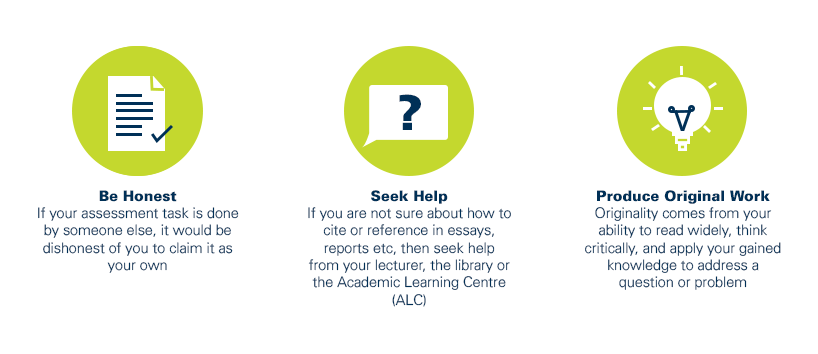
As a CQUniversity student you are expected to act honestly in all aspects of your academic work.
Any assessable work undertaken or submitted for review or assessment must be your own work. Assessable work is any type of work you do to meet the assessment requirements in the unit, including draft work submitted for review and feedback and final work to be assessed.
When you use the ideas, words or data of others in your assessment, you must thoroughly and clearly acknowledge the source of this information by using the correct referencing style for your unit. Using others’ work without proper acknowledgement may be considered a form of intellectual dishonesty.
Participating honestly, respectfully, responsibly, and fairly in your university study ensures the CQUniversity qualification you earn will be valued as a true indication of your individual academic achievement and will continue to receive the respect and recognition it deserves.
As a student, you are responsible for reading and following CQUniversity’s policies, including the Student Academic Integrity Policy and Procedure. This policy sets out CQUniversity’s expectations of you to act with integrity, examples of academic integrity breaches to avoid, the processes used to address alleged breaches of academic integrity, and potential penalties.
What is a breach of academic integrity?
A breach of academic integrity includes but is not limited to plagiarism, self-plagiarism, collusion, cheating, contract cheating, and academic misconduct. The Student Academic Integrity Policy and Procedure defines what these terms mean and gives examples.
Why is academic integrity important?
A breach of academic integrity may result in one or more penalties, including suspension or even expulsion from the University. It can also have negative implications for student visas and future enrolment at CQUniversity or elsewhere. Students who engage in contract cheating also risk being blackmailed by contract cheating services.
Where can I get assistance?
For academic advice and guidance, the Academic Learning Centre (ALC) can support you in becoming confident in completing assessments with integrity and of high standard.
What can you do to act with integrity?