Overview
Blockchain is a decentralised digital ledger with a growing list of records called blocks, which contain timestamp data, cryptographic information and transaction details. The use of blockchain technologies in cryptocurrency has grown rapidly in recent years. Besides cryptocurrencies in the financial industry, the potential for blockchain technologies in other industries is huge. In terms of achieving sustainability, blockchain has the ability to drive business process efficiency and transparency across industries, which in turn ensures better usage of resources and creates value. This unit will introduce you to the fundamentals and impact of blockchain technologies on businesses, relevant architectures, blockchain applications, and security implications. This unit aims to provide you with a solid theoretical foundation while also providing you with an opportunity to develop your own blockchain application for solving a real-world sustainability problem in relation to one of social, economic, environmental or technological issues.
Details
Pre-requisites or Co-requisites
Pre-requisite: COIT20246
Important note: Students enrolled in a subsequent unit who failed their pre-requisite unit, should drop the subsequent unit before the census date or within 10 working days of Fail grade notification. Students who do not drop the unit in this timeframe cannot later drop the unit without academic and financial liability. See details in the Assessment Policy and Procedure (Higher Education Coursework).
Offerings For Term 2 - 2026
Attendance Requirements
All on-campus students are expected to attend scheduled classes - in some units, these classes are identified as a mandatory (pass/fail) component and attendance is compulsory. International students, on a student visa, must maintain a full time study load and meet both attendance and academic progress requirements in each study period (satisfactory attendance for International students is defined as maintaining at least an 80% attendance record).
Recommended Student Time Commitment
Each 6-credit Postgraduate unit at CQUniversity requires an overall time commitment of an average of 12.5 hours of study per week, making a total of 150 hours for the unit.
Class Timetable
Assessment Overview
Assessment Grading
This is a graded unit: your overall grade will be calculated from the marks or grades for each assessment task, based on the relative weightings shown in the table above. You must obtain an overall mark for the unit of at least 50%, or an overall grade of 'pass' in order to pass the unit. If any 'pass/fail' tasks are shown in the table above they must also be completed successfully ('pass' grade). You must also meet any minimum mark requirements specified for a particular assessment task, as detailed in the 'assessment task' section (note that in some instances, the minimum mark for a task may be greater than 50%). Consult the University's Grades and Results Policy for more details of interim results and final grades.
All University policies are available on the CQUniversity Policy site.
You may wish to view these policies:
- Grades and Results Policy
- Assessment Policy and Procedure (Higher Education Coursework)
- Review of Grade Procedure
- Student Academic Integrity Policy and Procedure
- Academic Progression Policy and Procedure
- Student Refund and Credit Balance Policy and Procedure
- Complaints Policy and Procedure
- Information and Communications Technology Acceptable Use Policy and Procedure
This list is not an exhaustive list of all University policies. The full list of University policies are available on the CQUniversity Policy site.
Feedback, Recommendations and Responses
Every unit is reviewed for enhancement each year. At the most recent review, the following staff and student feedback items were identified and recommendations were made.
Feedback from Unit coordinator's reflection and Teaching Team feedback.
Students with no programming background struggled with programming content.
Introduce students to basic-level Solidity programming, then guide them in developing blockchain applications.
Feedback from In-class student feedback
Students were unable to install and configure blockchain tools on the lab PCs.
Identify and use online tools to avoid the need for installing and configuring blockchain tools on lab PCs.
- Evaluate key concepts of blockchain technologies
- Analyse the benefits of blockchain technologies and their applications for promoting sustainability
- Evaluate the legal, regulatory and ethical concerns in relation to blockchain technologies
- Critically analyse infrastructure and tools for building blockchain applications
- Develop a blockchain application that solves a real-world sustainability problem
- Evaluate future directions and industry outlooks on blockchain technology and its role in sustainability.
The Australian Computer Society (ACS) recognises the Skills Framework for the Information Age (SFIA). SFIA is adopted by organisations, governments and individuals in many countries and provides a widely used and consistent definition of ICT skills. SFIA is increasingly being used when developing job descriptions and role profiles. ACS members can use the tool MySFIA to build a skills profile.
This unit contributes to the following workplace skills as defined by SFIA 7 (the SFIA code is included):
Sustainability Management (SUMI)
Business Process Improvement (BPRE)
Innovation (INOV)
Information Security (SCTY)
IT Management (ITMG)
Alignment of Assessment Tasks to Learning Outcomes
| Assessment Tasks | Learning Outcomes | |||||
|---|---|---|---|---|---|---|
| 1 | 2 | 3 | 4 | 5 | 6 | |
| 1 - Written Assessment - 25% | ||||||
| 2 - Presentation - 20% | ||||||
| 3 - Group Work - 55% | ||||||
Alignment of Graduate Attributes to Learning Outcomes
| Graduate Attributes | Learning Outcomes | |||||
|---|---|---|---|---|---|---|
| 1 | 2 | 3 | 4 | 5 | 6 | |
| 1 - Knowledge | ||||||
| 2 - Communication | ||||||
| 3 - Cognitive, technical and creative skills | ||||||
| 4 - Research | ||||||
| 5 - Self-management | ||||||
| 6 - Ethical and Professional Responsibility | ||||||
| 7 - Leadership | ||||||
| 8 - First Nations Knowledges | ||||||
| 9 - Aboriginal and Torres Strait Islander Cultures | ||||||
Alignment of Assessment Tasks to Graduate Attributes
| Assessment Tasks | Graduate Attributes | ||||||||
|---|---|---|---|---|---|---|---|---|---|
| 1 | 2 | 3 | 4 | 5 | 6 | 7 | 8 | 9 | |
| 1 - Written Assessment - 25% | |||||||||
| 2 - Presentation - 20% | |||||||||
| 3 - Group Work - 55% | |||||||||
Textbooks
There are no required textbooks.
Additional Textbook Information
There is no prescribed textbook for this unit. Students will be provided with resources via the Moodle unit website.
IT Resources
- CQUniversity Student Email
- Internet
- Unit Website (Moodle)
- Access to a computer is recommended
- Geth (Go Ethereum)
- Ganache
- Node JS
- Truffle
- Visual Studio Code
All submissions for this unit must use the referencing style: Harvard (author-date)
For further information, see the Assessment Tasks.
m.elkhodr@cqu.edu.au
Week 1
Begin Date: 13 Jul 2026Module/Topic
Introduction to Blockchain Technology
Chapter
Materials will be provided on the Moodle Unit Website
Events and Submissions/Topic
Week 2
Begin Date: 20 Jul 2026Module/Topic
Types of Blockchain
Chapter
Materials will be provided on the Moodle Unit Website
Events and Submissions/Topic
Week 3
Begin Date: 27 Jul 2026Module/Topic
Cryptography
Chapter
Materials will be provided on the Moodle Unit Website
Events and Submissions/Topic
Week 4
Begin Date: 03 Aug 2026Module/Topic
Blockchain Network
Chapter
Materials will be provided on the Moodle Unit Website
Events and Submissions/Topic
Week 5
Begin Date: 10 Aug 2026Module/Topic
Blockchain Development
Chapter
Materials will be provided on the Moodle Unit Website
Events and Submissions/Topic
Week 6
Begin Date: 17 Aug 2026Module/Topic
Smart Contracts
Chapter
Materials will be provided on the Moodle Unit Website
Events and Submissions/Topic
Vacation Week
Begin Date: 24 Aug 2026Module/Topic
Term break
Chapter
Events and Submissions/Topic
Week 7
Begin Date: 31 Aug 2026Module/Topic
Blockchain Applications
Chapter
Materials will be provided on the Moodle Unit Website
Events and Submissions/Topic
In-class practical Assessment 2: due in your scheduled tutorial this week
Week 8
Begin Date: 07 Sep 2026Module/Topic
Blockchain and Cloud Computing
Chapter
Materials will be provided on the Moodle Unit Website
Events and Submissions/Topic
Week 9
Begin Date: 14 Sep 2026Module/Topic
Blockchain and Other Emerging Technologies - I
Chapter
Materials will be provided on the Moodle Unit Website
Events and Submissions/Topic
Week 10
Begin Date: 21 Sep 2026Module/Topic
Blockchain and Other Emerging Technologies - II
Chapter
Materials will be provided on the Moodle Unit Website
Events and Submissions/Topic
Week 11
Begin Date: 28 Sep 2026Module/Topic
Blockchain Best Practices
Chapter
Materials will be provided on the Moodle Unit Website
Events and Submissions/Topic
Week 12
Begin Date: 05 Oct 2026Module/Topic
Revision
Chapter
Events and Submissions/Topic
Demo due during the scheduled Week 12 tutorial, and final report submitted online via Moodle by the due date.
Solution Development Due: Week 12 Friday (9 Oct 2026) 11:59 pm AEST
Exam Week
Begin Date: 12 Oct 2026Module/Topic
Chapter
Events and Submissions/Topic
Vacation/Exam Week
Begin Date: 19 Oct 2026Module/Topic
Chapter
Events and Submissions/Topic
Unit Coordinator: Dr Mahmoud Elkhodr
m.elkhodr@cqu.edu.au
1 Presentation
Assessment type: Presentation
Mode: Group of 4
Due: Week 5
Submission: Online via Moodle
This is a group-based assessment worth 20% of the total marks for this unit. The assessment is designed to develop students’ practical research, teamwork and professional presentation skills in the context of contemporary blockchain technologies and their real-world applications.
In this assessment, students will work in groups of up to four members to investigate a recent development, industry application, business problem or organisational scenario where blockchain technology may provide value. Groups will prepare and submit a recorded presentation that explains the selected context, analyses the relevance of blockchain, identifies potential benefits and limitations, and presents an initial feasibility position.
Students may select their own group members. Each group is responsible for ensuring that all members contribute appropriately to the preparation and presentation. All group members must submit the same assessment artefacts through the Moodle submission link, unless otherwise advised by the Unit Coordinator.
Further details, including the assessment specification, required presentation format, marking criteria, submission requirements and supporting resources, will be provided on the unit Moodle site.
Please refer to the unit's Moodle site for a detailed description of the task.
AI ASSESSMENT SCALE - AI PLANNING
You may use Al for planning, idea development, and research. Your final submission should show how you have developed and refined these ideas.
Where generative AI is used, groups must provide the required SAGE evidence as described on Moodle, including a brief account of how AI-supported suggestions were accepted, modified or rejected during development of the presentation.
Week 5 Friday (14 Aug 2026) 11:59 pm AEST
Online via Moodle
Within two weeks from the date of submission
The assessment criteria include:
- quality of the selected blockchain case, industry context or organisational scenario;
- depth of analysis of blockchain suitability, benefits, limitations and feasibility in the selected context;
- quality of research, source selection, provider/platform comparison and evidence-based justification;
- effectiveness of the recorded presentation, including structure, clarity, professional communication, visual design, timing and referencing;
- appropriate acknowledgement of group contribution and permitted AI-assisted support, including the required SAGE evidence where applicable.
Please refer to the unit Moodle site for the detailed task description and marking rubric.
- Evaluate key concepts of blockchain technologies
- Analyse the benefits of blockchain technologies and their applications for promoting sustainability
- Evaluate the legal, regulatory and ethical concerns in relation to blockchain technologies
- Critically analyse infrastructure and tools for building blockchain applications
- Develop a blockchain application that solves a real-world sustainability problem
- Knowledge
- Communication
- Cognitive, technical and creative skills
- Research
- Self-management
2 Written Assessment
Assessment 2: In-class Practical Assessment
Weighting: 20%
Mode: Individual
Due: Week 7, during the student’s allocated tutorial
Submission: Online via Moodle (completed and submitted in class)
This is an individual in-class practical assessment worth 25% of the total marks for this unit. The assessment requires students to apply blockchain concepts, practical skills and research-informed reasoning developed in the unit during the first half of the term.
The assessment will be completed during the student’s allocated Week 7 tutorial, whether the student is enrolled on campus or online. Students will be provided with a practical/research task during the tutorial and must complete and submit their work through Moodle within the allocated tutorial time.
The task may require students to complete or modify a practical blockchain activity, use appropriate tools, record evidence of their work, interpret outputs, and provide short written explanations that demonstrate their understanding of relevant blockchain concepts. Students are expected to review the relevant weekly materials, readings and tutorial activities before attending the assessment session.
Attendance at the allocated Week 7 tutorial is required. Students who do not attend their allocated tutorial and do not have an approved assignment extension or approved alternative assessment arrangement will receive a mark of zero for this assessment. Submissions by email, or submissions made outside the allocated tutorial time without an approved arrangement will not be accepted.
Further details, including the assessment specification, permitted resources, submission requirements, marking criteria and supporting guidance, will be provided on the unit Moodle site.
AI Assessment Scale: AI Assisted
Generative AI and other digital tools may be used to support planning, clarification, troubleshooting, checking and refinement during the assessment, where this is consistent with the assessment instructions. Students remain responsible for the accuracy, completeness and integrity of their submission.
The submitted work must demonstrate the student’s own understanding and practical application. Students must be able to explain the work they submit, verify any AI-assisted output, and acknowledge any use of generative AI as required in the assessment instructions.
This assessment is exempt from the 72-hour submission grace period and must be completed by the stated submission date/time.
Students must attend their allocated Week 7 tutorial, complete the in-class practical assessment during the allocated tutorial time, and submit the required file through Moodle before the end of the session. Submissions outside the allocated tutorial time will only be accepted where an approved extension or approved alternative assessment arrangement is in place.
Within two weeks from the date of submission
The marking criteria are based on:
- relevance, knowledge and understanding of the assessed blockchain concepts, as demonstrated through the completed in-class practical/research task;
- practical application and technical literacy, including the appropriate use of required tools, completion of the required activity, interpretation of outputs, and evidence of work completed during the allocated tutorial session;
- communication and information literacy, including the clarity of written explanations, use of appropriate terminology, and ability to connect practical outputs to relevant blockchain principles;
- quality of supporting evidence, references or citations where required, including appropriate acknowledgement of any permitted external or AI-assisted support in accordance with the assessment instructions.
- Please refer to the unit Moodle site for the detailed task description, submission requirements and marking rubric.
- Evaluate key concepts of blockchain technologies
- Analyse the benefits of blockchain technologies and their applications for promoting sustainability
- Critically analyse infrastructure and tools for building blockchain applications
- Evaluate future directions and industry outlooks on blockchain technology and its role in sustainability.
- Knowledge
- Communication
- Cognitive, technical and creative skills
- Research
- Self-management
- Ethical and Professional Responsibility
3 Group Work
Assessment 3: Solution Development
Weighting: 55%
Assessment type: Group work
Mode: Group
Due: Week 12
Submission: Demo/defend during the scheduled Week 12 tutorial, and final report submitted online via Moodle
This is a group-based assessment worth 50% of the total marks for this unit. The assessment requires students to develop and document a blockchain-based solution for a selected business, industry or societal problem. The solution should demonstrate how blockchain technology may be applied to address the selected problem and should consider relevant technical, organisational, security, privacy, governance and implementation issues.
The assessment is completed in two parts:
Part A: Solution Demo/Defend — 25%
Groups will demonstrate and explain their proposed blockchain-based solution during the scheduled Week 12 tutorial, whether on campus or online. The demo may include, as appropriate, a working prototype, smart contract, simulation, system architecture, process model, transaction workflow, screenshots, video demonstration, or other evidence of solution development.
Part B: Solution Development Report — 30%
Groups will submit a written report through Moodle. The report should document the problem context, proposed solution, blockchain architecture or design, implementation strategy, risks, limitations, recommendations and supporting references.
Students will work in groups of up to four members. Groups may choose to develop a working blockchain application or prototype where feasible. Where full application development is not feasible, groups must still provide appropriate evidence of solution development through a detailed design, simulation, architecture, process model, smart-contract prototype, or implementation plan.
Further details, including the assessment specification, required report structure, demo expectations, acceptable solution artefacts, submission requirements, marking criteria and supporting resources, will be provided on the unit Moodle site.
AI Assessment Scale: AI Planning
Generative AI may be used for planning, idea development, research support, design exploration, troubleshooting and refinement. Students are responsible for critically evaluating, modifying and verifying any AI-assisted material before submission.
The final demo and report must show evidence of the group’s own judgement, development and refinement of ideas. Where generative AI has been used, students must acknowledge its use and explain how AI-assisted material was reviewed, adapted or rejected during the development of the solution.
Week 12 Friday (9 Oct 2026) 11:59 pm AEST
Demo due during the scheduled Week 12 tutorial, and final report submitted online via Moodle by the due date
On Grades Certification date
The assessment criteria are based on:
- analysis of the selected problem, industry context, and suitability of blockchain technology;
- quality of the proposed blockchain-based solution, including architecture, design, implementation approach, and evidence of solution development;
- effectiveness of the demo/defend component, including the group’s ability to demonstrate, explain and justify the proposed solution;
- consideration of technical, organisational, security, privacy, governance, scalability, risk and implementation issues;
quality, structure and professionalism of the written report, including clarity of argument, appropriate use of evidence, referencing, and acknowledgement of any permitted AI-assisted support.
Please refer to the unit Moodle site for the detailed task description, demo requirements, report requirements and marking rubric.
- Evaluate the legal, regulatory and ethical concerns in relation to blockchain technologies
- Develop a blockchain application that solves a real-world sustainability problem
- Evaluate future directions and industry outlooks on blockchain technology and its role in sustainability.
- Knowledge
- Communication
- Cognitive, technical and creative skills
- Research
- Self-management
- Ethical and Professional Responsibility
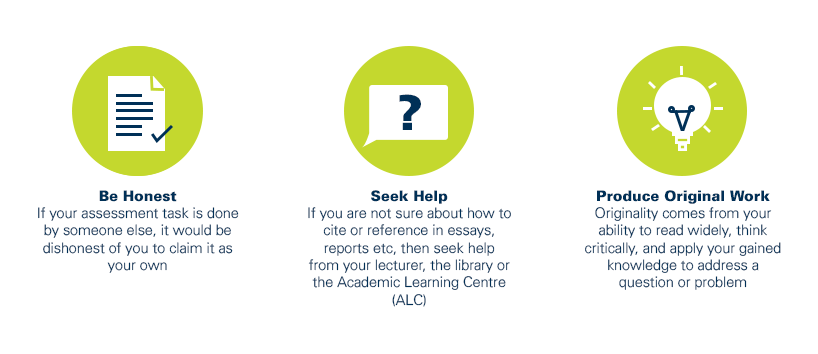
As a CQUniversity student you are expected to act honestly in all aspects of your academic work.
Any assessable work undertaken or submitted for review or assessment must be your own work. Assessable work is any type of work you do to meet the assessment requirements in the unit, including draft work submitted for review and feedback and final work to be assessed.
When you use the ideas, words or data of others in your assessment, you must thoroughly and clearly acknowledge the source of this information by using the correct referencing style for your unit. Using others’ work without proper acknowledgement may be considered a form of intellectual dishonesty.
Participating honestly, respectfully, responsibly, and fairly in your university study ensures the CQUniversity qualification you earn will be valued as a true indication of your individual academic achievement and will continue to receive the respect and recognition it deserves.
As a student, you are responsible for reading and following CQUniversity’s policies, including the Student Academic Integrity Policy and Procedure. This policy sets out CQUniversity’s expectations of you to act with integrity, examples of academic integrity breaches to avoid, the processes used to address alleged breaches of academic integrity, and potential penalties.
What is a breach of academic integrity?
A breach of academic integrity includes but is not limited to plagiarism, self-plagiarism, collusion, cheating, contract cheating, and academic misconduct. The Student Academic Integrity Policy and Procedure defines what these terms mean and gives examples.
Why is academic integrity important?
A breach of academic integrity may result in one or more penalties, including suspension or even expulsion from the University. It can also have negative implications for student visas and future enrolment at CQUniversity or elsewhere. Students who engage in contract cheating also risk being blackmailed by contract cheating services.
Where can I get assistance?
For academic advice and guidance, the Academic Learning Centre (ALC) can support you in becoming confident in completing assessments with integrity and of high standard.
What can you do to act with integrity?