Overview
This unit examines how modern journalism operates in a rapidly evolving media environment. Students will analyse contemporary journalistic practices across traditional and social platforms, while evaluating credibility, ethics, and the shifting role of news in a digital age. The unit explores technological, social, and cultural trends influencing news production and consumption, enabling students to interpret and compare processes across diverse contexts. Through assessments that include critical essays, comparative analyses, and reflective tasks, students will investigate patterns of news reporting and ethical dilemmas impacting both practitioners and audiences. By the end of the unit, students will become critical consumers of news media, aware of the media's role in shaping public opinion, and the ethical obligations of news industries and journalists to produce reliable, verifiable information for audiences.
Details
Pre-requisites or Co-requisites
Minimum of 36 credit points
Important note: Students enrolled in a subsequent unit who failed their pre-requisite unit, should drop the subsequent unit before the census date or within 10 working days of Fail grade notification. Students who do not drop the unit in this timeframe cannot later drop the unit without academic and financial liability. See details in the Assessment Policy and Procedure (Higher Education Coursework).
Offerings For Term 2 - 2026
Attendance Requirements
All on-campus students are expected to attend scheduled classes - in some units, these classes are identified as a mandatory (pass/fail) component and attendance is compulsory. International students, on a student visa, must maintain a full time study load and meet both attendance and academic progress requirements in each study period (satisfactory attendance for International students is defined as maintaining at least an 80% attendance record).
Recommended Student Time Commitment
Each 6-credit Undergraduate unit at CQUniversity requires an overall time commitment of an average of 12.5 hours of study per week, making a total of 150 hours for the unit.
Class Timetable
Assessment Overview
Assessment Grading
This is a graded unit: your overall grade will be calculated from the marks or grades for each assessment task, based on the relative weightings shown in the table above. You must obtain an overall mark for the unit of at least 50%, or an overall grade of 'pass' in order to pass the unit. If any 'pass/fail' tasks are shown in the table above they must also be completed successfully ('pass' grade). You must also meet any minimum mark requirements specified for a particular assessment task, as detailed in the 'assessment task' section (note that in some instances, the minimum mark for a task may be greater than 50%). Consult the University's Grades and Results Policy for more details of interim results and final grades.
All University policies are available on the CQUniversity Policy site.
You may wish to view these policies:
- Grades and Results Policy
- Assessment Policy and Procedure (Higher Education Coursework)
- Review of Grade Procedure
- Student Academic Integrity Policy and Procedure
- Academic Progression Policy and Procedure
- Student Refund and Credit Balance Policy and Procedure
- Complaints Policy and Procedure
- Information and Communications Technology Acceptable Use Policy and Procedure
This list is not an exhaustive list of all University policies. The full list of University policies are available on the CQUniversity Policy site.
Feedback, Recommendations and Responses
Every unit is reviewed for enhancement each year. At the most recent review, the following staff and student feedback items were identified and recommendations were made.
Feedback from Unit Coordinator Self-reflection
Asynchronous content that supports self-paced learners and increases teacher presence would be useful
Produce instructive pre-recorded overviews for weekly topics to support self-directed learners and enhance teacher presence online
Feedback from Unit Coordinator Self-reflection
The revised structure and content of the unit emphasised the impact of real-life issues on contemporary culture and journalistic practice
Continue to update resources with current affairs and breaking news to ensure content is fresh, dynamic and remains relevant to students' experiences.
- Analyse contemporary journalistic practices and audience framing across traditional and social media platforms
- Evaluate credibility, ethics, and the changing role of news media in a digital environment
- Critically reflect on how technological, social, and cultural trends influence news production and audience consumption
- Interpret and compare news production processes and audience consumption patterns across diverse media contexts
- Analyse patterns of news reporting and the impact of ethical dilemmas on journalistic practices and news consumers.
n/a
Alignment of Assessment Tasks to Learning Outcomes
| Assessment Tasks | Learning Outcomes | ||||
|---|---|---|---|---|---|
| 1 | 2 | 3 | 4 | 5 | |
| 1 - Group Discussion - 20% | |||||
| 2 - Practical Assessment - 35% | |||||
| 3 - Written Assessment - 45% | |||||
Alignment of Graduate Attributes to Learning Outcomes
| Graduate Attributes | Learning Outcomes | ||||
|---|---|---|---|---|---|
| 1 | 2 | 3 | 4 | 5 | |
| 1 - Communication | |||||
| 2 - Problem Solving | |||||
| 3 - Critical Thinking | |||||
| 4 - Information Literacy | |||||
| 5 - Team Work | |||||
| 6 - Information Technology Competence | |||||
| 7 - Cross Cultural Competence | |||||
| 8 - Ethical practice | |||||
| 9 - Social Innovation | |||||
| 10 - First Nations Knowledges | |||||
| 11 - Aboriginal and Torres Strait Islander Cultures | |||||
Textbooks
There are no required textbooks.
IT Resources
- CQUniversity Student Email
- Internet
- Unit Website (Moodle)
- Microsoft Teams
All submissions for this unit must use the referencing style: American Psychological Association 7th Edition (APA 7th edition)
For further information, see the Assessment Tasks.
f.heaselgrave@cqu.edu.au
Week 1
Begin Date: 13 Jul 2026Module/Topic
Making sense of media
Chapter
See e-reading list on Moodle.
Events and Submissions/Topic
Week 2
Begin Date: 20 Jul 2026Module/Topic
What makes the news?
Chapter
See e-reading list on Moodle.
Events and Submissions/Topic
Week 3
Begin Date: 27 Jul 2026Module/Topic
Framing the news
Chapter
See e-reading list on Moodle.
Events and Submissions/Topic
Week 4
Begin Date: 03 Aug 2026Module/Topic
Decoding the news
Chapter
See e-reading list on Moodle.
Events and Submissions/Topic
Week 5
Begin Date: 10 Aug 2026Module/Topic
Social media and news production
Chapter
See e-reading list on Moodle.
Events and Submissions/Topic
Week 6
Begin Date: 17 Aug 2026Module/Topic
Monitoring news outputs and impact
Chapter
See e-reading list on Moodle.
Events and Submissions/Topic
Vacation Week
Begin Date: 24 Aug 2026Module/Topic
Chapter
Events and Submissions/Topic
Week 7
Begin Date: 31 Aug 2026Module/Topic
Social media and engaged journalism
Chapter
See e-reading list on Moodle.
Events and Submissions/Topic
Week 8
Begin Date: 07 Sep 2026Module/Topic
Community building: From mass to niche audiences
Chapter
See e-reading list on Moodle.
Events and Submissions/Topic
Week 9
Begin Date: 14 Sep 2026Module/Topic
Media ethics in the digital age
Chapter
See e-reading list on Moodle.
Events and Submissions/Topic
Week 10
Begin Date: 21 Sep 2026Module/Topic
(Social) media regulation and law
Chapter
See e-reading list on Moodle.
Events and Submissions/Topic
Week 11
Begin Date: 28 Sep 2026Module/Topic
The future of news: AI & automation
Chapter
See e-reading list on Moodle.
Events and Submissions/Topic
Week 12
Begin Date: 05 Oct 2026Module/Topic
Review and assessment help
Chapter
Events and Submissions/Topic
Exam Week
Begin Date: 12 Oct 2026Module/Topic
Chapter
Events and Submissions/Topic
Vacation/Exam Week
Begin Date: 19 Oct 2026Module/Topic
Chapter
Events and Submissions/Topic
Use of Generative Artificial Intelligence (AI) in Learning Materials in this Unit
Generative AI tools may have been used by academic/teaching staff in the development of learning materials and assessments (for example, for initial drafting, content organisation, activity generation, image creation, editing, summarisation, rubric creation or assessment design). Any AI-assisted content has been critically reviewed, refined, and contextualised by academic staff. The final learning materials, teaching activities, and guidance provided reflect academic judgement and align with CQUniversity learning, teaching, accessibility, and academic integrity requirements.
1 Group Discussion
Due: Monday Week 5 (10 August), 10PM
Weighting: 20%
Word count: 1000 words
In this assessment, you will analyse how the news is reported to shape the way audiences receive, believe, and act in response to a story. This is a collaborative assessment that requires you to participate in and comment on the creative and analytical insights of other students through online engagement in discussion forum posts.
Task instructions
There are two assessable components for this assessment task:
Part ONE. Step 1. You will locate TWO different media articles about the same news story that has been covered recently (in the last 4 weeks) by traditional mass media outlets (e.g. The Guardian and SBS News). You will write a 350-word analysis of each text (700 words in total) about the following news elements:
- The news values evident in the story
- The framing techniques used by journalists or editors. Think about:
- How journalists perceive their role
- How social, cultural and political factors might shape journalistic framing
- Whether any important information has been excluded from the story
- The audience/s being targeted, based on how the story is framed. Think about:
- How the way the story is framed impacts the audience's understanding and perception of the issue
Step 2. Write a brief (150 word) synthesis of both two articles, commenting on any notable differences or similarities in reporting styles and how they might impact news consumption.
Step 3. Submit your work as a Discussion Forum post to the Assessment 2 block on Moodle.
Part TWO. Once you have posted your analysis, you will be able to see the posts of other students (after the 30-minute editing time has lapsed). You will need to reply to the post of ONE other student (150 words), providing feedback and suggestions for deepening understanding of the 4 elements outlined above. This peer review exercise must be conducted professionally, with respect, and identify constructive feedback for improvement as well as observations of any analytical strength. This component provides students an opportunity to learn from one another, to share valuable insights and resources related to unit content and to ignite discussion among peers.
Further guidance supporting your submission of this task will be provided on the Moodle site.
Referencing and Format
In explaining and analysing your media piece for Part one, you will need to use at least three (3) academic sources (in total, for both pieces), referenced at the bottom of the post in the APA 7 format. The Discussion Post should be presented with the use of headings and formatting to enhance clarity and meaning. Also pay attention to spelling and grammar.
For Part two, your response should be similarly formatted, using headings or other formatting options, to respond constructively to the other student's post. At least one (1) reference should be recommended in your response to help build your peers' reference list.
Use of GenAI tools in this assessment
You may use Al for planning, idea development, and research. Your final submission should show how you have developed and refined these ideas, and you must acknowledge use of AI in your assessment. Any misuse or lack of disclosure regarding the use of AI tools will be considered a breach of academic integrity.
Week 5 Monday (10 Aug 2026) 10:00 pm AEST
Submit via Moodle
Vacation Week Monday (24 Aug 2026)
Assignments will be returned within two weeks of on-time submission.
Student work will be assessed using the following marking criteria:
- News values: Identification and analysis of news values as they apply to each media story (20%)
- Framing: Analysis of relevant framing theories as they apply to the media texts (25%)
- News consumption: Audience analysis and the impact of framing on consumption (10%)
- Quality of peer feedback: The constructiveness and comprehensiveness of feedback provided on the Discussion Forum post, including suggestions for improvements and additional reading/research (15%)
- Presentation and written expression: Appropriate use of headings and formatting tools to convey ideas; inclusion of link to the media story; Clarity of writing and attention to grammatical and spelling conventions (15%)
- Research and referencing: Demonstrated research through use of relevant references (minimum of 3); inclusion of full reference list, using the APA 7 style; appropriate acknowledgement of AI use where applicable (15%)
- Analyse contemporary journalistic practices and audience framing across traditional and social media platforms
- Critically reflect on how technological, social, and cultural trends influence news production and audience consumption
- Interpret and compare news production processes and audience consumption patterns across diverse media contexts
2 Practical Assessment
Assessment: Media monitoring log and analysis
Due Date: Monday 14 September, 10PM
Weighting: 35%
Word count: 1200 words
Task Description
In this assessment, you will monitor the news reporting of controversial issues through traditional and social media platforms. The task will help you to scrutinise the content and claims of online news sources, and to assess the professional values, principles and approaches to contemporary journalism.
Your Task
You will be provided a media monitoring template to record the way a single issue is reported on by different media outlets and across different platforms. You will use your findings to discuss how online and social media have changed journalism practice.
Step 1: Choose a controversial issue or event (not the same as Assessment 1) to monitor. You can choose from the list below or select a topic of your own choosing in consultation with the Unit Coordinator:
- Housing affordability crisis
- Nuclear energy debate
- Social media age restrictions for children
- State or Federal election
- Cybersecurity incident
- Natural disaster
- Immigration policy changes
- Royal Commission inquiries
- Indigenous land rights disputes
Step 2: Do a quick sweep of media coverage. Do a Google search to ensure the issue is covered across multiple platforms i.e. online newspapers and social media networks.
Step 3. Set up your monitoring procedure:
For mass media: Subscribe to 3 different news media outlets (e.g. The Guardian, The Conversation, Sydney Morning Herald, ABC, SBS etc).
Set up Google Alerts so that you can track new stories that are published about your topic/issue. These alerts are sent to your email account. To create alerts go to www.google.com.au/alerts, log in to your Google account and follow the on-screen instructions to add keywords and frequency with which you'd like to receive alerts.
For socials: Follow or like the social media accounts of 2 news media outlets (e.g. @TheGuardian on X, Facebook or Instagram)
- For X, identify relevant hashtags to follow related to the topic/issue you are focusing on
- For Facebook, set up notifications to alert you to stories about your chosen topic/issue
- For Insta, set up hashtag following for key terms.
Step 4. Monitor and record news coverage. You should collect 10 articles/posts (5 from online news and 5 from social platforms) about your topic/issue on two different days over a 5-day interval and you will need to provide evidence in the form of screenshots and a media monitor log to show what data you collected.
Step 5. Write up of findings (1200 words). The report is the main part of the assessment and enables you to review your data and reflect on the differences in news reporting between online and social media sites. You are free to format your report in any way that suits your findings, but you should ensure your discussion includes the following elements:
- Introduction and overview of the topic/issue being analysed and brief justification for why you selected this option
- Explanation of the media monitoring process - how you collected the data, which news site and social media platform did you focus on and why
- Consideration of the credibility and accuracy of news reporting across the two platforms and whether one platform is more authentic than the other
- Reflection on any differences in framing, tone or approach taken by different journalists who may be reporting the same issue for the same media organisation but on a different platform (comparing online content to social media coverage)
- Consideration of whether, and how, the different forms of media (online vs social media) provide opportunities for community building and engaged journalism, drawing on examples from your media monitoring data to illustrate your point
- Conclusion summarising if and how social media has changed journalistic content or practice
- Appendix with your media monitoring log and other evidence of data collection
Additional information and support
The time period in which you monitor the news is up to you, but the sources you collect must be current i.e. do not use old or previously published stories/posts, they should have been published within one week of the start of your monitoring period.
More guidance on this assessment will be provided during the weekly online class and on the Moodle site.
You can use headings in this report.
Use of GenAI tools in this assessment
You may use Al for planning, idea development, and research. Your final submission should show how you have developed and refined these ideas, and you must acknowledge use of AI in your assessment. Any misuse or lack of disclosure regarding the use of AI tools will be considered a breach of academic integrity.
Week 9 Monday (14 Sept 2026) 10:00 pm AEST
Submission via Moodle Portal
Week 11 Monday (28 Sept 2026)
Feedback and comments returned via Moodle portal within two weeks of on-time submissions
Content: Quality of the explanation and rationale; appropriateness of the methods used to conduct and to report media monitoring findings (20%)
Analysis: Quality of reflection and analysis regarding the authenticity and differences between online and social media platforms in relation to core concepts (20%)
Application: Demonstrative examples of the ways online and social media enable journalists to engage audiences; clear and logical conclusions stated (20%)
Presentation: Completion and inclusion of media monitoring log and other evidence in the appendix; logical structure and layout of ideas, using appropriate formatting (15%)
Research and referencing: Analysis is supported by academic research and references are used in-text and in the reference list to support claims, adhering to APA 7 conventions; acknowledges use of AI where applicable (15%)
Written expression: Clarity of writing and attention to grammatical and spelling conventions (10%)
- Analyse contemporary journalistic practices and audience framing across traditional and social media platforms
- Evaluate credibility, ethics, and the changing role of news media in a digital environment
- Critically reflect on how technological, social, and cultural trends influence news production and audience consumption
- Analyse patterns of news reporting and the impact of ethical dilemmas on journalistic practices and news consumers.
3 Written Assessment
Assessment 3: Portfolio
Due: 9 October, 10pm (Friday Week 12)
Weighting: 45%
Word count: 1500 words
Task Description
The decision whether or not to use AI and automated content for news production is an ongoing ethical dilemma in journalism practice. Ethical dilemmas occur often in professional practice, both at an organisational and a professional/personal level. This assessment will help you to recognise, assess and resolve these dilemmas in an online and AI context so that you can prevent similar mistakes from reoccurring.
In this assessment, we will test your knowledge of ethical frameworks, principles and regulatory practices as they apply to the Australian Broadcasting Company (ABC).
The assessment has two parts. The following scenario will apply to both parts:
Scenario
The ABC is piloting the use of AI to generate brief online weather updates for regional areas using Bureau of Meteorology data. During a severe flooding event in Queensland, an automated weather summary was published on the ABC website and shared across social media platforms. The report was later found to contain serious factual errors and incorrectly downplayed flood risks in several communities. On further investigation, it was found the content wasn't properly labeled as AI-generated, and the usual human editorial oversight did not occur due to after-hours publishing protocols.
The ethical dilemma: Should the ABC continue to use AI to auto-generate content for weather reports?
Part ONE - Analysing ethical frameworks (1000 words)
Your task is to evaluate this dilemma through two ethical frameworks (e.g. Utilitarianism, Deontology, Virtue ethics, Consequentialism) so that you can make an ethical decision about whether the ABC should continue using AI for weather reporting.
Your response should consider the ethical issues of this incident and its impact on:
- journalists
- the journalism professional
- the editorial process
- key audiences
- the institution's reputation.
You should also consider the scenario in relation to the ethical principles that guide professional practice at the ABC (e.g. providing accuracy; avoiding harm and offence).
This task requires you to read around the ABC regulatory framework and AI policy, as well as reviewing the policies used by other media institutions.
Structure and format
Your analysis should begin with a brief introduction of the ABC scenario and any information relevant to the case and a summary of the two ethical frameworks you have chosen to apply to the dilemma. You may use headings if you wish. As you will be referring to issues related to media ethics, regulation, law and AI you must include in-text references in your analysis.
Part TWO - Producing ethical guidelines (500 words)
Following the outcome of your analysis in Part ONE, you will establish ethical guidelines to regulate the use of AI content at the ABC.
You will produce a set of principles to guide the ethical use of AI when reporting the weather. The guidelines will be presented in a table format to clearly identify what and when AI use is considered acceptable and unacceptable, with illustrative examples to demonstrate the point. You will also provide a rationale for how these principles uphold the ABC's code of ethics. A template will be provided to assist with this task and example guidelines will be shared during tutorials.
Structure and format
The guidelines should be added as an appendix to the Part ONE task and labelled appropriately. This document should be of professional standard and provide a quick and easy reference to AI use for staff at the ABC so think about the presentation. To maintain the accessibility of this document, you can use footnote references for this task.
Use of AI tools
You may use Al for planning, idea development, and research. Your final submission should show how you have developed and refined these ideas, and you must acknowledge use of AI in your assessment. Any misuse or lack of disclosure regarding the use of AI tools will be considered a breach of academic integrity.
Week 12 Friday (9 Oct 2026) 10:00 pm AEST
Submission via Moodle portal
Vacation/Exam Week Friday (23 Oct 2026)
Feedback and comments returned via Moodle portal within two weeks of on-time submission
Ethical Framework Analysis and Application (30%) - Identifies and applies two ethical frameworks to the ABC scenario, demonstrating understanding of how each framework addresses the AI weather reporting dilemma
Stakeholder Impact Analysis (25%) - Analyses impacts on key stakeholders (journalists, journalism profession, editorial processes, audiences, ABC's reputation) with consideration of consequences to those stakeholders
Ethical Guidelines (25%) - Identifies relevant ethical issues and provides rationale linking to ABC's code of ethics, correctly and professionally guidelines, presented in an accessible format for quick reference
Written expression (10%) - Writes concisely, using paragraph breaks and sentence spacing to punctuate ideas, adequate use of grammar and spelling
Research (10%) - Conducts adequate research from credible academic and industry sources, uses APA 7 referencing conventions accurately and consistently and acknowledges use of AI where applicable
- Evaluate credibility, ethics, and the changing role of news media in a digital environment
- Interpret and compare news production processes and audience consumption patterns across diverse media contexts
- Analyse patterns of news reporting and the impact of ethical dilemmas on journalistic practices and news consumers.
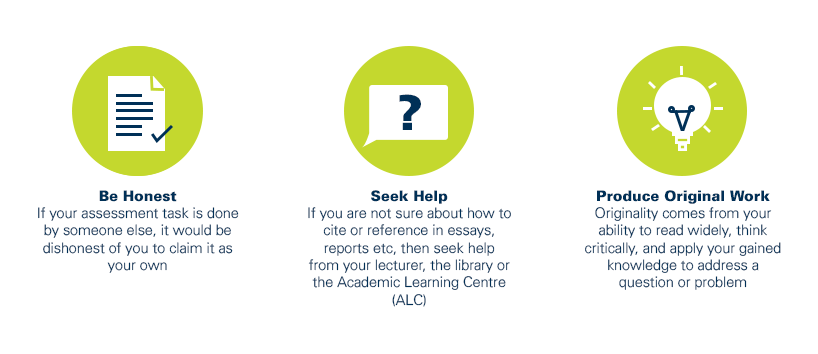
As a CQUniversity student you are expected to act honestly in all aspects of your academic work.
Any assessable work undertaken or submitted for review or assessment must be your own work. Assessable work is any type of work you do to meet the assessment requirements in the unit, including draft work submitted for review and feedback and final work to be assessed.
When you use the ideas, words or data of others in your assessment, you must thoroughly and clearly acknowledge the source of this information by using the correct referencing style for your unit. Using others’ work without proper acknowledgement may be considered a form of intellectual dishonesty.
Participating honestly, respectfully, responsibly, and fairly in your university study ensures the CQUniversity qualification you earn will be valued as a true indication of your individual academic achievement and will continue to receive the respect and recognition it deserves.
As a student, you are responsible for reading and following CQUniversity’s policies, including the Student Academic Integrity Policy and Procedure. This policy sets out CQUniversity’s expectations of you to act with integrity, examples of academic integrity breaches to avoid, the processes used to address alleged breaches of academic integrity, and potential penalties.
What is a breach of academic integrity?
A breach of academic integrity includes but is not limited to plagiarism, self-plagiarism, collusion, cheating, contract cheating, and academic misconduct. The Student Academic Integrity Policy and Procedure defines what these terms mean and gives examples.
Why is academic integrity important?
A breach of academic integrity may result in one or more penalties, including suspension or even expulsion from the University. It can also have negative implications for student visas and future enrolment at CQUniversity or elsewhere. Students who engage in contract cheating also risk being blackmailed by contract cheating services.
Where can I get assistance?
For academic advice and guidance, the Academic Learning Centre (ALC) can support you in becoming confident in completing assessments with integrity and of high standard.
What can you do to act with integrity?