Overview
This unit gives students an opportunity to undertake a project of their choice in a professional communication discipline in which they have already done a substantial amount of study. The project is flexible and is designed by students in consultation with academic and workplace supervisors. It may involve academic research into professional communication practice; creative media practice; or professional communication-related work placement with an approved organisation (minimum 120 hours). The unit is offered subject to the availability of an appropriate supervisor, who will work with the student to devise assessment tasks that will meet negotiated and specific project learning outcomes. Selected industry placements and research projects are available on a competitive basis. Students considering this unit are advised to contact theSchool, or the Unit Coordinator prior to enrolment.
Details
Pre-requisites or Co-requisites
Prerequisite: Students must have completed 48 credit points prior to taking this unit
Important note: Students enrolled in a subsequent unit who failed their pre-requisite unit, should drop the subsequent unit before the census date or within 10 working days of Fail grade notification. Students who do not drop the unit in this timeframe cannot later drop the unit without academic and financial liability. See details in the Assessment Policy and Procedure (Higher Education Coursework).
Offerings For Term 1 - 2020
Attendance Requirements
All on-campus students are expected to attend scheduled classes - in some units, these classes are identified as a mandatory (pass/fail) component and attendance is compulsory. International students, on a student visa, must maintain a full time study load and meet both attendance and academic progress requirements in each study period (satisfactory attendance for International students is defined as maintaining at least an 80% attendance record).
Recommended Student Time Commitment
Each 6-credit Undergraduate unit at CQUniversity requires an overall time commitment of an average of 12.5 hours of study per week, making a total of 150 hours for the unit.
Class Timetable
Assessment Overview
Assessment Grading
This is a graded unit: your overall grade will be calculated from the marks or grades for each assessment task, based on the relative weightings shown in the table above. You must obtain an overall mark for the unit of at least 50%, or an overall grade of 'pass' in order to pass the unit. If any 'pass/fail' tasks are shown in the table above they must also be completed successfully ('pass' grade). You must also meet any minimum mark requirements specified for a particular assessment task, as detailed in the 'assessment task' section (note that in some instances, the minimum mark for a task may be greater than 50%). Consult the University's Grades and Results Policy for more details of interim results and final grades.
All University policies are available on the CQUniversity Policy site.
You may wish to view these policies:
- Grades and Results Policy
- Assessment Policy and Procedure (Higher Education Coursework)
- Review of Grade Procedure
- Student Academic Integrity Policy and Procedure
- Monitoring Academic Progress (MAP) Policy and Procedure - Domestic Students
- Monitoring Academic Progress (MAP) Policy and Procedure - International Students
- Student Refund and Credit Balance Policy and Procedure
- Student Feedback - Compliments and Complaints Policy and Procedure
- Information and Communications Technology Acceptable Use Policy and Procedure
This list is not an exhaustive list of all University policies. The full list of University policies are available on the CQUniversity Policy site.
Feedback, Recommendations and Responses
Every unit is reviewed for enhancement each year. At the most recent review, the following staff and student feedback items were identified and recommendations were made.
Feedback from Term 1 Student Evaluation Survey comments
Students liked the authenticity and practicality of completing one larger assessment / work placement throughout the unit, rather than multiple smaller pieces.
It is recommended to maintain the practical nature of a portfolio assessment.
Feedback from Term 1 Student Evaluation Survey comments and Student Satisfaction Ratings.
Student feedback indicates the existing learning resources for the research paper element were insufficient.
It is recommended to include a structured outline and exemplar around the research topic assessment item.
- Develop objectives and criteria for a professional communication project that upon successful completion will demonstrate knowledge at graduate level of professional communication practice; and
- Demonstrate knowledge and relevant skill at graduate level of professional communication practice.
Alignment of Assessment Tasks to Learning Outcomes
| Assessment Tasks | Learning Outcomes | |
|---|---|---|
| 1 | 2 | |
| 1 - Written Assessment - 0% | ||
| 2 - Practical and Written Assessment - 90% | ||
| 3 - Practical Assessment - 10% | ||
Alignment of Graduate Attributes to Learning Outcomes
| Graduate Attributes | Learning Outcomes | |
|---|---|---|
| 1 | 2 | |
| 1 - Communication | ||
| 2 - Problem Solving | ||
| 3 - Critical Thinking | ||
| 4 - Information Literacy | ||
| 5 - Team Work | ||
| 6 - Information Technology Competence | ||
| 7 - Cross Cultural Competence | ||
| 8 - Ethical practice | ||
| 9 - Social Innovation | ||
| 10 - First Nations Knowledges | ||
| 11 - Aboriginal and Torres Strait Islander Cultures | ||
Alignment of Assessment Tasks to Graduate Attributes
| Assessment Tasks | Graduate Attributes | ||||||||||
|---|---|---|---|---|---|---|---|---|---|---|---|
| 1 | 2 | 3 | 4 | 5 | 6 | 7 | 8 | 9 | 10 | 11 | |
| 1 - Written Assessment - 0% | |||||||||||
| 2 - Practical and Written Assessment - 90% | |||||||||||
| 3 - Practical Assessment - 10% | |||||||||||
Textbooks
There are no required textbooks.
IT Resources
- CQUniversity Student Email
- Internet
- Unit Website (Moodle)
All submissions for this unit must use the referencing style: American Psychological Association 6th Edition (APA 6th edition)
For further information, see the Assessment Tasks.
l.costigan@cqu.edu.au
Week 1
Begin Date: 09 Mar 2020Module/Topic
Select work placement, media project or research topic and discuss project with coordinator or academic supervisor.
Chapter
Events and Submissions/Topic
Week 2
Begin Date: 16 Mar 2020Module/Topic
Write proposal about the work placement, media project or research topic.
Chapter
Events and Submissions/Topic
Week 3
Begin Date: 23 Mar 2020Module/Topic
Work placement, media project or research topic.
Chapter
Events and Submissions/Topic
Week 4
Begin Date: 30 Mar 2020Module/Topic
Work placement, media project or research topic.
Chapter
Events and Submissions/Topic
Week 5
Begin Date: 06 Apr 2020Module/Topic
Work placement, media project or research topic.
Chapter
Events and Submissions/Topic
Vacation Week
Begin Date: 13 Apr 2020Module/Topic
Vacation Week
Chapter
Events and Submissions/Topic
Week 6
Begin Date: 20 Apr 2020Module/Topic
Work placement, media project or research topic.
Chapter
Events and Submissions/Topic
Week 7
Begin Date: 27 Apr 2020Module/Topic
Work placement, media project or research topic.
Chapter
Events and Submissions/Topic
Week 8
Begin Date: 04 May 2020Module/Topic
Work placement, media project or research topic.
Chapter
Events and Submissions/Topic
Week 9
Begin Date: 11 May 2020Module/Topic
Work placement, media project or research topic.
Chapter
Events and Submissions/Topic
Week 10
Begin Date: 18 May 2020Module/Topic
Work placement, media project or research topic.
Chapter
Events and Submissions/Topic
Week 11
Begin Date: 25 May 2020Module/Topic
Work placement, media project or research topic.
Chapter
Events and Submissions/Topic
Week 12
Begin Date: 01 Jun 2020Module/Topic
Work placement, media project or research topic.
Chapter
Events and Submissions/Topic
Supervisor Report Due: Week 12 Friday (5 June 2020) 6:00 pm AEST
Review/Exam Week
Begin Date: 08 Jun 2020Module/Topic
Chapter
Events and Submissions/Topic
Exam Week
Begin Date: 15 Jun 2020Module/Topic
Chapter
Events and Submissions/Topic
1 Written Assessment
- Submit a short document in PDF/PowerPoint form that provides an overview of their project (by the end of Week 3).
- Participate in an online Zoom session at the beginning of Week 4 to discuss their project with staff and peers.
NOTES:
- The proposal document should be succinct - no more than two pages if PDF, no more than four slides if PowerPoint. See below for content required within the document.
- Participation in the Zoom session is compulsory. The purpose of this assessment is to get feedback from academic staff as to the scope of your project, and to facilitate conversation about issues and opportunities. It is intended as a formative, open session. If you have a legitimate reason for non-attendance, you will need to negotiate an alternative appointment with the unit coordinator.
- You may have started your project in consultation with the unit coordinator. You will still be required to participate in this session to receive early guidance and feedback about your project.
- A background of workplace and its operation; or background to/inspiration for idea if a media product.
- Details of your project.
- Proposed schedule/timetable of activities.
- Desired learning outcomes (what do you want to be able to do/achieve) by the end of the project.
- The name and contact details of your workplace or media product supervisor who will provide a report on your progress and ability at the end of term.
- A statement of the research topic or question.
- A broad review of major literature relating to the topic area.
- A research proposal and research plan.
Week 3 Friday (27 Mar 2020) 6:00 pm AEST
Online
Week 4 Monday (30 Mar 2020)
Feedback on projects will be provided via a compulsory Zoom session in Week 4.
This is a pass/fail assessment. This assessment is required, as it establishes the course of action for the term. Students will not be able to progress through the unit without first passing this assessment. Re-submissions are permitted.
A pass is based on the unit coordinator's opinion that the project can be successfully achieved.
- Develop objectives and criteria for a professional communication project that upon successful completion will demonstrate knowledge at graduate level of professional communication practice; and
- Communication
- Critical Thinking
2 Practical and Written Assessment
Choose ONE of the following workplace, product-based or research oriented activities:
- Work placement: A work placement in an approved organisation for no less than 120 hours. The organisation must be selected in consultation with the unit coordinator/academic supervisor. Students will produce a portfolio of the work completed in their placement, a reflective journal, and a 2,000 word essay based on a question devised in consultation with the academic supervisor.
- Media Product: Produce a media product which demonstrates the application of advanced high-level production skills (e.g. short film, book, graphic design product - approximately 120 hours). Students will also produce a reflective journal and a 2,000 word essay based on a question devised in consultation with the academic supervisor.
- Research topic: Academically oriented research into a communication topic, resulting in a 6,000 word dissertation (for example, analysis of use of media releases by journalists in a regional news room, the effectiveness of email as a communication form).
Each project is very different but the ultimate requirement is the same: you need to provide evidence of the work you have done. The specific details of your individual project will be finalised in consultation with the unit coordinator or your allocated supervisor.
NOTE: WORD COUNT for written assignments:
The word count is considered from the first word of the introduction to the last word of the conclusion. It excludes the cover page, abstract, contents page, reference page and appendices. It includes in-text references and direct quotations.
Week 12 Friday (5 June 2020) 6:00 pm AEST
Online
Exam Week Friday (19 June 2020)
Assessments will generally be returned to students within two weeks of submission.
The assessment criteria will vary depending on whether students select the work placement, media product or research topic. Marking matrices are available on Moodle. Generally, the criteria relates to:
- Adherence to the requirements of the task
- Quality of writing and referencing
- Evidence of work undertaken
- Evidence of improvement/learning
- Overall presentation
- Demonstrate knowledge and relevant skill at graduate level of professional communication practice.
- Communication
- Problem Solving
- Critical Thinking
- Information Literacy
- Team Work
- Information Technology Competence
- Cross Cultural Competence
- Ethical practice
3 Practical Assessment
This component of the assessment is completed by the unit coordinator or academic supervisor, who will appraise the student’s work using industry, professional or academic standards.
The coordinator or allocated academic supervisor will complete the appraisal for media products and research projects.
In the event of an external work placement, the unit coordinator or academic supervisor will liaise directly with the organisation in order to obtain this appraisal. Students need to submit the contact details of their immediate workplace supervisor with their proposal. The unit coordinator or academic supervisor will then contact the workplace supervisor after reviewing the student's portfolio submission.
Week 12 Friday (5 June 2020) 6:00 pm AEST
Online
Exam Week Friday (19 June 2020)
Assessments will generally be returned within two weeks of submission.
This assessment task relates to the general criteria below:
- Ability
- Reliability
- Response to feedback
- Presentation/demeanour
- Demonstrate knowledge and relevant skill at graduate level of professional communication practice.
- Communication
- Problem Solving
- Critical Thinking
- Information Literacy
- Team Work
- Information Technology Competence
- Cross Cultural Competence
- Ethical practice
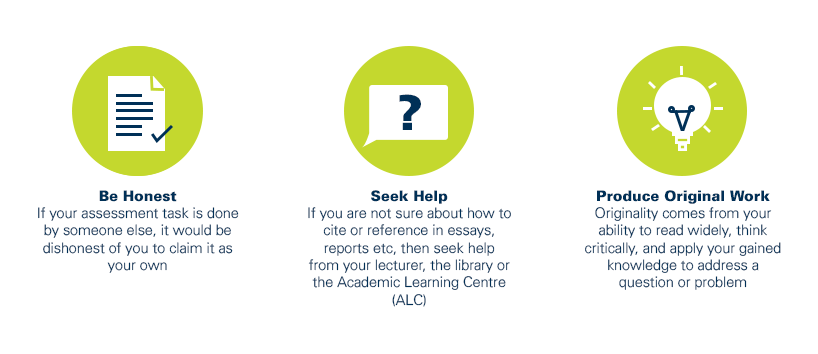
As a CQUniversity student you are expected to act honestly in all aspects of your academic work.
Any assessable work undertaken or submitted for review or assessment must be your own work. Assessable work is any type of work you do to meet the assessment requirements in the unit, including draft work submitted for review and feedback and final work to be assessed.
When you use the ideas, words or data of others in your assessment, you must thoroughly and clearly acknowledge the source of this information by using the correct referencing style for your unit. Using others’ work without proper acknowledgement may be considered a form of intellectual dishonesty.
Participating honestly, respectfully, responsibly, and fairly in your university study ensures the CQUniversity qualification you earn will be valued as a true indication of your individual academic achievement and will continue to receive the respect and recognition it deserves.
As a student, you are responsible for reading and following CQUniversity’s policies, including the Student Academic Integrity Policy and Procedure. This policy sets out CQUniversity’s expectations of you to act with integrity, examples of academic integrity breaches to avoid, the processes used to address alleged breaches of academic integrity, and potential penalties.
What is a breach of academic integrity?
A breach of academic integrity includes but is not limited to plagiarism, self-plagiarism, collusion, cheating, contract cheating, and academic misconduct. The Student Academic Integrity Policy and Procedure defines what these terms mean and gives examples.
Why is academic integrity important?
A breach of academic integrity may result in one or more penalties, including suspension or even expulsion from the University. It can also have negative implications for student visas and future enrolment at CQUniversity or elsewhere. Students who engage in contract cheating also risk being blackmailed by contract cheating services.
Where can I get assistance?
For academic advice and guidance, the Academic Learning Centre (ALC) can support you in becoming confident in completing assessments with integrity and of high standard.
What can you do to act with integrity?