Overview
This unit offers a critical exploration of policing and investigative practices within Australian and global contexts. You will examine the historical foundations of policing in Australia, with particular attention to colonial and postcolonial legacies that continue to shape contemporary law enforcement. The unit encourages you to engage with complex debates surrounding the role of police in diverse, democratic societies, including tensions between public safety, civil liberties, and the discretionary powers of law enforcement. Through analysis of various policing and investigative models and agencies, you will gain insight into the diverse structures, functions, and jurisdictions that underpin the modern law enforcement ecosystem. Investigative strategies will be explored through case studies and practical scenarios, enabling you to critically assess their purpose, application, and effectiveness in addressing different types of crime.
Details
Pre-requisites or Co-requisites
There are no requisites for this unit.
Important note: Students enrolled in a subsequent unit who failed their pre-requisite unit, should drop the subsequent unit before the census date or within 10 working days of Fail grade notification. Students who do not drop the unit in this timeframe cannot later drop the unit without academic and financial liability. See details in the Assessment Policy and Procedure (Higher Education Coursework).
Offerings For Term 1 - 2026
Attendance Requirements
All on-campus students are expected to attend scheduled classes - in some units, these classes are identified as a mandatory (pass/fail) component and attendance is compulsory. International students, on a student visa, must maintain a full time study load and meet both attendance and academic progress requirements in each study period (satisfactory attendance for International students is defined as maintaining at least an 80% attendance record).
Recommended Student Time Commitment
Each 6-credit Undergraduate unit at CQUniversity requires an overall time commitment of an average of 12.5 hours of study per week, making a total of 150 hours for the unit.
Class Timetable
Assessment Overview
Assessment Grading
This is a graded unit: your overall grade will be calculated from the marks or grades for each assessment task, based on the relative weightings shown in the table above. You must obtain an overall mark for the unit of at least 50%, or an overall grade of 'pass' in order to pass the unit. If any 'pass/fail' tasks are shown in the table above they must also be completed successfully ('pass' grade). You must also meet any minimum mark requirements specified for a particular assessment task, as detailed in the 'assessment task' section (note that in some instances, the minimum mark for a task may be greater than 50%). Consult the University's Grades and Results Policy for more details of interim results and final grades.
All University policies are available on the CQUniversity Policy site.
You may wish to view these policies:
- Grades and Results Policy
- Assessment Policy and Procedure (Higher Education Coursework)
- Review of Grade Procedure
- Student Academic Integrity Policy and Procedure
- Academic Progression Policy and Procedure
- Student Refund and Credit Balance Policy and Procedure
- Complaints Policy and Procedure
- Information and Communications Technology Acceptable Use Policy and Procedure
This list is not an exhaustive list of all University policies. The full list of University policies are available on the CQUniversity Policy site.
Feedback, Recommendations and Responses
Every unit is reviewed for enhancement each year. At the most recent review, the following staff and student feedback items were identified and recommendations were made.
Feedback from SUTE
Students indicated assessment feedback was not useful.
The Unit Coordinator will review assessment instructions to improve students' understanding of what is required. A review of the marking guidance will be carried out to improve the usefulness of assessment feedback.
Feedback from SUTE
Students noted assessment expectations could be clearer.
The unit will review assessments to ensure clearer instructions are provided to help students know what is expected. The Unit Coordinator will run dedicated assessment sessions to explain assessment expectations.
Feedback from SUTE
Students appreciated the study guides and additional resources.
The study guides will continue to improve and be engaging, and efforts will be made to enhance and maintain additional resources.
Feedback from SUTE
Students appreciated the teaching style and subject passion of the Unit Coordinator.
The Unit Coordinator will continue to provide an engaging learning space and deep connections between the teacher, learner, and topics.
- Explain the historical development and impacts of policing in Australian society, considering colonial and post-colonial contexts.
- Identify and describe different approaches to contemporary policing and investigative practice.
- Critically reflect on the balance between public safety, civil liberties, and police discretion in a diverse and democratic state.
- Critically assess the purpose and effectiveness of different policing and investigative strategies.
Alignment of Assessment Tasks to Learning Outcomes
| Assessment Tasks | Learning Outcomes | |||
|---|---|---|---|---|
| 1 | 2 | 3 | 4 | |
| 1 - Written Assessment - 20% | ||||
| 2 - Written Assessment - 40% | ||||
| 3 - Written Assessment - 40% | ||||
Alignment of Graduate Attributes to Learning Outcomes
| Graduate Attributes | Learning Outcomes | |||
|---|---|---|---|---|
| 1 | 2 | 3 | 4 | |
| 1 - Communication | ||||
| 2 - Problem Solving | ||||
| 3 - Critical Thinking | ||||
| 4 - Information Literacy | ||||
| 5 - Team Work | ||||
| 6 - Information Technology Competence | ||||
| 7 - Cross Cultural Competence | ||||
| 8 - Ethical practice | ||||
| 9 - Social Innovation | ||||
| 10 - First Nations Knowledges | ||||
| 11 - Aboriginal and Torres Strait Islander Cultures | ||||
Textbooks
There are no required textbooks.
IT Resources
- CQUniversity Student Email
- Internet
- Unit Website (Moodle)
- MS Teams
All submissions for this unit must use the referencing style: American Psychological Association 7th Edition (APA 7th edition)
For further information, see the Assessment Tasks.
r.hale@cqu.edu.au
Week 1
Begin Date: 09 Mar 2026Module/Topic
Introduction to unit
Chapter
Sarre, R., & Prenzler, T. (2018). Ten key developments in modern policing: an Australian perspective. Police Practice & Research, 19(1), 3–16. https://doi.org/10.1080/15614263.2016.1242424
Events and Submissions/Topic
Week 2
Begin Date: 16 Mar 2026Module/Topic
Global Origins and History of Policing
Chapter
Chris Cunneen. (2023). A brief history of policing. In Defund the Police (1st ed., p. 21). Policy Press. https://doi.org/10.2307/jj.1666821.7
Events and Submissions/Topic
Week 3
Begin Date: 23 Mar 2026Module/Topic
Colonial Foundations of Australian policing
Chapter
Bland, E. (2025). Colonial policing practices in Queensland and their contemporary legacies. Policing & Society, 35(5), 646–661. https://doi.org/10.1080/10439463.2024.2438263
Cripps, K. (2023). Indigenous women and intimate partner homicide in Australia: confronting the impunity of policing failures. Current Issues in Criminal Justice, 35(3), 293–311. https://doi.org/10.1080/10345329.2023.2205625
Events and Submissions/Topic
Week 4
Begin Date: 30 Mar 2026Module/Topic
Models of Contemporary Policing
Chapter
Wadley, S., Riley, L., & Murria, S. (2025). Police problem solving models and theories. ROUTLEDGE. https://doi.org/10.4324/9781041056393
[Note - this is in the UK context, however the modesl are widely applicable]
Events and Submissions/Topic
Week 5
Begin Date: 06 Apr 2026Module/Topic
Police Powers, Discretion, and Decision‑Making
Chapter
Dhir, A. (2025). “We work in the grey around decision making”; how “thematic discretion” can help understand police decision-making in cases of youth image-based sexual abuse. Policing & Society, 35(2), 135–148. https://doi.org/10.1080/10439463.2024.2378302
Methven, E. (2023). Skipping straight to the punishment: criminal infringement notices and factors that influence police discretion. Current Issues in Criminal Justice, 35(1), 100–117. https://doi.org/10.1080/10345329.2022.2132810
Events and Submissions/Topic
Week 6
Begin Date: 13 Apr 2026Module/Topic
Public Safety versus Civil Liberties
Chapter
Utset, M. A. (2021). Predictive policing and criminal law. In J. L. M. McDaniel & K. G. Pease (Eds.), Predictive Policing and Artificial Intelligence, pp. 163–182. Routledge. https://doi.org/10.4324/9780429265365-8
Sheldon Krimsky, & Tania Simoncelli. (2010). Australia: A Quest for Uniformity in DNA Data Banking. In Genetic Justice (p. 194). Columbia University Press. https://doi.org/10.7312/krim14520.16
Events and Submissions/Topic
Vacation Week
Begin Date: 20 Apr 2026Module/Topic
Chapter
Events and Submissions/Topic
Week 7
Begin Date: 27 Apr 2026Module/Topic
Policing Diverse Communities
Chapter
White, R. (2009). Ethnic Diversity and Differential Policing in Australia: the Good, the Bad and the Ugly. Journal of International Migration and Integration, 10(4), 359–375. https://doi.org/10.1007/s12134-009-0111-2
Miles-Johnson, T. (2016). Policing Diversity: Examining Police Resistance to Training Reforms for Transgender People in Australia. Journal of Homosexuality, 63(1), 103–136. https://doi.org/10.1080/00918369.2015.1078627
Events and Submissions/Topic
Week 8
Begin Date: 04 May 2026Module/Topic
Understanding Police Misconduct and Accountability
Chapter
Hine, K. A., Porter, L. E., & Ransley, J. (2020). An environmental approach to police misconduct: exploring situational prevention possibilities to understanding and preventing police misconduct. Policing : An International Journal of Police Strategies & Management, 43(6), 893–916. https://doi.org/10.1108/PIJPSM-07-2020-0119
Rajakaruna, N., Henry, P. J., & Scott, A. J. (2015). A necessary safety net: use of a confidential internal telephone line to report unethical behaviour. Police Practice & Research, 16(5), 431–443. https://doi.org/10.1080/15614263.2014.932695
Prenzler, T., & Maguire, M. (2023). Reforming Queensland’s police complaints system: recent inquiries and the prospects of a best practice model. Current Issues in Criminal Justice, 35(3), 324–339. https://doi.org/10.1080/10345329.2023.2210791
Events and Submissions/Topic
Week 9
Begin Date: 11 May 2026Module/Topic
Introduction to Investigations: Purpose, Principles, and Ethics
Chapter
Australian Government (2022). Australian Government Investigations Standard. https://www.afp.gov.au/sites/default/files/2023-09/Australian-Government-Investigations-Standard-2022.pdf
AFP Investigations Doctrine. https://www.afp.gov.au/sites/default/files/PDF/IPS/AFP%20Investigations%20Doctrine.pdf
Events and Submissions/Topic
Week 10
Begin Date: 18 May 2026Module/Topic
Investigative Processes - Part 1
Chapter
Fair Work Commission. Investigations plan template. https://www.fwc.gov.au/documents/organisations/resources/tf011-investigation-plan-template.docx
Forensic Interview Solutions. PEACE - A different approach. https://www.fis-international.com/assets/Uploads/resources/PEACE-A-Different-Approach.pdf
Australian Public Service Commission. Chapter 8: Investigation and determination. https://www.apsc.gov.au/resources/circulars-guidance-and-advice/handling-misconduct-human-resource-managers-guide/chapter-8-investigation-and-determination
Queensland Police Service (QPS) Operating Manual - OPM Issue 88 Public Edition: Chapter 2 – Investigative Process. https://www.qpsdfvinquiry.qld.gov.au/public-hearings/assets/exhibits/week-1/qps-operational-procedures-manual-chapter-2-investigative-process.pdf
[Students are not required to read this entire document. It is provided for your interest].
Events and Submissions/Topic
Week 11
Begin Date: 25 May 2026Module/Topic
Investigative Processes - Part 2
Chapter
Bleakley, P. (2022). Bring in Mr Big. In Policing Child Sexual Abuse (1st ed., Vol. 1, pp. 130–147). Routledge. https://doi.org/10.4324/9781003189589-9
Stelfox, P. (2011). Criminal Investigation: Filling the Skills Gap in Leadership, Management, and Supervision. Policing : A Journal of Policy and Practice, 5(1), 15–22. https://doi.org/10.1093/police/paq055
Events and Submissions/Topic
Week 12
Begin Date: 01 Jun 2026Module/Topic
Contemporary Challenges and Future Directions
Chapter
Cunneen, C. (2023). What is to be done? In Defund the Police (pp. 168–190). https://doi.org/10.46692/9781447361695.009
Punter, H., & Bronitt, S. (2019). New paradigms of policing mental illness in Australia: The future of “mental health street-sweeping.” In J. L. M. McDaniel, K. Moss, & K. G. Pease (Eds.), Policing and Mental Health (1st ed., pp. 59–82). Routledge. https://doi.org/10.4324/9780429470882-5
Events and Submissions/Topic
Exam Week
Begin Date: 08 Jun 2026Module/Topic
Chapter
Events and Submissions/Topic
Vacation/Exam Week
Begin Date: 15 Jun 2026Module/Topic
Chapter
Events and Submissions/Topic
1 Written Assessment

In this assessment, you will compile an annotated bibliography of eight (8) scholarly sources that examine the historical development of policing in Australia and its enduring impacts, particularly in relation to colonial and post‑colonial contexts.
You will then write a 500‑word thematic reflection that synthesises the key debates, tensions, and insights emerging from your research.
Part A: Annotated Bibliography (8 sources × 150 words each)
Select eight (8) scholarly sources, such as:
-
- Peer‑reviewed journal articles
- Academic book chapters
- Scholarly books
- Government inquiries or commissions with academic relevance
Write an annotation for each source.
- Each annotation must be approximately 150 words.
- Present your annotations in alphabetical order by author surname.
- Use a consistent referencing style – APA 7.
Each annotation must include the following:
1. Summary of the Source
- Identify the author’s main argument or purpose.
- Outline the key themes, findings, or historical insights.
- Describe the policing issue addressed.
2. Evaluation of the Source
- Comment on the source’s credibility, methodology, or scholarly value.
- Explain how it contributes to academic debates about policing.
- Identify any limitations, biases, or gaps.
3. Reflection on Relevance to Colonial/Post‑Colonial Policing
- Explain how the source enhances your understanding of:
- Colonial foundations of policing in Australia
- Enduring impacts on contemporary policing
- Issues such as race, power, control, and state authority.
Part B: Thematic Reflection (500 words)
Write a 500‑word thematic reflection that synthesises the insights gained from your annotated bibliography.
Your reflection should:
1. Key Themes or Debates – What did you learn from the literature you found overall? What were the different views/debates/interpretations that you discovered?
3. Explain How the Sources Shaped Your Understanding – How has your perspective on policing history developed since engaging with these sources? What thoughts do you have about policing after reading these sources?
Formatting
- 500 words (±10%)
- Written in paragraphs (not dot points)
- Academic tone with appropriate referencing where needed. Avoid using “I” and slang/casual/conversational language and tone.
Submission Requirements
Submit one document containing both the annotated bibliography and the reflection in Word. Upload to the Moodle drop box.
Extensions
Request for extension must be submitted to the unit coordinator prior to the due date.
The automatic 72-hour grace period applies to this task, meaning you can submit the task within 72 hours of the due time without any penalty.
Submitting your assignment after the grace period without an extension in place will result in late penalties based on the original due date. Late penalties are 5% of the value of the task, per calendar day.
NOTE ON AI USE
Level 2: You may use Al for planning, idea development, and research. Your final submission should show how you have developed and refined these ideas.
Week 5 Thursday (9 Apr 2026) 5:00 pm AEST
The 72-hour grace period applies to this assessment. If you require longer, please be sure to apply for an extension on the due date.
Within two weeks of timely submission
Quality of sources /2
Critical summary of sources /8
Colonial/postcolonial relevance /4
Thematic reflection quality /6
[A detailed marking rubric is available on Moodle, as well as an example annotation].
- Explain the historical development and impacts of policing in Australian society, considering colonial and post-colonial contexts.
- Identify and describe different approaches to contemporary policing and investigative practice.
2 Written Assessment
Students select a contemporary policing issue in Australia and present an 1800-word critical essay outlining the nature of the issue, supported by a real-world example. Students must provide an evidence-based analysis of the extent of the issue, why it occurs and how it can be prevented/remedied. At least 10 scholarly references are to be incorporated.
STEP ONE: SELECT AN ISSUE
During the term, several issue/problems/dilemmas regarding policing will be discussed. In this assessment, you have the opportunity to select an issue that interests you.
Examples will be discussed in the workshops. Please check your chosen issue with the Unit Coordinator to ensure it is relevant and fit for the purposes of this assessment.
STEP TWO: RESEARCH THE ISSUE
Conduct research into the issue using scholarly databased, including the CQUniversity library database, Google Scholar etc. Choosing the right search terms to return academic journal articles/book chapters is a skill, and we will practice this in the workshops (which will be recorded). The Academic Learning Centre will also provide advice on this during the term.
You need to use at least 10 scholarly sources within your essay, but when searching try to read much wider. Read as many sources as you can to get a good grasp on your topic.
Remember, the information should be from within Australia and your sources should have been published recently (e.g. within the past 10 years).
Take clear notes - Organise what you read into key themes and findings so you can easily write up your essay.
STEP THREE: WRITE UP YOUR ESSAY
Pull together what you have read into a critical research essay of 1800 words (+/- 10%).
Your essay should start by introducing the issue - what is it? what does it involve? where has it happened?. This is where you must use a real-world example to show the reader what the issue looks like in reality.
Then, draw on the evidence you have found through your research to explain the 'extent' of the issue (include any statistics on it's prevalence, how many people are impacted etc.).
Next, explain 'why' it occurs based on what you have read in your research.
Finally, outline how it could be 'prevented/mitigated' based on what the research says (not your personal opinion).
Think of these as the sections or parts of your essay, each supported by the different sources you were able to find in your search of the literature.
Do not forget to include a reference list, in APA 7 format, showing the full details of each of the scholarly sources that you included in your essay.
NOTE ON AI USE
Level 2: You may use Al for planning, idea development, and research. Your final submission should show how you have developed and refined these ideas.
Week 8 Thursday (7 May 2026) 5:00 pm AEST
The 72-hour grace period applies to this assessment. If you require longer, please be sure to apply for an extension on the due date.
Within 2 weeks of timely submission
- Relevance and appropriateness of chosen issue /4
- Understanding and communication of the nature and extent of the issue /8
- Understanding and communication of the reasons why the issue occurs /8
- Understanding of evidence-based prevention/mitigation strategies /8
- Strength of evidence base - Relevance and recency of sources; Integration of evidence /6
- Overall quality of essay - Presentation, APA referencing format, structure, proof reading /6
- Explain the historical development and impacts of policing in Australian society, considering colonial and post-colonial contexts.
- Critically reflect on the balance between public safety, civil liberties, and police discretion in a diverse and democratic state.
- Critically assess the purpose and effectiveness of different policing and investigative strategies.
3 Written Assessment
Students analyse a hypothetical investigation, delivering their assessment in a 1800-word evaluation report. Students must evaluate the investigative strategies used, assessing their effectiveness and appropriateness. Students should identify any ethical and legal considerations, especially regarding civil liberties and procedural fairness. Recommendations for improvement are made at the end of the report. At least 10 scholarly references are to be incorporated (can be a mix of academic and 'grey' literature).
STEP 1: CHOOSE A HYPOTHETICAL TO EVALUATE
Three hypothetical investigation options will be available on Moodle. Choose the one that you feel most comfortable identifying the issues in - this will make it much easier to write-up your evaluation.
Be sure to just choose ONE of the options (do not evaluate all three).
STEP 2: EVALUATE THE HYPOTHETICAL INVESTIGATION
Using the information provided to you in the latter weeks of the term regarding the methods and processes involved in investigations, appraise the hypothetical example for its strengths and limitations. This includes evaluating whether the processes and methods adopted in the hypothetical investigation were appropriate, or are there other ways of approaching the investigation that would have been better, based on what you have learned this term?
If you can see any ethical or legal issues within the investigation, identify these, and explain to the reader what they are and how/why they are problematic.
Lastly, make some recommendations as to how the investigation could be improved, if this issue were to occur again. Aim for 3 clear recommendations. Tips on how to write up recommendations will be provided in the workshops (which will be recorded).
Be sure to back up your claims with sources. These can be scholarly (e.g. journal articles/book chapters) and may also include 'grey' literature (government reports, non-scholarly agency reports etc.). Cite in-text and provide a full reference list at the end in APA 7 format.
NOTE ON AI USE
Level 2: You may use Al for planning, idea development, and research. Your final submission should show how you have developed and refined these ideas.
Week 12 Thursday (4 June 2026) 5:00 pm AEST
The 72-hour grace period applies to this assessment. If you require longer, please be sure to apply for an extension on the due date.
Within 2 weeks of timely submission
- Identification and communication of strengths and limitations within the chosen hypothetical investigation /10
- Ability to identify and communicate the ethical and legal issues and their impact /9
- Relevance and clarity of recommnedations for improvement /8
- Integration of evidence to support claims /6
- Overall quality of report - presentation, proof reading, APA formatting etc. /7
- Identify and describe different approaches to contemporary policing and investigative practice.
- Critically reflect on the balance between public safety, civil liberties, and police discretion in a diverse and democratic state.
- Critically assess the purpose and effectiveness of different policing and investigative strategies.
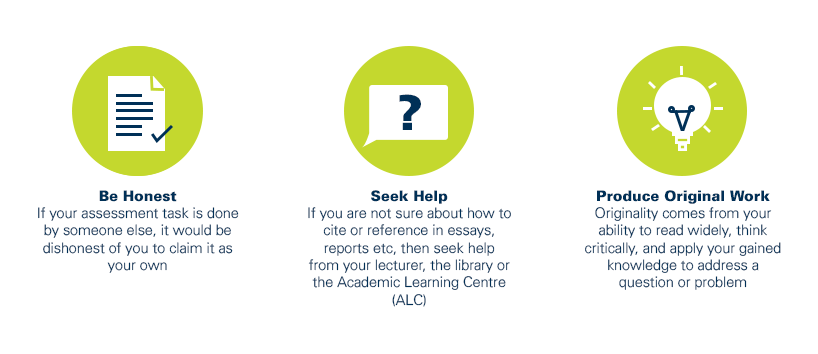
As a CQUniversity student you are expected to act honestly in all aspects of your academic work.
Any assessable work undertaken or submitted for review or assessment must be your own work. Assessable work is any type of work you do to meet the assessment requirements in the unit, including draft work submitted for review and feedback and final work to be assessed.
When you use the ideas, words or data of others in your assessment, you must thoroughly and clearly acknowledge the source of this information by using the correct referencing style for your unit. Using others’ work without proper acknowledgement may be considered a form of intellectual dishonesty.
Participating honestly, respectfully, responsibly, and fairly in your university study ensures the CQUniversity qualification you earn will be valued as a true indication of your individual academic achievement and will continue to receive the respect and recognition it deserves.
As a student, you are responsible for reading and following CQUniversity’s policies, including the Student Academic Integrity Policy and Procedure. This policy sets out CQUniversity’s expectations of you to act with integrity, examples of academic integrity breaches to avoid, the processes used to address alleged breaches of academic integrity, and potential penalties.
What is a breach of academic integrity?
A breach of academic integrity includes but is not limited to plagiarism, self-plagiarism, collusion, cheating, contract cheating, and academic misconduct. The Student Academic Integrity Policy and Procedure defines what these terms mean and gives examples.
Why is academic integrity important?
A breach of academic integrity may result in one or more penalties, including suspension or even expulsion from the University. It can also have negative implications for student visas and future enrolment at CQUniversity or elsewhere. Students who engage in contract cheating also risk being blackmailed by contract cheating services.
Where can I get assistance?
For academic advice and guidance, the Academic Learning Centre (ALC) can support you in becoming confident in completing assessments with integrity and of high standard.
What can you do to act with integrity?