Overview
This work placement capstone unit enables you to apply the theories, content knowledge and skills you have learned throughout your degree to a professional environment through either an on-site placement or an online research project placement. On-site placements may be with a regulatory agency, criminal justice agency, government department, local council, or community-based organisation. This practical experience will involve 100 hours of workplace experience, which may be accrued intensively or distributed throughout the term. Students undertaking the research project placement will complete 100 hours of work on a dedicated project under the supervision of the project owner. The research project placement can be undertaken wholly online, by distance. The university will assist you in finding suitable placement arrangements, depending on your location and availability. All students are required to undertake coursework in addition to their placement hours, which will include assessments relating to the weekly modules on professional expectations, skills, and careers.
Details
Pre-requisites or Co-requisites
Enrolment in CL55, CL75, or CL94 and 72 cp of completed units.
Important note: Students enrolled in a subsequent unit who failed their pre-requisite unit, should drop the subsequent unit before the census date or within 10 working days of Fail grade notification. Students who do not drop the unit in this timeframe cannot later drop the unit without academic and financial liability. See details in the Assessment Policy and Procedure (Higher Education Coursework).
Offerings For Term 2 - 2026
Attendance Requirements
All on-campus students are expected to attend scheduled classes - in some units, these classes are identified as a mandatory (pass/fail) component and attendance is compulsory. International students, on a student visa, must maintain a full time study load and meet both attendance and academic progress requirements in each study period (satisfactory attendance for International students is defined as maintaining at least an 80% attendance record).
Recommended Student Time Commitment
Each 6-credit Undergraduate unit at CQUniversity requires an overall time commitment of an average of 12.5 hours of study per week, making a total of 150 hours for the unit.
Class Timetable
Assessment Overview
Assessment Grading
This is a graded unit: your overall grade will be calculated from the marks or grades for each assessment task, based on the relative weightings shown in the table above. You must obtain an overall mark for the unit of at least 50%, or an overall grade of 'pass' in order to pass the unit. If any 'pass/fail' tasks are shown in the table above they must also be completed successfully ('pass' grade). You must also meet any minimum mark requirements specified for a particular assessment task, as detailed in the 'assessment task' section (note that in some instances, the minimum mark for a task may be greater than 50%). Consult the University's Grades and Results Policy for more details of interim results and final grades.
All University policies are available on the CQUniversity Policy site.
You may wish to view these policies:
- Grades and Results Policy
- Assessment Policy and Procedure (Higher Education Coursework)
- Review of Grade Procedure
- Student Academic Integrity Policy and Procedure
- Academic Progression Policy and Procedure
- Student Refund and Credit Balance Policy and Procedure
- Complaints Policy and Procedure
- Information and Communications Technology Acceptable Use Policy and Procedure
This list is not an exhaustive list of all University policies. The full list of University policies are available on the CQUniversity Policy site.
Feedback, Recommendations and Responses
Every unit is reviewed for enhancement each year. At the most recent review, the following staff and student feedback items were identified and recommendations were made.
Feedback from Agency feedback
Placement providers felt the number of hours could be increased to enable onboarding.
Increase placement hours to enable students to undertake agency onboarding and induction.
Feedback from Student feedback
Students felt that expectations around placement processes were unclear.
Offer an online information session prior to the term commencing wherein expectations and processes can be communicated to students before placements commence.
- Apply skills and knowledge developed in the course to practice in a regulatory agency, criminal justice agency, government department, community-based agency, or a relevant research project.
- Evaluate and report on placement experience, assessing personal and professional growth, including strengths and weaknesses in intellectuall, social, and professional development.
- Reflect upon and analyse the careers, roles, relationships, responsibilities and activities of staff engaged in the practice of Criminal Justice and related careers.
- Critically reflect upon the knowledge gained of the professional work environment and career pathways as a result of the coursework within the unit and participation in placement.
Alignment of Assessment Tasks to Learning Outcomes
| Assessment Tasks | Learning Outcomes | |||
|---|---|---|---|---|
| 1 | 2 | 3 | 4 | |
| 1 - Professional Practice Placement - 70% | ||||
| 2 - Written Assessment - 15% | ||||
| 3 - Presentation - 15% | ||||
Alignment of Graduate Attributes to Learning Outcomes
| Graduate Attributes | Learning Outcomes | |||
|---|---|---|---|---|
| 1 | 2 | 3 | 4 | |
| 1 - Communication | ||||
| 2 - Problem Solving | ||||
| 3 - Critical Thinking | ||||
| 4 - Information Literacy | ||||
| 5 - Team Work | ||||
| 6 - Information Technology Competence | ||||
| 7 - Cross Cultural Competence | ||||
| 8 - Ethical practice | ||||
| 9 - Social Innovation | ||||
| 10 - First Nations Knowledges | ||||
| 11 - Aboriginal and Torres Strait Islander Cultures | ||||
Textbooks
There are no required textbooks.
IT Resources
- CQUniversity Student Email
- Internet
- Unit Website (Moodle)
All submissions for this unit must use the referencing style: American Psychological Association 7th Edition (APA 7th edition)
For further information, see the Assessment Tasks.
r.hale@cqu.edu.au
Week 1
Begin Date: 13 Jul 2026Module/Topic
Introduction: Career goals & ambitions
Chapter
Hays (2023). How to set career goals. https://www.hays.com.au/career-advice/career-development/setting-career-goals
Events and Submissions/Topic
Week 2
Begin Date: 20 Jul 2026Module/Topic
Working in professional settings: Standards and expectations
Chapter
Victorian Public Sector Commission (2023). Code of conduct for VPS employees. https://vpsc.vic.gov.au/ethics-behaviours-culture/codes-of-conduct/code-of-conduct-for-victorian-public-sector-employees/
Events and Submissions/Topic
Week 3
Begin Date: 27 Jul 2026Module/Topic
Skill set 1: Professional integrity, boundaries and ethical dilemmas.
Chapter
Relationships Australia Victoria (n.d). Maintaining professional and personal boundaries. https://www.relationshipsvictoria.org.au/media/g10lkvqa/maintaining-professional-boundaries-tip-sheet-21079-web.pdf
Cypher, R.L. (2023). Social Media: Crossing the Lines of Professional Boundaries? The Journal of Perinatal & Neonatal Nursing, 36(4), 337–339. https://doi.org/10.1097/JPN.0000000000000687
Events and Submissions/Topic
Week 4
Begin Date: 03 Aug 2026Module/Topic
Skill set 2: Teamwork and interpersonal skills for the modern workplace
Chapter
Cooks-Campbell, A (2022). Why communication is key in the workplace. https://www.betterup.com/blog/why-communication-is-key-to-workplace-and-how-to-improve-skills
Events and Submissions/Topic
Week 5
Begin Date: 10 Aug 2026Module/Topic
Skill set 3 - Client facing work: Communicating effectively with diverse clients
Chapter
Ginicola, M. M., Smith, C., & Filmore, J. M. (2017). Developing Competence in Working With LGBTQI+ Communities: Awareness, Knowledge, Skills, and Action. In Affirmative Counseling With LGBTQI+ People (pp. 1–20). American Counseling Association. https://doi.org/10.1002/9781119375517.ch1
Ginicola, M. M., Smith, C., & Filmore, J. M. (2017). Developing Competence in Working With LGBTQI+ Communities: Awareness, Knowledge, Skills, and Action. In Affirmative Counseling With LGBTQI+ People (pp. 1–20). American Counseling Association. https://doi.org/10.1002/9781119375517.ch1
Cortoni, F., Beech, A. R., & Craig, L. A. (2017). Sexual Offenders. In Forensic Practice (pp. 52–75). John Wiley & Sons, Ltd. https://doi.org/10.1002/9781118314531.ch4
Barry, M. Promoting desistance with young people. In Earle, R., Hester, R., Taylor, W., Hester, R. (2013) Youth justice handbook: theory, policy and practice. Routledge. https://doi.org/10.4324/9781315820064
Events and Submissions/Topic
Week 6
Begin Date: 17 Aug 2026Module/Topic
Area 1: Public service roles
Chapter
Howes, L. M., & Goodman-Delahunty, J. (2015). Career decisions by Australian police officers: a cross-section of perspectives on entering, staying in and leaving policing careers. Police Practice & Research, 16(6), 453–468. https://doi.org/10.1080/15614263.2014.951936
Rhineberger-Dunn, G., & Mack, K. Y. (2020). Predicting Burnout Among Juvenile Detention and Juvenile Probation Officers. Criminal Justice Policy Review, 31(3), 335–355. https://doi.org/10.1177/0887403419831352
Events and Submissions/Topic
Vacation Week
Begin Date: 24 Aug 2026Module/Topic
Break
Chapter
Nil
Events and Submissions/Topic
Week 7
Begin Date: 31 Aug 2026Module/Topic
Area 2: Non-government and community-based roles
Chapter
Price, A., & Kelly, S. (2021). Caught between a rock and a hard place: Social work in non-government organisations. Aotearoa New Zealand Social Work. 33. 67-80. 10.11157/anzswj-vol33iss1id824
McGrath, S., & Johnson, M (2023). The provision of support and advocacy for rural victims. Case study: Victim advocacy in the Delta Region of the United States. In Hale, R., & Harkness, A. (2023). Rural victims of crime: representations, realities and responses. Routledge.
Events and Submissions/Topic
Week 8
Begin Date: 07 Sep 2026Module/Topic
Area 3: Regulation, oversight and investigations
Chapter
Queensland Family and Child Commission (2023). Oversight Framework and Forward Work Plan 2023-2027. https://www.qfcc.qld.gov.au/sector/monitoring-and-reviewing-systems/oversight
Naylor, B. (2021). Human rights oversight of correctional institutions in Australia. European Journal of Criminology, 18(1), 52–73. https://doi.org/10.1177/1477370820958238
Events and Submissions/Topic
Week 9
Begin Date: 14 Sep 2026Module/Topic
Area 4: Research and evaluation
Chapter
Queensland Government. Criminal Justice evaluation framework. https://www.premiers.qld.gov.au/publications/categories/guides/criminal-justice.aspx
Events and Submissions/Topic
Week 10
Begin Date: 21 Sep 2026Module/Topic
Employability 1: Identifying suitable roles and writing strong applications
Chapter
See CQU careers module - available on Moodle
Events and Submissions/Topic
Week 11
Begin Date: 28 Sep 2026Module/Topic
Employability 2 - Interview preparation and presentation
Chapter
See CQU careers module - available on Moodle
Events and Submissions/Topic
Week 12
Begin Date: 05 Oct 2026Module/Topic
Preparing for post-graduate career pathways: Reassessing ambitions and goals
Chapter
Events and Submissions/Topic
Exam Week
Begin Date: 12 Oct 2026Module/Topic
Chapter
Events and Submissions/Topic
Vacation/Exam Week
Begin Date: 19 Oct 2026Module/Topic
Chapter
Events and Submissions/Topic
Placement reflection presentation Due: Vacation/Exam Week Friday (23 Oct 2026) 11:59 pm AEST
1 Professional Practice Placement
All students are required to complete 100-hours of work placement either on-site at an agency or via an online research project.
More details about the placement experience can be found on the 'Placement information sheet' available on Moodle.
Students will be assessed on their placement performance across the 100-hours, regardless of whether they do an on-site or research placement.
The criteria assessed by the 'placement supervisor' include: -
1. Professionalism & Workplace Conduct /15
- Professional presentation
- Attendance and punctuality
- Responsiveness and timely completion of requests
- Appropriate behavior, attitude, and language use
- Ethical conduct
- Respect for colleagues and clients
2. Communication Skills /15
- Clarity and professionalism of verbal and written communication
- Professional tone in digital communication
- Ability to adapt communication style to audience
- Active listening and asking appropriate questions
- Confidence communicating within team
3. Organisation & Time Management /15
- Managing breaks and any leave requirements
- Managing workload independently
- Meeting deadlines
- Ability to organise work tasks
- Keeping track of and communicating task progress
4. Initiative & Problem‑Solving /10
- Identifying issues and proposing solutions
- Working independently when appropriate
- Attempting to solve problems first
- Escalating when required
- Seeking feedback and acting on it
5. Impact & Contribution to the Workplace/team /10
- Personability and collegiality in workplace interactions
- Completing meaningful tasks for the team
- Positive influence on work environment
- Producing work that is useful to the organisation/team
- Quality of completed tasks
6. Learning Attitude & professional growth /5
- Openness and willingness to learning
- Seeking out learning opportunities and asking questions
- Improvements across the placement in any professional skills areas above
- Understanding of strengths and weaknesses and limitations as a student
Feedback across these areas will be communicated to students during their final placement assessment meeting and provided in writing with comments from the supervisor.
Any concerns about the marks received should be directed to the Unit Coordinator in the first instance.
Vacation/Exam Week Friday (23 Oct 2026) 11:59 pm AEST
Due upon completion of placement assessment meeting. 72-hr grace period is not relevant to this task.
N/A
See above
- Apply skills and knowledge developed in the course to practice in a regulatory agency, criminal justice agency, government department, community-based agency, or a relevant research project.
- Evaluate and report on placement experience, assessing personal and professional growth, including strengths and weaknesses in intellectuall, social, and professional development.
- Critically reflect upon the knowledge gained of the professional work environment and career pathways as a result of the coursework within the unit and participation in placement.
2 Written Assessment
Students select one current advertised job role relating to criminal justice that would be suitable to apply for following graduation.
Provide the hyperlink to the job ad and PDF of the position description (or advertisement text).
Compose a job application including: -
- Cover letter explaining why you are suitable for the role and your relevant skills/experience (approx. 400 words)
- Curriculum Vitae outlining your education, skills, employment history (see requirements/template on Moodle)
- Response to two Key Selection Criteria (300 words each)
Week 12 Monday (5 Oct 2026) 9:00 am AEST
72-hr grace period applies
Within two weeks of timely submission
Cover letter (quality, communication, presentation) /5
CV (quality, structure, layout) /5
KSC responses (depth, written communication, adherence to STAR) /5
- Evaluate and report on placement experience, assessing personal and professional growth, including strengths and weaknesses in intellectuall, social, and professional development.
- Reflect upon and analyse the careers, roles, relationships, responsibilities and activities of staff engaged in the practice of Criminal Justice and related careers.
- Critically reflect upon the knowledge gained of the professional work environment and career pathways as a result of the coursework within the unit and participation in placement.
3 Presentation
Students must record a 7–8-minute presentation reflecting on their placement experience.
The presentation must: -
- Evaluate and report on placement experience overall.
- Discuss the various careers, roles, relationships, responsibilities and activities associated with the placement experience.
- Assess personal and professional growth, including areas for further professional development and how these can be addressed.
- Critically reflect upon the knowledge gained of the professional work environment and career pathways as a result of the coursework within the unit and participation in placement.
Vacation/Exam Week Friday (23 Oct 2026) 11:59 pm AEST
Due within one week of final placement assessment meeting. 72-hour grace period is not relevant to this assessment.
Within two weeks of timely submission
- Quality of video and verbal presentation /3
- Depth of reflection and discussion /7
- Understanding of professional skills, strengths, areas for further development /5
- Apply skills and knowledge developed in the course to practice in a regulatory agency, criminal justice agency, government department, community-based agency, or a relevant research project.
- Evaluate and report on placement experience, assessing personal and professional growth, including strengths and weaknesses in intellectuall, social, and professional development.
- Reflect upon and analyse the careers, roles, relationships, responsibilities and activities of staff engaged in the practice of Criminal Justice and related careers.
As a CQUniversity student you are expected to act honestly in all aspects of your academic work.
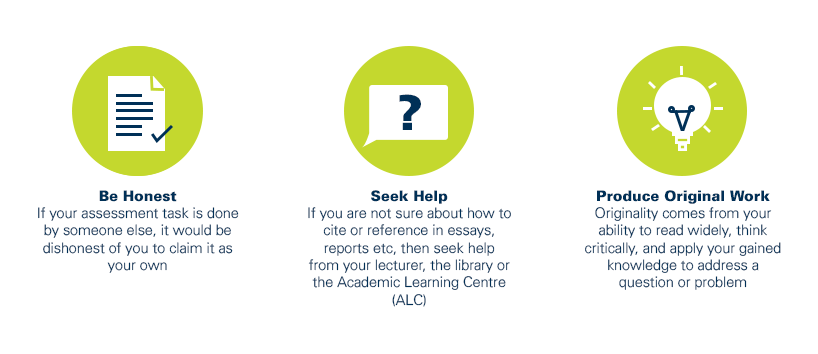
Any assessable work undertaken or submitted for review or assessment must be your own work. Assessable work is any type of work you do to meet the assessment requirements in the unit, including draft work submitted for review and feedback and final work to be assessed.
When you use the ideas, words or data of others in your assessment, you must thoroughly and clearly acknowledge the source of this information by using the correct referencing style for your unit. Using others’ work without proper acknowledgement may be considered a form of intellectual dishonesty.
Participating honestly, respectfully, responsibly, and fairly in your university study ensures the CQUniversity qualification you earn will be valued as a true indication of your individual academic achievement and will continue to receive the respect and recognition it deserves.
As a student, you are responsible for reading and following CQUniversity’s policies, including the Student Academic Integrity Policy and Procedure. This policy sets out CQUniversity’s expectations of you to act with integrity, examples of academic integrity breaches to avoid, the processes used to address alleged breaches of academic integrity, and potential penalties.
What is a breach of academic integrity?
A breach of academic integrity includes but is not limited to plagiarism, self-plagiarism, collusion, cheating, contract cheating, and academic misconduct. The Student Academic Integrity Policy and Procedure defines what these terms mean and gives examples.
Why is academic integrity important?
A breach of academic integrity may result in one or more penalties, including suspension or even expulsion from the University. It can also have negative implications for student visas and future enrolment at CQUniversity or elsewhere. Students who engage in contract cheating also risk being blackmailed by contract cheating services.
Where can I get assistance?
For academic advice and guidance, the Academic Learning Centre (ALC) can support you in becoming confident in completing assessments with integrity and of high standard.
What can you do to act with integrity?