Overview
This unit will enable you to develop your skills for working safely and effectively with male users of violence to effect behavioural change. It will enhance your understanding of the ethical and legal implications for practice in this field and relevant statutory requirements and standards which support safe practice. You will draw on your knowledge of domestic and family violence theories and frameworks as you acquire a range of group and other interpersonal skills to challenge and address perpetrator attitudes and behaviours. This unit also supports the growth of your abilities to assess client motivations and their commitment to change and will build your capacity to promote, monitor and review client progress through developing response plans. You will strengthen your knowledge of working with specific groups, such as Culturally and Linguistically Diverse and Aboriginal and Torres Strait Islander clients.
Details
Pre-requisites or Co-requisites
There are no requisites for this unit.
Important note: Students enrolled in a subsequent unit who failed their pre-requisite unit, should drop the subsequent unit before the census date or within 10 working days of Fail grade notification. Students who do not drop the unit in this timeframe cannot later drop the unit without academic and financial liability. See details in the Assessment Policy and Procedure (Higher Education Coursework).
Offerings For Term 2 - 2020
Attendance Requirements
All on-campus students are expected to attend scheduled classes - in some units, these classes are identified as a mandatory (pass/fail) component and attendance is compulsory. International students, on a student visa, must maintain a full time study load and meet both attendance and academic progress requirements in each study period (satisfactory attendance for International students is defined as maintaining at least an 80% attendance record).
Recommended Student Time Commitment
Each 6-credit Postgraduate unit at CQUniversity requires an overall time commitment of an average of 12.5 hours of study per week, making a total of 150 hours for the unit.
Class Timetable
Assessment Overview
Assessment Grading
This is a graded unit: your overall grade will be calculated from the marks or grades for each assessment task, based on the relative weightings shown in the table above. You must obtain an overall mark for the unit of at least 50%, or an overall grade of 'pass' in order to pass the unit. If any 'pass/fail' tasks are shown in the table above they must also be completed successfully ('pass' grade). You must also meet any minimum mark requirements specified for a particular assessment task, as detailed in the 'assessment task' section (note that in some instances, the minimum mark for a task may be greater than 50%). Consult the University's Grades and Results Policy for more details of interim results and final grades.
All University policies are available on the CQUniversity Policy site.
You may wish to view these policies:
- Grades and Results Policy
- Assessment Policy and Procedure (Higher Education Coursework)
- Review of Grade Procedure
- Student Academic Integrity Policy and Procedure
- Monitoring Academic Progress (MAP) Policy and Procedure - Domestic Students
- Monitoring Academic Progress (MAP) Policy and Procedure - International Students
- Student Refund and Credit Balance Policy and Procedure
- Student Feedback - Compliments and Complaints Policy and Procedure
- Information and Communications Technology Acceptable Use Policy and Procedure
This list is not an exhaustive list of all University policies. The full list of University policies are available on the CQUniversity Policy site.
Feedback, Recommendations and Responses
Every unit is reviewed for enhancement each year. At the most recent review, the following staff and student feedback items were identified and recommendations were made.
Feedback from Formal student feedback
"Not enough tutorials"
In future, Zoom contact time with students will be increased and scheduled more regularly. While emails and phone calls were well accessed, the need for more Zoom time was expressed by a couple of students.
Feedback from Formal student feedback
There were a number of student comments in regards to technology difficulties.
There will be check points created throughout the unit, so the lecturer can check on the progress of students and any concerns or difficulties they may be having. While technical difficulties were referred to TaSAC, a couple of students still had difficulties. The new E-Reading lists should make it easier for students to navigate week by week through the unit materials and resources.
Feedback from Formal student feedback
There were some incorrect dates that were not picked up prior to the unit going live.
The need for accuracy of dates in the course profile and on the Moodle site is critically important. Due to transition times and lecturer oversight, these irregularities were not identified early. After conversation with the DDLT the matter was resolved. A more careful and cautious review of Moodle site and Course profile is to be undertaken.
Feedback from Self-reflection and informal student feedback
More lecturer resources to be provided for ongoing learning opportunities.
More powerpoints and pre-recorded lectures will be uploaded onto Moodle at the start of the term. Students will then be able to access them at their convenience.
- Evaluate and apply the relevant frameworks and methods for effecting behavioural change
- Formulate a comprehensive client response plan, based on cultural considerations and assessment of the client's suitability and needs
- Identify and apply relevant standards, procedures and statutory requirements to ensure worker and family safety
- Evaluate strategies and techniques for working in group practice with perpetrators
- Demonstrate effective, safe, professional and accountable conduct to promote client behaviour change.
Alignment of Assessment Tasks to Learning Outcomes
| Assessment Tasks | Learning Outcomes | ||||
|---|---|---|---|---|---|
| 1 | 2 | 3 | 4 | 5 | |
| 1 - Written Assessment - 30% | |||||
| 2 - Practical Assessment - 30% | |||||
| 3 - Portfolio - 40% | |||||
Alignment of Graduate Attributes to Learning Outcomes
| Graduate Attributes | Learning Outcomes | ||||
|---|---|---|---|---|---|
| 1 | 2 | 3 | 4 | 5 | |
| 1 - Knowledge | |||||
| 2 - Communication | |||||
| 3 - Cognitive, technical and creative skills | |||||
| 4 - Research | |||||
| 5 - Self-management | |||||
| 6 - Ethical and Professional Responsibility | |||||
| 7 - Leadership | |||||
| 8 - First Nations Knowledges | |||||
| 9 - Aboriginal and Torres Strait Islander Cultures | |||||
Alignment of Assessment Tasks to Graduate Attributes
| Assessment Tasks | Graduate Attributes | ||||||||
|---|---|---|---|---|---|---|---|---|---|
| 1 | 2 | 3 | 4 | 5 | 6 | 7 | 8 | 9 | |
| 1 - Written Assessment - 30% | |||||||||
| 2 - Practical Assessment - 30% | |||||||||
| 3 - Portfolio - 40% | |||||||||
Textbooks
There are no required textbooks.
IT Resources
- CQUniversity Student Email
- Internet
- Unit Website (Moodle)
All submissions for this unit must use the referencing styles below:
- American Psychological Association 6th Edition (APA 6th edition)
- American Psychological Association 7th Edition (APA 7th edition)
For further information, see the Assessment Tasks.
b.sullivan@cqu.edu.au
Week 1
Begin Date: 13 Jul 2020Module/Topic
Critical reflective practice - A foundational skill
Chapter
Events and Submissions/Topic
Week 2
Begin Date: 20 Jul 2020Module/Topic
Professional coherence: Self-care and safety
Chapter
All readings provided in Unit eReading list
Events and Submissions/Topic
Week 3
Begin Date: 27 Jul 2020Module/Topic
Understanding and working with power and control
Chapter
All readings provided in Unit eReading list
Events and Submissions/Topic
Week 4
Begin Date: 03 Aug 2020Module/Topic
Understanding, assessing, and managing risk
Chapter
All readings provided in Unit eReading list
Events and Submissions/Topic
Week 5
Begin Date: 10 Aug 2020Module/Topic
Understanding and working with coercive control
Chapter
All readings provided in Unit eReading list
Events and Submissions/Topic
Vacation Week
Begin Date: 17 Aug 2020Module/Topic
Multiple needs and case management
Chapter
All readings provided in Unit eReading list
Events and Submissions/Topic
Week 6
Begin Date: 24 Aug 2020Module/Topic
Understanding and working with cultural safety
Chapter
All readings provided in Unit eReading list
Events and Submissions/Topic
Written assessment - Essay
RISK ASSESSMENT AND MANAGEMENT PLAN Due: Week 6 Monday (24 Aug 2020) 5:00 pm AEST
Week 7
Begin Date: 31 Aug 2020Module/Topic
Motivational interviewing to enhance engagement
Chapter
All readings provided in Unit eReading list
Events and Submissions/Topic
Week 8
Begin Date: 07 Sep 2020Module/Topic
Co-facilitation of men's groups - Role-modeling respect
Chapter
All readings provided in Unit eReading list
Events and Submissions/Topic
Week 9
Begin Date: 14 Sep 2020Module/Topic
Using group processes 1: Advanced facilitator skills
Chapter
All readings provided in Unit eReading list
Events and Submissions/Topic
Practical assessment - Case study
Practice report Due: Week 9 Monday (14 Sept 2020) 5:00 pm AEST
Week 10
Begin Date: 21 Sep 2020Module/Topic
Using group processes 2: Working with resistance
Chapter
All readings provided in Unit eReading list
Events and Submissions/Topic
Week 11
Begin Date: 28 Sep 2020Module/Topic
Using group processes 3 - Challenging respectfully and safely
Chapter
All readings provided in Unit eReading list
Events and Submissions/Topic
Week 12
Begin Date: 05 Oct 2020Module/Topic
Reviewing and summarizing the journey
Chapter
All readings provided in Unit eReading list
Events and Submissions/Topic
Portfolio - Critical Reflective Practice
Review/Exam Week
Begin Date: 12 Oct 2020Module/Topic
Chapter
Events and Submissions/Topic
Exam Week
Begin Date: 19 Oct 2020Module/Topic
Chapter
Events and Submissions/Topic
1 Written Assessment
| Unit Name | Advanced Skills for Men's Behaviour Change |
| Unit No. | DFVP20009 |
| Coordinator | Dr Brian Sullivan |
| Assess No. | 1 |
| Type | Written Assessment |
| LOs assessed | 2) Formulate a comprehensive client response plan, based on cultural considerations and assessment of the client's suitability and needs 3) Identify and apply relevant standards, procedures and statutory requirements to ensure worker and family safety |
| Word Limit | 1,500 (+/- 10%) |
| Total Percentage | 30% |
| Details | Due: Week 6, Monday - 5.00pm Task: You are required to write a comprehensive risk assessment report and risk management plan. This task requires you to analyse information drawn from 60 minutes TV interview (https://www.youtube.com/watch?v=PTWBl5VcBxM)and to develop a risk assessment and a risk management plan. It requires you to identify key practice issues and to determine responses relevant to men’s behaviour change practice including safety; risk assessment; evidence-based responses; and professionally informed standards. Procedure: Review the Assessment Interview video file provided in Moodle and, with reference to your learning from the unit, use this material to: 1. Identify key risk factors relevant to the client’s abusive conduct in domestic/family settings 2. Identify key factors relevant to the safety of the (ex-) partner and children 3. Determine client-related factors that are relevant and amenable to change 4. Note what resources might be present in facilitating such change, including cultural considerations 5. Identify a list of recommendations for risk management purposes 6. Based on your responses to 1-5 above, provide a basic set of recommendations for intervention with the client. Your focus should be principally on the client.
· Formulate recommendations that are specific, achievable, and measurable. You should include at least five references in your report. At least three of these should be academic references based on empirical and/ or theoretical examinations of the practice and safety issues. Remaining references may be sources from the grey literature. |
| Notes to Students | Overall, this assessment item provides you with the opportunity to deductively apply principles from the relevant literature and link these to your current or future practice. All assessment-related information is also made available on the unit Moodle site under the ‘ASSESSMENT’ section. You will also find a link to a monitored discussion board designed as a forum for posing and responding to your questions relating to each assessment item. You are encouraged to monitor the unit Moodle site and your student emails for assessment-related information. Referencing The preferred style for CQUniversity School of Nursing, Midwifery and Social Sciences is American Psychological Association (APA) referencing. A guide to APA referencing can be accessed here. |
| Criteria | Provided via Moodle |
| Feedback | Provided via Moodle |
Week 6 Monday (24 Aug 2020) 5:00 pm AEST
|
- Formulate a comprehensive client response plan, based on cultural considerations and assessment of the client's suitability and needs
- Identify and apply relevant standards, procedures and statutory requirements to ensure worker and family safety
- Knowledge
- Communication
- Cognitive, technical and creative skills
- Research
- Ethical and Professional Responsibility
2 Practical Assessment
| Unit Name | Advanced Skills for Men's Behaviour Change |
| Unit No. | DFVP20009 |
| Coordinator | Dr Brian Sullivan |
| Assess No. | 2 |
| Type | Practical Assessment |
| LOs assessed | 5) Demonstrate effective, safe, professional and accountable conduct to promote client behaviour change |
| Word Limit | 1,500 (+/- 10%) |
| Total Percentage | 30% |
| Detail | Due: 5.00pm Monday, Week 9 You are required to provide an analysis of practice. Your submission should be presented as a practice report. The task provides you with an opportunity to identify and appraise features of a clinical interview conducted to enhance commitment to a tailored process of change relevant to the use of domestic/family violence. The interview you will analyse is presented on a video file made available through the Moodle portal for this unit. The task requires you to demonstrate appreciation of effective, safe, professional, and accountable practice designed to promote client behaviour change. |
| Notes to Students |
Practical assessment activities are designed to reflect skills required in professional practice and involve different types of learning and assessment. They provide students with an opportunity to demonstrate a range of different skills, including ways of applying knowledge and attributes. These activities allow you to engage with and respond to scenarios similar to those encountered in practice experience. This activity provides you with the opportunity to deductively apply principles from the relevant literature and link these to your current or future practice. Attend to the scenario carefully and be aware of its specific requirements in terms of length, format, structure, required referencing, and intended purpose. Sensitivity to intersectional issues (such as gender, race/culture) and inclusiveness should be observed. All assessment-related information is also made available on the unit Moodle site under the ‘ASSESSMENT’ section. You will also find a link to a monitored discussion board specifically designed for questions relating to each assessment item on the unit Moodle site. You are encouraged to monitor the unit Moodle site and your student emails for assessment-related information. Referencing The preferred style for CQUniversity School of Nursing and Midwifery is American Psychological Association (APA) referencing. A guide to APA referencing can be accessed here. Criteria Provided via Moodle Feedback Provided via Moodle |
| Criteria | Provided via Moodle |
| Feedback | Provided via Moodle |
Week 9 Monday (14 Sept 2020) 5:00 pm AEST
|
|
|
- Demonstrate effective, safe, professional and accountable conduct to promote client behaviour change.
- Knowledge
- Communication
- Cognitive, technical and creative skills
- Self-management
- Ethical and Professional Responsibility
- Leadership
3 Portfolio
| Unit Name | Advanced Skills for Men's Behaviour Change | ||||||
| Unit No. | DFVP20009 | ||||||
| Coordinator | Dr Brian Sullivan | ||||||
| Assess No. | 3 | ||||||
| Type | Portfolio | ||||||
| LOs assessed |
1. Evaluate and apply the relevant frameworks and methods for effecting behavioural change 2. Formulate a comprehensive client response plan, based on cultural considerations and assessment of the client's suitability and needs 3. Identify and apply relevant standards, procedures and statutory requirements to ensure worker and family safety 4. Evaluate strategies and techniques for working in group practice with perpetrators |
||||||
| Word Limit | 3000 (+/- 10%) | ||||||
| Total Percentage | 40% | ||||||
| Details |
Due: Friday, Week 12 - 2020 Overview Morley, C. and Dunstan, J. (2016) Putting gender back on the agenda in domestic and family violence policy and service responses: Using critical reflection to create cultural change. Social Alternatives, 35(4), 43-48 Thompson, N. & Pascal, J. (2012). Developing critically reflective practice. Reflective Practice, 13(2), 311-325.
|
While the completed item is not due until the end of Week 12, this assessment item must be compiled, week by week, over the course of the term
Week 12 Friday (9 Oct 2020)
| Assessment 3 Portfolio – Critical Reflection Journal - Rubric DFVP20010 | ||||
| High Distinction 84.50-100% | Distinction 74.50-84.49% | Credit 64.50-74.49% | Pass 49.50-64.49% | Fail Below 49.50% |
| STRUCTURE | ||||
| Presentations, efficiency & organisation 10% | ||||
| Excellent presentation of journal, in double-spaced 12-point font. Consistently accurate with spelling, grammar and paragraph structure. A complete 8 entries. | Very well-written and presented journal, in double-spaced 12-point font. There are minor errors (e.g. 1 or 2 errors in spelling, grammar, sentence and paragraph structure). A complete 8 entries | Well-written and presented journal, in double-spaced 12-point font. Consistently accurate with spelling, grammar and paragraph structure. A complete 8 entries.There are some errors (e.g. 3 or 4 consistent errors with spelling, grammar , sentence and paragraph structure). | Adequate presentation of journal, in double-spaced 12-point font There are 4 or 5 inconsistent errors (spelling, grammar, sentence and paragraph structure). One or two entriesmay be missing. | The introduction is not apparent or does not attempt to introduce your Journal. It does not flow logically and is not brought to a close. Overall, a poorly presented assignment. There are many inaccuracies in formatting spelling, grammar and paragraph structure. (> 5 errors). Many entries are missing |
| Substantiation of discussion and referencing 10% | ||||
| Critical reflection is informed consistently with logic, examples, and with reference to the current literature. A minimum of 8 contemporary* peer reviewed journal articles and grey literaturehave been cited. (5 + 3) Accurate APA referencing. No errors. | Generally, critical reflection is informed with logic, examples, and with reference to the current peer reviewed literature, with 1 or 2 exceptions. A minimum of 8 contemporary* peer reviewed journal articles and grey literaturehave been cited. (5 + 3). Mostly accurate APA referencing. 1-2 consistent errors (may be made multiple times). | Critical reflection is often informed with logic, examples, and with reference to the current peer reviewed literature, with 3 or 4 exceptions. Between 8 - 10 contemporary* peer reviewed journal articles have been cited. Generally, accurate APA referencing. 3 consistent errors (may be made multiple times). | Critical reflection is occasionally informed with logic, examples, and with reference to the current peer reviewed literature, with 5 or 6 exceptions. Between 5-8 contemporary* peer reviewed journal articles have been cited. Occasionally accurate APA referencing. 4 consistent errors (made multiple times). | Critical reflection is not informed or infrequently attempts to (>7 errors) to inform with logic, examples, and with reference to the current peer reviewed literature. Less than 5 contemporary* peer reviewed journal articles have been cited. APA referencing not used, or more than 5 inaccuracies. |
| ARGUMENT AND APPROACH 80% | ||||
| Relevancy & depth 40% | ||||
| The content is entirely relevant and comprehensively addresses the tasks. The journal provides an excellent understanding of and response to a broad range of advanced skills in domestic violence intervention. Excellent demonstration of critical thinking in your response to advanced skills in domestic and family violence and the significance of the men’s program within that system An excellent logical discussion that is within the set word limit. | The content is very relevant and clearly addresses the tasks. The journal provides an very good understanding of and response to a broad range of advanced skills in domestic violence intervention. Clear demonstration of critical thinking in your response to advanced skills in domestic and family violence and the significance of the men’s program within that system . The discussion clearly proceeds logically and is within the set word limit. | The content is relevant and addresses the tasks. The journal provides an good understanding of and response to a broad range of advanced skills in domestic violence intervention There is generally a good demonstration of critical thinking in your response to advanced skills in domestic and family violence and the significance of the men’s program within that system The discussion proceeds logically and is within the set word count. | The content is mostly relevnt and partly addresses the tasks. The journal provides an adequate understanding of and response to a broad range of advanced skills in domestic violence intervention. There is an adequate demonstration of critical thinking in your response to advanced skills in domestic and family violence and the significance of the men’s program within that system . The discussion is at times repetitive or lacks cohesion and is within the set word limit | The content is irrelevant and/or does not address the task. The discussion lacks cohesion. The word count is not within the limi The journal provides an insufficient understanding of and response to a broad range of advanced skills in domestic violence intervention. There is a very limited demonstration of critical thinking inyour response to advanced skills in domestic and family violence and the significance of the men’s program within that system . |
| Explanation & justification of literature retrieval and review processes 40% | ||||
| This is an excellent critical reflection on your response to advanced skills in domestic violence intervention. Consistently applies deep critical analysis to practice contexts showing excellent application of theory to personal individual practice | This is a very good critical reflection on your response to advanced skills in domestic violence intervention. Generally applies deep critical analysis to practice contexts, showing very good application of theory to personal individual practice | This is a good critical reflection on your response to advanced skills in domestic violence intervention. Good application of critical analysis to practice contexts, often showing good application of theory to personal individual practice | This is an adequate critical reflection on your response to advanced skills in domestic violence intervention. Satisfactorily applies critical analysis to practice contexts, at times showing some application of theory to personal individual practice | This is not a satisfactory critical reflection on your response to advanced skills in domestic violence intervention. Less than adequate application of critical analysis to practice contexts showing limited application of theory to personal individual practice |
| TOTAL MARKS /100 Late penalty (if applicable) % Final Grade Marker___________________________________ Date __________________ | ||||
*Contemporary = less than 7 years old
- Evaluate and apply the relevant frameworks and methods for effecting behavioural change
- Formulate a comprehensive client response plan, based on cultural considerations and assessment of the client's suitability and needs
- Identify and apply relevant standards, procedures and statutory requirements to ensure worker and family safety
- Evaluate strategies and techniques for working in group practice with perpetrators
- Knowledge
- Communication
- Cognitive, technical and creative skills
- Research
- Ethical and Professional Responsibility
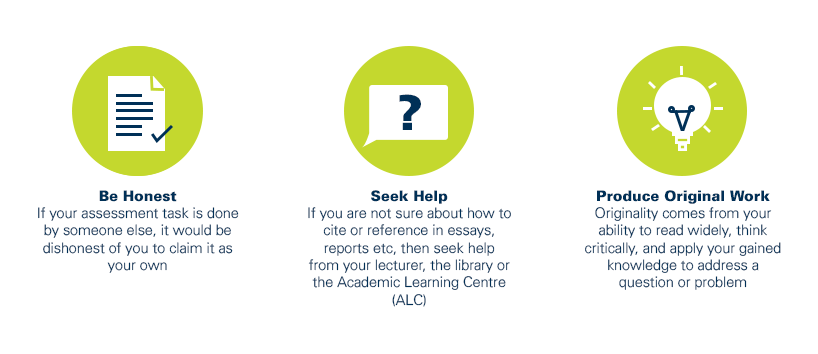
As a CQUniversity student you are expected to act honestly in all aspects of your academic work.
Any assessable work undertaken or submitted for review or assessment must be your own work. Assessable work is any type of work you do to meet the assessment requirements in the unit, including draft work submitted for review and feedback and final work to be assessed.
When you use the ideas, words or data of others in your assessment, you must thoroughly and clearly acknowledge the source of this information by using the correct referencing style for your unit. Using others’ work without proper acknowledgement may be considered a form of intellectual dishonesty.
Participating honestly, respectfully, responsibly, and fairly in your university study ensures the CQUniversity qualification you earn will be valued as a true indication of your individual academic achievement and will continue to receive the respect and recognition it deserves.
As a student, you are responsible for reading and following CQUniversity’s policies, including the Student Academic Integrity Policy and Procedure. This policy sets out CQUniversity’s expectations of you to act with integrity, examples of academic integrity breaches to avoid, the processes used to address alleged breaches of academic integrity, and potential penalties.
What is a breach of academic integrity?
A breach of academic integrity includes but is not limited to plagiarism, self-plagiarism, collusion, cheating, contract cheating, and academic misconduct. The Student Academic Integrity Policy and Procedure defines what these terms mean and gives examples.
Why is academic integrity important?
A breach of academic integrity may result in one or more penalties, including suspension or even expulsion from the University. It can also have negative implications for student visas and future enrolment at CQUniversity or elsewhere. Students who engage in contract cheating also risk being blackmailed by contract cheating services.
Where can I get assistance?
For academic advice and guidance, the Academic Learning Centre (ALC) can support you in becoming confident in completing assessments with integrity and of high standard.
What can you do to act with integrity?