Overview
This unit considers the practice and theory of modern photography. You will learn about historical and modern perspectives on photography as news, art and visual culture, as well as practical considerations such as composition, lighting and colour. You will be required to produce a portfolio, and must have access to either a digital camera or a 35 mm SLR camera and scanner. You will need access to software that can process digital images.
Details
Pre-requisites or Co-requisites
Prerequisite: Minimum of 36 credit points Students who have completed COMM12116 Contemporary Photomedia may not enrol in this unit.
Important note: Students enrolled in a subsequent unit who failed their pre-requisite unit, should drop the subsequent unit before the census date or within 10 working days of Fail grade notification. Students who do not drop the unit in this timeframe cannot later drop the unit without academic and financial liability. See details in the Assessment Policy and Procedure (Higher Education Coursework).
Offerings For Term 1 - 2026
Attendance Requirements
All on-campus students are expected to attend scheduled classes - in some units, these classes are identified as a mandatory (pass/fail) component and attendance is compulsory. International students, on a student visa, must maintain a full time study load and meet both attendance and academic progress requirements in each study period (satisfactory attendance for International students is defined as maintaining at least an 80% attendance record).
Recommended Student Time Commitment
Each 6-credit Undergraduate unit at CQUniversity requires an overall time commitment of an average of 12.5 hours of study per week, making a total of 150 hours for the unit.
Class Timetable
Assessment Overview
Assessment Grading
This is a graded unit: your overall grade will be calculated from the marks or grades for each assessment task, based on the relative weightings shown in the table above. You must obtain an overall mark for the unit of at least 50%, or an overall grade of 'pass' in order to pass the unit. If any 'pass/fail' tasks are shown in the table above they must also be completed successfully ('pass' grade). You must also meet any minimum mark requirements specified for a particular assessment task, as detailed in the 'assessment task' section (note that in some instances, the minimum mark for a task may be greater than 50%). Consult the University's Grades and Results Policy for more details of interim results and final grades.
All University policies are available on the CQUniversity Policy site.
You may wish to view these policies:
- Grades and Results Policy
- Assessment Policy and Procedure (Higher Education Coursework)
- Review of Grade Procedure
- Student Academic Integrity Policy and Procedure
- Academic Progression Policy and Procedure
- Student Refund and Credit Balance Policy and Procedure
- Complaints Policy and Procedure
- Information and Communications Technology Acceptable Use Policy and Procedure
This list is not an exhaustive list of all University policies. The full list of University policies are available on the CQUniversity Policy site.
Feedback, Recommendations and Responses
Every unit is reviewed for enhancement each year. At the most recent review, the following staff and student feedback items were identified and recommendations were made.
Feedback from Research and collegial discussion
Advances in Generative AI continue to impact the field of photomedia.
Update material on Generative AI and photography to account for emerging edit-by-instruction models such as Gemini Flash 2.5. While strongly retaining the focus on real photography, expand the generative AI exercise component somewhat.
- operate a digital camera and image-processing software
- identify the characteristics of a photographic image that suit different purposes and contexts
- produce photographs suitable for a range of specified media purposes and contexts
- compile a high quality portfolio of images in a particular genre.
Not applicable
Alignment of Assessment Tasks to Learning Outcomes
| Assessment Tasks | Learning Outcomes | |||
|---|---|---|---|---|
| 1 | 2 | 3 | 4 | |
| 1 - Practical and Written Assessment - 40% | ||||
| 2 - Portfolio - 60% | ||||
Alignment of Graduate Attributes to Learning Outcomes
| Graduate Attributes | Learning Outcomes | |||
|---|---|---|---|---|
| 1 | 2 | 3 | 4 | |
| 1 - Communication | ||||
| 2 - Problem Solving | ||||
| 3 - Critical Thinking | ||||
| 4 - Information Literacy | ||||
| 5 - Team Work | ||||
| 6 - Information Technology Competence | ||||
| 7 - Cross Cultural Competence | ||||
| 8 - Ethical practice | ||||
| 9 - Social Innovation | ||||
| 10 - First Nations Knowledges | ||||
| 11 - Aboriginal and Torres Strait Islander Cultures | ||||
Alignment of Assessment Tasks to Graduate Attributes
| Assessment Tasks | Graduate Attributes | ||||||||||
|---|---|---|---|---|---|---|---|---|---|---|---|
| 1 | 2 | 3 | 4 | 5 | 6 | 7 | 8 | 9 | 10 | 11 | |
| 1 - Practical and Written Assessment - 40% | |||||||||||
| 2 - Portfolio - 60% | |||||||||||
Textbooks
There are no required textbooks.
Additional Textbook Information
Students.will need.to.habe access to Adobe Photoshop CC or an equivalent.
IT Resources
- CQUniversity Student Email
- Internet
- Unit Website (Moodle)
- Microsoft Word
- Adobe Photoshop CC or earlier
- Digital camera or smartphone with good quality camera
All submissions for this unit must use the referencing style: American Psychological Association 7th Edition (APA 7th edition)
For further information, see the Assessment Tasks.
b.murphy@cqu.edu.au
Week 1: Introduction to the course: critically approaching photomedia
Begin Date: 09 Mar 2026Module/Topic
Introduction to the course: critically approaching photomedia
Chapter
Readings and activities on the course Moodle site
Events and Submissions/Topic
Taking and critically discussing photographs
Week 2: The parameters of photomedia
Begin Date: 16 Mar 2026Module/Topic
The parameters of photomedia
Chapter
Readings and activities on the course Moodle site
Events and Submissions/Topic
Working with shutter speed, focus, aperture, ISO and resolution
Week 3: Photography and communication
Begin Date: 23 Mar 2026Module/Topic
Photography and communication
Chapter
Readings and activities on the course Moodle site
Events and Submissions/Topic
Shooting for a scenario and basic Photoshop editing
Week 4: Week 4: Photography for news and publicity
Begin Date: 30 Mar 2026Module/Topic
Week 4: Photography for news and publicity
Chapter
Readings and activities on the course Moodle site
Events and Submissions/Topic
Working with people and using ambient lighting
Week 5: Photography for documentary and illustration
Begin Date: 06 Apr 2026Module/Topic
Photography for documentary and illustration
Chapter
Readings and activities on the course Moodle site
Events and Submissions/Topic
Capturing an event and lighting an object
Week 6: Photography for portraiture and art
Begin Date: 13 Apr 2026Module/Topic
Photography for portraiture and art
Chapter
Readings and activities on the course Moodle site
Events and Submissions/Topic
Working with lighting and people
Vacation Week
Begin Date: 20 Apr 2026Module/Topic
Chapter
Events and Submissions/Topic
Week 7: The photographic brief and the business of photomedia
Begin Date: 27 Apr 2026Module/Topic
The photographic brief and the business of photomedia
Chapter
Readings and activities on the course Moodle site
Events and Submissions/Topic
Propose a concept for a brief that would describe your final project and provide an accompanying draft photograph
Practical photographic exercises and discussion Due: Week 7 Monday (27 Apr 2026) 11:59 pm AEST
Week 8: Researching genres of photography
Begin Date: 04 May 2026Module/Topic
Researching genres of photography
Chapter
Readings and activities on the course Moodle site
Events and Submissions/Topic
Discuss the style of a selected photographer, and take a photograph emulating that style
Week 9: Mood, feeling and style
Begin Date: 11 May 2026Module/Topic
Mood, feeling and style
Chapter
Readings and activities on the course Moodle site
Events and Submissions/Topic
Discuss the context and purpose of your portfolio with reference to a sample draft photo
Week 10: Working with photographs: context and purpose
Begin Date: 18 May 2026Module/Topic
Working with photographs: context and purpose
Chapter
Readings and activities on the course Moodle site
Events and Submissions/Topic
Feed-forward session for Assessment Item 2
Discuss the stylistic techniques you will be using in your portfolio with reference to a sample draft photograph
Week 11: Publicity, presentation and social media
Begin Date: 25 May 2026Module/Topic
Publicity, presentation and social media
Chapter
Readings and activities on the course Moodle site
Events and Submissions/Topic
Seek feedback from teaching staff on your draft portfolio
Create the two AI images that will accompany your Portfolio
Week 12: Photography and Generative AI
Begin Date: 01 Jun 2026Module/Topic
Review of Unit / exploration of photography and generative AI
Chapter
Readings and activities on the course Moodle site
Events and Submissions/Topic
Seek feedback from your lecturer or tutor on your draft Portfolio
Photographic Portfolio and Brief Due: Week 12 Friday (5 June 2026) 11:59 pm AEST
1 Practical and Written Assessment
Each week you will be provided with a series of activities that include photographic tasks and discussion questions. Examples of previous responses to the photographic tasks will be provided in the weekly content blocks in Moodle. At the start of Week Seven you must submit one Microsoft Word .docx file that contains the following items:
- A photograph for each week’s assessed photographic tasks from Weeks One to Six
- A written response to each of the assessed discussion questions from Weeks One to Six
- Documentation outlining your contribution to class discussion, sharing and critique activities for Weeks One to Six.
A copy of each photograph should be saved as a file no wider than 1200 pixels, using one of the methods described on the DGTL12005 Moodle site, and inserted into your Word document.
You must keep original, un-resized copies of your photographs and make them available to the markers on request.
Only photographs you take during term for the purposes of this assessment will gain marks. If you submit a photograph not taken by yourself specifically for the Unit it will not be marked and may be considered plagiarism. A random selection of photographs are checked for originality each term.
Each written response should adhere to the word length specified in the discussion question. Typically, this will be around 300 to 400 words.
Your participation in sharing and discussion is documented by:
- Including copies of photographs you submitted for peer critique in addition to submissions specified in assessed exercises
- Including copies of the peer critiques you provided over the first six weeks.
On campus students may be assigned a participation mark by their local lecturer based on their in-class participation.
Use of Generative Artificial Intelligence agents (Gen AI)
Within this assessment, the use of Gen AI agents is as follows:
- No Gen AI use at any point during this assessment.
Week 7 Monday (27 Apr 2026) 11:59 pm AEST
Submit one .docx file via Moodle. Keep copies of your original photographs and make them available if requested for checking.
Week 9 Friday (15 May 2026)
Marks and feedback will be supplied via Moodle.
Criteria for marking each photograph (25 total marks for all photographs)
- 85-100% Exemplary. A creative and effective response to the set task. A photograph that emulates a professional standard.
- 75-84% Very good. A creative and effective response to the set task and a well-composed photograph that demonstrates a high level of technical and compositional skill. Some room for improvement.
- 65-74% An effective but not exceptional photograph and a sound response to the set task. There may be minor flaws or the photograph may not fully address all of the requirements of the set task.
- 50-65% A photograph of acceptable quality that may contain significant compositional or technical flaws, or that only addresses the set question in a very general way.
- 0-49% A photograph that is of unacceptable quality or does not address the set question.
Criteria for marking each written response (10 total marks for all written responses)
- 85-100% Exemplary. The set question is answered by an argument that uses insights from the course material and/or independent research. Writing is concise and precise. Where relevant, references are used correctly. The response emulates a publishable standard of academic writing.
- 75-84% The set question is answered by an argument that uses insights from the course material and/or independent research to provide context for specific elements of the photographic task. Writing is concise and precise.
- 65-74% The set question is answered convincingly, and an attempt is made to use insights from the course material and/or other relevant sources to provide a sound argument. Written expression is of an acceptable level, but there may be room for improvement.
- 50-64% The written piece addresses the set question, and a clear argument is made. Written expression is of a generally acceptable level, but there may be some significant limitations.
- 0-49% The written response does not provide a clear or sustainable response to the set question, or the level of written expression is such that the argument being made is hard to discern.
Criteria for marking class participation (5 marks)
- 5 marks: Student participated fully in class and forum discussion, provided several satisfactory photographs for critique and provided several effective critiques.
- 4 marks: Student demonstrated significant participation in class discussion, provided at least one satisfactory photograph for critique and provided at least one effective critique.
- 3.5 marks: Student participated in class discussion, submitted at least one photograph of a sound standard for critique and provided one critique of a sound standard.
- 2.5 marks: Student participated in class discussion, provided a photograph for critique and attempted a critique.
- 0-2 marks: Student did not satisfactorily engage with class discussion and/or critique exercises or did not submit report.
Deductions
- Deductions of two marks per day may be applied for every day borrowed equipment is overdue for return.
- Deductions will apply if you are not able to supply original copies of any photograph requested by teaching staff.
- operate a digital camera and image-processing software
- identify the characteristics of a photographic image that suit different purposes and contexts
- produce photographs suitable for a range of specified media purposes and contexts
- compile a high quality portfolio of images in a particular genre.
- Communication
- Problem Solving
- Information Literacy
- Information Technology Competence
- Ethical practice
2 Portfolio
- A portfolio of ten photographs presented via Google Drive or a free portfolio housing source of your choice
- Two supplementary images created with Adobe Firefly or another LLM that emulate photographs that could be part of the portfolio. NB these are not marked, but are discussed in the assessed Brief
- A written brief that defines and critically describes the portfolio. A template for the Brief will be made available on Moodle.
The portfolio
You must choose one only of the following genres to work within
- Illustration
- News or publicity
- Documentary
- Portraiture
- Art.
Ideally, the portfolio will:
- Be a coherent work that accords with the aims and definitions set out in the brief
- Conform to the conventions of the genre as set out in the brief
- Be comprised of well composed photographs that exhibit technical proficiency and have visual appeal
- Demonstrate an appropriate mix of consistency and variation.
The brief (1500 words) defines and describes your portfolio and is to be written as if you are a client commissioning the portfolio from a third party.
Guided forum discussion questions over the second half of the course will help you define the practical, technical and stylistic requirements expressed in the brief.
Ideally, the brief will:
- Provide a thoughtful and concise working definition of the chosen genre, referencing authoritative sources and the work of other photographers
- Discuss features of the portfolio with reference to the above
- Clearly express the aims of the portfolio
- Discuss technical aspects of selected photographs with reference to the aims of the portfolio and characteristics of the genre
- Reflect critically on the degree to which the portfolio meets the stated aims
- Effectively argue that your photography is superior to AI-generated alternatives
- Effectively make use of relevant concepts from the course material, supplied online texts and readings or other relevant sources
- Be concise, well written and make good use of referencing.
Discussion of draft portfolio
You are encouraged to present a draft of your Portfolio and discuss it with your peers and your lecturer by Week 10. This will normally happen in your on-campus or Zoom class. At the discretion of your lecturer, you may be able to present your draft asynchronously.
Participation is not assessed but is very likely to lead to a better finished assignment.
What to submit
One Microsoft Word document containing:
- The URL of the photographic portfolio
- The photographic brief including appendix.
You must keep original, unresized copies of your photographs and make them available to the markers on request.
Important note on plagiarism: Only photographs you take during term for the purposes of this assessment will gain marks. If you submit a photograph not taken by yourself specifically for this assessment it will not be marked and may be considered plagiarism. A random selection of photographs are checked for originality each term.
Use of Generative Artificial Intelligence agents (Gen AI)
Within this assessment, the use of Gen AI agents is as follows:
- Gen AI may only be used two create the two supplementary images.
Week 12 Friday (5 June 2026) 11:59 pm AEST
Submit one Microsoft Word .docx file to Moodle. Retain original copies of your photography to supply to markers if requested for checking.
Vacation/Exam Week Friday (19 June 2026)
Marks and feedback will be supplied via Moodle.
Portfolio (/40)
- 34-40 marks Exemplary. A creative and effective response to the set task. A portfolio that emulates a professional standard.
- 30-33 marks: Very good. A creative and effective response to the set task and a consistent portfolio that demonstrates high levels of technical, compositional and conceptual skill. Some room for improvement.
- 26-29 marks: An effective but not exceptional portfolio and a sound realisation of the chosen genre. There may be minor flaws or the portfolio may not fully consistent with requirements of the chosen genre and topic.
- 20-25 marks: A portfolio of acceptable quality that may contain significant flaws, or that only conforms to the selected genre and topic in a very general way.
- 0-19 marks: A portfolio that is of unacceptable quality or does not address the set question.
Brief (/20)
- 17-20 marks: Exemplary. The written piece uses insights from the course material and/or independent research to provide context for specific elements of the photographic task. Writing is concise and precise. Referencing is used correctly. The response emulates a publishable standard of academic writing. At least three examples of clear, well-written and meaningful feedback to other students' posts have been included in the appendix.
- 15-16.5 marks The written piece uses insights from the set material and/or independent research to provide context for specific elements of the photographic task. Writing is concise and precise.
- 13-14.5 marks: The written piece provides a coherent discussion, and an attempt is made to use insights from the course material and/or other relevant sources to provide a sound argument. An attempt is made to discuss specific elements of the photographic task. Written expression is of an acceptable level, but there may be room for improvement.
- 10-12.5 marks: The written piece addresses the photographic task, and a clear argument is made. Written expression is of a generally acceptable level, but there may be some significant limitations.
- 0-9.5 marks: The written response does not provide a clear or sustainable response to the set question, or the level of written expression is such that the argument being made is hard to discern.
- operate a digital camera and image-processing software
- identify the characteristics of a photographic image that suit different purposes and contexts
- produce photographs suitable for a range of specified media purposes and contexts
- compile a high quality portfolio of images in a particular genre.
- Communication
- Information Technology Competence
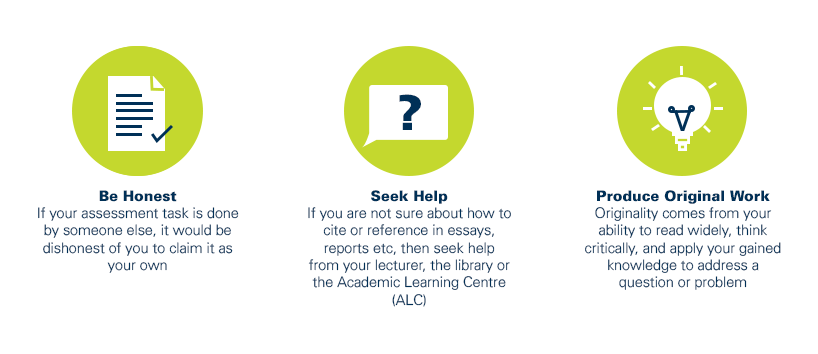
As a CQUniversity student you are expected to act honestly in all aspects of your academic work.
Any assessable work undertaken or submitted for review or assessment must be your own work. Assessable work is any type of work you do to meet the assessment requirements in the unit, including draft work submitted for review and feedback and final work to be assessed.
When you use the ideas, words or data of others in your assessment, you must thoroughly and clearly acknowledge the source of this information by using the correct referencing style for your unit. Using others’ work without proper acknowledgement may be considered a form of intellectual dishonesty.
Participating honestly, respectfully, responsibly, and fairly in your university study ensures the CQUniversity qualification you earn will be valued as a true indication of your individual academic achievement and will continue to receive the respect and recognition it deserves.
As a student, you are responsible for reading and following CQUniversity’s policies, including the Student Academic Integrity Policy and Procedure. This policy sets out CQUniversity’s expectations of you to act with integrity, examples of academic integrity breaches to avoid, the processes used to address alleged breaches of academic integrity, and potential penalties.
What is a breach of academic integrity?
A breach of academic integrity includes but is not limited to plagiarism, self-plagiarism, collusion, cheating, contract cheating, and academic misconduct. The Student Academic Integrity Policy and Procedure defines what these terms mean and gives examples.
Why is academic integrity important?
A breach of academic integrity may result in one or more penalties, including suspension or even expulsion from the University. It can also have negative implications for student visas and future enrolment at CQUniversity or elsewhere. Students who engage in contract cheating also risk being blackmailed by contract cheating services.
Where can I get assistance?
For academic advice and guidance, the Academic Learning Centre (ALC) can support you in becoming confident in completing assessments with integrity and of high standard.
What can you do to act with integrity?