Overview
This unit of study builds on the prerequisite unit to teach visual storytelling concepts and narrative film-making techniques. You will learn how to create a visual story narrative by employing principles and elements of story design. You will develop practical film-making skills related to directing and cinematography during the production of a narrative short film. You will learn how to constructively critique screen production work through an exploration of screen culture and history.
Details
Pre-requisites or Co-requisites
Prerequisite: MMST11009 Digital Video and AudioAntirequisite: Students who have completed DGTL12010 Visual Storytelling or DGTL13003 Advanced Media Production may not enrol in this unit.
Important note: Students enrolled in a subsequent unit who failed their pre-requisite unit, should drop the subsequent unit before the census date or within 10 working days of Fail grade notification. Students who do not drop the unit in this timeframe cannot later drop the unit without academic and financial liability. See details in the Assessment Policy and Procedure (Higher Education Coursework).
Offerings For Term 2 - 2026
Attendance Requirements
All on-campus students are expected to attend scheduled classes - in some units, these classes are identified as a mandatory (pass/fail) component and attendance is compulsory. International students, on a student visa, must maintain a full time study load and meet both attendance and academic progress requirements in each study period (satisfactory attendance for International students is defined as maintaining at least an 80% attendance record).
Recommended Student Time Commitment
Each 6-credit Undergraduate unit at CQUniversity requires an overall time commitment of an average of 12.5 hours of study per week, making a total of 150 hours for the unit.
Class Timetable
Assessment Overview
Assessment Grading
This is a graded unit: your overall grade will be calculated from the marks or grades for each assessment task, based on the relative weightings shown in the table above. You must obtain an overall mark for the unit of at least 50%, or an overall grade of 'pass' in order to pass the unit. If any 'pass/fail' tasks are shown in the table above they must also be completed successfully ('pass' grade). You must also meet any minimum mark requirements specified for a particular assessment task, as detailed in the 'assessment task' section (note that in some instances, the minimum mark for a task may be greater than 50%). Consult the University's Grades and Results Policy for more details of interim results and final grades.
All University policies are available on the CQUniversity Policy site.
You may wish to view these policies:
- Grades and Results Policy
- Assessment Policy and Procedure (Higher Education Coursework)
- Review of Grade Procedure
- Student Academic Integrity Policy and Procedure
- Academic Progression Policy and Procedure
- Student Refund and Credit Balance Policy and Procedure
- Complaints Policy and Procedure
- Information and Communications Technology Acceptable Use Policy and Procedure
This list is not an exhaustive list of all University policies. The full list of University policies are available on the CQUniversity Policy site.
Feedback, Recommendations and Responses
Every unit is reviewed for enhancement each year. At the most recent review, the following staff and student feedback items were identified and recommendations were made.
Feedback from Instructor reflections
Scheduling constraints limit some students' capacity to discuss and get feedback on their creative ideas, which disadvantages them and delays their progress.
Introduce guidance on how GenAI tools can be used for project development to provide students with an alternative to direct contact time if required.
- Create a narrative short film by employing principles and elements of story design
- Create a narrative short film through the application of film-making principles and skills related to directing and cinematography
- Constructively critique screen production work within the context of screen culture and history.
Not applicable
Alignment of Assessment Tasks to Learning Outcomes
| Assessment Tasks | Learning Outcomes | ||
|---|---|---|---|
| 1 | 2 | 3 | |
| 1 - Practical Assessment - 30% | |||
| 2 - Practical Assessment - 30% | |||
| 3 - Practical Assessment - 40% | |||
Alignment of Graduate Attributes to Learning Outcomes
| Graduate Attributes | Learning Outcomes | ||
|---|---|---|---|
| 1 | 2 | 3 | |
| 1 - Communication | |||
| 2 - Problem Solving | |||
| 3 - Critical Thinking | |||
| 4 - Information Literacy | |||
| 5 - Team Work | |||
| 6 - Information Technology Competence | |||
| 7 - Cross Cultural Competence | |||
| 8 - Ethical practice | |||
| 9 - Social Innovation | |||
| 10 - First Nations Knowledges | |||
| 11 - Aboriginal and Torres Strait Islander Cultures | |||
Alignment of Assessment Tasks to Graduate Attributes
| Assessment Tasks | Graduate Attributes | ||||||||||
|---|---|---|---|---|---|---|---|---|---|---|---|
| 1 | 2 | 3 | 4 | 5 | 6 | 7 | 8 | 9 | 10 | 11 | |
| 1 - Practical Assessment - 30% | |||||||||||
| 2 - Practical Assessment - 30% | |||||||||||
| 3 - Practical Assessment - 40% | |||||||||||
Textbooks
There are no required textbooks.
IT Resources
- CQUniversity Student Email
- Internet
- Unit Website (Moodle)
- Access to a digital camera (a smartphone with video capabilities is sufficient)
- Access to digital audio recording equipment (a smartphone with a microphone and audio recording app is sufficient)
- Adobe Premiere Pro (Adobe Creative Cloud student subscription recommended) or other NLE software (eg. DaVinci Resolve)
All submissions for this unit must use the referencing style: American Psychological Association 7th Edition (APA 7th edition)
For further information, see the Assessment Tasks.
a.couzens@cqu.edu.au
Week 1
Begin Date: 13 Jul 2026Module/Topic
Inspiration
Chapter
Events and Submissions/Topic
Completion of week 1 development activities as described in lecture materials.
Week 2
Begin Date: 20 Jul 2026Module/Topic
Meaning
Chapter
Events and Submissions/Topic
Completion of week 2 development activities as described in lecture materials.
Week 3
Begin Date: 27 Jul 2026Module/Topic
Audience
Chapter
Events and Submissions/Topic
Completion of week 3 development activities as described in lecture materials.
Mandatory pitch of your short film idea in-class and/or via your Production Blog. An additional pitching session will be scheduled for students unable to attend the timetabled tutorial.
Week 4
Begin Date: 03 Aug 2026Module/Topic
Aesthetics
Chapter
Events and Submissions/Topic
Completion of week 4 preproduction activities as described in lecture materials.
Mandatory share your moodboard to your Production Blog and give feedback on two other students' moodboards.
Short Film Development Due: Week 4 Monday (3 Aug 2026) 11:59 pm AEST
Week 5
Begin Date: 10 Aug 2026Module/Topic
Space
Chapter
Events and Submissions/Topic
Completion of week 5 preproduction activities as described in lecture materials.
Mandatory share your storyboard to your Production Blog and give feedback on two other students' storyboards.
Week 6
Begin Date: 17 Aug 2026Module/Topic
Place
Chapter
Events and Submissions/Topic
Completion of week 6 preproduction activities as described in lecture materials.
Mandatory submission of draft risk assessment for your short film production to your tutor for feedback and sign-off.
Vacation Week
Begin Date: 24 Aug 2026Module/Topic
Chapter
Events and Submissions/Topic
Week 7
Begin Date: 31 Aug 2026Module/Topic
Character
Chapter
Events and Submissions/Topic
Completion of week 7 preproduction activities as described in lecture materials.
Week 8
Begin Date: 07 Sep 2026Module/Topic
Time
Chapter
Events and Submissions/Topic
Completion of week 8 preproduction activities as described in lecture materials.
Prepare shooting schedule for feedback during in-class discussion.
Week 9
Begin Date: 14 Sep 2026Module/Topic
Authorship
Chapter
Events and Submissions/Topic
Completion of week 9 production activities as described in lecture materials.
Shooting of films anticipated to occur this week.
Preproduction Folio Due: Week 9 Monday (14 Sept 2026) 11:59 pm AEST
Week 10
Begin Date: 21 Sep 2026Module/Topic
Convention
Chapter
Events and Submissions/Topic
Completion of week 10 production activities as described in lecture materials.
Editing anticipated to commence this week.
Week 11
Begin Date: 28 Sep 2026Module/Topic
Medium
Chapter
Events and Submissions/Topic
Completion of week 11 postproduction activities as described in lecture materials.
Mandatory sharing of your rough/fine cut in-class or via your Production Blog in either week 11 or 12. An additional screening session will be scheduled for students unable to attend the timetabled tutorial.
Week 12
Begin Date: 05 Oct 2026Module/Topic
Truth
Chapter
Events and Submissions/Topic
Completion of week 12 postproduction activities as described in lecture materials.
Mandatory sharing of your rough/fine cut in-class or via your Production Blog in either week 11 or 12. An additional screening session will be scheduled for students unable to attend the timetabled tutorial.
Exam Week
Begin Date: 12 Oct 2026Module/Topic
Chapter
Events and Submissions/Topic
Vacation/Exam Week
Begin Date: 19 Oct 2026Module/Topic
Chapter
Events and Submissions/Topic
1 Practical Assessment
During the first three weeks of term, you will be guided through a series of activities to assist you with the planning and development of a short narrative film that will be produced in Assessment 3: Final Film. These will consist of a combination of analytical, critical, and creative tasks structured around the weekly unit content.
You will report on the outcomes of these activities through a Production Blog housed on the unit Moodle site. Your Production Blog will be used to provide periodic progress updates and respond to specific provocations provided in the unit content in weeks 1, 2, and 3. Blog posts may include embedded media such as photographs or audio. The activities are structured as follows:
In week 1 you will interrogate different sources of inspiration for your final film and draw on these to ideate a short film concept that is authentically tailored to your personal context, creatively ambitious, and technically achievable within your resource constraints.
In week 2 you will evaluate different tools that visual stories use to produce meaning and apply these to develop your film’s creative intent.
In week 3 you will present your concept and creative intent to your peers for feedback and consider different audience contexts to refine and finalise the story you will be telling in your final film.
You should expect to dedicate approximately 8-10 hours to each week’s tasks, including screenings, readings, and updating your Production Blog.
You will submit the posts from weeks 1, 2, and 3 of your Production Blog as a Word or PDF file. If your reports and reflections include details of a personal nature that you do not wish to be shared with other students in the class but are relevant to assessing your submission, you may choose to include those details only in the submitted document.
AI assessment scale:
Level 3 - You may use AI to assist with specific tasks such as drafting text, refining, and evaluating your work. You must critically evaluate and modify any AI-generated content. Any misuse or lack of disclosure regarding AI tools will be considered a breach of academic integrity.
Generative AI may also be used as part of your development process to assist with creative ideation. Where this is done, you must share full transcripts of your conversations and interrogate how the use of AI influenced your creative decision-making.
72-hour grace period:
The 72-hour grace period applies to Assessment 1: Short Film Development. However, it only applies to the final submission deadline. There are specific formative tasks such as sharing your proposal and giving feedback to others that must be completed to a schedule so that you can integrate that feedback into your reflections. Alternative opportunities to catch up on these formative tasks will only be facilitated for students who have an approved extension. Additionally, use of the 72-hour grace period may delay your commencement of Assessment 2: Preproduction Folio, and this will not be considered grounds for an extension in that assignment.
If you need longer than 72 hours, you will still need to use the normal Assessment Extension System process. Due to the formative nature of this assessment task, an approved extension for Assessment 1: Short Film Development will be considered grounds for an equivalent extension applied to Assessment 2: Preproduction Folio.
Week 4 Monday (3 Aug 2026) 11:59 pm AEST
This assessment item includes mandatory formative activities that must be completed by an earlier deadline. See full assessment brief for details.
2 weeks following submission
1. Application of unit content to analysis of visual storytelling (30%)
2. Engagement with scholarly and theoretical concepts (30%)
3. Creative development of short film idea (30%)
4. Adherence to formal academic conventions in blog posts (10%)
- Create a narrative short film by employing principles and elements of story design
- Create a narrative short film through the application of film-making principles and skills related to directing and cinematography
- Constructively critique screen production work within the context of screen culture and history.
- Communication
- Problem Solving
- Critical Thinking
- Information Literacy
- Cross Cultural Competence
2 Practical Assessment
In preparation for production of Assessment 3: Final Film, students will complete a series of preproduction tasks. These tasks will be completed weekly through a guided process. They will reflect the theoretical and practical content covered each week, including scripting, ideation, and logistics. Students are also required to participate in a structured peer review process during weeks 4 and 5 to get feedback on their work while also giving feedback to others.
You will report on the outcomes of these activities by updating the Production Blog commenced in Assessment 1: Short Film Development. Your blog posts will provide periodic progress updates and respond to specific provocations provided in the unit content in weeks 4, 5, 6, 7, and 8. Blog posts will include embedded media to share specific planning and proposals. The activities are structured as follows:
In week 4 you will draw on different theoretical approaches to aesthetics to develop a cohesive visual identity for your film. As part of this process, you will create and share a moodboard for feedback.
In week 5 you will draw on visual composition conventions to plan the framing of individual shots in your film. As part of this process, you will create and share a storyboard for feedback, which will form the basis of your coverage plan.
In week 6 you will consider the impact of cultural context and geography on the creative and production dynamics of your film. As part of this process, you will plan the logistics for shooting your film according to the specific locations you will utilise. This will involve securing permissions and assessing health and safety risks.
In week 7 you will interrogate your film's characters, applying theory relating to film performance to establish a plan for how you will direct and support your actors.
In week 8 you will consider the impact of time on your film through theoretical exploration of film history and its impact on screen narrative and aesthetics. Additionally, you will finalise coverage and develop a shooting schedule in preparation for entering the production phase for your short film.
You should expect to dedicate approximately 8-10 hours to each week's tasks, including screenings, readings, and updating your Production Blog.
You will submit the posts from weeks 4, 5, 6, 7, and 8 of your Production Blog as a Word or PDF file. If your reports and reflections include details of a personal nature that you do not wish to be shared with other students in the class but are relevant to assessing your submission, you may choose to include those details only in the submitted document.
AI Assessment scale tool:
Level 4 - You may use AI extensively throughout your work either as you wish, or as specifically directed in your assessment. Focus on directing AI to achieve your goals while demonstrating your critical thinking. Any misuse or lack of disclosure regarding the use of AI tools will be considered a breach of academic integrity.
Specifically, the mood board and storyboards may be produced using Generative AI. In this case, you must also provide a reference for the LLM used as well as all prompts used to generate the media in your Production Blog.
Generative AI may also be used as part of your development process to assist with creative ideation. Where this is done, you must share full transcripts of your conversations to your Production Blog and interrogate how the use of AI influenced your creative decision-making.
72-hour grace period:
The 72-hour grace period applies to Assessment 2: Preproduction Folio. However, it only applies to the final submission deadline. There are specific formative tasks such as sharing your preproduction documents and giving feedback to others that must be completed to a schedule so that you can integrate that feedback into your reflections. Alternative opportunities to catch up on these formative tasks will only be facilitated for students who have an approved extension. Additionally, use of the 72-hour grace period may delay your commencement of Assessment 3: Final Film, and this will not be considered grounds for an extension in that assignment.
If you need longer than 72 hours, you will still need to use the normal Assessment Extension System process. Due to the formative nature of this assessment task, an approved extension for Assessment 2: Preproduction Folio will be considered grounds for an equivalent extension applied to Assessment 3: Final Film.
Week 9 Monday (14 Sept 2026) 11:59 pm AEST
This assessment item includes mandatory formative activities that must be completed by an earlier deadline. See full assessment brief for details.
Two weeks following submission
1. Application of visual storytelling techniques and theory to plan creation of meaning (30%)
2. Strategic deployment of available resources to generate an ambitious but achievable production plan (30%)
3. Coherence and completeness of preproduction activities (30%)
4. Engagement with peer review activities (10%)
- Create a narrative short film by employing principles and elements of story design
- Create a narrative short film through the application of film-making principles and skills related to directing and cinematography
- Constructively critique screen production work within the context of screen culture and history.
- Communication
- Problem Solving
- Critical Thinking
- Information Literacy
- Cross Cultural Competence
3 Practical Assessment
Building on the work done in Assessment 1: Short Film Development and Assessment 2: Preproduction Folio, you will produce a 3-6 minute narrative short film that synthesizes and applies the conceptual, creative, and technical skills developed throughout the unit. You must adapt your narrative ideas to suit resource limitations – access to specialist equipment is not required. Adjustments to the technical requirements may be negotiated with the Unit Coordinator where it is necessary to prepare the film for an intended release strategy (e.g. entry into a specified film festival).
Students may collaborate with others for the production of the film, but must be solely responsible for the film's creative vision as evidenced through formative activities throughout the unit and weekly blog posts.
In addition to the short narrative film, you will continue to update your Production Blog with posts that provide periodic progress updates and reflections based on the unit content in weeks 9, 10, 11, and 12. Blog posts may include embedded media such as photographs or audio. Though individual blog posts do not have a specific deadline, the focus of each blog post is mapped to the weekly content as follows:
In week 9 you will critically reflect on the experience of shooting your short film, reporting on how your preproduction planning was applied in the execution of your production.
In week 10 you will share a rough cut of your film, reflect on the process of editing that cut, and identify questions you would like your peers to address when giving feedback. You will also be required to give feedback to other students on their rough cuts.
In week 11 you will develop a festival or online release strategy tailored to your film.
In week 12 you will critically review your final film. In doing so you will report on how you addressed any feedback received during the rough cut stage and evaluate the completed film's alignment to your intended creative vision.
You should expect to dedicate approximately 8-10 hours to each week's tasks, shared between working on the production and postproduction of your film and updating your Production Blog.
You will submit the posts from weeks 9, 10, 11, and 12 of your Production Blog as a Word or PDF file. If your reports and reflections include details of a personal nature that you do not wish to be shared with other students in the class but are relevant to assessing your submission, you may choose to include those details only in the submitted document.
AI assessment scale:
Level 3 - You may use AI to assist with specific tasks such as drafting text, refining, and evaluating your work. You must critically evaluate and modify any AI-generated content. Any misuse or lack of disclosure regarding AI tools will be considered a breach of academic integrity.
Generative AI may also be used as part of your development process to assist with creative ideation. Where this is done, you must share full transcripts of your conversations to your Production Blog and interrogate how the use of AI influenced your creative decision-making.
72-hour grace period:
The 72-hour grace period applies to Assessment 3: Final Film. However, it only applies to the final submission deadline. There are specific formative tasks such as sharing your rough cut and giving feedback to others that must be completed to a schedule so that you can integrate that feedback into your reflections. Alternative opportunities to catch up on these formative tasks will only be facilitated for students who have an approved extension.
If you need longer than 72 hours, you will still need to use the normal Assessment Extension System process.
Exam Week Monday (12 Oct 2026) 11:59 pm AEST
This assessment item includes mandatory formative activities that must be completed by an earlier deadline. See full assessment brief for details.
Two weeks following submission
1. Application of cinematographic techniques to communicate narrative, ideology, and emotion (25%)
2. Application of directing techniques to communicate narrative, ideology, and emotion (25%)
3. Design and execution of an appropriate release strategy (20%)
4. Critical reflection on creative process and outcomes, including responses to feedback (20%)
5. Engagement with peer review activities (10%)
- Create a narrative short film by employing principles and elements of story design
- Create a narrative short film through the application of film-making principles and skills related to directing and cinematography
- Constructively critique screen production work within the context of screen culture and history.
- Communication
- Problem Solving
- Critical Thinking
- Information Literacy
- Cross Cultural Competence
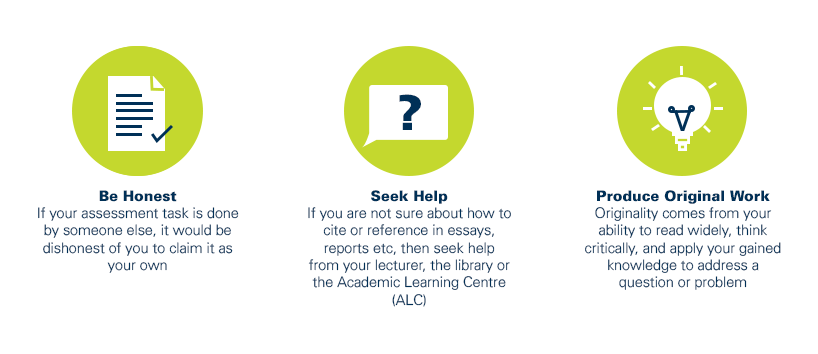
As a CQUniversity student you are expected to act honestly in all aspects of your academic work.
Any assessable work undertaken or submitted for review or assessment must be your own work. Assessable work is any type of work you do to meet the assessment requirements in the unit, including draft work submitted for review and feedback and final work to be assessed.
When you use the ideas, words or data of others in your assessment, you must thoroughly and clearly acknowledge the source of this information by using the correct referencing style for your unit. Using others’ work without proper acknowledgement may be considered a form of intellectual dishonesty.
Participating honestly, respectfully, responsibly, and fairly in your university study ensures the CQUniversity qualification you earn will be valued as a true indication of your individual academic achievement and will continue to receive the respect and recognition it deserves.
As a student, you are responsible for reading and following CQUniversity’s policies, including the Student Academic Integrity Policy and Procedure. This policy sets out CQUniversity’s expectations of you to act with integrity, examples of academic integrity breaches to avoid, the processes used to address alleged breaches of academic integrity, and potential penalties.
What is a breach of academic integrity?
A breach of academic integrity includes but is not limited to plagiarism, self-plagiarism, collusion, cheating, contract cheating, and academic misconduct. The Student Academic Integrity Policy and Procedure defines what these terms mean and gives examples.
Why is academic integrity important?
A breach of academic integrity may result in one or more penalties, including suspension or even expulsion from the University. It can also have negative implications for student visas and future enrolment at CQUniversity or elsewhere. Students who engage in contract cheating also risk being blackmailed by contract cheating services.
Where can I get assistance?
For academic advice and guidance, the Academic Learning Centre (ALC) can support you in becoming confident in completing assessments with integrity and of high standard.
What can you do to act with integrity?