Overview
The emergency and disaster management sector has highlighted the importance of contemporary practice being grounded in research. In this unit, you will be encouraged to explore the notion of research, plus the important questions of why and how research can and should inform the different phases of emergency and disaster management. In order to do so, you will build knowledge and skills in critically analysing research, understandings of the frameworks and practices guiding the ethical conduct of research and your role in utilising and implementing research in a professionally and ethically responsible manner. You will learn fundamental underpinning research literacies and how you can use these to inform decision-making processes grounded in evidence-based practice.
Details
Pre-requisites or Co-requisites
Co-Requisite for this unit is DSMG28001 Foundations of Emergency and Disaster Management. Students enrolled in the CM40 Bachelor of Paramedic Science/Graduate Certificate in Emergency and Disaster Management must also have a minimum of 96 credit points to enrol in this unit.
Important note: Students enrolled in a subsequent unit who failed their pre-requisite unit, should drop the subsequent unit before the census date or within 10 working days of Fail grade notification. Students who do not drop the unit in this timeframe cannot later drop the unit without academic and financial liability. See details in the Assessment Policy and Procedure (Higher Education Coursework).
Offerings For Term 2 - 2026
Attendance Requirements
All on-campus students are expected to attend scheduled classes - in some units, these classes are identified as a mandatory (pass/fail) component and attendance is compulsory. International students, on a student visa, must maintain a full time study load and meet both attendance and academic progress requirements in each study period (satisfactory attendance for International students is defined as maintaining at least an 80% attendance record).
Recommended Student Time Commitment
Each 6-credit Postgraduate unit at CQUniversity requires an overall time commitment of an average of 12.5 hours of study per week, making a total of 150 hours for the unit.
Class Timetable
Assessment Overview
Assessment Grading
This is a graded unit: your overall grade will be calculated from the marks or grades for each assessment task, based on the relative weightings shown in the table above. You must obtain an overall mark for the unit of at least 50%, or an overall grade of 'pass' in order to pass the unit. If any 'pass/fail' tasks are shown in the table above they must also be completed successfully ('pass' grade). You must also meet any minimum mark requirements specified for a particular assessment task, as detailed in the 'assessment task' section (note that in some instances, the minimum mark for a task may be greater than 50%). Consult the University's Grades and Results Policy for more details of interim results and final grades.
All University policies are available on the CQUniversity Policy site.
You may wish to view these policies:
- Grades and Results Policy
- Assessment Policy and Procedure (Higher Education Coursework)
- Review of Grade Procedure
- Student Academic Integrity Policy and Procedure
- Academic Progression Policy and Procedure
- Student Refund and Credit Balance Policy and Procedure
- Complaints Policy and Procedure
- Information and Communications Technology Acceptable Use Policy and Procedure
This list is not an exhaustive list of all University policies. The full list of University policies are available on the CQUniversity Policy site.
Feedback, Recommendations and Responses
Every unit is reviewed for enhancement each year. At the most recent review, the following staff and student feedback items were identified and recommendations were made.
Feedback from SUTE
Provide additional assessment exemplars and clearer guidance on assessment expectations.
Additional exemplars, marking guidance, and assessment support materials will be incorporated into future offerings to help students better understand assignment requirements and improve assessment performance.
- Identify different research approaches and their use in researching emergency and disaster management issues
- Examine ethical issues and the frameworks and practices underpinning the ethical conduct of research
- Locate appropriate peer-reviewed and grey literature relevant to emergency and disaster management
- Analyse contemporary literature, and its relationship to the different phases of emergency and disaster management
- Formulate strategies for the implementation and utilisation of research in emergency and disaster management contexts and situations
- Communicate future directions and strategies for enhancing the body of knowledge in emergency and disaster management.
NIL
Alignment of Assessment Tasks to Learning Outcomes
| Assessment Tasks | Learning Outcomes | |||||
|---|---|---|---|---|---|---|
| 1 | 2 | 3 | 4 | 5 | 6 | |
| 1 - Written Assessment - 25% | ||||||
| 2 - Written Assessment - 45% | ||||||
| 3 - Presentation - 30% | ||||||
Alignment of Graduate Attributes to Learning Outcomes
| Graduate Attributes | Learning Outcomes | |||||
|---|---|---|---|---|---|---|
| 1 | 2 | 3 | 4 | 5 | 6 | |
| 1 - Knowledge | ||||||
| 2 - Communication | ||||||
| 3 - Cognitive, technical and creative skills | ||||||
| 4 - Research | ||||||
| 5 - Self-management | ||||||
| 6 - Ethical and Professional Responsibility | ||||||
| 7 - Leadership | ||||||
| 8 - First Nations Knowledges | ||||||
| 9 - Aboriginal and Torres Strait Islander Cultures | ||||||
Textbooks
There are no required textbooks.
IT Resources
- CQUniversity Student Email
- Internet
- Unit Website (Moodle)
- Zoom (both microphone and webcam capability)
All submissions for this unit must use the referencing style: American Psychological Association 7th Edition (APA 7th edition)
For further information, see the Assessment Tasks.
s.delport@cqu.edu.au
Week 1
Begin Date: 13 Jul 2026Module/Topic
Theme One: Research and how to find it.
Chapter
Events and Submissions/Topic
Online Classroom and Assessment Drop-in Session – Introduction, Welcome to Unit and Getting Started on Theme One
Monday 6 -7 PM AEST - QLD time
Week 2
Begin Date: 20 Jul 2026Module/Topic
Theme One: Research and how to find it.
Chapter
Events and Submissions/Topic
Online Classroom and Assessment Drop-in Session
Monday 6 -7 PM AEST - QLD time
Week 3
Begin Date: 27 Jul 2026Module/Topic
Theme One: Research and how to find it.
Chapter
Events and Submissions/Topic
Online Classroom and Assessment Drop-in Session - Assessment Task One and Theme One
Monday 6 -7 PM AEST - QLD time
Week 4
Begin Date: 03 Aug 2026Module/Topic
Theme Two: The doing of research.
Chapter
Events and Submissions/Topic
Online Classroom and Assessment Drop-in Session
Monday 6 -7 PM AEST - QLD time
Engaging with research literature (Written Assessment 25%) Due: Week 4 Thursday (6 Aug 2026) 5:00 pm AEST
Week 5
Begin Date: 10 Aug 2026Module/Topic
Theme Two: The doing of research.
Chapter
Events and Submissions/Topic
Online Classroom and Assessment Drop-in Session
Monday 6 -7 PM AEST - QLD time
Week 6
Begin Date: 17 Aug 2026Module/Topic
Theme Two: The doing of research.
Chapter
Events and Submissions/Topic
Online Classroom and Assessment Drop-in Session - Assessment Task Two and Theme Two
Monday 6 -7 PM AEST - QLD time
Vacation Week
Begin Date: 24 Aug 2026Module/Topic
Break Week
Chapter
Events and Submissions/Topic
Online Classroom and Assessment Drop-in Session
Monday 6 -7 PM AEST - QLD time
Week 7
Begin Date: 31 Aug 2026Module/Topic
Theme Two: The doing of research.
Chapter
Events and Submissions/Topic
Online Classroom and Assessment Drop-in Session - Assessment Task Two and Theme Two
Monday 6 -7 PM AEST - QLD time
Week 8
Begin Date: 07 Sep 2026Module/Topic
Theme Two: The doing of research.
Chapter
Events and Submissions/Topic
Online Classroom and Assessment Drop-in Session
Monday 6 -7 PM AEST - QLD time
Week 9
Begin Date: 14 Sep 2026Module/Topic
Theme Three: Me and research.
Chapter
Events and Submissions/Topic
Online Classroom and Assessment Drop-in Session
Monday 6 -7 PM AEST - QLD time
Research in action (Written Assessment 45%) Due: Week 9 Thursday (17 Sept 2026) 5:00 pm AEST
Week 10
Begin Date: 21 Sep 2026Module/Topic
Theme Three: Me and research.
Chapter
Events and Submissions/Topic
Online Classroom and Assessment Drop-in Session - Assessment Task Three and Theme Three
Monday 6 -7 PM AEST - QLD time
Week 11
Begin Date: 28 Sep 2026Module/Topic
Theme Three: Me and research.
Chapter
Events and Submissions/Topic
Online Classroom and Assessment Drop-in Session
Monday 6 -7 PM AEST - QLD time
Week 12
Begin Date: 05 Oct 2026Module/Topic
Theme Four: Bringing it all together.
Chapter
Events and Submissions/Topic
Online Classroom and Assessment Drop-in Session
Monday 6 -7 PM AEST - QLD time
Communicating Research (Presentation 30%) Due: Week 12 Tuesday (6 Oct 2026) 5:00 pm AEST
Exam Week
Begin Date: 12 Oct 2026Module/Topic
Chapter
Events and Submissions/Topic
Vacation/Exam Week
Begin Date: 19 Oct 2026Module/Topic
Chapter
Events and Submissions/Topic
1 Written Assessment
In our professional lives, our ability to search, locate and appropriately engage with credible knowledge and research literature are key skills. These skills can be broadly described as research literacies. Their utility beyond university life (and your assignments) means having finely honed research literacies is essential for the modern-day workforce.
In assessment task one, you will explore the research literature of a topic (see scenario below) related to emergency and disaster management and work on developing your research literacy skills. In particular, you will be demonstrating your knowledge and skills in locating research and literature sources (part 1) and analysing these sources (part 2). You must use the scenario below to undertake Part 1) and Part 2).
Part 1) Searching the Literature
Scenario: You are part of a project team in the local disaster management unit that has been tasked with providing peer-reviewed literature to support a discussion paper on capturing and implementing lessons learned in emergency and disaster operations. You have been asked for literature (peer-reviewed literature) that has been published in the last 10 years. "What lessons have been learned from recent Australian disasters, and how can these lessons improve future emergency and disaster management practices?"
Literature Area: What peer-reviewed literature has been published in the last 10 years on "What lessons have been learned from recent Australian disasters, and how can these lessons improve future emergency and disaster management practices?"
Activity instructions
You are required to:
Part 1.1) Conduct a library catalogue search to locate literature for the scenario above. You must use the CQUniversity library catalogue, and you must use the CQUniversity 7-step process for searching the literature (see the Assessment tile in Moodle).
Document your library catalogue search and the results using the table provided in the Assessment Task One template. Note: Part 1.1 is about the search. For this assessment task, you will not be downloading or using any of the articles. You must use the Assessment Task One Template.
Part 1.2) Conduct a GenAI search to locate literature for the scenario above. You must use the Google (2025) 5-Step Prompt Framework for GenAI (see the Assessment tile in Moodle). You can use any Gen AI product (e.g., ChatGPT, Microsoft Co-Pilot, Perplexity), including the free version of the product. You do not need a paid GenAI product for this assessment. Document your response to the below in the Assessment Task One Template. You must use the Assessment Task One Template.
· Name the GenAI platform or product you use
· Conduct and document your GenAI search and the results using the table provided in the Assessment Task One Template.
· Reflect on the two different search approaches (library catalogue and GenAI) and respond to the three (3) reflective questions in the Assessment Task One Template about the use of the CQUniversity library catalogue and CQUniversity 7-step process, as compared to the GenAI product and 5-step framework for GenAI prompting.
There is no set word count for Part 1. Please see the notes in the Assessment Task One Template.
Part 2) Using the literature
Using the literature searches you conducted in Part 1) you must:
- Select five pieces of peer-reviewed literature (that you found using your searches).
- Write a short, annotated bibliography for each source using the CQUniversity Annotated Bibliography Info Sheet published by the Academic Learning Centre (which is located in the eReading List).
- Write a short overview of the actual or potential implications of the five pieces of peer-reviewed literature on the four (4) phases of emergency and disaster management (that is, prevention, preparedness, response and recovery). Your short overview will be up to 250 words.
Generative AI (GenAI): Level of GenAI use allowed:
Level 2: You may use Al for planning, idea development, and research. Your final submission should show how you have developed and refined these ideas. Part 1.2 element b) is excepted (see below).
Presentation requirements
You must use the Assessment Task One Template located in the Assessment Tile in Moodle.
You must submit the document as a Word file or PDF.
Important: Please refer to the Generative AI Permission document available on your Moodle site for guidelines on the acceptable and unacceptable use of generative AI in this unit.
STUDENTS MUST INCLUDE GEN-AI USE DECLARATION
Choose your appropriate AI declaration. Complete relevant details.
Suggested wording for AI use declaration:
AI Use Declaration (include at the bottom of your title page)
In completing this Assessment Task, I acknowledge the use of [specify the GenAI tools/platforms] to guide the [specific process/es: brainstorming, drafting, research assistance, editing, etc.]. The output from these prompts was used to [explain how the output from GenAI was critically evaluated to use in your own work]. I confirm that all AI-generated content underwent thorough review and evaluation and the final output accurately reflects my own understanding, knowledge and intended meaning. While AI assistance was used in the process, I maintain full responsibility for the content, its accuracy, and its presentation and can explain and justify all inclusions. This declaration is included to ensure transparency and to formally acknowledge the role of AI in the completion of this assessment task.
Week 4 Thursday (6 Aug 2026) 5:00 pm AEST
Submitted as a word document on Moodle
Week 6 Thursday (20 Aug 2026)
2 weeks after submission
The assessment criteria for this task are contained in the rubric, which is available from the Moodle unit site. Broadly, you will be assessed on:
- Using academic and emergent GenAI processes and practices to search for literature
- Locating appropriate literature
- Analysing literature, including in relation to specified concepts (e.g., emergency and disaster management)
- Communication and presentation
- Locate appropriate peer-reviewed and grey literature relevant to emergency and disaster management
- Analyse contemporary literature, and its relationship to the different phases of emergency and disaster management
2 Written Assessment
In assessment task two, you will expand upon the research literacies from assessment task one and demonstrate your emerging knowledge and skill in research approaches and ethical issues related to research. Your ability to recognise and understand different research approaches and the ethical (or otherwise) conduct of research will underpin your ability to make judgements about the veracity and credibility of knowledge, and thereby, support you to engage with appropriate sources that can support robust actions and decisions.
Like assessment task one, this task consists of multiple parts, and these parts are based on your engagement with the unit content (e.g., unit Learning Guide and eReading list) plus the broader academic literature (e.g., from the CQUniversity library catalogue).
Part 1) Research in the emergency and disaster management context
Part 1.1) Effective keyword searches are crucial to locating appropriate literature. Before searching for literature, it can be useful to plan out your approach and the keywords (concepts) that you will utilise. Using the CQUniversity Note Making: Key words for searching Academic Learning Centre (ALC) info sheet (see Assessment tile in Moodle), create either a concept map (figure 1 of the info sheet) or FlowChart (figure 2 of the info sheet) for the following topic:
“Lived experiences of surviving natural disasters in Australia and implications for emergency management.”
Part 1.2) Identify one (1) peer-reviewed journal article that addresses lived experiences of surviving natural disasters in Australia and their implications for emergency management. For that article:
- Provide the full APA citation for the located peer-review journal article
- Based on your located article, name one (1) benefit of emergency and disaster management volunteers to Australian communities.
- Identify in what ways the identified benefit impacts one or more of the four (4) phases of emergency and disaster management (that is, how the benefit does or could impact disaster prevention, preparedness, response and/ or recovery).
Note: your response to part c) must be supported by appropriate literature (see the assessment task rubric for details of the number and type of literature across the different grade bands).
Your Part 1.2) responses may be 250 – 300 words in total. There is no word count or limit for the key word table, concept map or FlowChart (part 1.1).
Part 2) Research approaches
The terms ‘quantitative research’ and ‘qualitative research’ are commonplace in the research literature. With that in mind, you are asked to:
Part 2.1) Write an analytic summary of no more than 250 words about quantitative research. In particular, what it is and how it is defined in the academic literature.
Part 2.2) Write an analytic summary of no more than 250 words about qualitative research. In particular, what it is and how it is defined in the academic literature.
Note: your response to the above must be supported by appropriate literature (see the assessment task rubric for details of the number and type of literature across the different grade bands). Your Part 2) response will be up to 500 words in total.
Part 3) Ethics in research
Research is governed by strict ethics requirements. These requirements are outlined in the National Statement on Ethical Conduct of Human Research, 2023 (see eReading list). Based on your reading of the National Statement and other literature sources, respond to the following:
Part 3.1) Identify and discuss one (1) ethical issue that a research team would need to consider if the research project used face-to-face focus groups to collect data and where one of the research team members is a work colleague of one of the focus group participant.
Part 3.2) Identify one (1) strategy that could be used to mitigate the impact of the identified ethical issue above.
Note: your response to Part 3.1 & Part 3.2) must be supported by appropriate literature (see the assessment task rubric for details of the number and type of literature across the different grade bands). Your Part 3) response will be up to approx. 750 words in total.
Generative AI (GenAI): Level of GenAI use allowed:
Level 2: You may use Al for planning, idea development, and research. Your final submission should show how you have developed and refined these ideas.
Presentation requirements
You must use the Assessment Task Two Template located in the Assessment Tile in Moodle.
You must submit the document as a Word file or PDF.
STUDENTS MUST INCLUDE GEN-AI USE DECLARATION
Choose your appropriate AI declaration. Complete relevant details.
Suggested wording for AI use declaration:
AI Use Declaration (include at the bottom of your title page)
In completing this Assessment Task, I acknowledge the use of [specify the GenAI tools/platforms] to guide the [specific process/es: brainstorming, drafting, research assistance, editing, etc.]. The output from these prompts was used to [explain how the output from GenAI was critically evaluated to use in your own work]. I confirm that all AI-generated content underwent thorough review and evaluation and the final output accurately reflects my own understanding, knowledge and intended meaning. While AI assistance was used in the process, I maintain full responsibility for the content, its accuracy, and its presentation and can explain and justify all inclusions. This declaration is included to ensure transparency and to formally acknowledge the role of AI in the completion of this assessment task.
Complete this declaration if you did NOT use AI:
In completing this Assessment Task, I confirm that this work is entirely my own and I have not used any Generative AI tools. This assessment task accurately reflects my own understanding, knowledge, and intended meaning.
Week 9 Thursday (17 Sept 2026) 5:00 pm AEST
Submission via Moodle in a word document
Week 11 Thursday (1 Oct 2026)
2 weeks from submission
The assessment criteria for this task are contained in the rubric, which is available from the Moodle unit site. Broadly, you will be assessed on:
- Locating appropriate literature
- Knowledge of research and research approaches
- Knowledge of ethical issues and frameworks underpinning ethical practice
- Application of knowledge and skills related to accessing research and evidence
- Interpretation and utilisation of literature in the emergency and disaster management context
- Communication and presentation
- Identify different research approaches and their use in researching emergency and disaster management issues
- Examine ethical issues and the frameworks and practices underpinning the ethical conduct of research
- Locate appropriate peer-reviewed and grey literature relevant to emergency and disaster management
- Analyse contemporary literature, and its relationship to the different phases of emergency and disaster management
3 Presentation
Assessment task three expands on the research literacies covered in assessment tasks one and two and moves onto the issue of research utilisation. Research utilisation is a key issue. If research is not effectively communicated, it cannot be utilised, nor can evidence-informed decisions about future directions be made. With this in mind, for assessment task three (3), you are going to present your ideas for implementing and utilising research, plus communicating future research directions. This presentation will be based on a fictional opportunity being offered by a key emergency and disaster management research body (see activity instructions below).
Activity Instructions
You will develop and deliver a short 7-minute presentation pitch to the CEO of Natural Hazards Research Australia (NHRA), who is offering funding to individuals who have creative ideas for implementing research. The (fictional) successful individual will be awarded $150,000.00, which will be used to fund the implementation of a strategy or initiative to enhance the disaster resilience or response within an identified community.
You should focus on the lessons learned from Assessment 1. Your strategy or initiative must be evidence-based, that is, based on research.
Your presentation pitch, what we will call a ‘7-minute Sprint’, will include five (5) key sections:
1: Description of the strategy or initiative
Describe your strategy or initiative clearly, including what it is, what community it targets, and how it works to enhance disaster resilience or response.
2: Statement of potential benefits
Outline the potential benefits of the strategy or initiative and link to the literature to support your assertions about benefits.
Requirement: You must support your response with a minimum of two (2) different pieces of peer-reviewed literature.
3: Implementation plan
Develop an implementation plan for the strategy or initiative.
Requirement: You must support your response with a minimum of two (2) different pieces of peer-reviewed literature.
As part of the implementation plan, you must outline:
a. Broad steps you will use to implement the strategy or initiative.
b. Rationale for the chosen steps (why these steps are appropriate).
c. Potential implementation issues and strategies for managing or mitigating these.
d. Strategy for how you will measure the success of the implementation.
4: Future research recommendations
Provide one (1) recommendation for a future research project that will further enhance the body of knowledge related to the chosen peer-reviewed journal article.
Your assessment submission will take the form of a PowerPoint presentation, which includes both a written and an audio component plus a script containing the text/ words read out as the audio component. See the presentation requirements below:
Presentation requirements written component
- The PowerPoint presentation will have a maximum of 9 slides.
- The first slide is the introductory slide.
- The last slide will be your reference list. The remaining 7 slides are for the body of the ‘7-minute sprint’.
- The slides must be visually appealing and contribute to successfully communicating the key messages of the presentation pitch.
- The PowerPoint presentation template is provided in the Assessment section of the Moodle site.
- While you may add text, diagrams, images and so forth to your PowerPoint slides, you must use and not materially change the provided template.
- A copy of the script (text/words) that you read out and recorded as the audio component. The script can be either a Word document or PDF.
Presentation requirements audio component - The audio component is an expanded discussion of the PowerPoint slides.
- The audio component must be recorded directly onto the PowerPoint slides using the recording feature in PowerPoint.
- The audio presentation will be a maximum of 7 minutes in length.
Generative AI (GenAI): Level of GenAI use allowed:
Level 2: You may use Al for planning, idea development, and research. Your final submission should show how you have developed and refined these ideas.
STUDENTS MUST INCLUDE GEN-AI USE DECLARATION
Choose your appropriate AI declaration. Complete relevant details.
Suggested wording for AI use declaration:
AI Use Declaration (include at the bottom of your title page)
In completing this Assessment Task, I acknowledge the use of [specify the GenAI tools/platforms] to guide the [specific process/es: brainstorming, drafting, research assistance, editing, etc.]. The output from these prompts was used to [explain how the output from GenAI was critically evaluated to use in your own work]. I confirm that all AI-generated content underwent thorough review and evaluation and the final output accurately reflects my own understanding, knowledge and intended meaning. While AI assistance was used in the process, I maintain full responsibility for the content, its accuracy, and its presentation and can explain and justify all inclusions. This declaration is included to ensure transparency and to formally acknowledge the role of AI in the completion of this assessment task.
Complete this declaration if you did NOT use AI:
In completing this Assessment Task, I confirm that this work is entirely my own and I have not used any Generative AI tools. This assessment task accurately reflects my own understanding, knowledge, and intended meaning.
Week 12 Tuesday (6 Oct 2026) 5:00 pm AEST
Submitted as a PowerPoint and audio with transcript/speaker notes in Moodle
Vacation/Exam Week Tuesday (20 Oct 2026)
2 weeks following submission
The assessment criteria for this unit are in the form of a rubric, which is available from the Moodle unit site. Broadly, you will be assessed on:
- Knowledge of research
- Skills in interpreting and communicating research findings
- Skills in applying and utilising research and its findings
- Communication and presentation
- Formulate strategies for the implementation and utilisation of research in emergency and disaster management contexts and situations
- Communicate future directions and strategies for enhancing the body of knowledge in emergency and disaster management.
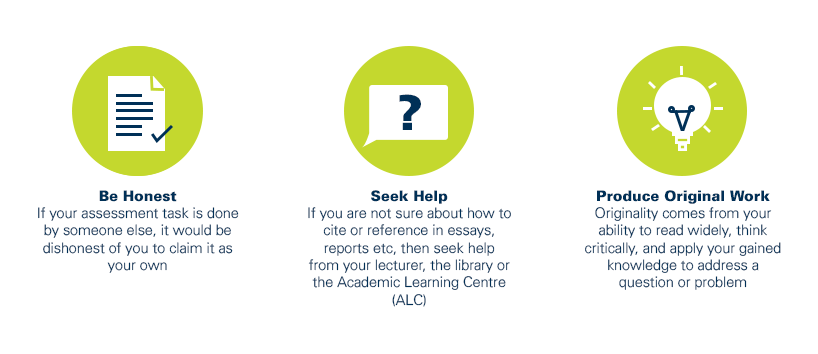
As a CQUniversity student you are expected to act honestly in all aspects of your academic work.
Any assessable work undertaken or submitted for review or assessment must be your own work. Assessable work is any type of work you do to meet the assessment requirements in the unit, including draft work submitted for review and feedback and final work to be assessed.
When you use the ideas, words or data of others in your assessment, you must thoroughly and clearly acknowledge the source of this information by using the correct referencing style for your unit. Using others’ work without proper acknowledgement may be considered a form of intellectual dishonesty.
Participating honestly, respectfully, responsibly, and fairly in your university study ensures the CQUniversity qualification you earn will be valued as a true indication of your individual academic achievement and will continue to receive the respect and recognition it deserves.
As a student, you are responsible for reading and following CQUniversity’s policies, including the Student Academic Integrity Policy and Procedure. This policy sets out CQUniversity’s expectations of you to act with integrity, examples of academic integrity breaches to avoid, the processes used to address alleged breaches of academic integrity, and potential penalties.
What is a breach of academic integrity?
A breach of academic integrity includes but is not limited to plagiarism, self-plagiarism, collusion, cheating, contract cheating, and academic misconduct. The Student Academic Integrity Policy and Procedure defines what these terms mean and gives examples.
Why is academic integrity important?
A breach of academic integrity may result in one or more penalties, including suspension or even expulsion from the University. It can also have negative implications for student visas and future enrolment at CQUniversity or elsewhere. Students who engage in contract cheating also risk being blackmailed by contract cheating services.
Where can I get assistance?
For academic advice and guidance, the Academic Learning Centre (ALC) can support you in becoming confident in completing assessments with integrity and of high standard.
What can you do to act with integrity?