Overview
This clinical unit will provide opportunities to apply and integrate both theoretical and practical knowledge, skills and professional behaviours in the clinical environment, independently and under the supervision of qualified professionals. You will consolidate skills in cardiovascular assessment using echocardiography. You will then apply your knowledge to the analysis of the outcomes of cardiac assessment. Analysis of clinical case studies will enable you to provide differential diagnoses, patient management plans and reflection on practice within an ethical framework of best practice and patient safety. Behavioural aspects of professional practice are emphasised and you are expected to reflect on your own performance and exhibit the highest level of safe patient care. Critical appraisal of performance will enable you to advance your professional, technical and analytical skills in a work setting under qualified supervision.
Details
Pre-requisites or Co-requisites
Prerequisite ECHO13006 Adult Echocardiography AND ECHO13008 Advanced Cardiac Assessment Skills AND ECHO12005 Cardiac Clinical Unit 2Note:ECHO13006 OR ECHO13008 must have been successfully completed within the last twelve months. Should this time limit have elapsed the student must successfully complete one (or more) technical skill, professional behaviour and diagnostic knowledge-based assessment (s) (after completion of technical skill / knowledge revision). Details of this will be articulated in a learning contract created by the Head of Course or designate.
Important note: Students enrolled in a subsequent unit who failed their pre-requisite unit, should drop the subsequent unit before the census date or within 10 working days of Fail grade notification. Students who do not drop the unit in this timeframe cannot later drop the unit without academic and financial liability. See details in the Assessment Policy and Procedure (Higher Education Coursework).
Offerings For Term 2 - 2026
Attendance Requirements
All on-campus students are expected to attend scheduled classes - in some units, these classes are identified as a mandatory (pass/fail) component and attendance is compulsory. International students, on a student visa, must maintain a full time study load and meet both attendance and academic progress requirements in each study period (satisfactory attendance for International students is defined as maintaining at least an 80% attendance record).
Recommended Student Time Commitment
Each 18-credit Undergraduate unit at CQUniversity requires an overall time commitment of an average of 37.5 hours of study per week, making a total of 450 hours for the unit.
Class Timetable
Assessment Overview
Assessment Grading
This is a pass/fail (non-graded) unit. To pass the unit, you must pass all of the individual assessment tasks shown in the table above.
All University policies are available on the CQUniversity Policy site.
You may wish to view these policies:
- Grades and Results Policy
- Assessment Policy and Procedure (Higher Education Coursework)
- Review of Grade Procedure
- Student Academic Integrity Policy and Procedure
- Academic Progression Policy and Procedure
- Student Refund and Credit Balance Policy and Procedure
- Complaints Policy and Procedure
- Information and Communications Technology Acceptable Use Policy and Procedure
This list is not an exhaustive list of all University policies. The full list of University policies are available on the CQUniversity Policy site.
Feedback, Recommendations and Responses
Every unit is reviewed for enhancement each year. At the most recent review, the following staff and student feedback items were identified and recommendations were made.
Feedback from Self reflection.
The pathology that students selected to use for their case study was variable and may have resulted in varying levels of difficulty for students.
Consider allocating a set pathology that students need to use for their case study presentation. This will ensure students are equally challenged, with a competency expectation appropriate to that of clinical experience and stage of course progression.
Feedback from Self reflection & verbal feedback from students.
Tutorial engagement was poor despite after hours scheduling.
Consider hosting tutorials at a time during business hours where students may be able to listen in on their break whilst on placement.
Feedback from Self reflection.
Some students found transition from simulation to the clinical setting difficult.
Efforts will be made to better familarise students with clinic practice expectations, through contextualised tutorials and/or development of learning resources for the Moodle site exploring patient interaction, assessing referrals/clinical indications, communicating with patients and professional staff.
- Perform echocardiographic assessment in the clinical environment under supervision as per Australasian Sonographer Accreditation Registry (ASAR) requirements.
- Accurately communicate the outcomes of cardiac assessments performed in the clinical environment, including consideration of quality assurance.
- Behave professionally while attending clinical placement using appropriate interpersonal skills relevant to sonographic practice in accordance with CQUniversity graduate attributes and Australasian Sonographer Accreditation Registry (ASAR) requirements.
- Analyse, and critically reflect upon, clinical cases involving cardiac ultrasound and other assessment techniques.
- Attend clinical placement as per external accreditation requirements stipulated by the Australian Sonographer Accreditation Registry (ASAR).
Linked to National and International Standards
1. ASAR Accreditation Standards for Cardiac Sonography - critical practice Unit 8 - Cardiac, Foundation units of competence - 1- 5.
2. European Association of Cardiovascular Imaging Core Syllabus
3. American Registry for Cardiac Sonography Core Syllabus
Alignment of Assessment Tasks to Learning Outcomes
| Assessment Tasks | Learning Outcomes | ||||
|---|---|---|---|---|---|
| 1 | 2 | 3 | 4 | 5 | |
| 1 - Practical Assessment - 0% | |||||
| 2 - Performance - 0% | |||||
| 3 - Professional Practice Placement - 0% | |||||
| 4 - Learning logs / diaries / Journal / log books - 0% | |||||
| 5 - Case Study - 0% | |||||
Alignment of Graduate Attributes to Learning Outcomes
| Graduate Attributes | Learning Outcomes | ||||
|---|---|---|---|---|---|
| 1 | 2 | 3 | 4 | 5 | |
| 1 - Communication | |||||
| 2 - Problem Solving | |||||
| 3 - Critical Thinking | |||||
| 4 - Information Literacy | |||||
| 5 - Team Work | |||||
| 6 - Information Technology Competence | |||||
| 7 - Cross Cultural Competence | |||||
| 8 - Ethical practice | |||||
| 9 - Social Innovation | |||||
| 10 - First Nations Knowledges | |||||
| 11 - Aboriginal and Torres Strait Islander Cultures | |||||
Textbooks
There are no required textbooks.
IT Resources
- CQUniversity Student Email
- Internet
- Unit Website (Moodle)
All submissions for this unit must use the referencing style: Vancouver
For further information, see the Assessment Tasks.
m.osman@cqu.edu.au
p.boucaut@cqu.edu.au
Begin Date: N/A
Module/Topic
This unit consists of a sixteen (16) week clinical placement, to a minimum of 640 hours (16 x 40 hours).
Chapter
Events and Submissions/Topic
This clinical unit may occur outside of standard University term dates. Please refer to the unit Moodle site for assessment details and relevant due dates.
Assessment due dates may vary depending on the individual commencement date of a student's clinical placement.
The Unit Coordinator (UC) for ECHO13007 is Mahomed Osman. The preferred method for contacting Mahomed is via the Q&A forum located on the Moodle site for content related questions. If the query is of a personal nature, please email m.osman@cqu.edu.au, or phone (07) 3023 4160. Mahomed's workdays are Monday to Friday and he is based at the Brisbane campus.
The clinical window during which this practicum can be undertaken commences in term 2. The clinical practicum is 16 weeks in duration with full time attendance. A total of 640 hours (16 x 40 hours) of clinical placement must be completed. Students must attend the allocated clinical placement for the entirety of each working day, including the last day of placement, unless alternative arrangements have been agreed by both the UC and Clinical Supervisor in writing.
This Year 3 clinical unit builds on the echocardiography skills, knowledge and attributes developed from year 1 to 3 of the Bachelor of Echocardiography and Cardiac Physiology/Graduate Diploma of Echocardiography course offering. There are no specified texts for this unit. However, students are expected to revise previous theoretical content and prescribed texts related to the pathological knowledge and practical skills of echocardiography and cardiac physiology. Students must ensure that the texts from previous units are available to consult whilst on placement. Students are expected to consult these resources regularly to enhance knowledge and understanding during this clinical unit. Fortnightly tutorials will be held during the term, details will be posted on the unit Moodle site.
This is a pass/fail non-graded unit which means that each individual assessment must be awarded a pass grade in order to pass the unit. All coursework must be submitted by the due date, as there is no opportunity to apply a 5% penalty due to the pass/fail nature of the assessment tasks. If students are experiencing difficulty meeting unit assessment requirements, please contact the UC prior to the relevant assessment due date.
1 Practical Assessment
The purpose of this practical assessment is to evaluate student performance when completing an echocardiographic ultrasound examination within the clinical environment, and to evaluate the student’s professionalism and attitudes to their echocardiographic practice.
The practical assessment requires students to perform all tasks associated with a standard echocardiographic investigation and to demonstrate use of the non-imaging Doppler (PEDOF) probe. Students must complete a comprehensive protocol. In addition, no matter the valvular pathology evident, PEDOF acquisition of the systolic aortic signal must be attempted from all available windows. The echocardiogram must take place within the clinical placement environment, within a typical daily caseload, and under supervision of the Clinical Supervisor or delegate sonographer, unless otherwise arranged in consultation with the Clinical Supervisor, Unit Coordinator and Head of Course.
The practical assessment must be performed on a patient (not a peer) and must be video recorded. Patients must provide written consent by completing the consent form (available on Moodle). Confidentiality standards must be adhered to throughout all components of this assessment. Video recordings should focus on visualisation of the student's dynamic image optimisation attempts and aspects of knobology, and must not show the patient's identity in any form. Please refer to the Practical Assessment Video Recording Guidelines (available on Moodle).
There are three (3) components to the marking tool for this assessment:
- Section A is completed by the Clinical Supervisor. The Clinical Supervisor or delegate will provide authentic observations and feedback relating to student performance. The assessor may pose questions to the student prior to, during or after the echocardiographic examination, to clarify understanding of any of the assessment criteria.
- Section B is completed by the student. Students must provide a written reflection on their own sonographic practice (minimum 100 words). Further details relating to this section can be found on the practical assessment marking tool and the unit Moodle site.
- Section C is completed by the Unit Coordinator or nominated academic staff member. Final moderation for this assessment is aligned against competency expectations as detailed in the marking tool.
The practical assessment marking tool details criterion that students must demonstrate to pass this assessment task, including:
- Pre-examination tasks (including professional behaviour and instrumentation).
- Examination tasks (including scanning technique and protocol, two-dimensional/colour/spectral Doppler optimisation, and measurement technique).
- Post examination tasks (including documentation, interpretation and communication, professionalism and additional tasks).
Submission for this assessment task must consist of:
- Completed Practical Assessment Marking Tool (uploaded to Moodle in PDF format).
- Signed patient consent form – for video recording and sharing of echocardiographic images for education purposes (uploaded to Moodle in PDF format).
- Departmental TTE report (uploaded to Moodle in PDF format).
- Video recording (uploaded to Echo360 with link shared in the 'online text' section of the Moodle submission).
- DICOM images from the TTE used for the practical assessment (uploaded to Google Drive or OneDrive with link shared through the 'online text' section of the Moodle submission).
This assessment task must take place in the 12th week of placement, thus allowing sufficient time for improvement before a second attempt (if required) prior to completion of the clinical placement block. The final submission of all components is then due on Monday of week 13. If the first attempt at this assessment task is deemed unsatisfactory by the Unit Coordinator, only one re-attempt will be permitted. Students that fail the first attempt at this assessment should discuss their strategy for performance improvement with both their assessor and Unit Coordinator. The re-attempt practical assessment must be scheduled prior to the completion of the clinical placement block and may require supervision from the Unit Coordinator or nominated representative, in conjunction with the Clinical Supervisor. In some instances, students may be required to attend their local campus to complete the re-attempt.
The 72-hour grace period does not apply to this assessment.
CQUniversity Assessment Policy and Procedure guidelines apply to assessments for work integrated learning units. Students are responsible for meeting published or advised submission dates. Any delays in assessment submissions, in the absence of an approved extension or extenuating circumstances, may result in a fail grade and will be brought to the attention of the Deputy Dean of Learning and Teaching. Students are advised to refer to the Assessment Policy and Procedure (Higher Education Coursework) document for additional university guidelines regarding assessments.
Level of GenAI use allowed is Level 1: You must not use Al at any point during the assessment. You must demonstrate your core skills and knowledge.
Monday of clinical week 13 at 11:59pm AEST. Re-submission (if required) is due on the final day of clinical placement at 11:59pm AEST, unless otherwise arranged with the Unit Coordinator.
Clinical supervisors will provide direct feedback at time of assessment, through verbal conversation and return of the completed marking tool (part A). Final mark and feedback will be provided within two (2) weeks of assessment submission. Any student who fails the first attempt will receive prioritised feedback from the Unit Coordinator.
To pass this assessment, students must pass ALL criterion descriptors as specified on the marking tool, in accordance with the unit-specific competency level descriptor. Expected levels of competency are determined by industry standards1 and are detailed in the practical assessment marking tool (available on the unit Moodle site). ECHO13007 students must address all criterion descriptors to a 'novice' level.
1. Childs J, Thoirs K, Osborne B, Halligan T, Stoodley P, Quinton A, et al. Professional Competency Framework for Sonographers. figshare; 2021. Available from: https://doi.org/10.6084/m9.figshare.17148035.v2.
- Perform echocardiographic assessment in the clinical environment under supervision as per Australasian Sonographer Accreditation Registry (ASAR) requirements.
- Accurately communicate the outcomes of cardiac assessments performed in the clinical environment, including consideration of quality assurance.
- Behave professionally while attending clinical placement using appropriate interpersonal skills relevant to sonographic practice in accordance with CQUniversity graduate attributes and Australasian Sonographer Accreditation Registry (ASAR) requirements.
2 Performance
Clinical sites mention professional behaviour, particularly team work and empathy, as paramount in their decision to employ an echocardiographer. This assessment considers the ability of the student to communicate professionally with a diverse cultural audience of patients, staff and the general public, demonstrate professional respect for all, and function as a reliable, well organised member of the health team.
The Clinical Supervisor, or delegate, will be working in the echocardiography lab with the student, directly observing day-to-day performance. These observations and collective feedback will relate to the student's demonstration of knowledge, skills and behaviours over a span of time, not limited to a particular scan type or patient case. The observations and feedback are then used to complete the Global Assessment of Professional Attributes (GAPA) form.
There are three main sections to the GAPA form:
Section 1: Applied Knowledge
Section 2: Psychomotor skills and Standard of Work
Section 3: Professionalism
In each section there are multiple observable behaviours that the student is required to demonstrate throughout the placement. The assessor will score the performance of the student based on how frequently, and to what extent, each of the listed behaviours are demonstrated. The assessor is also encouraged to provide comments to expand on the scoring feedback.
This assessment is performed TWICE during the placement – at the midpoint (week 8) and at the completion (week 16).
The mid-placement GAPA is formative. At the mid-placement GAPA, the student should be given sufficient feedback to improve their behavioural performance as required. Any significant issues should be brought to the attention of the Unit Coordinator following the mid-placement GAPA (or earlier if required).
The final GAPA assessment is summative. For any behaviour that the student scores well on at the mid-placement assessment, it is expected they will continue to meet that level of performance or surpass it for the rest of the placement.
Clinical supervisors are urged to contact the Unit Coordinator immediately for guidance if:
- Student behaviour is identified as ‘inappropriate and beyond acceptable risk’ to clinical site staff, patients and/or reputation.
- Student skill progression is deemed insufficient despite documented constructive feedback, support, and intervention.
The Unit Coordinator may request performance of a GAPA assessment at any time during a student placement. If the outcome of this GAPA is unsatisfactory, and/or the site feedback indicates that they can no longer host the student due to the risk incurred or lack of skill progression, this singular GAPA result may result in a FAIL grade and clinical placement termination immediately (prior to student completion of the allocated practicum block).
The 72-hour grace period does not apply to this assessment.
CQUniversity Assessment Policy and Procedure guidelines apply to assessments for work integrated learning units. Students are responsible for meeting published or advised submission dates. Any delays in assessment submissions, in the absence of an approved extension or extenuating circumstances, may result in a fail grade and will be brought to the attention of the Deputy Dean of Learning and Teaching. Students are advised to refer to the Assessment Policy and Procedure (Higher Education Coursework) document for additional university guidelines regarding assessments.
Level of GenAI use allowed is Level 1: You must not use Al at any point during the assessment. You must demonstrate your core skills and knowledge.
The first GAPA assessment occurs in Week 8 of clinical placement and is due Monday Week 9 of clinical placement block. The second GAPA assessment occurs toward the end of Week 16 (the final week of the placement) and is due Monday following completion of clinical placement.
Feedback will be provided to students within two weeks of submission. Students identified as being at risk of failing on the mid term GAPA will receive prioritised feedback.
To pass this assessment, students must pass ALL criterion descriptors as specified on the marking tool, in accordance with the unit-specific competency level descriptor. Expected levels of competency are determined by industry standards1 and are detailed in the GAPA marking tool (available on the unit Moodle site). ECHO13007 students must address all criterion descriptors to a 'novice' level.
If minimum scores in the mid-placement (formative) GAPA are not met, a student may be regarded as a 'Student at Risk' of failing the clinical unit overall.
- The Unit Coordinator will contact the student to advise of the risk of failing the unit and provide formative feedback via email.
- The student is required to respond to this email to show they understand the implications of this information.
- The student must reflect on their performance and the feedback provided, and develop an action plan to address any areas of performance that are not yet at the target level for this placement, and use the remaining weeks to achieve those targets.
- Review of the student’s progress may be completed a short time after the mid placement GAPA, at any time as requested by the Clinical Supervisor or Unit Coordinator.
If behavioural attributes within any section of the GAPA are deemed a 'patient safety risk', student placement may be cancelled immediately, prior to completion of the allocated clinical placement block.
Unsatisfactory scores obtained at the second GAPA attempt, will result in a FAIL grade for the unit overall.
1. Childs J, Thoirs K, Osborne B, Halligan T, Stoodley P, Quinton A, et al. Professional Competency Framework for Sonographers. figshare; 2021. Available from: https://doi.org/10.6084/m9.figshare.17148035.v2.
- Accurately communicate the outcomes of cardiac assessments performed in the clinical environment, including consideration of quality assurance.
- Behave professionally while attending clinical placement using appropriate interpersonal skills relevant to sonographic practice in accordance with CQUniversity graduate attributes and Australasian Sonographer Accreditation Registry (ASAR) requirements.
- Analyse, and critically reflect upon, clinical cases involving cardiac ultrasound and other assessment techniques.
3 Professional Practice Placement
This assessment tracks clinical attendance during the ECHO13007 placement block. All hours dedicated to echocardiography must be documented in this log and must be approved by an ASAR registered Clinical Supervisor or appropriately qualified medical practitioner. Students must complete a minimum of 640 hours Echo-related clinical attendance during this unit, to contribute to the mandatory hours of clinical experience as required by the Australian Sonography Accreditation Registry (ASAR).
The Clinical Attendance Log will be available as a cloud-based file (Google Sheets). Every four weeks, the Clinical Supervisor must review and approve attendance log details, then sign the relevant section on the Clinical Attendance Log (printed or digital). Logs must be exported from the cloud-based system, signed and uploaded to Moodle every four weeks.
Students must consult the 'Bachelor of Echocardiography and Cardiac Physiology Student and Clinical Supervisor Handbook' and the 'Work-Integrated Learning Policy and Procedure' documents (available on the unit Moodle site and the CV69 portal) to understand clinical attendance requirements. If disruption to usual attendance occurs, the student must contact the Unit Coordinator immediately. Where unexpected absences occur and are documented appropriately, the WIL team will endeavour to provide additional scheduled placement time to make up attendance hours. However, this scheduled time may not necessarily follow the original placement dates and may occur at a different placement site. Inappropriate or undocumented absences may not be eligible for WIL negotiation to contracts. In this instance, students may not achieve the minimum requisite hours and may score a fail outcome for this assessment item.
- Students must not organise holidays, recreational leave or personal appointments during clinical placement periods, in the absence of prior written approval from the Unit Coordinator.
- Students must notify the clinical placement site PRIOR to their scheduled start time if they will be late arriving to the clinical placement site for any individual day throughout the clinical placement.
- Students who are absent from clinical placement due to illness or injury must contact their Clinical Supervisor and email their Unit Coordinator PRIOR to the scheduled start time for that day. Any clinical placement hours missed due to illness or injury must be made up and students must provide the Clinical Supervisor and Unit Coordinator with supporting documentation (medical certificate or statutory declaration).
- Any injury that occurs while on placement must be reported immediately to the Clinical Supervisor and Unit Coordinator. Medical clearance may be required before returning to placement. For more information, please refer to the Clinical Placement Attendance Guidelines available through SONIA or the unit Moodle site.
- Public holidays recognised by CQUniversity are outlined on the academic calendar. When a public holiday falls on a scheduled placement day, public holiday dates can be entered as 8 hours for each day into the Clinical Attendance Forms and hours are not required to be made up. If a designated University student vacation period coincides with the clinical placement period, students are expected to attend during this time.
- Students must be aware that the attendance of clinical placement takes precedence over any personal work commitments.
The 72-hour grace period does not apply to this assessment.
CQUniversity Assessment Policy and Procedure guidelines apply to assessments for work integrated learning units. Students are responsible for meeting published or advised submission dates. Any delays in assessment submissions, in the absence of an approved extension or extenuating circumstances, may result in a fail grade and will be brought to the attention of the Deputy Dean of Learning and Teaching. Students are advised to refer to the Assessment Policy and Procedure (Higher Education Coursework) document for additional university guidelines regarding assessments.
Level of GenAI use allowed is Level 1: You must not use AI at any point during the assessment. You must demonstrate your core skills and knowledge.
Clinical Attendance Forms are due monthly with the first due Monday of week 5 of the clinical placement block.
To pass this assessment, students must attend clinical placement for the minimum required hours (640 hours) and log attendance appropriately, ensuring documentation is complete, true and accurate. Logs must be reviewed and approved every four weeks, by the clinical supervisor or delegate, and then exported and submitted to Moodle by the published due dates.
CQUniversity Assessment Policy and Procedure guidelines, including academic integrity standards, apply to this assessment task. Random audits of data may be undertaken by the unit coordinator in consultation with clinical supervisors or other clinical placement staff.
- Attend clinical placement as per external accreditation requirements stipulated by the Australian Sonographer Accreditation Registry (ASAR).
4 Learning logs / diaries / Journal / log books
This assessment tracks clinical experience. The clinical case log provides insight into progression of the student's skill development within and across examination types during their placement block. All observed, partially completed or fully completed echocardiography cases a student is exposed to during clinical placement attendance must be documented in this log. All log entries must be verified by the Clinical Supervisor or delegate.
Maintenance of the clinical case log helps to ensure that an acceptable volume of clinical work is achieved, exposure to a reasonable case variety is obtained, and key practical skills are developing. The clinical case log documents weekly case volume and includes:
- Date of each examination.
- Unique identifier (ensuring anonymised patient details).
- Referral indication/s.
- Type of echocardiogram performed (adult, paediatric, stress, TOE).
- Student level of participation (observed, partially completed or fully completed).
- Case findings summary.
- Case category (ventricular, valvular, congenital, other).
- PEDOF probe use (only PEDOF performed by the student should be logged here).
- Statistics on scan completion, PEDOF use and valvular pathology encounters.
The Clinical Case Log will be available as a cloud-based file (Google Sheets). Every four weeks, the Clinical Supervisor must review and approve case log details, then sign the relevant section on the Clinical Attendance Log (printed or digital). Logs must be exported from the cloud-based system, signed and uploaded to Moodle every four weeks.
While weekly case numbers may fluctuate due to variability in case complexity and service demands, a gradual upward trajectory is expected as the placement progresses, reflecting the development of student competence and proficiency. It is reasonable to expect that by the end of this clinical placement block, students will be capable of managing an average daily caseload of approximately 4-6 scans per day. If clinical exposure, supervision, or individual progression is not supporting skill development at an appropriate rate, students are required to contact the Unit Coordinator promptly for guidance and support.
Students should be engaging in learning opportunities and gaining exposure to a variety of pathologies and scan types during their clinical placement block. To ensure key areas of knowledge and clinical experience are reflected on, students are required to organise caseloads according to echocardiographic outcomes. Note that ‘ventricular function’ may include diastolic dysfunction as well as systolic; ‘valvular’ should include significant valvular pathology, where quantitative investigation has been performed; ‘congenital’ may include any previously repaired congenital anomalies; ‘other’ pathologies include masses, effusions, aortopathies etc.; and ‘PEDOF’ imaging should include investigation from multiple acoustic windows and identification of multiple waveforms (not simply AS).
The 72-hour grace period does not apply to this assessment.
CQUniversity Assessment Policy and Procedure guidelines apply to assessments for work integrated learning units. Students are responsible for meeting published or advised submission dates. Any delays in assessment submissions, in the absence of an approved extension or extenuating circumstances, may result in a fail grade and will be brought to the attention of the Deputy Dean of Learning and Teaching. Students are advised to refer to the Assessment Policy and Procedure (Higher Education Coursework) document for additional university guidelines regarding assessments.
Level of GenAI use allowed is Level 1: You must not use Al at any point during the assessment. You must demonstrate your core skills and knowledge.
Clinical Case Logbooks are due monthly with the first due Monday of week 5 of clinical placement block.
Individual student feedback will be provided only if assessment criteria deficits are identified.
To pass this assessment, students must log caseloads appropriately, ensuring documentation is complete, true and accurate. Logs must be reviewed and approved every four weeks, by the Clinical Supervisor or delegate, and then exported and submitted to Moodle by the published due dates.
CQUniversity Assessment Policy and Procedure guidelines, including academic integrity standards, apply to this assessment task. Random audits of data may be undertaken by the Unit Coordinator in consultation with Clinical Supervisors or other clinical placement staff.
- Perform echocardiographic assessment in the clinical environment under supervision as per Australasian Sonographer Accreditation Registry (ASAR) requirements.
5 Case Study
Case study submissions support the development of clinical reasoning, prompt student reflection, and encourage self-improvement of technical and research skills, pathology knowledge and assessment strategies. Students are required to complete a case study presentation (via Zoom) based on an echocardiographic examination which they have performed during clinical placement. The examination must be performed on a real patient (not a peer) and students must have acquired at least 80% of the images; any images acquired by the Clinical Supervisor must be labelled or identified accordingly).
- The case study must be performed on a patient with abnormal ventricular function.
- Students who do not encounter a suitable case in clinical practice should contact the Unit Coordinator in advance of submission dates.
- Students must obtain a signed consent form from the patient to use the study for their assessment, or successfully de-identify all patient information (from reports, DICOM files and any other location where patient info is present). A case study consent form is available on the Moodle site.
- Case study presentations may be recorded for moderation purposes only. If there are any student concerns, students must raise this with the Unit Coordinator prior to commencing the placement block.
There are multiple components to each case study assessment, which must be submitted through Moodle as follows:
- The presentation slides and script must be uploaded in PDF format, to allow Turnitin evaluation.
- The departmental TTE report (anonymised unless patient consent is provided) must be uploaded in PDF format.
- The patient consent form (unless DICOM files/report have been anonymised) must be uploaded in PDF format.
- The DICOM set of the case study scan itself must be uploaded to Google Drive or OneDrive, with the link shared through the 'online text' section in the Moodle submission. File types other than DICOM are not an acceptable format for viewing diagnostic imaging and will not be accepted for submission.
Students are required to participate in a case study discussion meeting (via Zoom) with the Unit Coordinator or academic staff member, 2 weeks prior to their case study submission date (this falls around week 10 in a standard clinical practicum schedule). These meetings are formative and will not contribute to the final case study marking, but discussions may support student skill development, provide timely feedback to enable any refinements to be made, and ensure DICOM images are accessible and appropriate.
The 72-hour grace period does not apply to this assessment.
CQUniversity Assessment Policy and Procedure guidelines apply to assessments for work integrated learning units. Students are responsible for meeting published or advised submission dates. Any delays in assessment submissions, in the absence of an approved extension or extenuating circumstances, may result in a fail grade and will be brought to the attention of the Deputy Dean of Learning and Teaching. Students are advised to refer to the Assessment Policy and Procedure (Higher Education Coursework) document for additional university guidelines regarding assessments.
Level of GenAI use allowed is Level 3: You may use AI to assist with specific tasks such as drafting text, refining and evaluating your work. You must critically evaluate and modify any AI-generated content you use.
Discussion due Monday of week 10; Presentation and DICOM image submission due Monday of week 12. Both components are to be conducted via Zoom at the designated time in consultation with the Unit Coordinator.
Feedback will be provided to students within two weeks of submission.
To pass this assessment, students must pass ALL criterion descriptors as specified on the marking rubric, in accordance with the unit-specific competency level descriptor. Expected levels of competency are determined by industry standards1 and are detailed in the case study rubric (available on the unit Moodle site). ECHO13007 students must address all criterion descriptors to a 'novice' level.
There are two components to each case study assessment: the presentation component and the imaging component. Both components must be passed to pass the case study overall. Case studies that do not achieve a pass grade will be returned to the student with appropriate feedback. Students are permitted one re-submission opportunity (imaging component and/or written component as required). Any re-submission attempt will be due within two (2) weeks of receiving feedback.
The case study rubric details criterion that students must demonstrate to pass this assessment task:
- Patient presentation and clinical interactions.
- Formulation of differential diagnoses and/or expected TTE findings.
- Assessment strategy.
- Critique of imaging and scan limitations.
- Interpretation and supporting rationale.
- Clinical reasoning.
- Reflective practice.
- Professionalism and academic standards.
- Scanning technique.
- Measurement technique.
1. Childs J, Thoirs K, Osborne B, Halligan T, Stoodley P, Quinton A, et al. Professional Competency Framework for Sonographers. figshare; 2021. Available from: https://doi.org/10.6084/m9.figshare.17148035.v2.
- Accurately communicate the outcomes of cardiac assessments performed in the clinical environment, including consideration of quality assurance.
- Analyse, and critically reflect upon, clinical cases involving cardiac ultrasound and other assessment techniques.
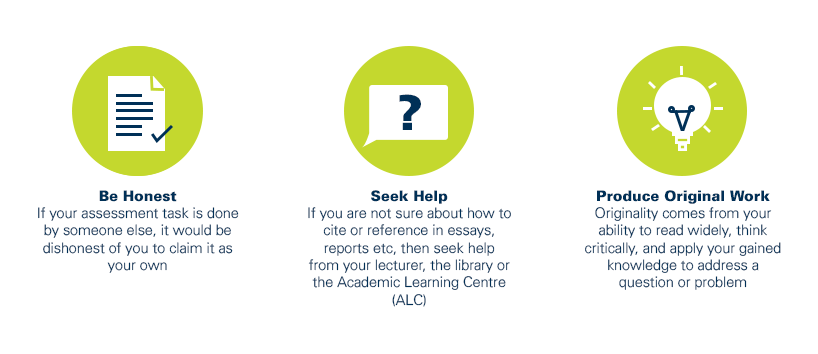
As a CQUniversity student you are expected to act honestly in all aspects of your academic work.
Any assessable work undertaken or submitted for review or assessment must be your own work. Assessable work is any type of work you do to meet the assessment requirements in the unit, including draft work submitted for review and feedback and final work to be assessed.
When you use the ideas, words or data of others in your assessment, you must thoroughly and clearly acknowledge the source of this information by using the correct referencing style for your unit. Using others’ work without proper acknowledgement may be considered a form of intellectual dishonesty.
Participating honestly, respectfully, responsibly, and fairly in your university study ensures the CQUniversity qualification you earn will be valued as a true indication of your individual academic achievement and will continue to receive the respect and recognition it deserves.
As a student, you are responsible for reading and following CQUniversity’s policies, including the Student Academic Integrity Policy and Procedure. This policy sets out CQUniversity’s expectations of you to act with integrity, examples of academic integrity breaches to avoid, the processes used to address alleged breaches of academic integrity, and potential penalties.
What is a breach of academic integrity?
A breach of academic integrity includes but is not limited to plagiarism, self-plagiarism, collusion, cheating, contract cheating, and academic misconduct. The Student Academic Integrity Policy and Procedure defines what these terms mean and gives examples.
Why is academic integrity important?
A breach of academic integrity may result in one or more penalties, including suspension or even expulsion from the University. It can also have negative implications for student visas and future enrolment at CQUniversity or elsewhere. Students who engage in contract cheating also risk being blackmailed by contract cheating services.
Where can I get assistance?
For academic advice and guidance, the Academic Learning Centre (ALC) can support you in becoming confident in completing assessments with integrity and of high standard.
What can you do to act with integrity?